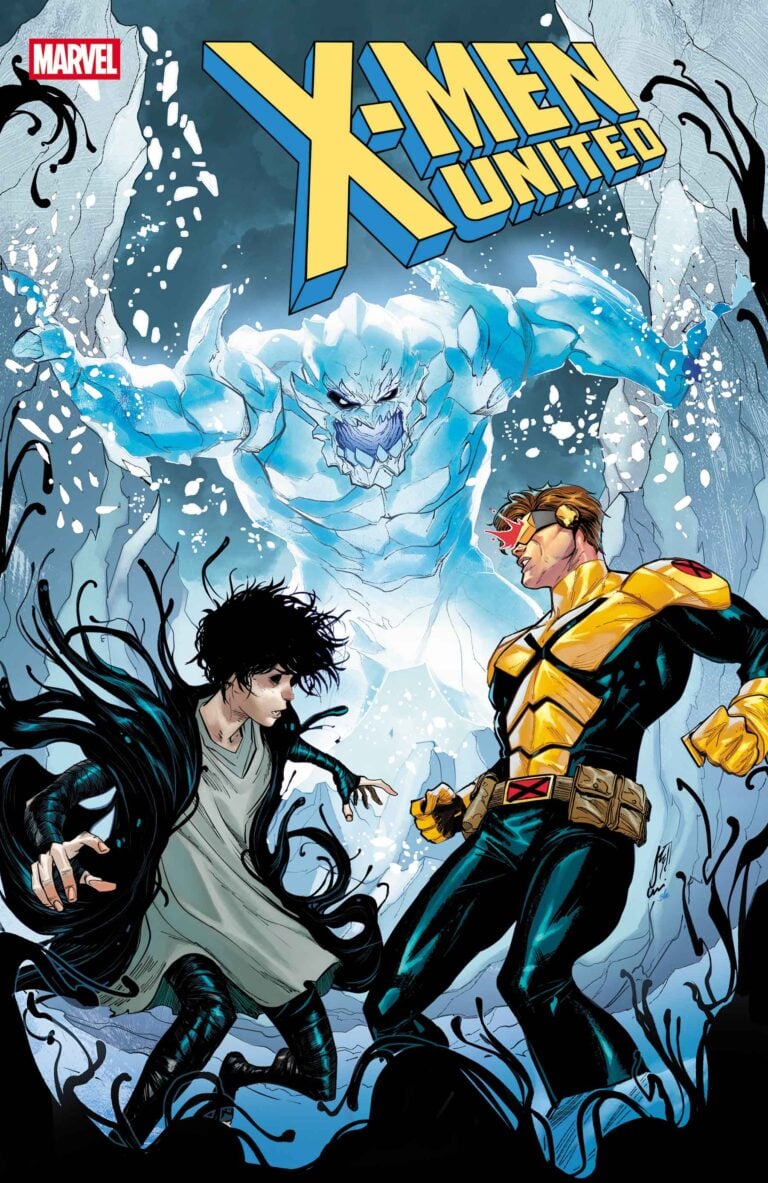
X-Men United continues on, brought you by Eve Ewing and Thiago Palma. The adventures on Greymatter Lane continue in the fourth issue of the series, taking the characters to settings they wouldn’t normally be in and developing story threads for the future.
This is a title in a curious, strange position. Initially promised to be the center of the Shadows of Tomorrow relaunch, X-Men United has felt like an odd passenger in the line rather than a story initiator. The seemingly ambitious scale of it has fallen away into something much, much smaller than initially proposed and with an unfortunate weightlessness to it that doesn’t feel like it’s part of the ongoing narrative at all. X-Men United #4 highlights this and more of the issues with the series with startling clarity.
At the heart of X-Men United is a seeming schism between the X-Men. Or rather, between the X-Men with Cyclops. The leader of the Alaskan X-Men and vanguard of Jed MacKay’s story that will unfold in the pages of DNX this September has no love for Emma Frost’s Greymatter Lane initiative, and seeks to bring it down. This earns him a stern rebuke in issue #2, and now, just two issues later, the matter is addressed again.
Title: X-Men United #4
Creatives: Thiago Palma (Artist), Brian Reber (Colorist)
Characters: Cyclops, Emma Frost, Iceman, Rogue, Lourdes
Villain: Generic Fantasy Threats
Format: Ongoing Series
Our Rating: 4/10 Stars
Iceman is given some much needed and welcome focus, having been a bit player in Exceptional X-Men and in X-Men United thus far. His long friendship with Cyclops is leveraged to bring the angsty, untrusting X-Men leader back into the fold for a game of… Dungeons and Dragons?
It’s a strange set-up, but with the potential to be fun. The idea is for it to be a team-building exercise. Unfortunately, after these promising initial pages, the issue immediately goes off the rails.
We’re treated to a peripheral story with Emma Frost and her old Hellfire associate Lourdes. We’re given several pages of dialogue between them, but these pages are not used well. They don’t quite convey the depth of relationship between the two women, nor do they really amount to much. We’re given a sense of impending danger coming Greymatter’s way, but the way it’s imparted on the reader is frustrating and inefficient at best.
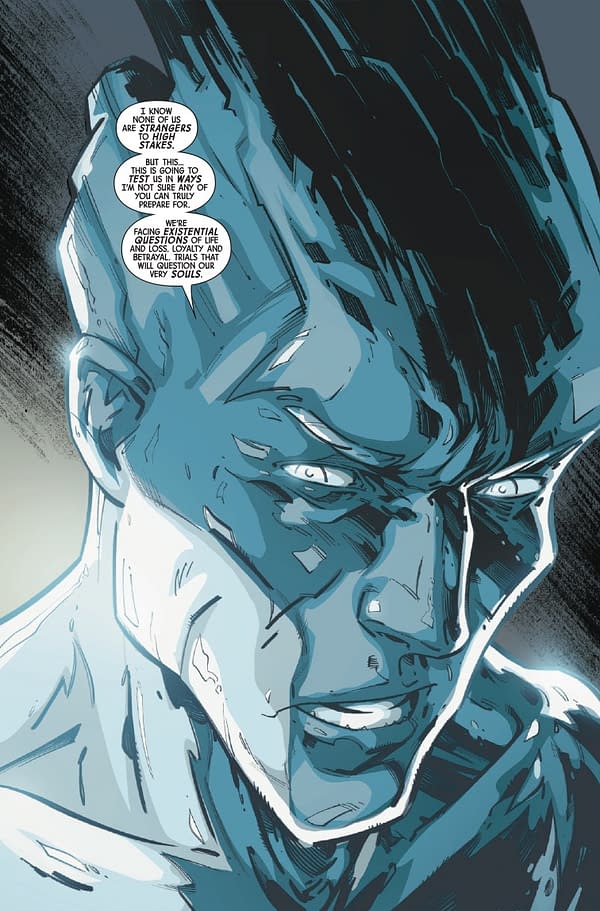
The Dungeons and Dragons campaign is just as frustrating. The idea is a fun one; a team building exercise that uses a fun roleplaying game that involves characters being other people has been done in a similar way in other media, quite successfully. Here however, the campaign immediately devolves into a generic fantasy story, with the characters leaping into a fantasy virtual reality and encountering generic threats that push them to work together rather than continue to fight. Cyclops may disagree with Emma, but he doesn’t want to see her hurt either. Emma Frost might find Cyclops overbearing, but she does appreciate his leadership in tough times. It’s a logical end goal to get to, but the way it’s done is flat and doesn’t take advantage of the fun the premise offers.
The issue ends on a cliffhanger, with the team trapped in their fantasy realm. Iceman, who initially seemed primed for a larger role, is quickly forgotten again, and Rogue is left mostly to the side to be a damsel for the others to save.
Intention Issues and Art
X-Men United was presented as a grand coming together of mutants. But it started with a schism between the characters. The pretense of teaching students and continuing the education of the many new mutants we have been introduced to since From the Ashes began has fallen wayside. The comic is unable to serve as the connective tissue between the many disparate titles in the X-Men line. The closest comparison it has in tone and story concept would be Jason Aaron and Chris Bachalo’s Wolverine and the X-Men comic, which took a similar approach of just trying to have fun and putting the characters in odd, zany circumstances. Unfortunately, the creative team for X-Men United doesn’t have quite as good a grasp of the concept as Aaron and Bachalo did.
Thiago Palma and Brian Reber are the artist and color artist for this issue. Palma’s work has been inconsistent on the title. At times there are moments of pleasing visuals and skills, but at others, the messiness and inexperience show. Facial features are not the strongest suit and in a series with more discussion and talk than fighting, the inability to consistently draw faces and impart emotional feeling through them is a problem.
X-Men United #4
A fun premise is squandered by writing that opts for a more generic, simple route. X-Men United #4 continues the problems the comic has with what it aims to be, while the art remains inconsistent at best.