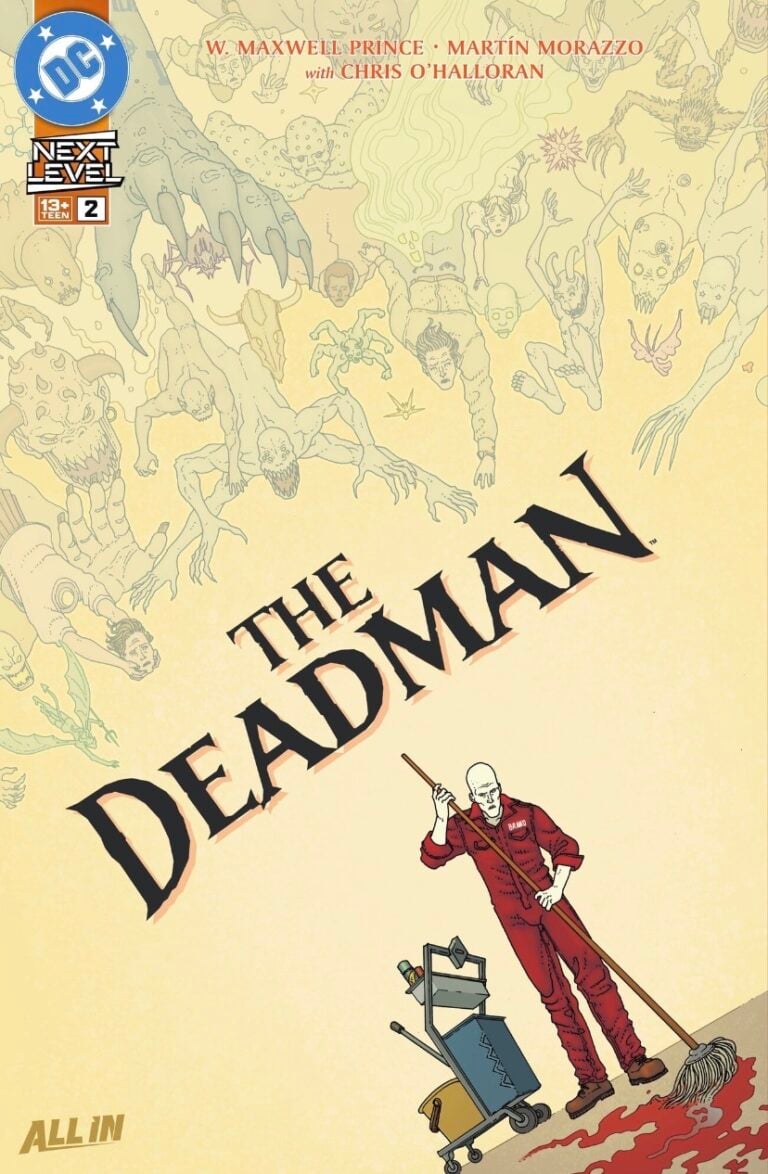
‘The Deadman’ #2 Review: The Spiritual Math of a Ghostly Custodian

Phillip Creary | July 1, 2026

July 1, 2026

W. Maxwell Prince and Martín Morazzo are turning the DC Universe inside out right now, and I’m completely hooked. When we left Boston Brand in the debut issue, our favorite acrobatic ghost had just scored a massive promotion to Custodian of All Souls. That sounds incredibly fancy on a cosmic resume, but issue #2 immediately shows us the actual heavy lifting involved in the gig. This job isn’t just about ushering souls peacefully into the afterlife. It means constantly throwing hands with demons, shapeshifting to match supernatural threats, and actively guarding humanity from things that roam the dark.

The issue kicks off with a grounded lesson in “spiritual math” delivered by Rama Kushna. Prince takes an insightful dive into Hindu concepts such as the Atman, Samsara, Karma, Avidya, and Moksha. He effectively breaks down how the soul resides in our temporary, decaying physical bodies and how karma affects us. While this kind of philosophical framing is gaining traction in modern Western media lately, Prince handles the metaphysics with an accessible, expert-like touch that makes it easy to understand. Everything in existence starts with the soul, and this introductory sequence perfectly anchors the high-stakes chaos that follows birth and rebirth.

Title: The Deadman #2

Creatives: W. Maxwell Prince (Writer), Martín Morazzo (Artist), Chris O’Halloran (Colorist), Good Old Neon (Letterer)

Characters: Deadman (Boston Brand), Rama Kushna, Batman, Plastic Man

Villain: The Bibliophile, Mr. Bloom, Mr. M

Format: Ongoing Series

Our Rating: 9.2/10 Stars
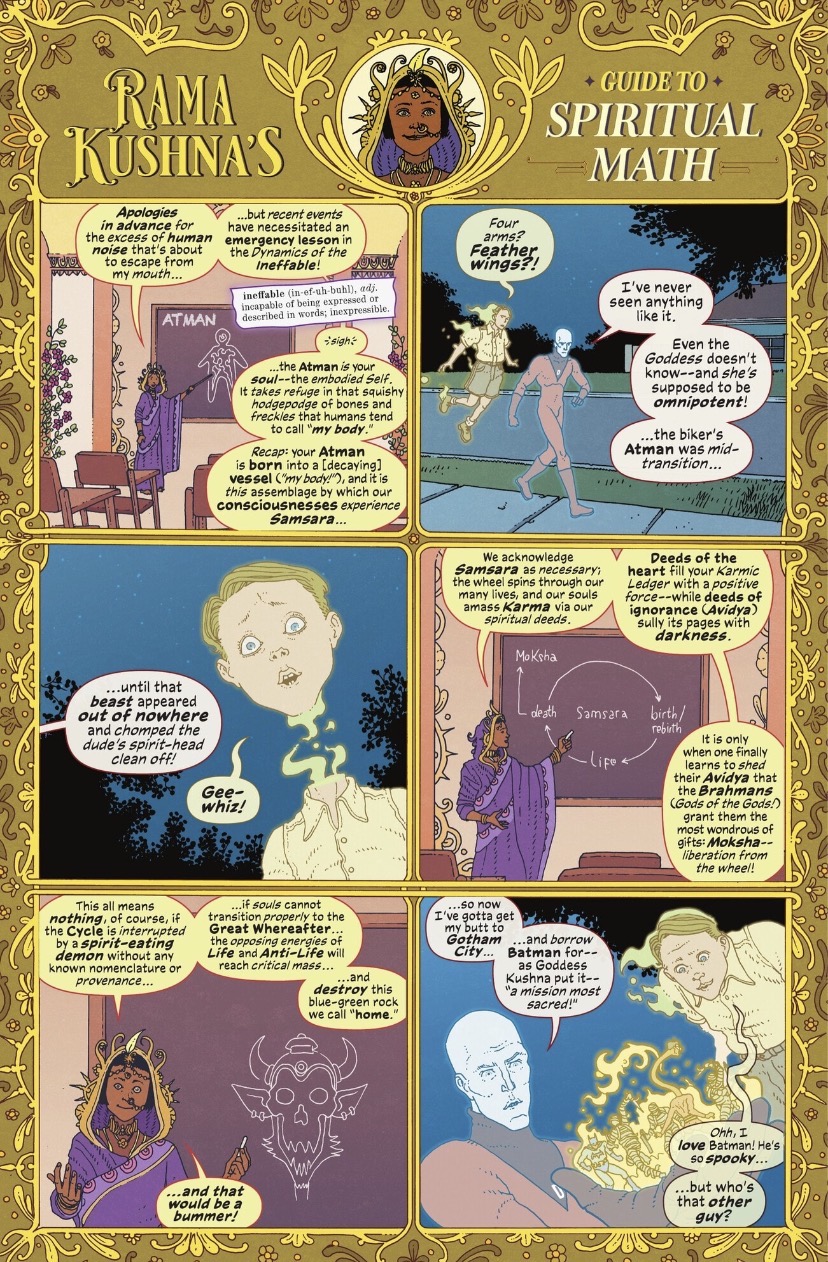
The Deadman #2 – Rama Kushna gives us a lesson on souls (Credit: Martín Morazzo)

Gotham Team-Ups and Fashion Disasters

While Rama Kushna is busy laying down the spiritual laws, Deadman tracks a live lead straight to Gotham City and links up with Batman and Plastic Man. This unadvertised team-up is an absolute blast to read. The creative team clearly holds a deep affection for Batman, and their voice for him strikes a perfect balance between grim determination and a subtle Silver Age camp. He feels grounded yet completely at home in a world filled with supernatural entities.

Plastic Man enters the fray in classic fashion by hilariously disguising himself as a living room table lamp. His personality shines bright, but his design remains an eyesore for me. The deep-V neckline, the questionable trunks, and the bizarre lack of footwear create a jarring visual. The classic glasses still work, but the rest of the outfit makes me wish Prince and Morazzo had given him a sleek, Deadman-style visual overhaul instead. Visual gripes aside, nobody says no to the Dark Knight when a major case is on the line.

The Tragedy of the Bibliophile and Inner Demons

The absolute highlight of the issue is the introduction of the Bibliophile. This quirky, golden-age style villain has a total photographic memory for every single word he’s ever read. The plot kicks off in the past when he broke into a Gotham museum to read restricted magical books. Batman and Deadman bust him, sending him straight to Blackgate Penitentiary. Sending a guy to a maximum-security prison just for reading a book feels like a massive overkill, but that’s classic Gotham justice for you.

On the artistic side, Martín Morazzo delivers stunning panel layouts throughout the whole issue. Colorist Chris O’Halloran saturates the pages with vibrant, shocking neon tones, while letterer Good Old Neon executes flawless, dynamic word balloons. The entire sequence is stellar visual storytelling. We also get a quick, sharp appearance from Mr. Bloom, who remains one of the best modern Batman villains. His creepy, elongated fingers and unsettling presence are utilized perfectly here.

The Human Cost of a Comic Book Villain

Beneath the capes and color, Prince injects a profound sense of sadness into the Bibliophile’s condition. His superpower is actually a devastating psychological affliction. He doesn’t just remember the contents of ancient texts; he relives every painful, minute detail of his own life.

This tragic layer elevates him to the ranks of Gotham’s great, misunderstood tier-three villains like Kite-Man or Condiment King. They look ridiculous on the surface, but their motivations are deeply human. Regular people don’t dress up like calendars to rob banks, but everyone understands the crushing weight of life, family responsibilities, and the desperate thought that a single score could fix everything. The Bibliophile carries that exact tragic energy, just wrapped up in a love for literature.

If the book has a flaw, it rests entirely on the shoulders of the main antagonist, Mr. M. He remains a total enigma, behaving like a standard, wealthy creep. He orchestrates some deeply unsettling acts, but he fails to feel genuinely terrifying because his core motivations remain entirely un-fleshed out. Right now, he is just evil simply for the sake of being evil.
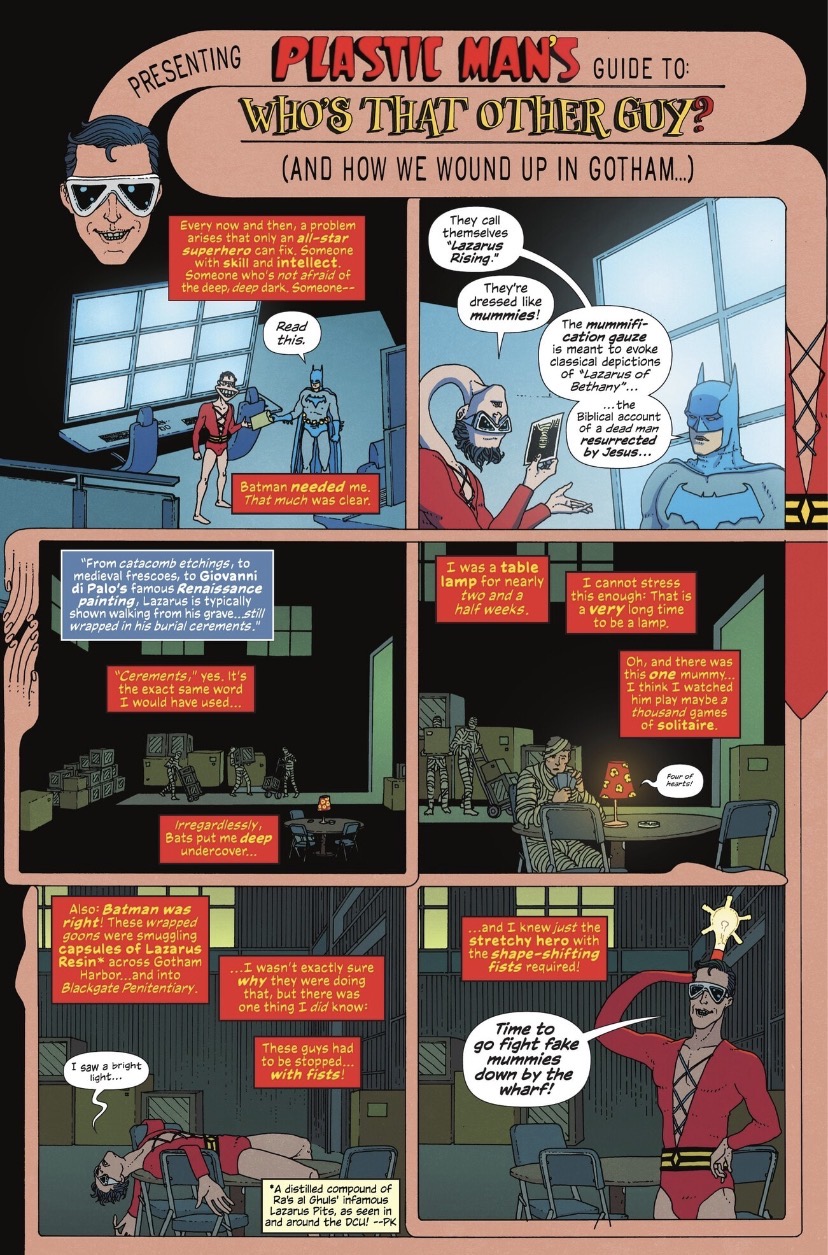
The Deadman #2 – If Plasticman doesn’t spend at least 2 weeks disguised as an inanimate object, then what are we even doing here (Credit: Martín Morazzo)

The Verdict: Should you buy Deadman #2?

The Deadman #2 absolutely hits it out of the park. It balances heavy spiritual philosophy with that classic, beautifully campy DC magic energy. The main villain falls a bit flat, but the tragic debut of the Bibliophile completely makes up for it. This issue proves the series has a massive heart to match its supernatural horror.

‘The Deadman’ #2 Review: The Spiritual Math of a Ghostly Custodian

The Deadman #2 absolutely hits it out of the park. It balances heavy spiritual philosophy with that classic, beautifully campy DC magic energy. The main villain falls a bit flat, but the tragic debut of the Bibliophile completely makes up for it. This issue proves the series has a massive heart to match its supernatural horror.
9.2
AMAZON
BUY NOW

‘The Deadman’ #2 Review: The Spiritual Math of a Ghostly Custodian

July 1, 2026

W. Maxwell Prince and Martín Morazzo are turning the DC Universe inside out right now, and I’m completely hooked. When we left Boston Brand in the debut issue, our favorite acrobatic ghost had just scored a massive promotion to Custodian of All Souls. That sounds incredibly fancy on a cosmic resume, but issue #2 immediately shows us the actual heavy lifting involved in the gig. This job isn’t just about ushering souls peacefully into the afterlife. It means constantly throwing hands with demons, shapeshifting to match supernatural threats, and actively guarding humanity from things that roam the dark.

The issue kicks off with a grounded lesson in “spiritual math” delivered by Rama Kushna. Prince takes an insightful dive into Hindu concepts such as the Atman, Samsara, Karma, Avidya, and Moksha. He effectively breaks down how the soul resides in our temporary, decaying physical bodies and how karma affects us. While this kind of philosophical framing is gaining traction in modern Western media lately, Prince handles the metaphysics with an accessible, expert-like touch that makes it easy to understand. Everything in existence starts with the soul, and this introductory sequence perfectly anchors the high-stakes chaos that follows birth and rebirth.

Title: The Deadman #2

Creatives: W. Maxwell Prince (Writer), Martín Morazzo (Artist), Chris O’Halloran (Colorist), Good Old Neon (Letterer)

Characters: Deadman (Boston Brand), Rama Kushna, Batman, Plastic Man

Villain: The Bibliophile, Mr. Bloom, Mr. M

Format: Ongoing Series

Our Rating: 9.2/10 Stars

The Deadman #2 – Rama Kushna gives us a lesson on souls (Credit: Martín Morazzo)

Gotham Team-Ups and Fashion Disasters

While Rama Kushna is busy laying down the spiritual laws, Deadman tracks a live lead straight to Gotham City and links up with Batman and Plastic Man. This unadvertised team-up is an absolute blast to read. The creative team clearly holds a deep affection for Batman, and their voice for him strikes a perfect balance between grim determination and a subtle Silver Age camp. He feels grounded yet completely at home in a world filled with supernatural entities.

Plastic Man enters the fray in classic fashion by hilariously disguising himself as a living room table lamp. His personality shines bright, but his design remains an eyesore for me. The deep-V neckline, the questionable trunks, and the bizarre lack of footwear create a jarring visual. The classic glasses still work, but the rest of the outfit makes me wish Prince and Morazzo had given him a sleek, Deadman-style visual overhaul instead. Visual gripes aside, nobody says no to the Dark Knight when a major case is on the line.

The Tragedy of the Bibliophile and Inner Demons

The absolute highlight of the issue is the introduction of the Bibliophile. This quirky, golden-age style villain has a total photographic memory for every single word he’s ever read. The plot kicks off in the past when he broke into a Gotham museum to read restricted magical books. Batman and Deadman bust him, sending him straight to Blackgate Penitentiary. Sending a guy to a maximum-security prison just for reading a book feels like a massive overkill, but that’s classic Gotham justice for you.

On the artistic side, Martín Morazzo delivers stunning panel layouts throughout the whole issue. Colorist Chris O’Halloran saturates the pages with vibrant, shocking neon tones, while letterer Good Old Neon executes flawless, dynamic word balloons. The entire sequence is stellar visual storytelling. We also get a quick, sharp appearance from Mr. Bloom, who remains one of the best modern Batman villains. His creepy, elongated fingers and unsettling presence are utilized perfectly here.

The Human Cost of a Comic Book Villain

Beneath the capes and color, Prince injects a profound sense of sadness into the Bibliophile’s condition. His superpower is actually a devastating psychological affliction. He doesn’t just remember the contents of ancient texts; he relives every painful, minute detail of his own life.

This tragic layer elevates him to the ranks of Gotham’s great, misunderstood tier-three villains like Kite-Man or Condiment King. They look ridiculous on the surface, but their motivations are deeply human. Regular people don’t dress up like calendars to rob banks, but everyone understands the crushing weight of life, family responsibilities, and the desperate thought that a single score could fix everything. The Bibliophile carries that exact tragic energy, just wrapped up in a love for literature.

If the book has a flaw, it rests entirely on the shoulders of the main antagonist, Mr. M. He remains a total enigma, behaving like a standard, wealthy creep. He orchestrates some deeply unsettling acts, but he fails to feel genuinely terrifying because his core motivations remain entirely un-fleshed out. Right now, he is just evil simply for the sake of being evil.

The Deadman #2 – If Plasticman doesn’t spend at least 2 weeks disguised as an inanimate object, then what are we even doing here (Credit: Martín Morazzo)

The Verdict: Should you buy Deadman #2?

The Deadman #2 absolutely hits it out of the park. It balances heavy spiritual philosophy with that classic, beautifully campy DC magic energy. The main villain falls a bit flat, but the tragic debut of the Bibliophile completely makes up for it. This issue proves the series has a massive heart to match its supernatural horror.
‘The Deadman’ #2 Review: The Spiritual Math of a Ghostly Custodian

The Deadman #2 absolutely hits it out of the park. It balances heavy spiritual philosophy with that classic, beautifully campy DC magic energy. The main villain falls a bit flat, but the tragic debut of the Bibliophile completely makes up for it. This issue proves the series has a massive heart to match its supernatural horror.
9.2

Share:

Comments

Leave the first comment

<!-- if comments are disabled for this post then hide comments container -->
<style> 
<?php if(!comments_open()) { echo "#nfps-comments-container {display: none !important;}"; }?>
</style>