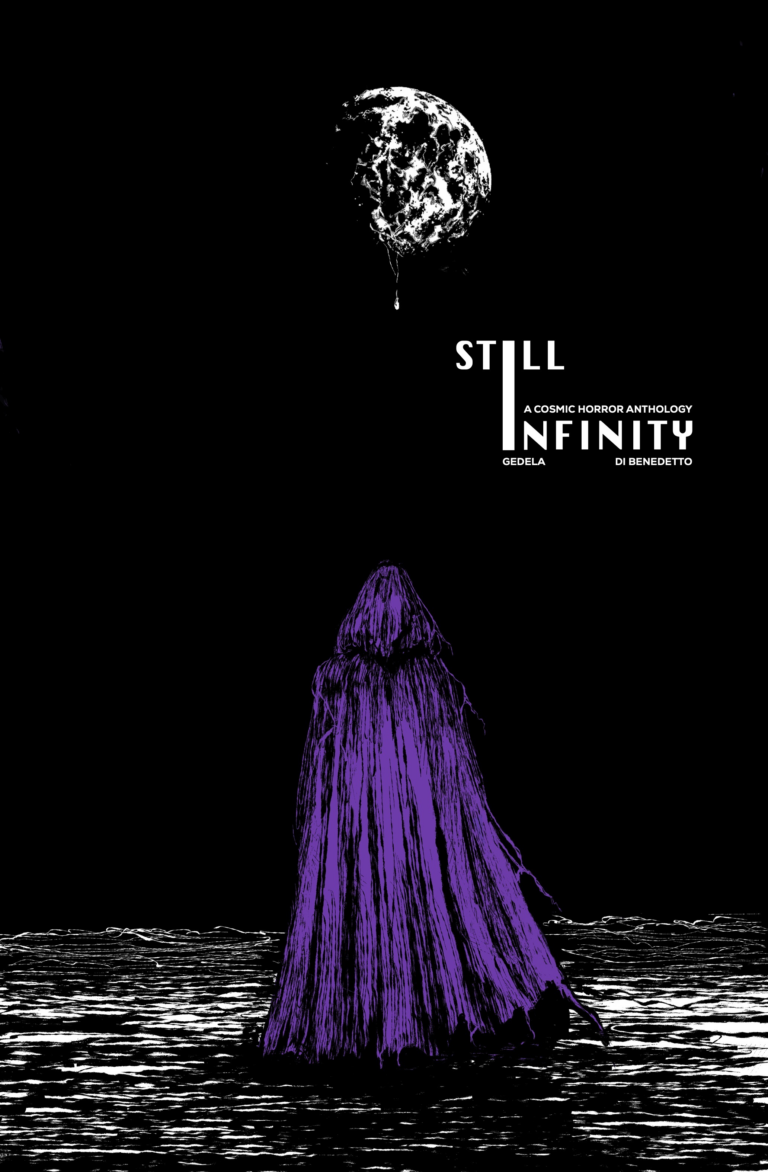
Comic books are packed with standard monsters and ghosts, but Manoj Gedela is tossing out those tired tropes for some actual psychological dread. His new 70-page Kickstarter anthology, Still Infinity, serves up six cosmic horror tales that completely ditch cheap jump scares to focus on the unseen, incomprehensible terrors of the universe. If you devour the existential dread of H.P. Lovecraft and Thomas Ligotti or lose yourself in the dark world-building of Bloodborne, this book is targeting that exact sweet spot.
We caught up with Manoj to chat about the psychological weight of the unknown and what it really takes to bring pure cosmic horror to the indie comic page.
- Inside the Mind of Manoj Gedela: Building the World of Still Infinity
- Breaking Down the Stories: Satire, Post-Human Cults, and Cosmic Evil
- Crafting a Cosmic Horror Comic: Pacing, Layouts, and Drawing the Unseen
- Launching on Kickstarter: Translating Invisible Tension to a Physical Comic Book
- Survival and Legacy: Pitching Still Infinity to H.P. Lovecraft
- Campaign Information
Inside the Mind of Manoj Gedela: Building the World of Still Infinity
Phillip Creary: How did Still Infinity actually come together? Were these stories you’d been sitting on for years, or did the concept hit you all at once?
Manoj Gedela: I am a massive fan of Cosmic Horror and I knew I wanted to create an anthology that had some new, compelling ideas within the genre. The stories themselves did not come to me all at once, but rather over the course of my deeper exploration into the genre; I devoted as much time as possible to read a lot of stories within the genre to gain inspiration and accustom myself to what ideas already exists, since I wanted to avoid repeating what had been already done before.
Phillip Creary: You’ve mentioned Bloodborne and Thomas Ligotti as big influences. Bloodborne is full of aggressive action, while Ligotti is all about slow, paralyzing dread. How do you mash those two vibes together without them fighting each other?
Manoj Gedela: Bloodborne and Ligotti do have different vibes, and so rather than trying to mash the two styles, I think their influences have translated synergistically into the novelty of some of my stories.
Phillip Creary: You wrote six different flavors of existential dread for this anthology. Which of these six stories hit a little too close to home for you personally while you were writing it?
Manoj Gedela: I’d say it has to be ‘The Traveler from Takxria’. It’s about an immortal Traveler who is obsessed with finding the answer to a seemingly unanswerable question. Personally, I’ve always been fascinated with such questions. “Is there a God?” “Are we alone in this universe?” etc etc. That’s the beauty of Cosmic Horror. It doesn’t provide answers. Rather, it aims to make you uncomfortable by telling you that we’re too insignificant to understand such questions.
Breaking Down the Stories: Satire, Post-Human Cults, and Cosmic Evil
‘A Pale Blue Dot‘ has alien roaches working a corporate quota. It sounds a bit satirical, but where does the humor stop and the actual existential dread kick in?
You’re right on, that’s exactly the tone I was going for. The idea came to me when I heard that cops here in the US are required to hit a quota for the speeding tickets they issue every month. Not sure how true that is, but it sounded quite silly.
On the surface, A Pale Blue Dot is a satire. But the more you dwell on the story, the sinister it gets. There’s something so nonchalant about what these roaches are doing. They’re just doing their jobs, living their lives. But the effect of their actions is on a cosmic scale. The thought that there could be extraterrestrial civilizations that can decide fates of entire galaxies with the switch of a button sounds terrifying, doesn’t it?
‘The Assassination of Maharaja Vikramarka’ links cosmic horror to a historic political execution. Why pull from real-world history for this one, and does grounding it in reality make the weird stuff land harder?
This story is one of my personal favorites and I’m really excited for the readers to experience it, but I want to clarify that it is not based on a real-world event. It’s definitely weird stuff like you said, as it’s a blend of the Indian Sword and Sorcery and Cosmic Horror genres. But it’s very much grounded in reality. The story deals with the idea of Evil. What is Evil? Why do some people receive the blunt end of the stick while others thrive in their wrongdoings. It’s the questions that all of us probably had at a point. That helps the story land harder as you said. The answer that’s provided at the end of the story for these questions is quite nihilistic. (Of course, that comes with the genre that we’re dealing with here).
I have to mention the two major influences for this story: Harlan Ellison’s ‘The Beast That Shouted Love at the Heart of the World’ and Laird Barron’s ‘Shiva, Open your Eye’. If you haven’t read them yet, do check them out! Also, a huge shoutout to our artist Ramses Sandoval. He killed it!
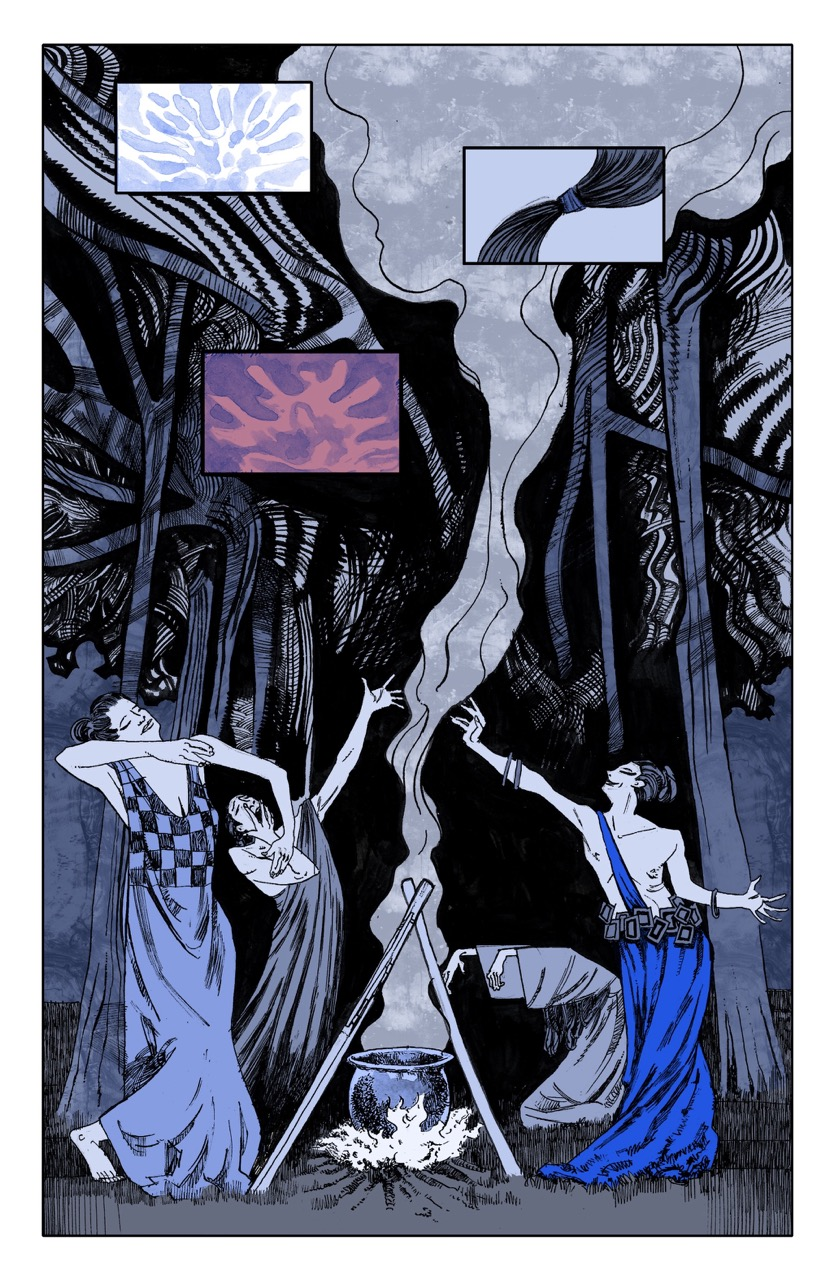
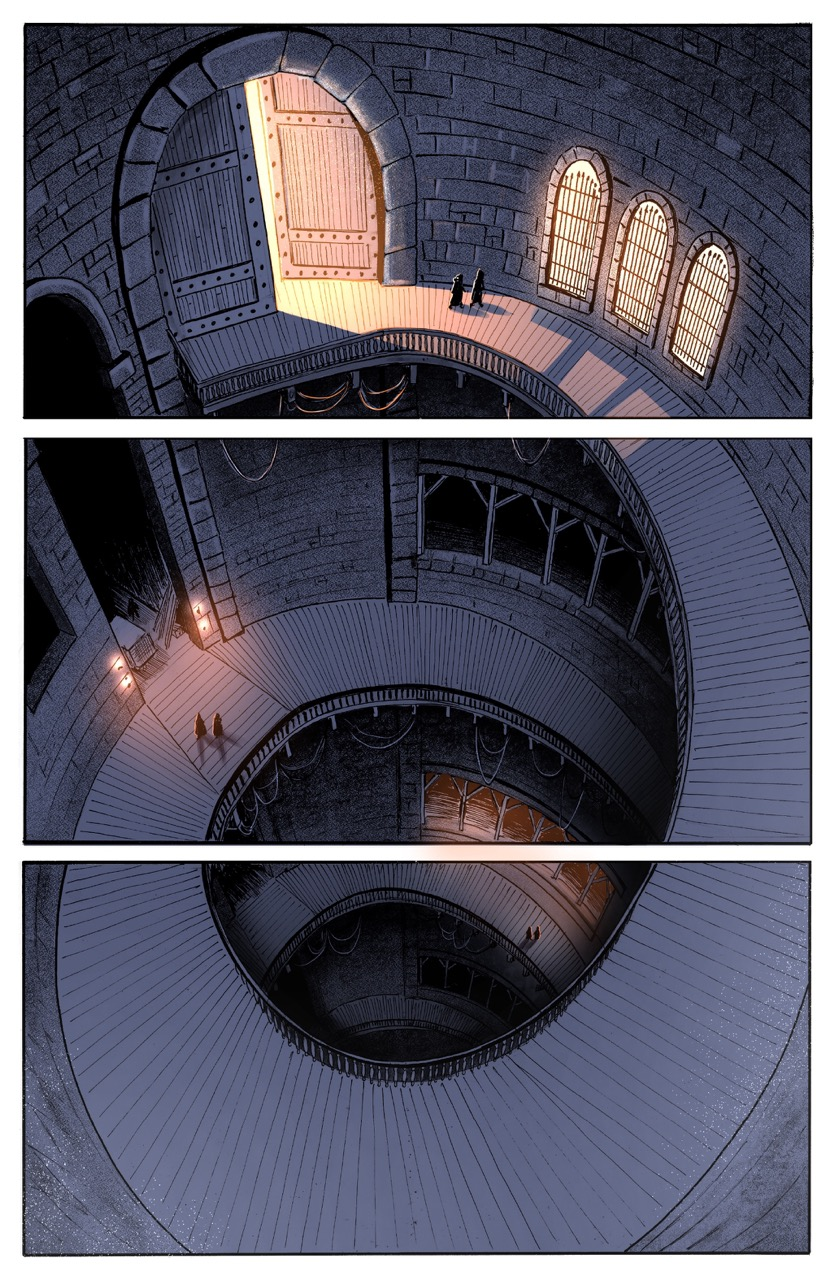
‘In Eaters of Truth,’ you have a cult member doing a bizarre ritual dance. Ritual dances are all about motion, which is tough to capture in a still comic panel. How closely did you work with Nicolás Nieto to make sure that the choreography felt deeply wrong and unsettling instead of theatrical?
Bizarre is the right word. (These are supposed to be post-humans!). Thankfully, Nicolàs knew right away what kind of a dance this is supposed to be to make it look unsettling. We had a bit of back and forth on what sort of colors he should use for the story but what he delivered is phenomenal.
Crafting a Cosmic Horror Comic: Pacing, Layouts, and Drawing the Unseen
Seventy pages split across six stories means everyone gets about 10-12 pages. That is a tight squeeze for horror. How do you pace a short-form comic so it actually builds real tension instead of feeling rushed?
I’d admit that this wasn’t easy in the slightest. But I loved the challenge. We had to think about pacing quite a bit while creating these stories. When do we use the splash pages, how do we design our layouts, where should we have the narrative dialogues, all these decisions were made by keeping the reader’s experience and the pacing in mind.
You’re explicitly avoiding classic creature features and slashers here. Comics are a visual medium, and the instinct is always to put the monster right in the panels. How do you actually draw the “unseen” without making the pages feel empty?
That’s a great question. The safer choice would certainly have been to design some gnarly looking monsters and develop stories around them. But the idea of bringing the feeling of existential dread onto the page without using jump scares as a crutch sounded very exciting to me. Huge credit to all of our artists here. Through the color choices and the framing, I think they’ve really brought out that eerie feeling that one associates with Cosmic Horror.
With six different artists on one anthology, the visual style is going to shift constantly. Did you write these scripts with guys like Nicolás Nieto or Ariel Quintero already in mind, or did their line art completely change how you envisioned the stories?
It was a mix of both. We have a lot of amazing indie artists in the comics scene and thanks to r/comicbookcollabs, I was able to find the right people for the style and tone I was looking for. I go to them with the script, a few storyboards and references, and then we have a discussion on what visual style would be best for the story.
When people write cosmic horror, they usually have something specific playing in the background to get into that headspace. What did the playlist look like while you were writing Still Infinity? Are we talking ambient drone, heavy metal, or just dead silence?
Dead silence. (I write at ungodly hours)
Launching on Kickstarter: Translating Invisible Tension to a Physical Comic Book
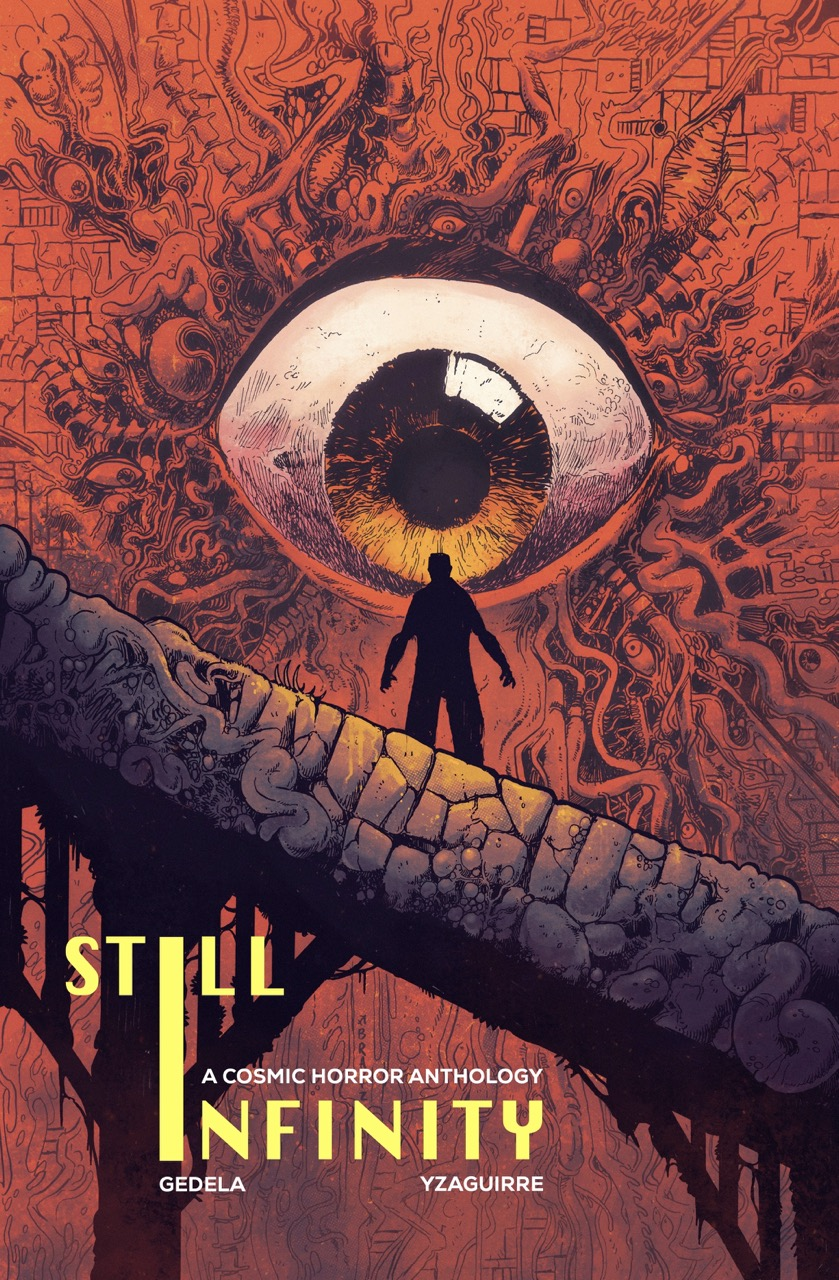
Crowdfunding relies on big, flashy visuals to grab backers instantly. Because your book focuses on psychological dread and things you can’t see, how did you pick your cover artists to make sure that invisible tension translated to a Kickstarter thumbnail?
This was a relatively easier choice. I have worked with Bryce before on Fluorescent Killers, he is amazing. I told him that the cover should elicit the feeling of looking at something incomprehensible, gave him a few references, and he absolutely nailed it. All the eyes (no pun intended) that we are getting on this book are mostly thanks to him.
You’re offering both digital PDFs and physical softcovers. In an increasingly digital world, why was it essential for you to get Still Infinity printed as a tangible book?
Nothing beats the experience of reading a physical book. Each page that you turn reminds you of the amount of effort that was put in by the creators to bring it to life. I personally cannot wait to hold the printed copy of Still Infinity in my hands!
Survival and Legacy: Pitching Still Infinity to H.P. Lovecraft
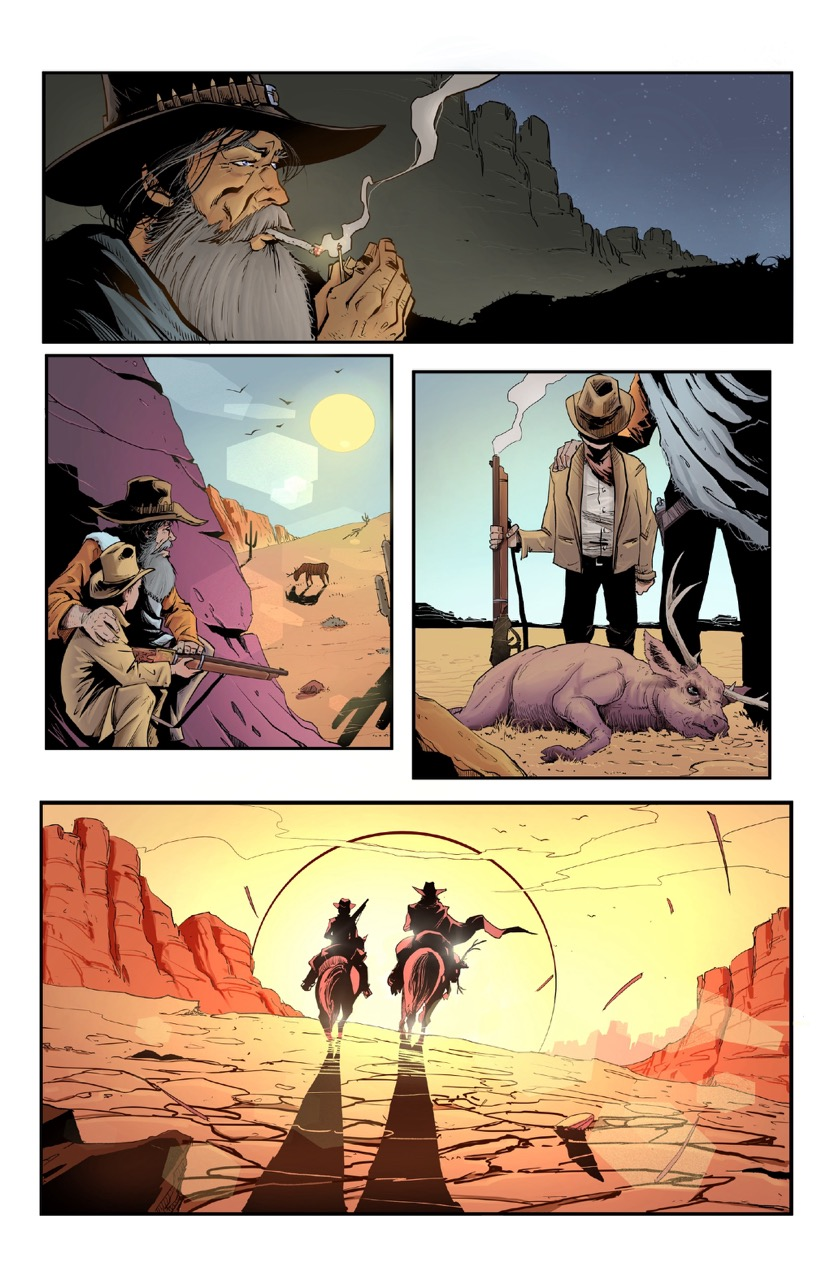
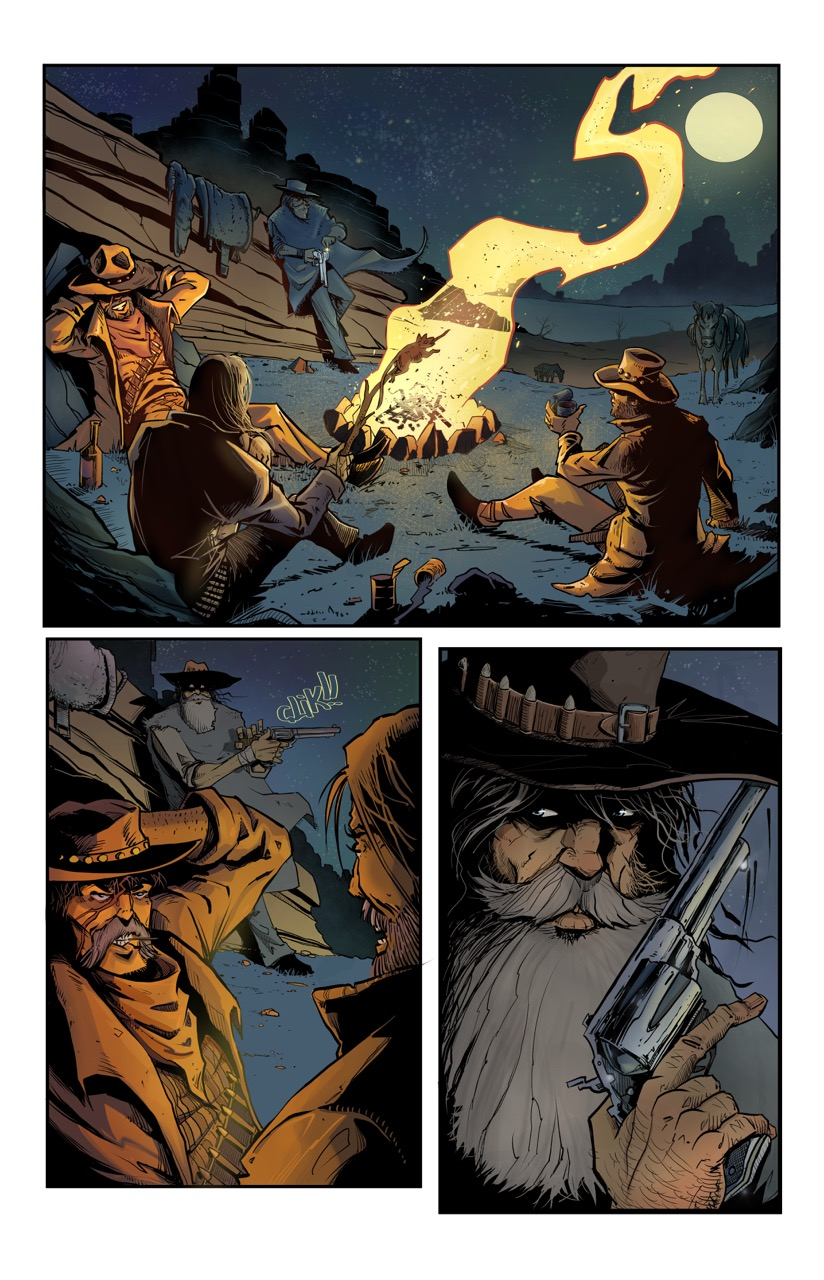
Out of all six scenarios you created for this anthology, from the ritualistic madness of ‘Eaters of Truth’ to the isolated society in ‘An Expected Visitor,’ which one do you think you’d survive the longest in, and which one would break you instantly?
Ha! I’ll pick ‘The Gunslinger that Outdrew Death’. I’d probably do alright in that world. I don’t think I’ll make it very far in an isolated society like the one in ‘An Expected Visitor’. So I’d like to stay away from that please.
If you could sit down for a drink with H.P. Lovecraft, Thomas Ligotti, and Laird Barron to pitch them “Still Infinity,” who do you think would be the toughest critic, and who would be the first to back the campaign?
Oof. If I sit down with them for a drink then I’d probably pick their brains out on the works they’ve created instead of pitching my own. But if I do get to pitch it, then I think Barron would be the first to back it. And Lovecraft would be the toughest critic.
When a reader hits that last page and closes the book, what’s the big takeaway you want them to get from the whole experience?
Well if they got to the last page, then I’d first like to thank them for sticking through til the end. Takeaway is a big word, I think I’d leave that to the readers. I wanted to challenge the definition of cosmic horror through Still Infinity, or at the very least expose/put forth some compelling stories that might seem novel for the readers to think about. I sincerely hope they enjoy reading this. We definitely enjoyed making it
Campaign Information
The Still Infinity Kickstarter campaign offers backers various reward tiers, including digital PDF copies, physical softcovers, and exclusive variant covers. Horror fans and comic book collectors can view the complete preview art, read creator bios, and back the project directly on their official Kickstarter campaign page.