
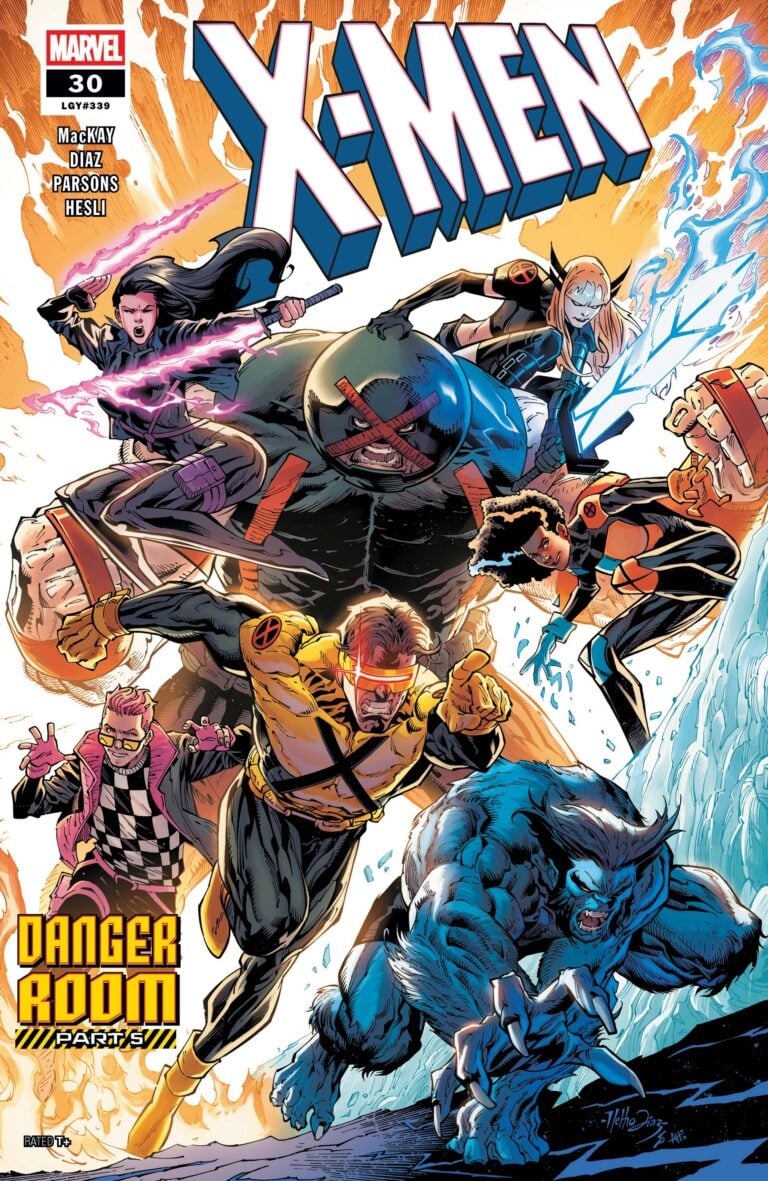
The Danger Room arc comes to a close with X-Men #30. Written by Jed MacKay and drawn by Netho Diaz, who drew the previous four issues as well, X-Men #30 caps off the latest five-issue story arc of the title. Happily, there is much to like in this issue, with the story ending on a strong note. Still, frustrations remain, with both this issue and with the story itself.
Before we get ahead of ourselves, let’s dig in. The issue begins with Maxine Danger and her loathsome recruits toasting themselves on their success in disposing of the X-Men. They have trapped Cyclops and the majority of the X-Men in a living submarine; Psylocke and her lover Greycrow are presumed dead; and Quinten Quire and Temper are headed into a manufactured conflict with the people of Merle.
Title: X-Men #30
Creatives: Jed MacKay (Writer), Netho Diaz (Artist), Sean Parsons (Inker), Arthur Hesli (Colorist)
Characters: Magneto, Beast, Quentin Quire, Temper, Cyclops, Psylocke, Greycrow, Glob
Villain: Maxine Danger
Format: Ongoing Series
Our Rating: 7.5/10
How Do Magneto and Beast Save the Day in X-Men #30?
But these are the X-Men they are dealing with, and no enemy of the X-Men comes out unscathed. Magneto is forced to take action and move to stop Quinten and Temper from exacting revenge on the townsfolk of Merle, who they believe attempted to kill Glob and who they resent for building Sentinels prior to the X-Men moving into the factory. Magneto has not been a well-featured or well-used character under Jed MacKay’s pen. The legendary mutant leader and iconic X-Men character has languished in this title, never used to his full potential or made to do much of anything. Pontificating in his chair happens infrequently, and besides a very brief battle with 3K in X-Men #17, Magneto has sadly felt wasted.
Thankfully, the character has a star turn in this issue. Put in the position of being the one to calm down angry, young, vengeful mutants, Jed MacKay does manage to write Magneto with insight and experience that feels authentic to the long history of the character. After all, no one else could understand Quinten in this situation better than Magneto, and no one could speak with the authority to talk him down quite like him. It’s a good, effective role to put the character in, and is one of the highlights of the issue.
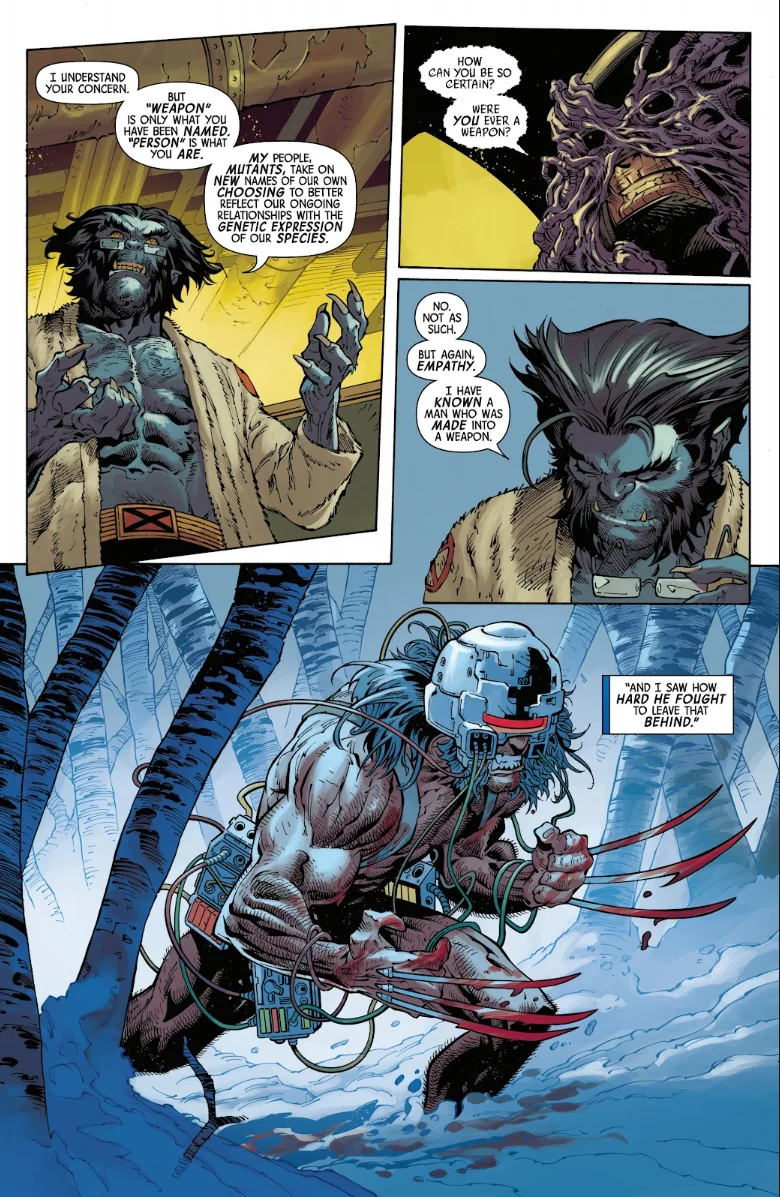
The other comes from Beast, a character Jed MacKay does excel in writing. The X-Men’s merriest and most peaceful mutant confronts the lifeform seeking to devour the X-Men. And rather than using his strength to fight his way out, Beast approaches the situation with emotional intelligence and empathy. It’s another effective use of a character in this issue, with Beast being given a chance to shine and resolve a dire situation peacefully. The way it’s done suits the character, and Jed MacKay shows greater understanding of Beast as a character than any other character under his pen.
Why Does the Ending of the Danger Room Arc Feel Weightless?
The X-Men, of course, survive and endure and overcome the Danger Room. But while the issue was very strong up to this point, it’s the closing that somewhat undercuts it. After five long issues focusing on this threat and introducing us to these villains, we don’t get to see them receive their just desserts. What Psylocke does to them is left up to the reader and isn’t shown on page. After being shown and told how reprehensible these characters are, and seeing what they put the X-Men through, the lack of consequences feels cheap. This would be understandable for a single-issue story, but after an entire trade paperback was dedicated to this story, the ending feels like nothing less than a cop out.
There is also a frustrating lack of weight to the proceedings. While Magneto and Beast get their star turns, Danger Room as a story does not have much narrative impact. No character is changed by it; Quinten’s actions against the town are swiftly erased, and the lack of consequences for the villains (even the grunts) makes the whole arc feel weightless and light. A frequent problem with X-Men under Jed MacKay, as the previous five-issue arc involving 3K’s siege of Merle felt similarly without consequence.
How Do Arthur Hesli and Sean Parsons Elevate Netho Diaz’s Art?
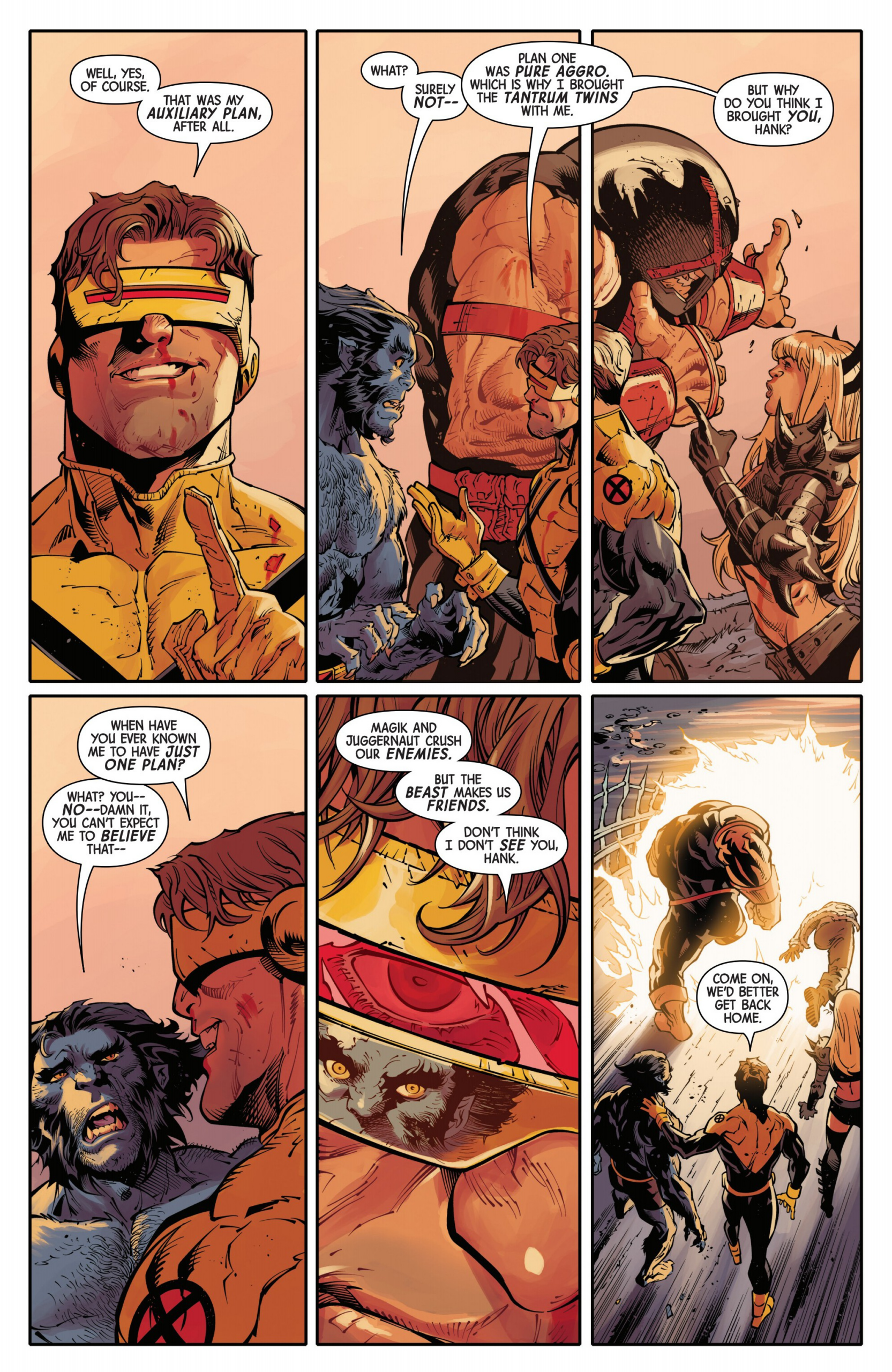
Netho Diaz continues his strong form, however. Penciled by this issue’s penciler, Sean Parsons, Diaz’s art has never looked better. One of the chief sources of his success is Arthur Hesli, who seems to have taken over coloring duties for the title. The colorist, known for his work on Magik (2025), X-Men Annual (2026), and Moonstar (2026), is able to accentuate and strengthen Diaz’s art. With richer, deeper colors, Hesli brings out the best in Diaz’s pencils and Parsons’ inks.
One particularly strong artistic sequence involves Magneto’s confrontation with Quinten. The more sketched look and the faded colours added to the emotion of the scene.
The Verdict: Should you buy X-Men #30?
Overall, X-Men #30 provides signature moments for key X-Men characters and features strong work by the art team of Netho Diaz, Sean Parsons, and Arthur Hesli. Unfortunately, while the issue is mostly strong, the ending is disappointing, and the need for five issues to be dedicated to this arc is suspect at best.
‘X-Men’ #30 Review: A Flawed but Character-Driven Finale to the Danger Room Arc
X-Men #30 provides signature moments for key X-Men characters, and features strong work by the art team of Netho Diaz, Sean Parsons, and Arthur Hesli. Unfortunately, while the issue is mostly strong, the ending is disappointing and the need for five issues to be dedicated to this arc is suspect at best.