KPB Interview: David Pepose Talks The O.Z. Finale, Space Ghost/Herculoids Crossover and Speed Racer “Demon on Wheels”

Phillip Creary | June 8, 2026

June 8, 2026

David Pepose has a knack for taking characters we grew up with and giving them a sharp, high-stakes edge. From his breakout work on Spencer & Locke to high-profile runs on Marvel’s Savage Avengers, Moon Knight, and Punisher, he thrives at finding the human friction inside massive concepts.

Every time David stops by to chat, we end up talking about how he manages to balance indie passion projects with massive corporate icons. Now, he’s returning to the sandbox where it all started.

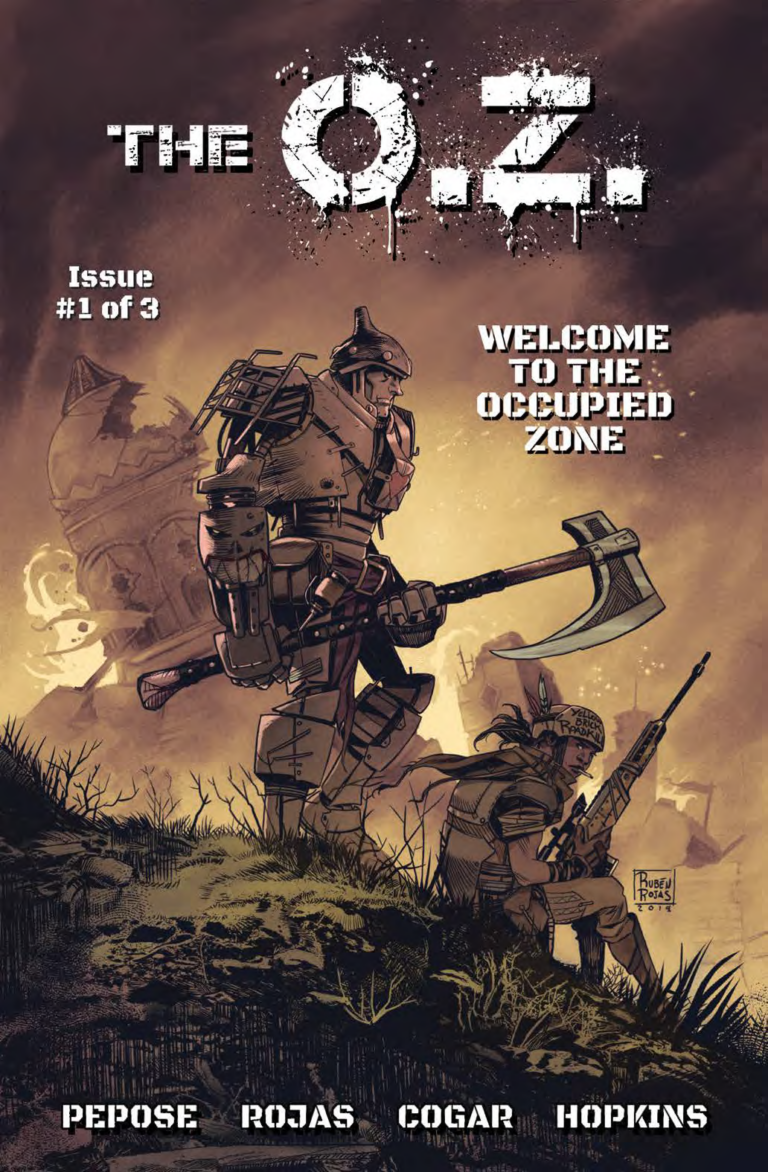
Co-created with artist Ruben Rojas, The O.Z. (The Occupied Zone) tackles a harrowing question: What happens to a fantasy kingdom after the fairy tale ends? The series follows Dorothy Gale’s granddaughter, a disillusioned Iraq War veteran with severe PTSD who gets swept into a post-apocalyptic Oz fractured by a brutal power vacuum. Alongside colorist Whitney Cogar and letterer DC Hopkins, David has spent years crafting a war story that balances explosive combat with a compassionate look at military trauma.

With the final chapter hitting Kickstarter on June 8th, we caught up with David to talk about the military tactics of the Emerald City, his cosmic work on Dynamite’s Space Ghost, his high-octane run on Mad Cave’s Speed Racer, and why the gentlest characters make the absolute best tyrants.

The O.Z (Art credit: Ruben Rojas)

What is The O.Z. Comic Book Series About?

Phillip Creary: For readers who are completely new to The O.Z., what is your quick elevator pitch for the series? 

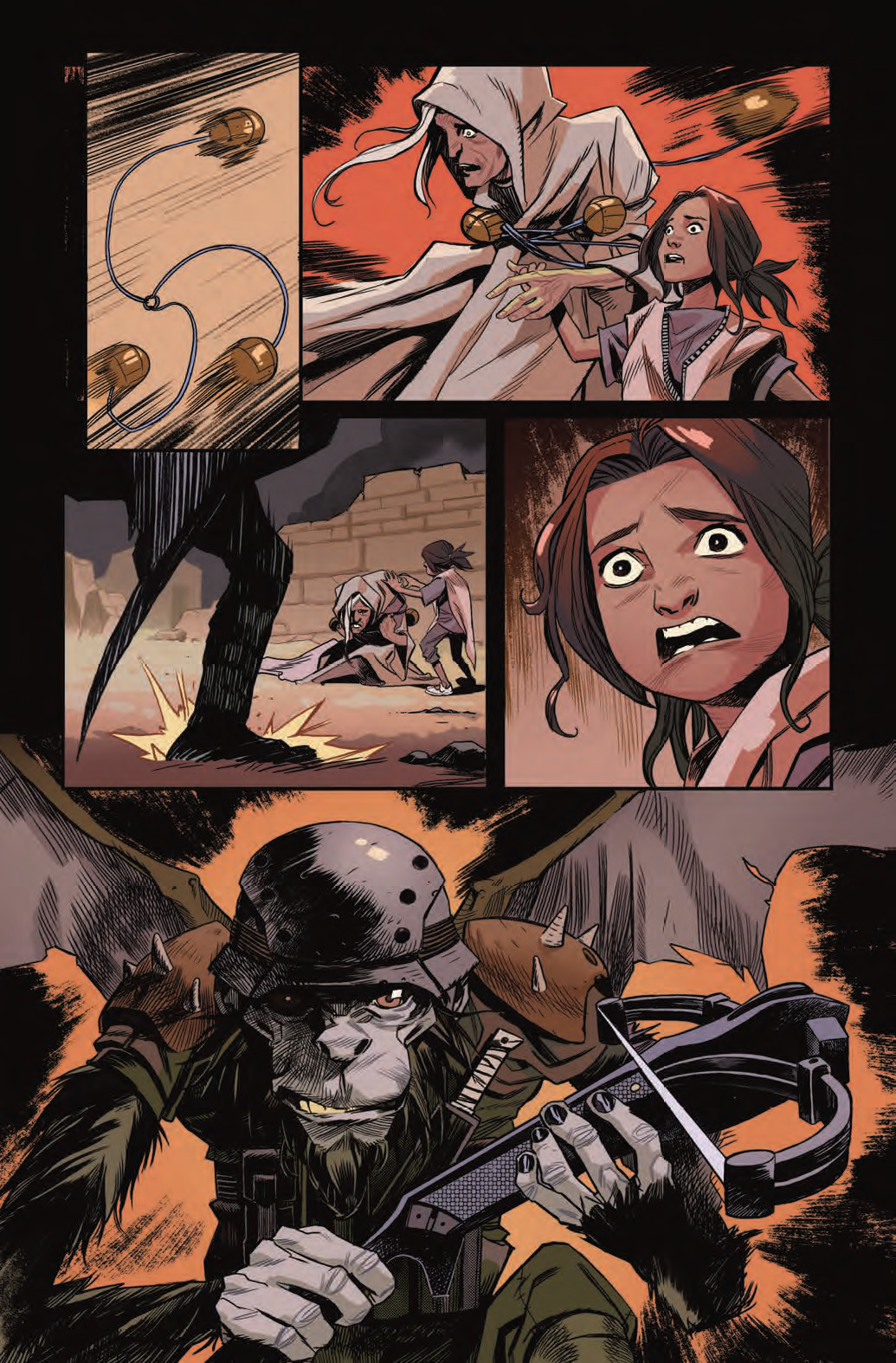
David Pepose: The O.Z. is like Mad Max meets The Wizard of Oz. It’s the story of Dorothy Gale’s granddaughter and namesake, an Iraq War veteran struggling with disillusionment and PTSD. But when she’s caught up in a tornado, our new Dorothy finds herself stranded in the war-torn land of Oz. She learns that not only were her grandmother’s stories true but killing two Wicked Witches and then immediately leaving didn’t result in a happy ending. Instead, it created a power vacuum not unlike Baghdad. Now our new Dorothy has to team up with her grandmother’s former friends (the Tin Soldier, the Prince of Lions, and Jack Pumpkinhead) if she hopes to bring peace to the Occupied Zone… or as the locals call it, The O.Z.

Your protagonist is also named Dorothy Gale, but she is the granddaughter of the original explorer and a modern combat veteran. How would you describe her mindset to a reader meeting her for the first time?

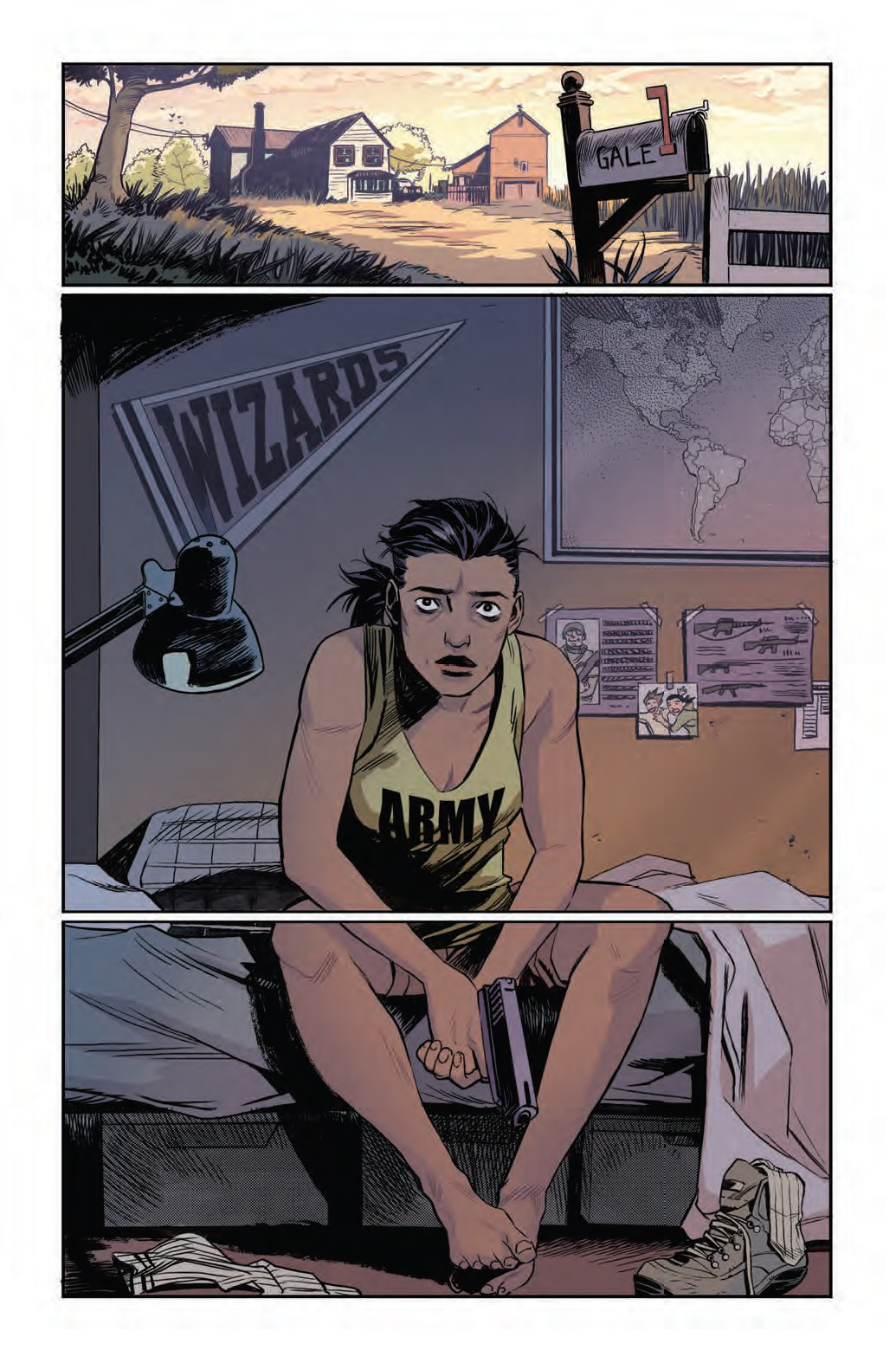
When you meet Dorothy in the first issue of The O.Z., she’s struggling deeply with the things she saw during her last tour, while also grappling with the pressures of trying to reintegrate back into civilian life. We’ve shown teases of Dorothy’s last mission, but in our latest Kickstarter, you’ll see exactly what horrors she has to live with. Dorothy’s in dire need of purpose, meaning, and closure. When she finds herself in the Occupied Zone, Dorothy’s thrust into this uncomfortable position of leadership, given that her grandmother is still seen as Oz’s ultimate heroine. Fighting for the Resistance won’t be enough to fully erase the traumas of her past, but I do think Dorothy sees liberating the Occupied Zone as a second chance to set things right.

In this universe, the Scarecrow is no longer looking for a brain because he used his intellect to become a calculating wartime tyrant. What inspired the decision to turn the gentlest character of the classic trio into your primary villain?

I wanted all of The O.Z.’s supporting characters to explore the horrors of war through their own unique lens: the Tin Soldier shutting down his own heart in the face of terrible bloodshed, the Prince of Lions struggling with his fears and self-doubt over leading the Animal Kingdom in the wake of his father’s death, and even Jack Pumpkinhead serving a similarly plant-derived master as the Scarecrow as his personal assassin.

But the Scarecrow always made the most sense to me as the villain of our story. Beyond how easy it was to imagine his look being turned into something horrific, the Scarecrow’s genius intellect made him the only one even remotely equipped to try to bring order to the land of Oz following the Wicked Witch’s death. But as the Scarecrow has learned, it’s easy to come up with ideas, but it can sometimes be all-but-impossible to actually implement them.

That’s the ultimate twist to the Scarecrow’s regime, which I think puts him in great company with villains like Homelander from The Boys. The Scarecrow’s got all this power, but he’s absolutely miserable. Like our heroes, the Scarecrow’s been worn down by endless death and slowly transforming into the villain of his own story. That means he’s also developed a deep well of unfathomable sadism and cruelty that pops up when you least expect it.

The O.Z (Art credit: Ruben Rojas)

How Ruben Rojas Redesigned the Wizard of Oz Characters

The character redesigns in The O.Z. look fantastic. The Tin Man, the Lion Prince, and even the Straw Man have some seriously sinister vibes. What were the visual directives you gave artist Ruben Rojas for these new designs?

I’m a big fan of the post-apocalyptic genre like Fallout and Mad Max, so injecting that kind of inspiration into the mix was always part of the plan. Ruben Rojas really thrives doing post-apocalyptic fantasy, so this series played to his strengths magnificently. The O.Z. is a series that’s about seeing just how drastically things can change, given enough time, so each design was meant to reflect the characters’ backstory, their strengths, and their internal conflicts.

Dorothy was the starting point, trying to lean into her background as a soldier, but with material that could conceivably be scavaged from materials from Oz. Meanwhile, the Tin Soldier was meant to be this patchwork juggernaut of salvaged steel, a product of being destroyed and rebuilt after decades of war. The Prince of Lions was meant to represent the fantasy stealth fighter, hiding behind this tribal mask while his subjects think he’s actually his father from beyond the grave.

On the other side of the war, Jack Pumpkinhead was meant to have a little more panache, a grinning killer who winds up joining the fold, drawing equal inspiration from Jack Skellington, the Green Goblin, and Magus from Chrono Trigger. And the idea of the Scarecrow being this shell of himself (meaning he’s got only half the straw he used to, having given it away to animate his cruel, faceless Strawman Army) speaks to how the war has ground him down in both mind, body, and soul.

Toto mentions that the magic of Oz gave him the ability to speak. Does this magic affect all Earth animals the same way when they cross over, or is Toto a special exception to the rule?

Y’know, I hadn’t thought about that before! I’d say yes, if you’re an Earth animal who’s spent enough time in Oz, you’ll be able to speak the lingo just like Toto.

Batman Vol. 1: Daylight
$18.59
Buy Now
We earn a commission if you make a purchase, at no additional cost to you.
06/08/2026 03:08 am GMT

Weaponizing the Magic of L. Frank Baum’s Oz

The magic of Oz behaves a bit differently here than standard fantasy tropes, like using enchanted poppies as tactical narcotics or magic fertilizer to grow emergency food supplies. How do you introduce these unique world rules to a brand-new audience without slowing down the story?

The O.Z. ultimately relies on weaponizing the imagery of L. Frank Baum’s Wizard of Oz novels, so I spent a lot of time thinking of ways to incorporate those elements, and building action sequences around them. Luckily, with Dorothy’s running narration, it’s pretty easy to roll with the references as she explains them, but I thought turning these kinds of magical elements into weapons spoke to that idea that not matter what your intentions or how many innocents you’re fighting for, war is always a corrupting force.

Dorothy builds a homemade flamethrower using Oz faeries and tactical know-how from her tours in Iraq. Walk us through the brainstorming session for that weapon. How many wild ideas did you throw at Ruben Rojas before settling on the “Faerie Flamethrower”?

Honestly, the Faerie Flamethrower was an early idea in the script. When I first pitched Ruben on The O.Z., I gave him a really detailed outline of the entire series, and we ultimately didn’t deviate much from that preliminary story roadmap. The magic of The O.Z., however, is that Ruben and I found ourselves on the same creative wavelength incredibly early. That cover for The O.Z. #1 could’ve been ripped straight from my imagination, for example. And that was such a gift, knowing that whatever crazy ideas I threw out at him, Ruben Rojas always delivered the goods. He’s a tremendous collaborator and partner, and I can’t wait to find the next project to work on together with him.

The O.Z (Art credit: Ruben Rojas)

Why a Fantasy Setting Works for Exploring Combat PTSD

The tone of the book deals heavily with the psychological reality of war, PTSD, and the difficulty of returning home to a civilian life that feels completely foreign. Why did you feel a fantasy setting was the perfect vehicle to explore these intense, real-world themes?

Sometimes, you build a book around specific themes you want to explore, while other times, the themes emerge based on the concept you envision. The O.Z. was one of those latter books. I stumbled onto the concept purely by accident: I was typing out the titles of iconic fantasy stories to see if I could find any inspiration, and my cursor got stuck in the middle of the word “Oz.” That made me think of Oz serving as an acronym, which then became “Occupied Zone” and opened up the entire war story concept.

Once that unfolded, Dorothy’s struggles with PTSD felt like exactly the kind of theme that would do this concept justice. Once upon a time, I was a newspaper reporter, and I interviewed many returning veterans and heard a lot of stories about the challenges they faced involving mental health and reintegrating back into civilian life. You see a lot of those stories in the core fabric of The O.Z., and my goal was that if I was going to explore themes that real-life people deal with every day, I wanted to do it with as compassionate and redemptive an angle as possible.

Space Ghost Vol. 2: Beware the Council of Doom (variant cover art: Francesco Mattina)

Writing Space Ghost and Speed Racer for Dynamite and Mad Cave

Moving over to your work with Dynamite Entertainment, you have been steering Space Ghost and Speed Racer, two massive cornerstones of classic animation. Do you have a personal history with these characters, and how did you land the opportunity to write them?

I’m only 40, so I certainly missed out Space Ghost and Speed Racer in their heyday. (Laughs) I grew up with Coast to Coast, but beyond reading Joe Kelly and Ariel Olivetti’s 2006 miniseries when I interned at DC, or reading bits of Jeff Parker’s FutureQuest maxiseries, I didn’t have a deep relationship with Space Ghost.

But that all changed when Dynamite approached me to see if I had any interest in writing the character, after my work on Moon Knight and Punisher. When I got the offer, I asked a few older friends what they thought about it, and they mentioned to me that Space Ghost had Adam West’s Batman deep in its DNA. That really opened up the entire concept for me. Batman has certainly changed quite a bit in tone since Adam West, and it occurred to me that Space Ghost himself has reinvented himself generationally, from the ’60s debut to the ’80s revival, to Coast to Coast and the 2006 miniseries. So I thought, why couldn’t we reinvent Space Ghost for a modern audience?

As I began watching all of the classic Space Ghost episodes, I was struck by the sheer untapped potential behind the character: the amazing design, the gadgets, the amazing found-family story to be explored with his sidekicks Jan, Jace, and Blip, and the top-tier bench of Alex Toth-designed supervillains. I’d learned a lot of lessons working at Marvel, and had a few theories of other ways to approach superheroic storytelling, so I rolled the dice and incorporated all of it into Space Ghost. As we’re heading into our third year of stories with these characters, I think the risk paid off.

Speed Racer came right on the heels of Space Ghost, thanks to Chas Pangburn and the amazing team at Mad Cave Studios. Mad Cave has been incredibly supportive of me and my work since my earliest books, and I’d had a great experience with them working on my horror series The Devil That Wears My Face with Alex Cormack.

Chas was the one who pulled me aside at San Diego Comic-Con and asked if I had any interest in Speed Racer, and as someone who adores writing car chases in comics, I told him almost immediately that I wanted in. Similar to Space Ghost, I watched every episode of Speed Racer, as well as revisited the 2008 movie. There’s something elemental and iconic about Speed not only as the world’s greatest race car driver, but this living avatar of artistic passion. As I started writing the series, it occurred to me that this series really was about my own trajectory as a comic book writer: the highs and the lows, the triumphs and the defeats, the lessons learned and the people who helped me cross the finish line. I love writing ’em both.

The Herculoids #1 (variant cover art: Francesco Mattina)

What to Expect from the Space Ghost and Herculoids Crossover

You recently teased a massive Space Ghost and Herculoids event coming to the July Annual. For fans of both properties, what is the specific inciting incident that forces Space Ghost into direct conflict with the Herculoids?

Given that Space Ghost has been this long-running story about a cosmic vigilante building a found family with his sidekicks, I’ve wanted to introduce him to a family from the other side of the cosmic tracks. Starting with our Space Ghost Annual, we’ll see the Herculoids make their grand debut in our series. For those who aren’t familiar, the Herculoids are the defenders of the jungle planet Amzot, comprised of the space barbarian Zandor, his formidable wife Tara, their acrobatic son Dorno, and their pack of interstellar kaiju (Zok the Star-Dragon, Igoo the mighty rock-ape, Tundro the living tank, and the protoplasms Gloop and Gleep) as they defend their planet Amzot from pirates and industrialists looking to pillage their unconquered planet.

There’s a lot of fun elements to be drawn from with that kind of high concept, but something that really caught my eye from the original cartoons were the explosive “energy rocks” that the Herculoids used as weaponry. Having watched all of the original Herculoids episodes, I wound up extrapolating a brand-new explanation of how the planet Amzot worked, turning these “energy rocks” into Quasarite, a mineral that’s infused with raw cosmic energy. Not only does Quasarite push the evolution of the wild flora and fauna of Amzot (including increasing Zandor and the Herculoids’ strength and power) but it can also power weapons, spaceships, and technology.

And that means Quasarite is valuable, which means Amzot won’t stay hidden forever. Without spoiling too much, somebody’s going to travel to Amzot in search for the Quasarite, and it’s going to put Zandor and his Herculoids on the warpath. That’s going to make for a lot of dramatic tension between Space Ghost and Zandor, one of whom is inherently a defender of the status quo, the other firmly anti-establishment. Sparks are going to fly, and it’s going to lead to our big blockbuster event kicking off in September. Like all good superhero team-ups, it’s going to take a bit for these two to get along, but at their core, these heroes are fathers who love their kids, and that common thread will eventually help them settle their differences.

Speed Racer (cover art: Davide Tinto)

Inside the Speed Racer “Demon on Wheels” Storyline

I’m sure writing a comic based on Speed Racer requires a huge amount of kinetic energy on a static page. What can you tell us about the upcoming “Demon on Wheels” storyline, and how are you pushing the stakes for Speed in this specific arc?

Definitely, Speed Racer is probably the most technically challenging book that I write, because we’re pacing out at least one race in every issue, along with Speed’s ongoing evolution to become a Formula X champion. And “Demon on Wheels” is going to transform Speed himself into his most dangerous opponent yet.

Our storyline kicks off when Speed is accidentally exposed to an experimental street drug known as “V-Gas” — it’s been used as a performance enhancer to make drivers fearless and aggressive, but with Speed, it’s going to fully unleash his darkest impulses. This story is going to follow Trixie, Racer X, and the rest of Speed’s supporting cast, as they try to pull him back from the brink before it’s too late — and before he does something he can’t take back.

Oh, and did I mention Issue #10 is going to be set in the heart of an active volcano? We’ve got lots of fun stuff coming for Speed and company, but this storyline is one of my favorites to date, because it really stress-tests all the relationships we’ve been developing over the course of our series. Speed Racer really is an ensemble drama to me, and we’ll see everyone trying to intervene with Speed in really interesting ways.

Batman Vol. 1: Daylight
$18.59
Buy Now
We earn a commission if you make a purchase, at no additional cost to you.
06/08/2026 03:08 am GMT

Balancing Gritty Indie Comics with Classic Cartoon Nostalgia

Between a gritty, trauma-informed military fantasy like The O.Z., a cosmic space opera like Space Ghost, Race Racer, and many more projects, your desk probably looks pretty chaotic. What is the literal transition process like when you finish writing a dark panel about war trauma and immediately switch gears to say Mach Five races?

Luckily, I finished writing The O.Z. many years ago, so my involvement at the moment has just been overseeing production. But I think you bring up a great question. For me personally, I actually prefer juggling projects that each have a unique tone, versus doubling-up on any particular tone or genre. The times I’ve done that in the past have been really exhausting, because you’re trying to make sure books with similar vibes aren’t outright repeating themselves. Tackling a sci-fi superhero like Space Ghost versus a larger-than-life sports drama like Speed Racer versus a fantasy war series like The O.Z. feels like different creative muscle groups to me, which gives each part of my brain a chance to rest and recharge in between scripts.

Whether it is turning Oz into a combat zone or giving classic cartoon heroes modern depth, you have a real knack for updating nostalgic properties. What is your golden rule for honoring the original fan base while still making the story feel urgent for today’s audience?

Thank you so much for the kind words! My golden rule is that there’s nothing broken about the source material, and you should always be drawing from it whenever possible. There’s clearly a reason these stories have endured all this time, so you’ve got to learn the landmarks and lean into those strengths. This is a rule I’ve had since my very first book with Spencer & Locke, and it’s really served well. I don’t think there’s anything wrong with modernizing or even subverting an iconic property, as long it’s clear that you’re a fan and you’re doing it with a level of respect for what came before.

There’ll always be the occasional purist who wants things exactly as they remember it, but I think it’s ultimately a no-win scenario to try to perfectly mimic what’s come before. I’ve been very heartened over the course of my career to see that the overwhelmingly vast majority of readers are open for reinterpretation of these concepts. It’s a little bit like how many comic fans felt once Hollywood started making movies: I think fans of these properties are excited or even flattered to see that somebody’s remembered them, and that they’re going the extra mile to add a fresh coat of polish to their favorite childhood stories.

The O.Z (Art credit: Ruben Rojas)

How to Back The O.Z. Vol. 3 Final Chapter on Kickstarter

With the third and final volume hitting Kickstarter on Monday, June 8th, is this a project where a new reader can jump right in from the beginning? And will there be any kinds of catch-up options available to them?

Yes, our new Kickstarter for The O.Z. is absolutely perfect for newcomers and returning fans alike! This Kickstarter is for our third and final issue, so you’ll be able to get all three issues in print and digital, or you can add either of the previous issues to your order individually. We’ll also have the trade paperbacks of all my other series, everything from Spencer & Locke and Savage Avengers to Space Ghost and Speed Racer, available as individual add-ons or in discounted bundles.

Will there be any campaign-exclusive physical rewards for this final run, such as variant covers by guest artists, behind-the-scenes scripts, or production sketches from Ruben Rojas, that fans will not be able to get anywhere else later?

Definitely! Every reward tier on the Kickstarter will include our digital behind-the-scenes materials, so you’ll get to read my scripts, see Ruben Rojas’ raw inks, as well as Whitney Cogar’s unlettered colors. We’ll also have a variety of stretch goal rewards that we’re very much looking forward to unveiling, including a fully-drawn map of the Occupied Zone by artist Kenneth Wagnon, a brand-new “closing credits” song by George Marston, new bookmarks and enamel pins from Ruben Mocho, Rio Burton, and Promistyx, as well as some extra-special enhancements to the book itself. 

Batman Vol. 1: Daylight
$18.59
Buy Now
We earn a commission if you make a purchase, at no additional cost to you.
06/08/2026 03:08 am GMT

The Legacy of The O.Z. and Future Comic Projects
If Dorothy Gale, Space Ghost, and Speed Racer all walked into a bar, who starts the fight, who tries to de-escalate it, and who is stuck leaving with the tab?

Speed definitely starts the fight with Space Ghost, but Dorothy’s the one who finishes it. Unfortunately, Speed’s broke, so he’s not paying anybody’s tab, and Space Ghost’s credits don’t wind up translating to any local bars. Luckily, Dorothy’s able to pay the tab with Munchkin gold.

Beyond the successful funding of this final volume, what do you hope the ultimate legacy of The O.Z. will be for readers?

The O.Z. is a book that’s truly special to me, because it stretches back to the very beginnings of my career, while it’s finally ending with me as a more experienced, seasoned writer. I love looking back at our earlier issues and seeing the kind of scrappiness and recklessness I brought as a writer, who had no idea what he was doing or any concept of the future that laid ahead of him, and it all still holds up. The O.Z. is a massive swing from me, Ruben Rojas, Whitney Cogar, and DC Hopkins, and I think it really does represent some of our best work.

Where is the absolute best place for readers to follow you online, stay updated on your upcoming Space Ghost and Speed Racer arcs, and jump directly onto the campaign on June 8th?

You can follow me on Twitter, Instagram, and Bluesky at peposed, or on Facebook at davidpeposecomics — and you can sign up for The O.Z.’s Kickstarter at tinyurl.com/TheOZComic!

KPB Interview: David Pepose Talks The O.Z. Finale, Space Ghost/Herculoids Crossover and Speed Racer “Demon on Wheels”

June 8, 2026

David Pepose has a knack for taking characters we grew up with and giving them a sharp, high-stakes edge. From his breakout work on Spencer & Locke to high-profile runs on Marvel’s Savage Avengers, Moon Knight, and Punisher, he thrives at finding the human friction inside massive concepts.

Every time David stops by to chat, we end up talking about how he manages to balance indie passion projects with massive corporate icons. Now, he’s returning to the sandbox where it all started.

Co-created with artist Ruben Rojas, The O.Z. (The Occupied Zone) tackles a harrowing question: What happens to a fantasy kingdom after the fairy tale ends? The series follows Dorothy Gale’s granddaughter, a disillusioned Iraq War veteran with severe PTSD who gets swept into a post-apocalyptic Oz fractured by a brutal power vacuum. Alongside colorist Whitney Cogar and letterer DC Hopkins, David has spent years crafting a war story that balances explosive combat with a compassionate look at military trauma.

With the final chapter hitting Kickstarter on June 8th, we caught up with David to talk about the military tactics of the Emerald City, his cosmic work on Dynamite’s Space Ghost, his high-octane run on Mad Cave’s Speed Racer, and why the gentlest characters make the absolute best tyrants.

The O.Z (Art credit: Ruben Rojas)

What is The O.Z. Comic Book Series About?

Phillip Creary: For readers who are completely new to The O.Z., what is your quick elevator pitch for the series? 

David Pepose: The O.Z. is like Mad Max meets The Wizard of Oz. It’s the story of Dorothy Gale’s granddaughter and namesake, an Iraq War veteran struggling with disillusionment and PTSD. But when she’s caught up in a tornado, our new Dorothy finds herself stranded in the war-torn land of Oz. She learns that not only were her grandmother’s stories true but killing two Wicked Witches and then immediately leaving didn’t result in a happy ending. Instead, it created a power vacuum not unlike Baghdad. Now our new Dorothy has to team up with her grandmother’s former friends (the Tin Soldier, the Prince of Lions, and Jack Pumpkinhead) if she hopes to bring peace to the Occupied Zone… or as the locals call it, The O.Z.

Your protagonist is also named Dorothy Gale, but she is the granddaughter of the original explorer and a modern combat veteran. How would you describe her mindset to a reader meeting her for the first time?

When you meet Dorothy in the first issue of The O.Z., she’s struggling deeply with the things she saw during her last tour, while also grappling with the pressures of trying to reintegrate back into civilian life. We’ve shown teases of Dorothy’s last mission, but in our latest Kickstarter, you’ll see exactly what horrors she has to live with. Dorothy’s in dire need of purpose, meaning, and closure. When she finds herself in the Occupied Zone, Dorothy’s thrust into this uncomfortable position of leadership, given that her grandmother is still seen as Oz’s ultimate heroine. Fighting for the Resistance won’t be enough to fully erase the traumas of her past, but I do think Dorothy sees liberating the Occupied Zone as a second chance to set things right.

In this universe, the Scarecrow is no longer looking for a brain because he used his intellect to become a calculating wartime tyrant. What inspired the decision to turn the gentlest character of the classic trio into your primary villain?

I wanted all of The O.Z.’s supporting characters to explore the horrors of war through their own unique lens: the Tin Soldier shutting down his own heart in the face of terrible bloodshed, the Prince of Lions struggling with his fears and self-doubt over leading the Animal Kingdom in the wake of his father’s death, and even Jack Pumpkinhead serving a similarly plant-derived master as the Scarecrow as his personal assassin.

But the Scarecrow always made the most sense to me as the villain of our story. Beyond how easy it was to imagine his look being turned into something horrific, the Scarecrow’s genius intellect made him the only one even remotely equipped to try to bring order to the land of Oz following the Wicked Witch’s death. But as the Scarecrow has learned, it’s easy to come up with ideas, but it can sometimes be all-but-impossible to actually implement them.

That’s the ultimate twist to the Scarecrow’s regime, which I think puts him in great company with villains like Homelander from The Boys. The Scarecrow’s got all this power, but he’s absolutely miserable. Like our heroes, the Scarecrow’s been worn down by endless death and slowly transforming into the villain of his own story. That means he’s also developed a deep well of unfathomable sadism and cruelty that pops up when you least expect it.
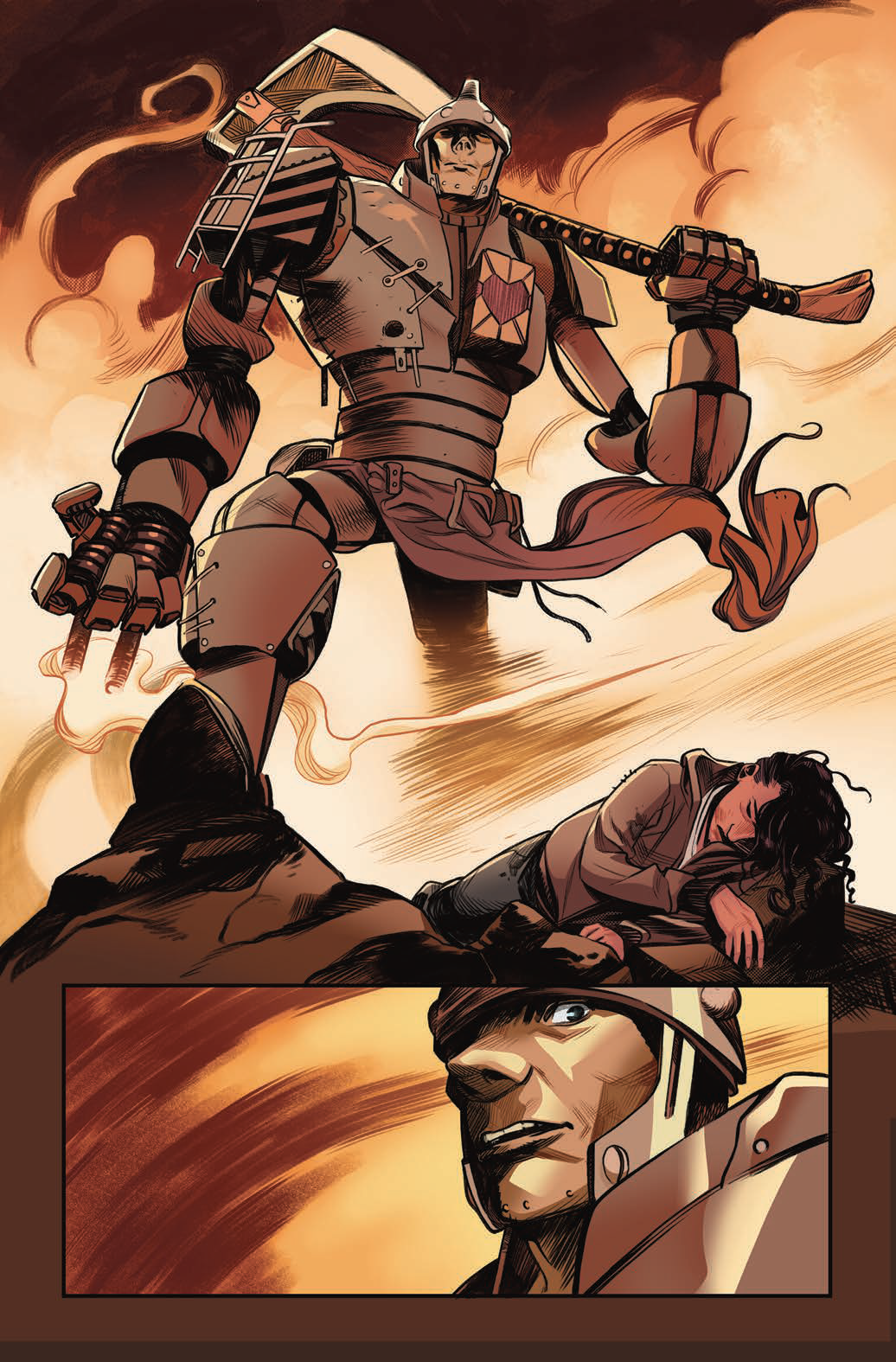
The O.Z (Art credit: Ruben Rojas)

How Ruben Rojas Redesigned the Wizard of Oz Characters

The character redesigns in The O.Z. look fantastic. The Tin Man, the Lion Prince, and even the Straw Man have some seriously sinister vibes. What were the visual directives you gave artist Ruben Rojas for these new designs?

I’m a big fan of the post-apocalyptic genre like Fallout and Mad Max, so injecting that kind of inspiration into the mix was always part of the plan. Ruben Rojas really thrives doing post-apocalyptic fantasy, so this series played to his strengths magnificently. The O.Z. is a series that’s about seeing just how drastically things can change, given enough time, so each design was meant to reflect the characters’ backstory, their strengths, and their internal conflicts.

Dorothy was the starting point, trying to lean into her background as a soldier, but with material that could conceivably be scavaged from materials from Oz. Meanwhile, the Tin Soldier was meant to be this patchwork juggernaut of salvaged steel, a product of being destroyed and rebuilt after decades of war. The Prince of Lions was meant to represent the fantasy stealth fighter, hiding behind this tribal mask while his subjects think he’s actually his father from beyond the grave.

On the other side of the war, Jack Pumpkinhead was meant to have a little more panache, a grinning killer who winds up joining the fold, drawing equal inspiration from Jack Skellington, the Green Goblin, and Magus from Chrono Trigger. And the idea of the Scarecrow being this shell of himself (meaning he’s got only half the straw he used to, having given it away to animate his cruel, faceless Strawman Army) speaks to how the war has ground him down in both mind, body, and soul.

Toto mentions that the magic of Oz gave him the ability to speak. Does this magic affect all Earth animals the same way when they cross over, or is Toto a special exception to the rule?

Y’know, I hadn’t thought about that before! I’d say yes, if you’re an Earth animal who’s spent enough time in Oz, you’ll be able to speak the lingo just like Toto.

Batman Vol. 1: Daylight
$18.59
Buy Now
We earn a commission if you make a purchase, at no additional cost to you.
06/08/2026 03:08 am GMT

Weaponizing the Magic of L. Frank Baum’s Oz

The magic of Oz behaves a bit differently here than standard fantasy tropes, like using enchanted poppies as tactical narcotics or magic fertilizer to grow emergency food supplies. How do you introduce these unique world rules to a brand-new audience without slowing down the story?

The O.Z. ultimately relies on weaponizing the imagery of L. Frank Baum’s Wizard of Oz novels, so I spent a lot of time thinking of ways to incorporate those elements, and building action sequences around them. Luckily, with Dorothy’s running narration, it’s pretty easy to roll with the references as she explains them, but I thought turning these kinds of magical elements into weapons spoke to that idea that not matter what your intentions or how many innocents you’re fighting for, war is always a corrupting force.

Dorothy builds a homemade flamethrower using Oz faeries and tactical know-how from her tours in Iraq. Walk us through the brainstorming session for that weapon. How many wild ideas did you throw at Ruben Rojas before settling on the “Faerie Flamethrower”?

Honestly, the Faerie Flamethrower was an early idea in the script. When I first pitched Ruben on The O.Z., I gave him a really detailed outline of the entire series, and we ultimately didn’t deviate much from that preliminary story roadmap. The magic of The O.Z., however, is that Ruben and I found ourselves on the same creative wavelength incredibly early. That cover for The O.Z. #1 could’ve been ripped straight from my imagination, for example. And that was such a gift, knowing that whatever crazy ideas I threw out at him, Ruben Rojas always delivered the goods. He’s a tremendous collaborator and partner, and I can’t wait to find the next project to work on together with him.
The O.Z (Art credit: Ruben Rojas)

Why a Fantasy Setting Works for Exploring Combat PTSD

The tone of the book deals heavily with the psychological reality of war, PTSD, and the difficulty of returning home to a civilian life that feels completely foreign. Why did you feel a fantasy setting was the perfect vehicle to explore these intense, real-world themes?

Sometimes, you build a book around specific themes you want to explore, while other times, the themes emerge based on the concept you envision. The O.Z. was one of those latter books. I stumbled onto the concept purely by accident: I was typing out the titles of iconic fantasy stories to see if I could find any inspiration, and my cursor got stuck in the middle of the word “Oz.” That made me think of Oz serving as an acronym, which then became “Occupied Zone” and opened up the entire war story concept.

Once that unfolded, Dorothy’s struggles with PTSD felt like exactly the kind of theme that would do this concept justice. Once upon a time, I was a newspaper reporter, and I interviewed many returning veterans and heard a lot of stories about the challenges they faced involving mental health and reintegrating back into civilian life. You see a lot of those stories in the core fabric of The O.Z., and my goal was that if I was going to explore themes that real-life people deal with every day, I wanted to do it with as compassionate and redemptive an angle as possible.
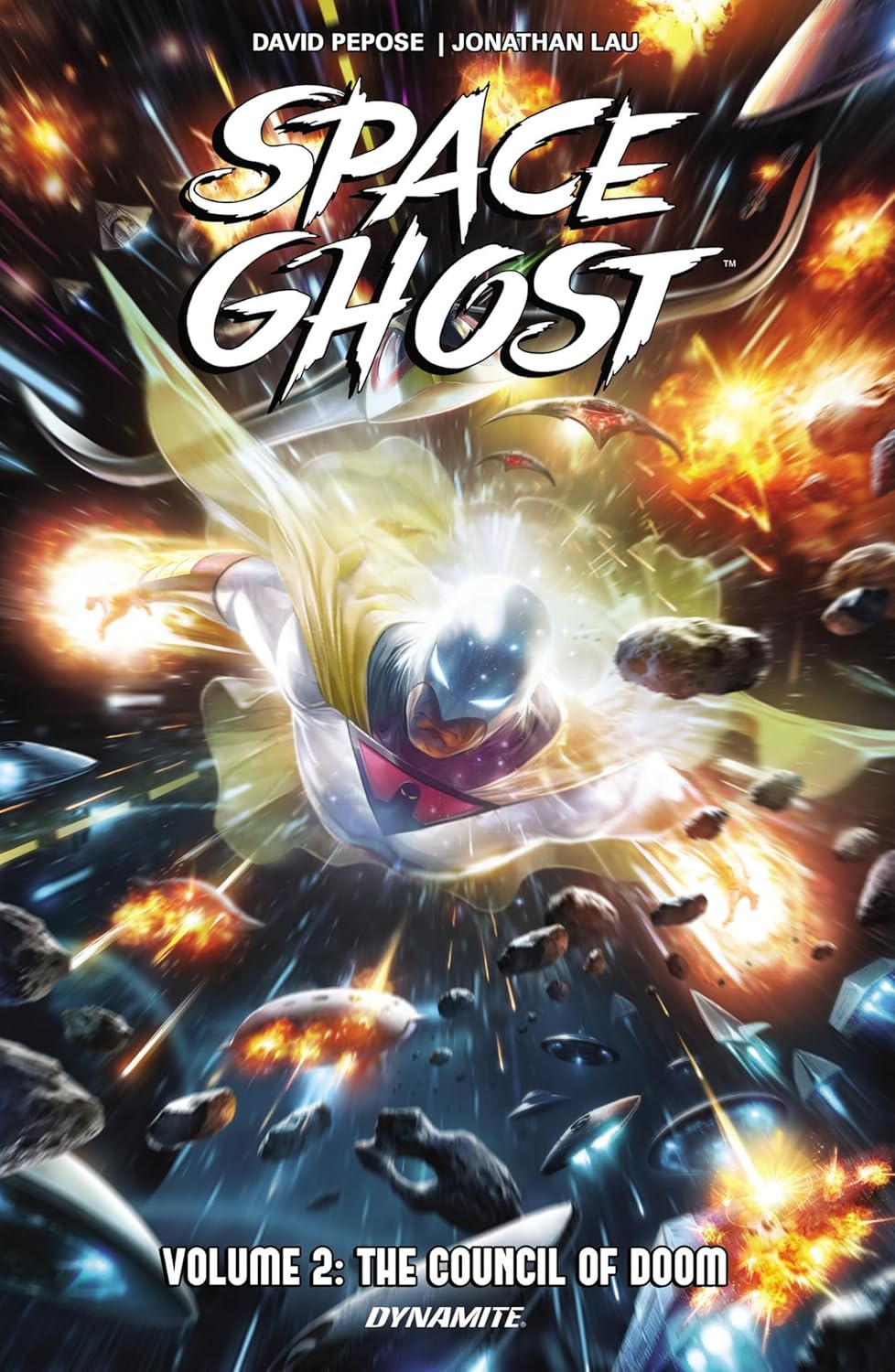
Space Ghost Vol. 2: Beware the Council of Doom (variant cover art: Francesco Mattina)

Writing Space Ghost and Speed Racer for Dynamite and Mad Cave

Moving over to your work with Dynamite Entertainment, you have been steering Space Ghost and Speed Racer, two massive cornerstones of classic animation. Do you have a personal history with these characters, and how did you land the opportunity to write them?

I’m only 40, so I certainly missed out Space Ghost and Speed Racer in their heyday. (Laughs) I grew up with Coast to Coast, but beyond reading Joe Kelly and Ariel Olivetti’s 2006 miniseries when I interned at DC, or reading bits of Jeff Parker’s FutureQuest maxiseries, I didn’t have a deep relationship with Space Ghost.

But that all changed when Dynamite approached me to see if I had any interest in writing the character, after my work on Moon Knight and Punisher. When I got the offer, I asked a few older friends what they thought about it, and they mentioned to me that Space Ghost had Adam West’s Batman deep in its DNA. That really opened up the entire concept for me. Batman has certainly changed quite a bit in tone since Adam West, and it occurred to me that Space Ghost himself has reinvented himself generationally, from the ’60s debut to the ’80s revival, to Coast to Coast and the 2006 miniseries. So I thought, why couldn’t we reinvent Space Ghost for a modern audience?

As I began watching all of the classic Space Ghost episodes, I was struck by the sheer untapped potential behind the character: the amazing design, the gadgets, the amazing found-family story to be explored with his sidekicks Jan, Jace, and Blip, and the top-tier bench of Alex Toth-designed supervillains. I’d learned a lot of lessons working at Marvel, and had a few theories of other ways to approach superheroic storytelling, so I rolled the dice and incorporated all of it into Space Ghost. As we’re heading into our third year of stories with these characters, I think the risk paid off.

Speed Racer came right on the heels of Space Ghost, thanks to Chas Pangburn and the amazing team at Mad Cave Studios. Mad Cave has been incredibly supportive of me and my work since my earliest books, and I’d had a great experience with them working on my horror series The Devil That Wears My Face with Alex Cormack.

Chas was the one who pulled me aside at San Diego Comic-Con and asked if I had any interest in Speed Racer, and as someone who adores writing car chases in comics, I told him almost immediately that I wanted in. Similar to Space Ghost, I watched every episode of Speed Racer, as well as revisited the 2008 movie. There’s something elemental and iconic about Speed not only as the world’s greatest race car driver, but this living avatar of artistic passion. As I started writing the series, it occurred to me that this series really was about my own trajectory as a comic book writer: the highs and the lows, the triumphs and the defeats, the lessons learned and the people who helped me cross the finish line. I love writing ’em both.
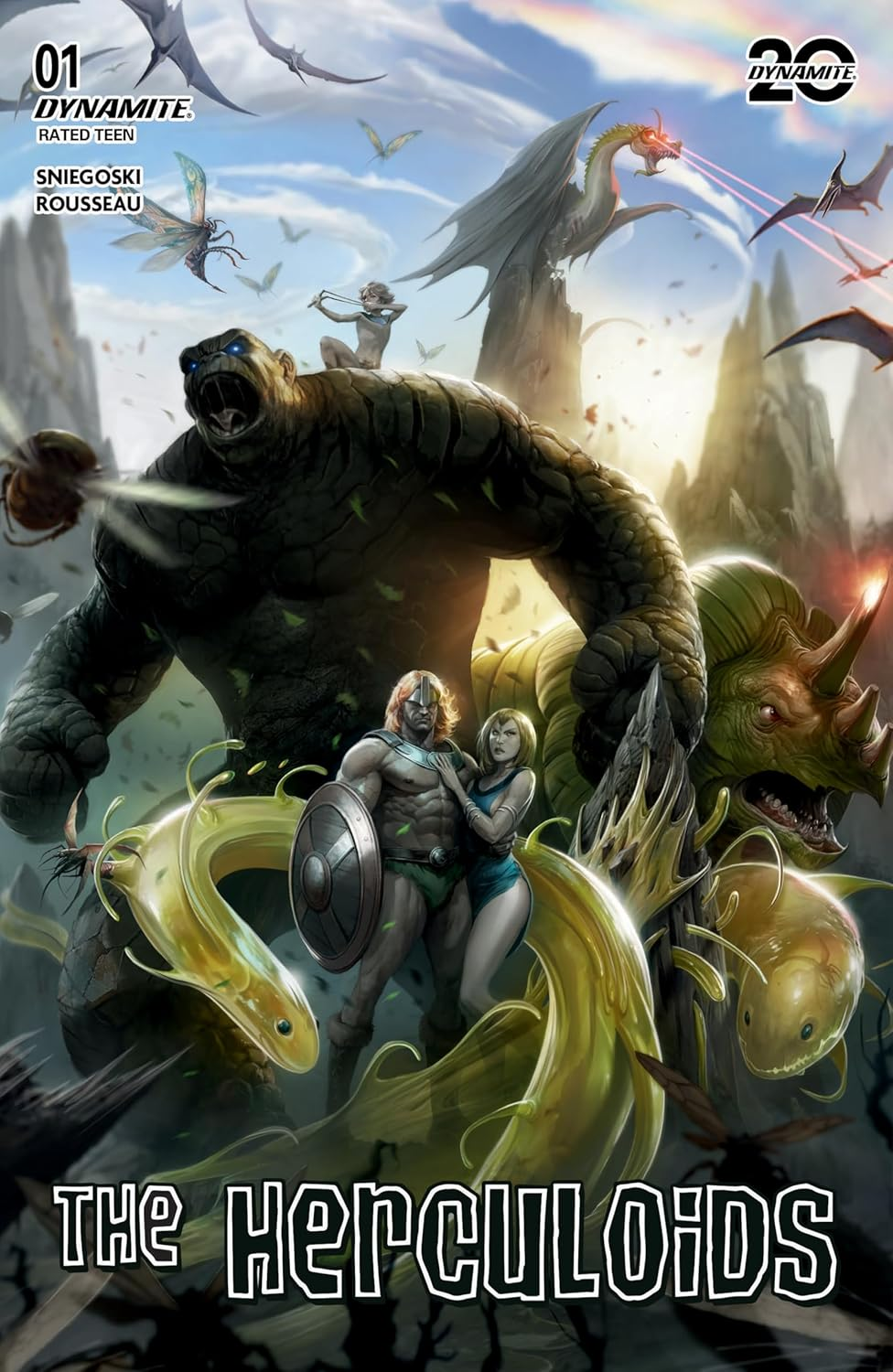
The Herculoids #1 (variant cover art: Francesco Mattina)

What to Expect from the Space Ghost and Herculoids Crossover

You recently teased a massive Space Ghost and Herculoids event coming to the July Annual. For fans of both properties, what is the specific inciting incident that forces Space Ghost into direct conflict with the Herculoids?

Given that Space Ghost has been this long-running story about a cosmic vigilante building a found family with his sidekicks, I’ve wanted to introduce him to a family from the other side of the cosmic tracks. Starting with our Space Ghost Annual, we’ll see the Herculoids make their grand debut in our series. For those who aren’t familiar, the Herculoids are the defenders of the jungle planet Amzot, comprised of the space barbarian Zandor, his formidable wife Tara, their acrobatic son Dorno, and their pack of interstellar kaiju (Zok the Star-Dragon, Igoo the mighty rock-ape, Tundro the living tank, and the protoplasms Gloop and Gleep) as they defend their planet Amzot from pirates and industrialists looking to pillage their unconquered planet.

There’s a lot of fun elements to be drawn from with that kind of high concept, but something that really caught my eye from the original cartoons were the explosive “energy rocks” that the Herculoids used as weaponry. Having watched all of the original Herculoids episodes, I wound up extrapolating a brand-new explanation of how the planet Amzot worked, turning these “energy rocks” into Quasarite, a mineral that’s infused with raw cosmic energy. Not only does Quasarite push the evolution of the wild flora and fauna of Amzot (including increasing Zandor and the Herculoids’ strength and power) but it can also power weapons, spaceships, and technology.

And that means Quasarite is valuable, which means Amzot won’t stay hidden forever. Without spoiling too much, somebody’s going to travel to Amzot in search for the Quasarite, and it’s going to put Zandor and his Herculoids on the warpath. That’s going to make for a lot of dramatic tension between Space Ghost and Zandor, one of whom is inherently a defender of the status quo, the other firmly anti-establishment. Sparks are going to fly, and it’s going to lead to our big blockbuster event kicking off in September. Like all good superhero team-ups, it’s going to take a bit for these two to get along, but at their core, these heroes are fathers who love their kids, and that common thread will eventually help them settle their differences.
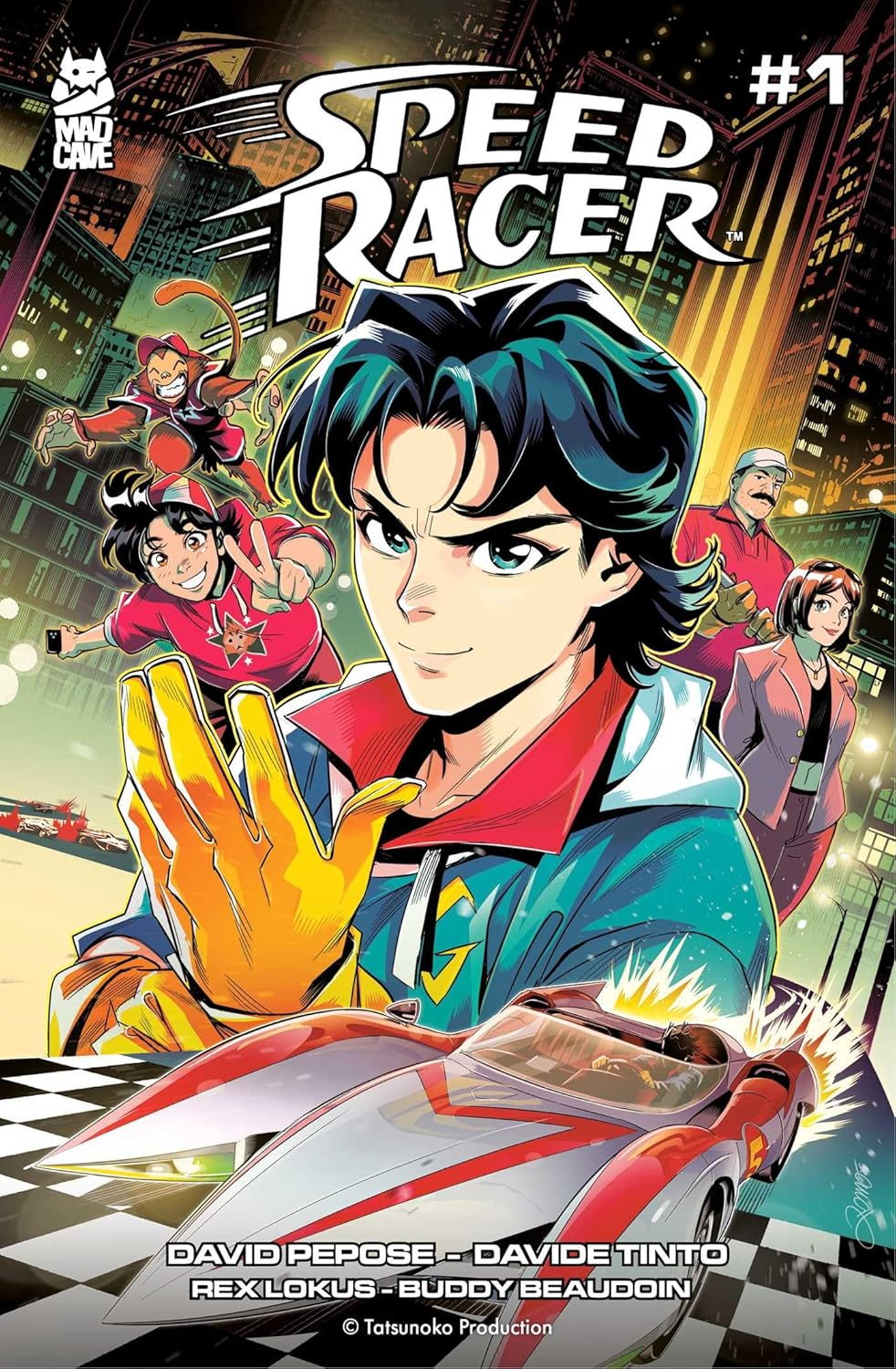
Speed Racer (cover art: Davide Tinto)

Inside the Speed Racer “Demon on Wheels” Storyline

I’m sure writing a comic based on Speed Racer requires a huge amount of kinetic energy on a static page. What can you tell us about the upcoming “Demon on Wheels” storyline, and how are you pushing the stakes for Speed in this specific arc?

Definitely, Speed Racer is probably the most technically challenging book that I write, because we’re pacing out at least one race in every issue, along with Speed’s ongoing evolution to become a Formula X champion. And “Demon on Wheels” is going to transform Speed himself into his most dangerous opponent yet.

Our storyline kicks off when Speed is accidentally exposed to an experimental street drug known as “V-Gas” — it’s been used as a performance enhancer to make drivers fearless and aggressive, but with Speed, it’s going to fully unleash his darkest impulses. This story is going to follow Trixie, Racer X, and the rest of Speed’s supporting cast, as they try to pull him back from the brink before it’s too late — and before he does something he can’t take back.

Oh, and did I mention Issue #10 is going to be set in the heart of an active volcano? We’ve got lots of fun stuff coming for Speed and company, but this storyline is one of my favorites to date, because it really stress-tests all the relationships we’ve been developing over the course of our series. Speed Racer really is an ensemble drama to me, and we’ll see everyone trying to intervene with Speed in really interesting ways.

Batman Vol. 1: Daylight
$18.59
Buy Now
We earn a commission if you make a purchase, at no additional cost to you.
06/08/2026 03:08 am GMT

Balancing Gritty Indie Comics with Classic Cartoon Nostalgia

Between a gritty, trauma-informed military fantasy like The O.Z., a cosmic space opera like Space Ghost, Race Racer, and many more projects, your desk probably looks pretty chaotic. What is the literal transition process like when you finish writing a dark panel about war trauma and immediately switch gears to say Mach Five races?

Luckily, I finished writing The O.Z. many years ago, so my involvement at the moment has just been overseeing production. But I think you bring up a great question. For me personally, I actually prefer juggling projects that each have a unique tone, versus doubling-up on any particular tone or genre. The times I’ve done that in the past have been really exhausting, because you’re trying to make sure books with similar vibes aren’t outright repeating themselves. Tackling a sci-fi superhero like Space Ghost versus a larger-than-life sports drama like Speed Racer versus a fantasy war series like The O.Z. feels like different creative muscle groups to me, which gives each part of my brain a chance to rest and recharge in between scripts.

Whether it is turning Oz into a combat zone or giving classic cartoon heroes modern depth, you have a real knack for updating nostalgic properties. What is your golden rule for honoring the original fan base while still making the story feel urgent for today’s audience?

Thank you so much for the kind words! My golden rule is that there’s nothing broken about the source material, and you should always be drawing from it whenever possible. There’s clearly a reason these stories have endured all this time, so you’ve got to learn the landmarks and lean into those strengths. This is a rule I’ve had since my very first book with Spencer & Locke, and it’s really served well. I don’t think there’s anything wrong with modernizing or even subverting an iconic property, as long it’s clear that you’re a fan and you’re doing it with a level of respect for what came before.

There’ll always be the occasional purist who wants things exactly as they remember it, but I think it’s ultimately a no-win scenario to try to perfectly mimic what’s come before. I’ve been very heartened over the course of my career to see that the overwhelmingly vast majority of readers are open for reinterpretation of these concepts. It’s a little bit like how many comic fans felt once Hollywood started making movies: I think fans of these properties are excited or even flattered to see that somebody’s remembered them, and that they’re going the extra mile to add a fresh coat of polish to their favorite childhood stories.
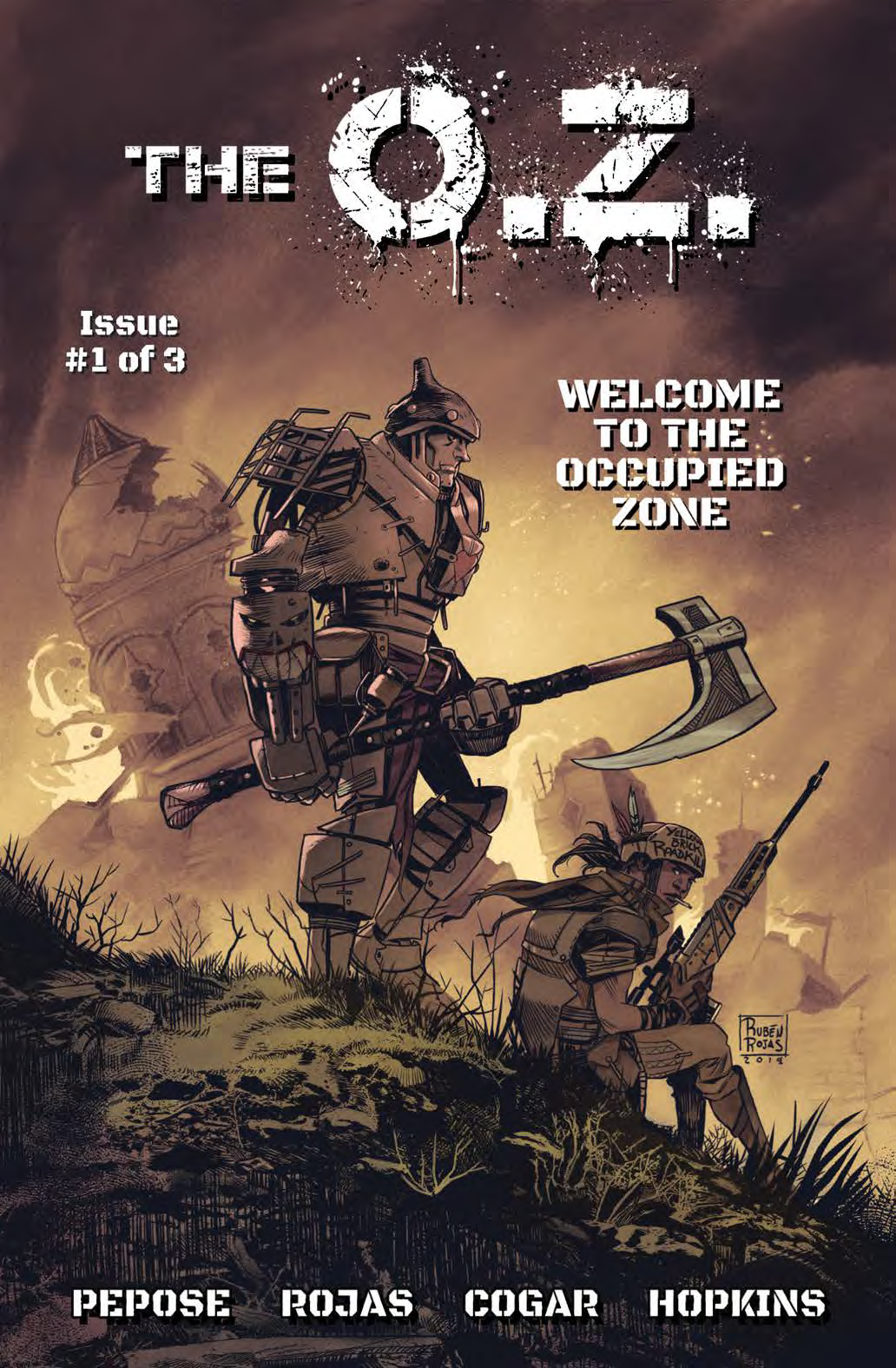
The O.Z (Art credit: Ruben Rojas)

How to Back The O.Z. Vol. 3 Final Chapter on Kickstarter

With the third and final volume hitting Kickstarter on Monday, June 8th, is this a project where a new reader can jump right in from the beginning? And will there be any kinds of catch-up options available to them?

Yes, our new Kickstarter for The O.Z. is absolutely perfect for newcomers and returning fans alike! This Kickstarter is for our third and final issue, so you’ll be able to get all three issues in print and digital, or you can add either of the previous issues to your order individually. We’ll also have the trade paperbacks of all my other series, everything from Spencer & Locke and Savage Avengers to Space Ghost and Speed Racer, available as individual add-ons or in discounted bundles.

Will there be any campaign-exclusive physical rewards for this final run, such as variant covers by guest artists, behind-the-scenes scripts, or production sketches from Ruben Rojas, that fans will not be able to get anywhere else later?

Definitely! Every reward tier on the Kickstarter will include our digital behind-the-scenes materials, so you’ll get to read my scripts, see Ruben Rojas’ raw inks, as well as Whitney Cogar’s unlettered colors. We’ll also have a variety of stretch goal rewards that we’re very much looking forward to unveiling, including a fully-drawn map of the Occupied Zone by artist Kenneth Wagnon, a brand-new “closing credits” song by George Marston, new bookmarks and enamel pins from Ruben Mocho, Rio Burton, and Promistyx, as well as some extra-special enhancements to the book itself. 

Batman Vol. 1: Daylight
$18.59
Buy Now
We earn a commission if you make a purchase, at no additional cost to you.
06/08/2026 03:08 am GMT

The Legacy of The O.Z. and Future Comic Projects

If Dorothy Gale, Space Ghost, and Speed Racer all walked into a bar, who starts the fight, who tries to de-escalate it, and who is stuck leaving with the tab?

Speed definitely starts the fight with Space Ghost, but Dorothy’s the one who finishes it. Unfortunately, Speed’s broke, so he’s not paying anybody’s tab, and Space Ghost’s credits don’t wind up translating to any local bars. Luckily, Dorothy’s able to pay the tab with Munchkin gold.

Beyond the successful funding of this final volume, what do you hope the ultimate legacy of The O.Z. will be for readers?

The O.Z. is a book that’s truly special to me, because it stretches back to the very beginnings of my career, while it’s finally ending with me as a more experienced, seasoned writer. I love looking back at our earlier issues and seeing the kind of scrappiness and recklessness I brought as a writer, who had no idea what he was doing or any concept of the future that laid ahead of him, and it all still holds up. The O.Z. is a massive swing from me, Ruben Rojas, Whitney Cogar, and DC Hopkins, and I think it really does represent some of our best work.

Where is the absolute best place for readers to follow you online, stay updated on your upcoming Space Ghost and Speed Racer arcs, and jump directly onto the campaign on June 8th?

You can follow me on Twitter, Instagram, and Bluesky at peposed, or on Facebook at davidpeposecomics — and you can sign up for The O.Z.’s Kickstarter at tinyurl.com/TheOZComic!
Share:

Comments

Leave the first comment

<!-- if comments are disabled for this post then hide comments container -->
<style> 
<?php if(!comments_open()) { echo "#nfps-comments-container {display: none !important;}"; }?>
</style>