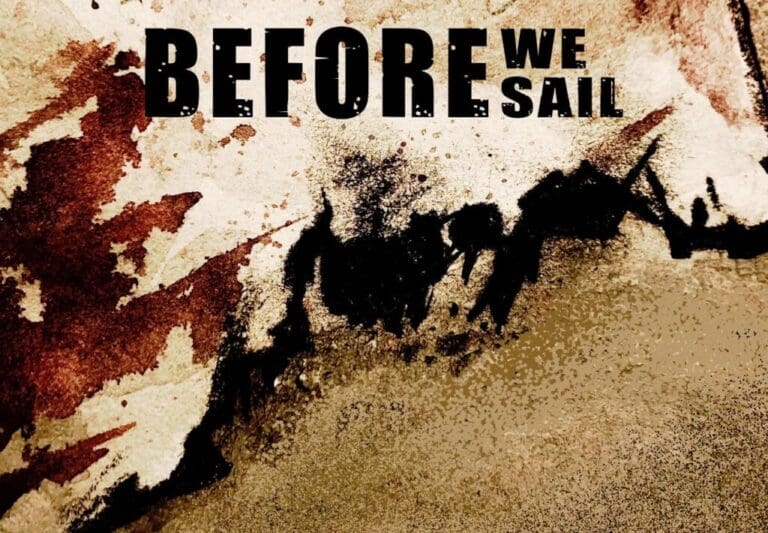
In the gritty comic Before We Sail, creator Carlos Yacolca and artist Michelle Lino present a poignant and often brutal vision of a post-apocalyptic Lima, Peru. The story follows protagonists Jonathan and Kath as they desperately try to escape a ravaged city to find safety at sea.
This comic, Yacolca’s writing debut, tackles complex themes. At its core, the story is an exploration into mental state, with the zombie apocalypse serving as a background element. In our interview, Yacolca revealed that the story is heavily influenced by his past struggles with depression and the feeling of living in a country with “no future.” He aimed to approach these themes with realism, avoiding the pitfalls of a “self-help book.” The narrative uses a unique tool: letters written by the protagonist, Jonathan. These letters serve as an internal monologue, offering insight into his thoughts and feelings without explicitly explaining events.
The series is featured in the weekly comic anthology, Aces Weekly, which is edited by the renowned artist David Lloyd. We sat down with Carlos Yacolca to discuss the series, his inspiration, and his passion for the medium.
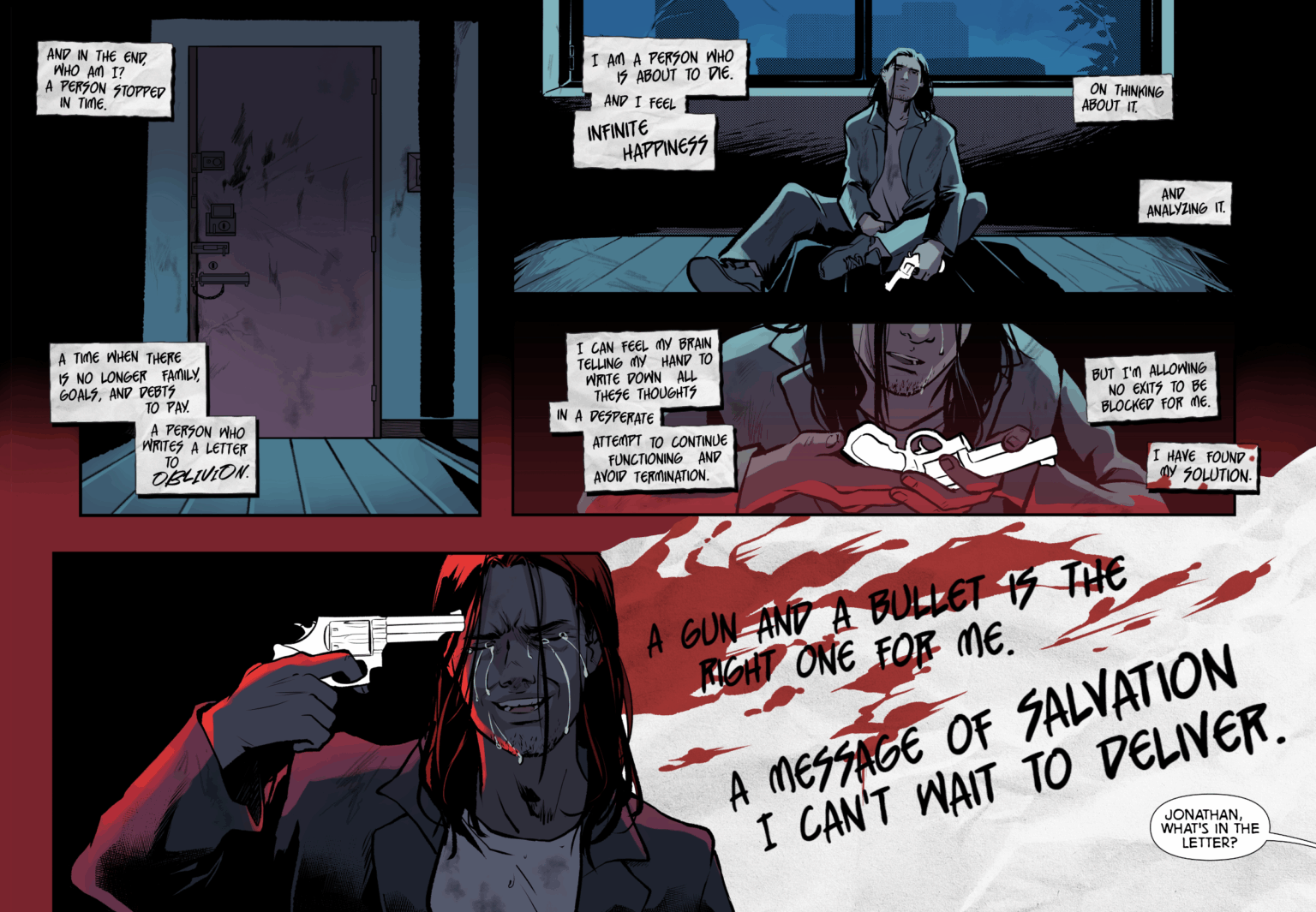
Aces Weekly
Phillip Creary: So I’ve read the first four chapters of Before We Sail, and I want to talk about the core themes. You’ve mentioned drawing from your own experiences with mental health, and that the story is about a mental state. How do you integrate these mental health themes into a story about zombies?
Carlos Yacolca: Well, I think about my own struggles with depression, especially when I was 18 or 19. During those times, my brain couldn’t stop thinking, and that overthinking brought more problems. Now, in a much better mental state, I analyze those feelings, which is what I wanted to do with this comic. I wanted to approach these feelings as a person who has already been through that “war in his head” and is now in check.
I’m a little hesitant when I see other writers handle mental health topics in a way that feels too much like a self-help book. To avoid that, I’ve studied how self-help books are structured. The two comics I believe have really nailed the portrayal of mental problems and how the brain works without being preachy are a series, Asterios Polyp, by Mazzucchelli—who worked with Frank Miller—and Clyde Vents by Seth. These comics analyze how the brain works and how mental problems affect people without giving you an easy answer like, “Hey, everything’s going to be okay”. They also explore how different environments and cultures can affect a person’s development. That’s the core of the story, with the zombie apocalypse as a sub-level or a background force of nature.
PC: That’s a great approach. So, as a Peruvian writer, do you feel that your background and culture influenced the themes, characters, or tone of Before We Sail?
Carlos Yacolca: The comic is set in Lima, and it features places from the city because I know them. It was just easier for me to use locations I was familiar with. But I didn’t write it to represent Peru. I don’t feel a strong connection to the society and people of Lima. To be honest, living in Peru is very complicated. The main influence Peru had on the comic is the feeling of a lack of advancement in the country, culture, and society. It’s a feeling of stagnation, of no future.
PC: So you’ve stated that comics are the greatest art form for communication. Could you elaborate on that?
Carlos Yacolca: Comics are a place where art can experiment and produce fresh ideas because you don’t need a huge budget or a mass audience to make them. They are often at the forefront of avant-garde and punk movements, tackling radical ideas and things other mediums can’t. Alan Moore has a paper on why comics are the art of the working class, and he analyzes how the working class has historically been the one to create comics. It’s a medium for people who want to fight back and express bigger ideas. Comics are a melting pot of people who want to make a change.
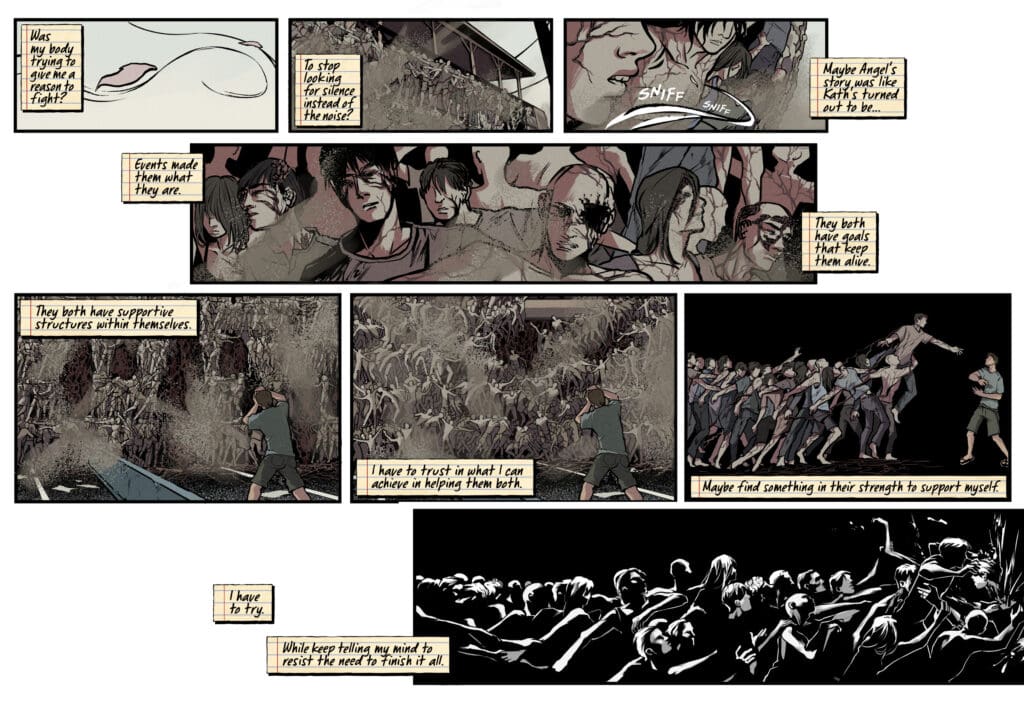
Aces Weekly
PC: This is your comic writing debut. What were some of your biggest challenges, and how did you overcome them?
Carlos Yacolca: This is not only my comic debut, but my writing debut in general. The process for Before We Sail has been very intense. It started in February 2023, and I had to be very careful because I was working with great figures in the industry like David Lloyd. I took my time to write the comic as perfectly as I could.
The pitching process alone took about a year. I would send my work to the editor for approval, get feedback from him, then send it to David Lloyd, who would also provide feedback. The writing was even more challenging. I had to write the scripts, and Lloyd would give me feedback, so I would have to change and re-evaluate things. I had to learn how to see the story from different perspectives. I think I was able to handle this because I was in a more stable mental state. I knew I wasn’t a perfect writer yet, but I was willing to rewrite the script as many times as it took to make it the best I could.
PC: What is one thing that surprised you the most during the creation of Before We Sail?
Carlos Yacolca: The biggest surprise for me was in Chapter 5. At that point, I felt more capable as a writer, and the story was already established. I sat down and wrote five pages of the chapter, and I thought, “How can I write this to make it perfect?” I ended up writing five different versions of the pages, chose the best one, and sent it. When I got the feedback, there weren’t many changes. I was surprised but happy because it showed that I was getting better at my craft.
PC: What do you hope readers will take away from the comic?
Carlos Yacolca: There are two things. First, as a writer, I want this comic to be my introduction to the world, to show who I am, what my ideas are, and what I plan to do next. I want to prove that I can write in a “dead” and “overpopulated” genre like zombie stories and make something that stands out. This is my “EP,” and I plan on making an “album” next.
Second, I hope the comic conveys a message about the need to create new ways of communication and a better future. It’s a cry for help. I believe the world has to change, and art and comics are ways to communicate that change.
PC: If you had to survive a zombie apocalypse, what three items would you absolutely have and why?
Carlos Yacolca: I would have a knife, a rope, and a bundle of comics. The knife and rope are very basic and useful. With the rope, I can tie things, and with the knife, I can cut things. The comics would serve as a form of protection from zombie bites.
PC: That’s a very smart and creative answer. Thank you so much for your time, Carlos. It was a pleasure.
Carlos Yacolca: Thank you. It was a pleasure talking to you.
And that concludes our conversation with Carlos Yacolca. Be sure to check out Before We Sail, available now.