‘V for Vendetta’ Graphic Novel Review

‘V for Vendetta’ Graphic Novel Review: Why V for Vendetta Still Matters

Neil King | June 24, 2025

June 24, 2025

{acf_comic_author_date}

Alan Moore and David Lloyd’s V for Vendetta stands as a monumental achievement in the realm of graphic novels, a work that transcends its medium to offer a chillingly prescient and deeply philosophical exploration of power, freedom, and the human spirit. First serialized in the early 1980s and later collected, this dystopian masterpiece is not just a thrilling story but a profound meditation on the cycles of oppression and rebellion, the nature of identity, and the enduring power of ideas. Its relevance, far from diminishing, seems only to grow with each passing decade, making it a timeless cornerstone of politically charged fiction.

The story unfolds in a near-future, post-nuclear Britain, now under the iron fist of a totalitarian, neo-fascist regime known as Norsefire. The world outside London is implied to be a wasteland, and within the city, every aspect of life is meticulously controlled by the “Finger,” “Eye,” “Ear,” and “Voice” of the state. Into this suffocating environment steps V, an enigmatic, anarchist revolutionary concealed behind a Guy Fawkes mask. V is a theatrical, highly intelligent, and relentlessly violent figure who embarks on a meticulously planned campaign to dismantle the government brick by brick, symbol by symbol. His path intertwines with that of Evey Hammond, a timid young woman he rescues from the state’s secret police. Evey’s journey from an innocent bystander to a crucial participant in V’s grand design forms the emotional core of the series, serving as the reader’s proxy in confronting the moral complexities of V’s methods.
DC Comics

At its heart, V for Vendetta is an intricate tapestry of interconnected themes. Anarchy, perhaps the most overt, is presented not as chaos but as a philosophical ideal—the absence of coercion, a space for true individual liberty. Moore masterfully contrasts this with the totalitarian control exerted by Norsefire, highlighting how the suppression of dissent, the manipulation of truth, and the enforcement of conformity lead to a society devoid of genuine humanity. The graphic novel forces readers to grapple with difficult questions: Is violence ever justified in the pursuit of freedom? Does the end truly justify the means? V’s unwavering belief in the “idea” being bulletproof and his willingness to commit horrific acts in its service sparks continuous debate, ensuring the narrative resonates long after the final page is turned.

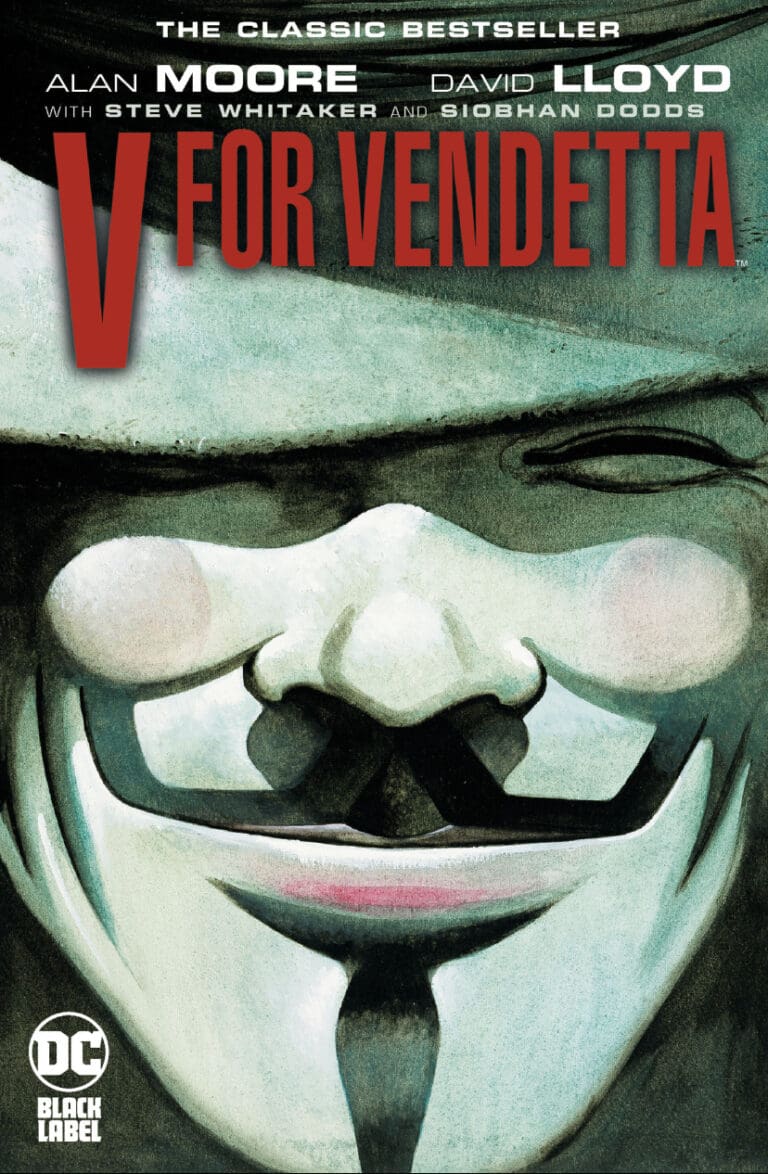
Identity is another powerful thread woven throughout the story. V, with his unchanging mask, becomes a symbol rather than a man, an embodiment of an idea. His personal history is fragmented, his true face never revealed, underscoring the notion that anyone can become “V” if they embrace the philosophy. Evey’s own transformation is equally significant; stripped of her past, her fears, and her preconceived notions, she is forced to confront her true self, ultimately emerging as a character profoundly altered by V’s radical teachings. The mask itself is a potent symbol—it conceals the individual but reveals the collective spirit of defiance.
DC Comics

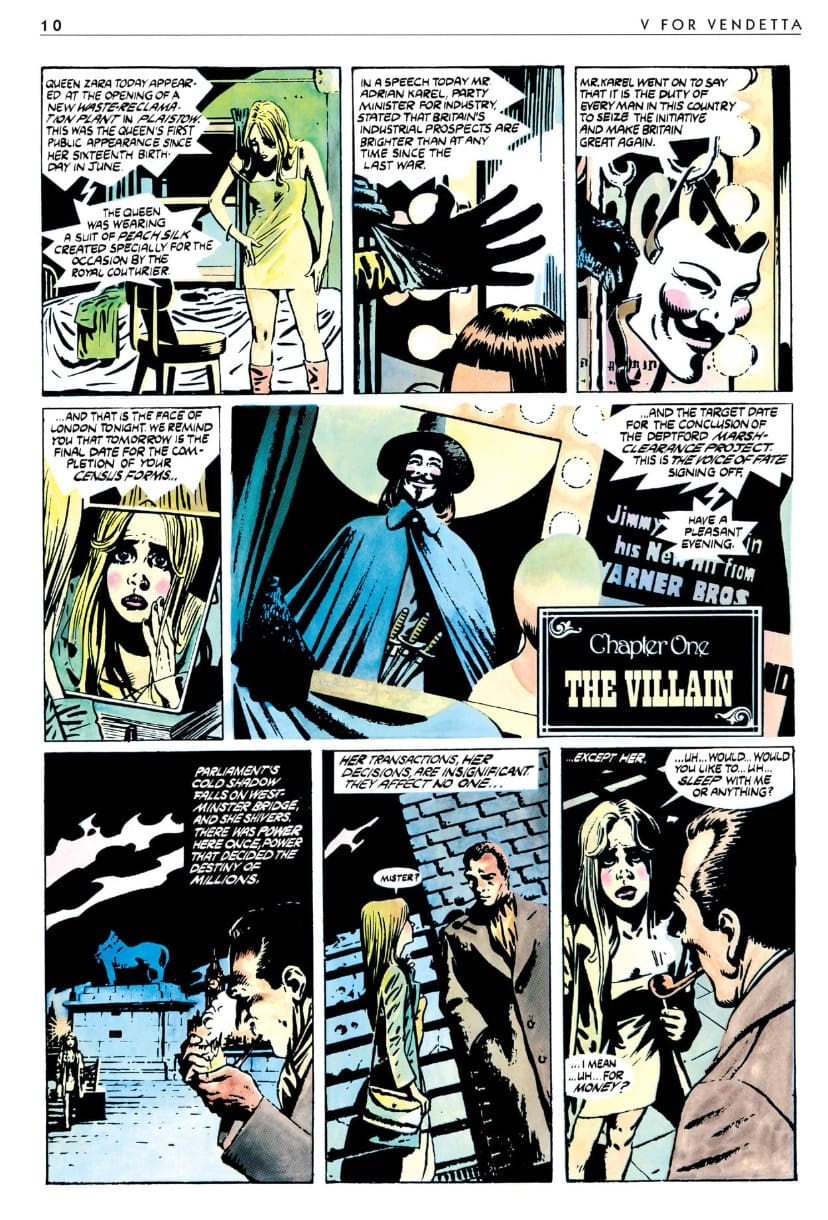
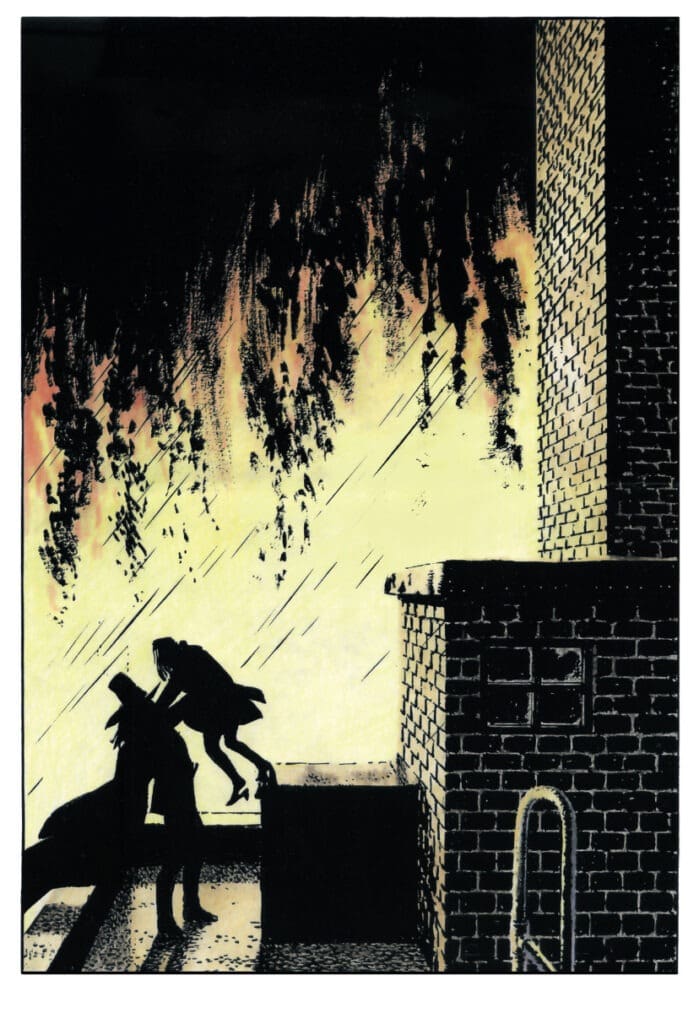
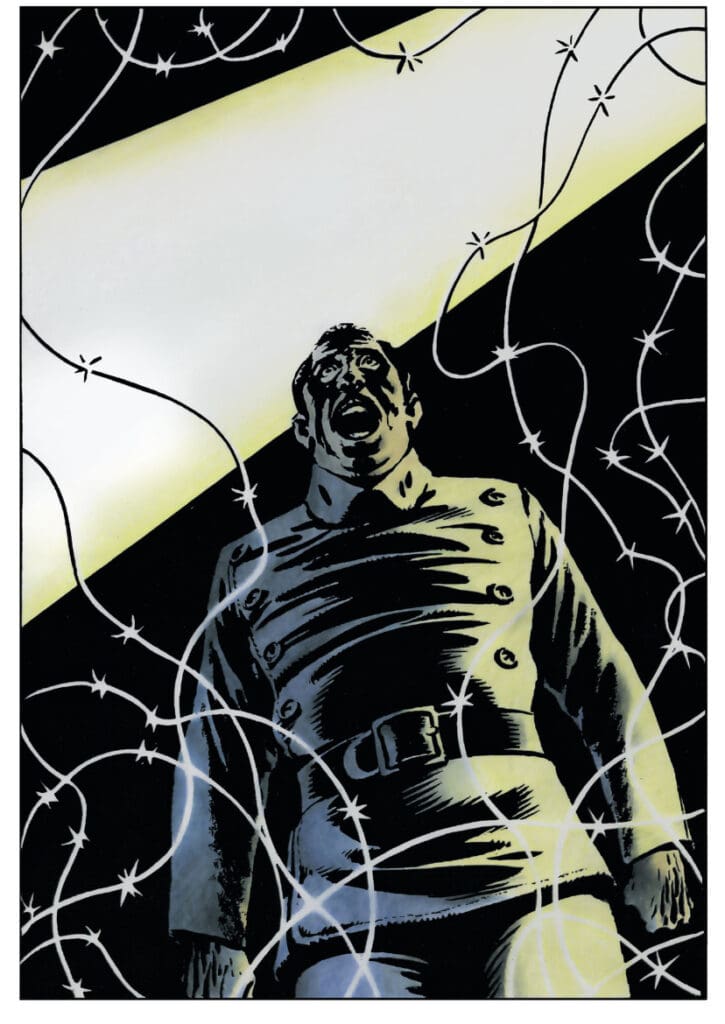
David Lloyd’s distinctive black-and-white artwork is indispensable to the novel’s power. His stark, often shadowy visuals perfectly capture the grim, oppressive atmosphere of Norsefire’s Britain. The absence of color intensifies the sense of moral ambiguity and desperation, emphasizing the stark contrasts between light and dark, freedom and tyranny. Lloyd’s character designs, particularly the iconic V mask, are instantly recognizable and contribute immensely to the graphic novel’s lasting cultural impact. The panel layouts are dynamic, often shifting to convey psychological states or accelerate the pace of action, while his use of close-ups on faces (except V’s) expertly communicates emotion and inner turmoil.

The symbolism in V for Vendetta is rich and layered. Beyond the Guy Fawkes mask, which has become a global emblem of protest, the recurring motif of roses (particularly the “Scarlet Carson” variety) serves as V’s calling card, symbolizing beauty, memory, and the deadly elegance of his retribution. The use of classical music, particularly Tchaikovsky’s 1812 Overture, is not merely background but an integral part of V’s theatrical terrorism, adding a layer of ironic grandeur to his destructive acts. Even the naming conventions, like the government departments (e.g., “The Head” for the leader, “The Nose” for surveillance), are imbued with a sense of the absurd and dehumanizing nature of the regime.
DC Comics

V for Vendetta‘s enduring relevance is undeniable. Written during the Cold War era and Thatcherite Britain, its critique of authoritarianism, media manipulation, and the erosion of civil liberties remains acutely pertinent in today’s global political landscape. It serves as a stark reminder of the dangers of complacency in the face of creeping fascism and the importance of individual resistance. While some may debate the morality of V’s actions, few can deny the compelling nature of his ideological struggle against a system that has robbed its citizens of their dignity and freedom.

V for Vendetta is a masterwork of sequential art, a challenging, thought-provoking, and visually stunning series that continues to provoke discussion and inspire action. It is more than just a story of a masked vigilante; it is a profound philosophical treatise wrapped in a captivating thriller. Moore and Lloyd crafted a timeless fable about the delicate balance between order and chaos, the corrupting influence of power, and the eternal flame of rebellion that, once ignited, can never truly be extinguished.

‘V for Vendetta’ Graphic Novel Review: Why V for Vendetta Still Matters

V for Vendetta is a masterwork of sequential art, a challenging, thought-provoking, and visually stunning series that continues to provoke discussion and inspire action. It is more than just a story of a masked vigilante; it is a profound philosophical treatise wrapped in a captivating thriller. Moore and Lloyd crafted a timeless fable about the delicate balance between order and chaos, the corrupting influence of power, and the eternal flame of rebellion that, once ignited, can never truly be extinguished.
AMAZON
BUY NOW
‘V for Vendetta’ Graphic Novel Review

‘V for Vendetta’ Graphic Novel Review: Why V for Vendetta Still Matters

June 24, 2025

{acf_comic_author_date}

Alan Moore and David Lloyd’s V for Vendetta stands as a monumental achievement in the realm of graphic novels, a work that transcends its medium to offer a chillingly prescient and deeply philosophical exploration of power, freedom, and the human spirit. First serialized in the early 1980s and later collected, this dystopian masterpiece is not just a thrilling story but a profound meditation on the cycles of oppression and rebellion, the nature of identity, and the enduring power of ideas. Its relevance, far from diminishing, seems only to grow with each passing decade, making it a timeless cornerstone of politically charged fiction.

The story unfolds in a near-future, post-nuclear Britain, now under the iron fist of a totalitarian, neo-fascist regime known as Norsefire. The world outside London is implied to be a wasteland, and within the city, every aspect of life is meticulously controlled by the “Finger,” “Eye,” “Ear,” and “Voice” of the state. Into this suffocating environment steps V, an enigmatic, anarchist revolutionary concealed behind a Guy Fawkes mask. V is a theatrical, highly intelligent, and relentlessly violent figure who embarks on a meticulously planned campaign to dismantle the government brick by brick, symbol by symbol. His path intertwines with that of Evey Hammond, a timid young woman he rescues from the state’s secret police. Evey’s journey from an innocent bystander to a crucial participant in V’s grand design forms the emotional core of the series, serving as the reader’s proxy in confronting the moral complexities of V’s methods.

DC Comics

At its heart, V for Vendetta is an intricate tapestry of interconnected themes. Anarchy, perhaps the most overt, is presented not as chaos but as a philosophical ideal—the absence of coercion, a space for true individual liberty. Moore masterfully contrasts this with the totalitarian control exerted by Norsefire, highlighting how the suppression of dissent, the manipulation of truth, and the enforcement of conformity lead to a society devoid of genuine humanity. The graphic novel forces readers to grapple with difficult questions: Is violence ever justified in the pursuit of freedom? Does the end truly justify the means? V’s unwavering belief in the “idea” being bulletproof and his willingness to commit horrific acts in its service sparks continuous debate, ensuring the narrative resonates long after the final page is turned.

Identity is another powerful thread woven throughout the story. V, with his unchanging mask, becomes a symbol rather than a man, an embodiment of an idea. His personal history is fragmented, his true face never revealed, underscoring the notion that anyone can become “V” if they embrace the philosophy. Evey’s own transformation is equally significant; stripped of her past, her fears, and her preconceived notions, she is forced to confront her true self, ultimately emerging as a character profoundly altered by V’s radical teachings. The mask itself is a potent symbol—it conceals the individual but reveals the collective spirit of defiance.

DC Comics

David Lloyd’s distinctive black-and-white artwork is indispensable to the novel’s power. His stark, often shadowy visuals perfectly capture the grim, oppressive atmosphere of Norsefire’s Britain. The absence of color intensifies the sense of moral ambiguity and desperation, emphasizing the stark contrasts between light and dark, freedom and tyranny. Lloyd’s character designs, particularly the iconic V mask, are instantly recognizable and contribute immensely to the graphic novel’s lasting cultural impact. The panel layouts are dynamic, often shifting to convey psychological states or accelerate the pace of action, while his use of close-ups on faces (except V’s) expertly communicates emotion and inner turmoil.

The symbolism in V for Vendetta is rich and layered. Beyond the Guy Fawkes mask, which has become a global emblem of protest, the recurring motif of roses (particularly the “Scarlet Carson” variety) serves as V’s calling card, symbolizing beauty, memory, and the deadly elegance of his retribution. The use of classical music, particularly Tchaikovsky’s 1812 Overture, is not merely background but an integral part of V’s theatrical terrorism, adding a layer of ironic grandeur to his destructive acts. Even the naming conventions, like the government departments (e.g., “The Head” for the leader, “The Nose” for surveillance), are imbued with a sense of the absurd and dehumanizing nature of the regime.

DC Comics

V for Vendetta‘s enduring relevance is undeniable. Written during the Cold War era and Thatcherite Britain, its critique of authoritarianism, media manipulation, and the erosion of civil liberties remains acutely pertinent in today’s global political landscape. It serves as a stark reminder of the dangers of complacency in the face of creeping fascism and the importance of individual resistance. While some may debate the morality of V’s actions, few can deny the compelling nature of his ideological struggle against a system that has robbed its citizens of their dignity and freedom.

V for Vendetta is a masterwork of sequential art, a challenging, thought-provoking, and visually stunning series that continues to provoke discussion and inspire action. It is more than just a story of a masked vigilante; it is a profound philosophical treatise wrapped in a captivating thriller. Moore and Lloyd crafted a timeless fable about the delicate balance between order and chaos, the corrupting influence of power, and the eternal flame of rebellion that, once ignited, can never truly be extinguished.
‘V for Vendetta’ Graphic Novel Review: Why V for Vendetta Still Matters

V for Vendetta is a masterwork of sequential art, a challenging, thought-provoking, and visually stunning series that continues to provoke discussion and inspire action. It is more than just a story of a masked vigilante; it is a profound philosophical treatise wrapped in a captivating thriller. Moore and Lloyd crafted a timeless fable about the delicate balance between order and chaos, the corrupting influence of power, and the eternal flame of rebellion that, once ignited, can never truly be extinguished.
Share:

Comments

Leave the first comment

<!-- if comments are disabled for this post then hide comments container -->
<style> 
<?php if(!comments_open()) { echo "#nfps-comments-container {display: none !important;}"; }?>
</style>