
‘Alien: Earth’ Episodes 1-2 Review

‘Alien: Earth’ Episodes 1-2 Review: Welcome to Earth

Chris Parker Jr | August 14, 2025

August 14, 2025

{acf_comic_author_date}

The original Alien movie remains a masterpiece of science fiction horror, blending bone-deep terror with unsettling reflections on humanity. Its xenomorphs are more than monsters; they are invasive forces of pure consumption, their relentless hunger standing in stark opposition to human warmth and hope.

And within the first minutes of Alien: Earth, it becomes clear that showrunner Noah Hawley, known for FX’s Fargo, has created a series that serves as a thoughtful homage to the strongest elements of the original films, capturing their tension, atmosphere, and inventive horror while establishing its own identity within the franchise.

The year is 2120, an ideal backdrop for a series that taps into the unsettling fear that future generations will inherit a world resembling hell. Opening with simple green-on-black text styled like an old computer readout, the show immediately sets a retro yet ominous tone. In this fractured future, corporations rule the universe, and ultimate dominance hinges on a chilling “race for immortality,” with three competing paths: cyborgs (enhanced humans), synths (entirely artificial beings), and hybrids (synthetic bodies housing transplanted human consciousness).

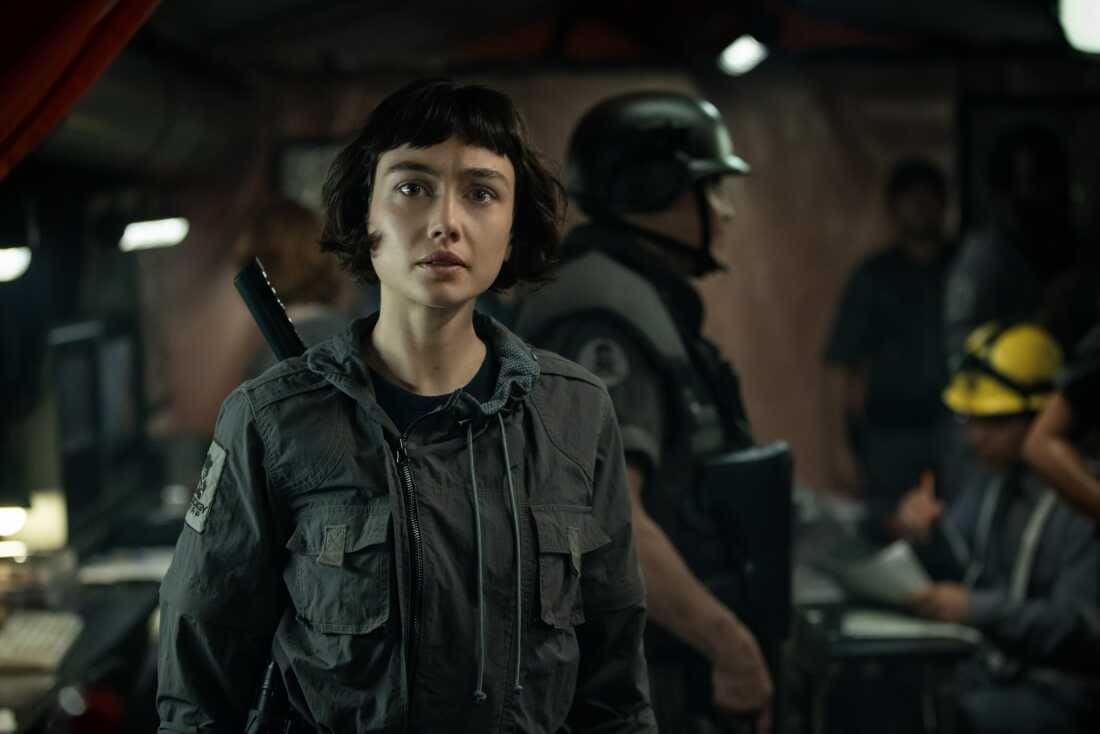
In the first episode, the focus falls on hybrids, with the infamous flesh-ripping aliens appearing only in brief, almost subliminal flash-forwards. At Neverland, the laboratory complex of the trillion-dollar startup Prodigy, a terminally ill girl lies beside an inert adult figure she calls Wendy. Following a groundbreaking procedure, her consciousness is transferred from her failing body into a fully lifelike synthetic woman. This new being, Wendy (Sydney Chandler), becomes the first hybrid and soon leads a group of child-robot soldiers under the guidance of the enigmatic Kirsh, portrayed by Timothy Olyphant with striking bleach-blond hair, a chillingly soft-spoken voice, and an unsettling presence that hints at deeper mysteries.
Disney+

In space, a crew of humans takes on a perilous job under troubling working conditions. Their supervisor, a humorless cyborg named Morrow (Babou Ceesay), adds to the tension, but the real danger comes from their cargo: captured alien life-forms stored in fragile glass containers. When the creatures inevitably escape, they slaughter the crew, leaving only the self-preserving Morrow, who grimly pilots the spaceship toward Earth to complete his mission for the wealthy and ruthless Weyland-Yutani Corporation.

As the spaceship collides with the rubble of a towering urban building, a Prodigy search-and-rescue team arrives, led by Alex Lawther as the medic Hermit, revealed to be Wendy’s long-lost brother. With the monsters finally unleashed, the series diverges from the traditional Alien formula, as the human and humanoid characters are not trapped in a claustrophobic vessel. Alien: Earth instead generates its bone-deep dread through inventive tension and atmosphere, finding new ways to terrify outside the confines of the classic franchise’s enclosed spaces.

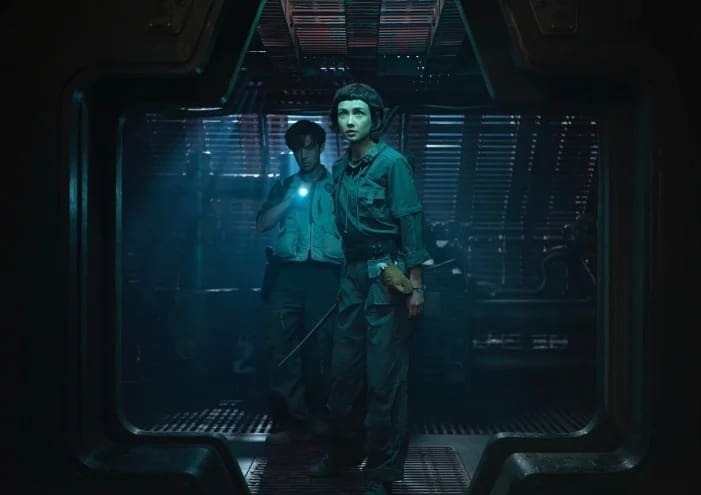
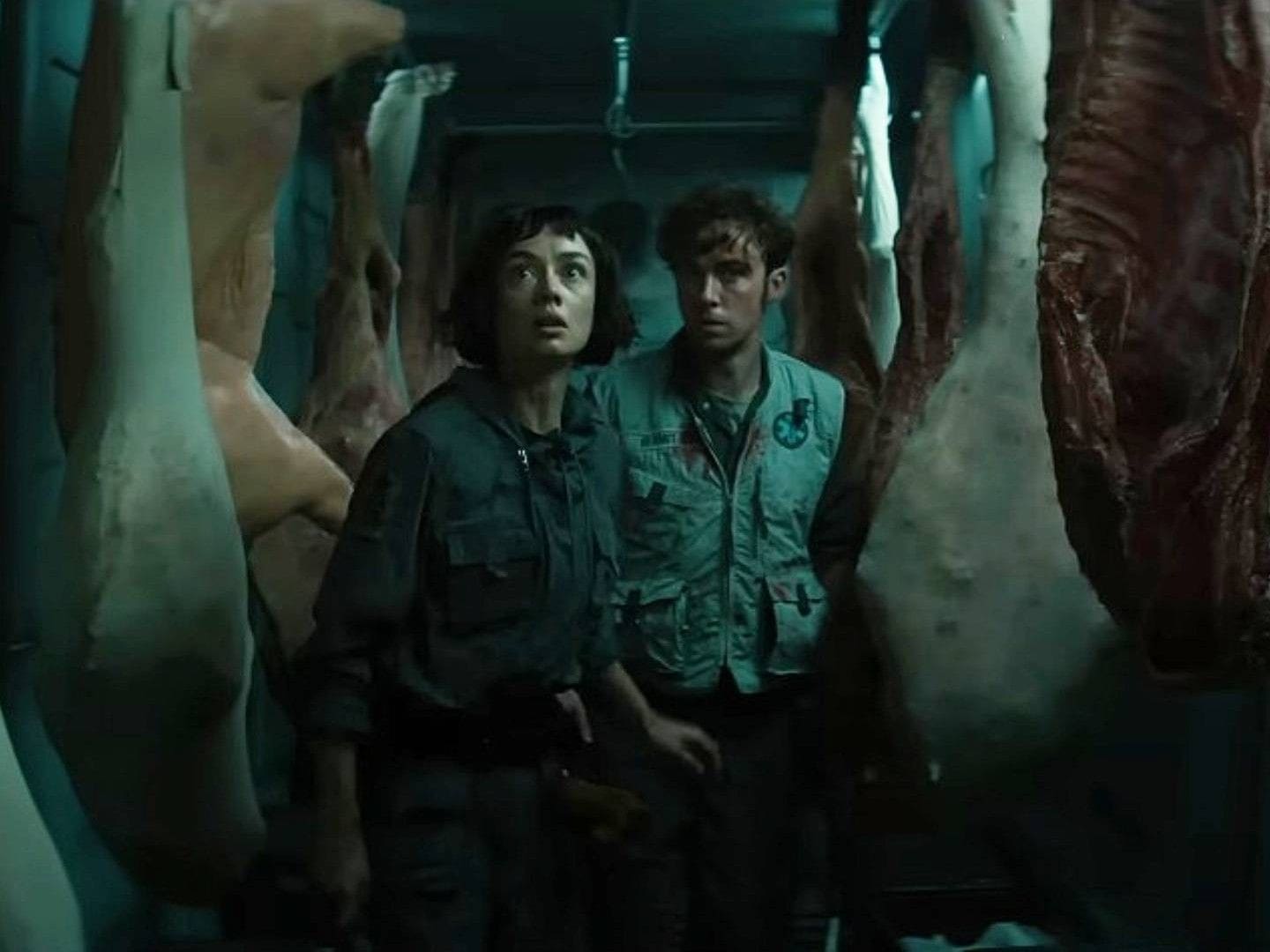
The standout elements of the show are a sleek xenomorph and four other creatures, ranging from a scuttling, leech-like bug to a multi-legged eyeball and a sleek xenomorph with a more humanoid presence than before. These updated monsters deliver classic nightmare fuel with a sharpened edge. When they attack, they leave behind hauntingly striking tableaux of torn corpses that are both terrifying and oddly mesmerizing.

The xenomorph remains a striking example of the franchise’s iconic design. The classic alien commands attention with its metal teeth and lethal, whip-like tail, delivering the kind of monstrous presence fans expect. While Hawley does not reinvent the creature, the xenomorph’s terrifying physicality and predatory instincts are deployed with precision, reminding viewers why it remains a cornerstone of the series’ horror legacy.
Disney+

But even more compelling than the monsters is the casting. Alex Lawther delivers the same detached resignation seen in Andor, while Sydney Chandler balances it with a chilling mix of innocence and hidden power. As an allegory for the rise of artificial intelligence, the hybrid Wendy possesses abilities beyond her creators’ comprehension. Samuel Blenkin shines as Boy Kavalier, the “genius” CEO of Prodigy and the Neverland project, embodying a frighteningly influential tech-bro with a whimsical, young Wonka energy. Blenkin’s performance is full of striking details, including a scene where he takes a critical video call while lying on a bed, gripping a tablet between his raised bare feet.

One of the standout achievements of the premiere episodes is the series’s impressive sense of scale. From the very beginning, it establishes a vast, cinematic world, with a massive spaceship crashing into a city and turning it into a chaotic war zone. Noah Hawley uses this scale purposefully, guiding a search-and-rescue team between the familiar Nostromo-style ship and the new Earth-bound environment. Episode two delivers haunted-house style sequences reminiscent of the original film, with a xenomorph stalking the characters. The series’s most striking moment comes when the alien interrupts an Elizabethan-style Bacchanal of oblivious wealthy party goers, with predictably deadly results.
Disney+

Another great detail in Alien: Earth is the use of hard rock tracks over the credits, adding depth and edge to the scenes. Episode 1 features Black Sabbath’s “The Mob Rules,” reflecting Wendy’s determination and hinting at looming danger. Episode 2 closes with Tool’s “Stinkfist,” emphasizing Wendy’s struggle with humanity and resolve amid chaos. These carefully chosen tracks enhance the atmosphere, linking heavy metal energy to the hybrid children, xenomorph threats, and dystopian corporate control, creating a thrilling audio-visual connection that underscores the series’ dark, intense tone.

Overall, the first two episodes of Noah Hawley’s Alien: Earth waste no time revealing the series’s intentions. It honors the atmosphere and tension of the original Alien while confidently staking its place within a franchise that has endured for decades, a balance few can achieve. These opening chapters skillfully weave the familiar with the new, whether through a subtle cross-dissolve linking two images or the spectacle of a spaceship crashing into a bustling futuristic city. In an era where streaming seasons keep shrinking, Noah Hawley delivers a gripping two-episode debut that blends the franchise’s iconic dread with the thrill of fresh ideas. The eclectic cast of humans, synthetics, aliens, and unsettling in-betweens, each adds texture to a world ready for reinvention. 

The series faces the challenge of satisfying devoted fans, appealing to newcomers, and meeting the expectations of Disney and FX, yet it does so without gimmicks or cheap tricks. At its heart lurks the unforgettable xenomorph, ensuring the scares remain as potent as ever. 

‘Alien: Earth’ Episodes 1-2 Review: Welcome to Earth

The series faces the challenge of satisfying devoted fans, appealing to newcomers, and meeting the expectations of Disney and FX, yet it does so without gimmicks or cheap tricks. At its heart lurks the unforgettable xenomorph, ensuring the scares remain as potent as ever. 
‘Alien: Earth’ Episodes 1-2 Review

‘Alien: Earth’ Episodes 1-2 Review: Welcome to Earth

August 14, 2025

{acf_comic_author_date}

The original Alien movie remains a masterpiece of science fiction horror, blending bone-deep terror with unsettling reflections on humanity. Its xenomorphs are more than monsters; they are invasive forces of pure consumption, their relentless hunger standing in stark opposition to human warmth and hope.

And within the first minutes of Alien: Earth, it becomes clear that showrunner Noah Hawley, known for FX’s Fargo, has created a series that serves as a thoughtful homage to the strongest elements of the original films, capturing their tension, atmosphere, and inventive horror while establishing its own identity within the franchise.

The year is 2120, an ideal backdrop for a series that taps into the unsettling fear that future generations will inherit a world resembling hell. Opening with simple green-on-black text styled like an old computer readout, the show immediately sets a retro yet ominous tone. In this fractured future, corporations rule the universe, and ultimate dominance hinges on a chilling “race for immortality,” with three competing paths: cyborgs (enhanced humans), synths (entirely artificial beings), and hybrids (synthetic bodies housing transplanted human consciousness).

In the first episode, the focus falls on hybrids, with the infamous flesh-ripping aliens appearing only in brief, almost subliminal flash-forwards. At Neverland, the laboratory complex of the trillion-dollar startup Prodigy, a terminally ill girl lies beside an inert adult figure she calls Wendy. Following a groundbreaking procedure, her consciousness is transferred from her failing body into a fully lifelike synthetic woman. This new being, Wendy (Sydney Chandler), becomes the first hybrid and soon leads a group of child-robot soldiers under the guidance of the enigmatic Kirsh, portrayed by Timothy Olyphant with striking bleach-blond hair, a chillingly soft-spoken voice, and an unsettling presence that hints at deeper mysteries.

Disney+

In space, a crew of humans takes on a perilous job under troubling working conditions. Their supervisor, a humorless cyborg named Morrow (Babou Ceesay), adds to the tension, but the real danger comes from their cargo: captured alien life-forms stored in fragile glass containers. When the creatures inevitably escape, they slaughter the crew, leaving only the self-preserving Morrow, who grimly pilots the spaceship toward Earth to complete his mission for the wealthy and ruthless Weyland-Yutani Corporation.

As the spaceship collides with the rubble of a towering urban building, a Prodigy search-and-rescue team arrives, led by Alex Lawther as the medic Hermit, revealed to be Wendy’s long-lost brother. With the monsters finally unleashed, the series diverges from the traditional Alien formula, as the human and humanoid characters are not trapped in a claustrophobic vessel. Alien: Earth instead generates its bone-deep dread through inventive tension and atmosphere, finding new ways to terrify outside the confines of the classic franchise’s enclosed spaces.

The standout elements of the show are a sleek xenomorph and four other creatures, ranging from a scuttling, leech-like bug to a multi-legged eyeball and a sleek xenomorph with a more humanoid presence than before. These updated monsters deliver classic nightmare fuel with a sharpened edge. When they attack, they leave behind hauntingly striking tableaux of torn corpses that are both terrifying and oddly mesmerizing.

The xenomorph remains a striking example of the franchise’s iconic design. The classic alien commands attention with its metal teeth and lethal, whip-like tail, delivering the kind of monstrous presence fans expect. While Hawley does not reinvent the creature, the xenomorph’s terrifying physicality and predatory instincts are deployed with precision, reminding viewers why it remains a cornerstone of the series’ horror legacy.

Disney+

But even more compelling than the monsters is the casting. Alex Lawther delivers the same detached resignation seen in Andor, while Sydney Chandler balances it with a chilling mix of innocence and hidden power. As an allegory for the rise of artificial intelligence, the hybrid Wendy possesses abilities beyond her creators’ comprehension. Samuel Blenkin shines as Boy Kavalier, the “genius” CEO of Prodigy and the Neverland project, embodying a frighteningly influential tech-bro with a whimsical, young Wonka energy. Blenkin’s performance is full of striking details, including a scene where he takes a critical video call while lying on a bed, gripping a tablet between his raised bare feet.

One of the standout achievements of the premiere episodes is the series’s impressive sense of scale. From the very beginning, it establishes a vast, cinematic world, with a massive spaceship crashing into a city and turning it into a chaotic war zone. Noah Hawley uses this scale purposefully, guiding a search-and-rescue team between the familiar Nostromo-style ship and the new Earth-bound environment. Episode two delivers haunted-house style sequences reminiscent of the original film, with a xenomorph stalking the characters. The series’s most striking moment comes when the alien interrupts an Elizabethan-style Bacchanal of oblivious wealthy party goers, with predictably deadly results.

Disney+

Another great detail in Alien: Earth is the use of hard rock tracks over the credits, adding depth and edge to the scenes. Episode 1 features Black Sabbath’s “The Mob Rules,” reflecting Wendy’s determination and hinting at looming danger. Episode 2 closes with Tool’s “Stinkfist,” emphasizing Wendy’s struggle with humanity and resolve amid chaos. These carefully chosen tracks enhance the atmosphere, linking heavy metal energy to the hybrid children, xenomorph threats, and dystopian corporate control, creating a thrilling audio-visual connection that underscores the series’ dark, intense tone.

Overall, the first two episodes of Noah Hawley’s Alien: Earth waste no time revealing the series’s intentions. It honors the atmosphere and tension of the original Alien while confidently staking its place within a franchise that has endured for decades, a balance few can achieve. These opening chapters skillfully weave the familiar with the new, whether through a subtle cross-dissolve linking two images or the spectacle of a spaceship crashing into a bustling futuristic city. In an era where streaming seasons keep shrinking, Noah Hawley delivers a gripping two-episode debut that blends the franchise’s iconic dread with the thrill of fresh ideas. The eclectic cast of humans, synthetics, aliens, and unsettling in-betweens, each adds texture to a world ready for reinvention. 

The series faces the challenge of satisfying devoted fans, appealing to newcomers, and meeting the expectations of Disney and FX, yet it does so without gimmicks or cheap tricks. At its heart lurks the unforgettable xenomorph, ensuring the scares remain as potent as ever. 
‘Alien: Earth’ Episodes 1-2 Review: Welcome to Earth

The series faces the challenge of satisfying devoted fans, appealing to newcomers, and meeting the expectations of Disney and FX, yet it does so without gimmicks or cheap tricks. At its heart lurks the unforgettable xenomorph, ensuring the scares remain as potent as ever. 

Share:

Comments

Leave the first comment

<!-- if comments are disabled for this post then hide comments container -->
<style> 
<?php if(!comments_open()) { echo "#nfps-comments-container {display: none !important;}"; }?>
</style>