Who is The Minotaur? The Corporate Cleaner of Gotham’s Underworld

Phillip Creary | December 9, 2025

December 9, 2025

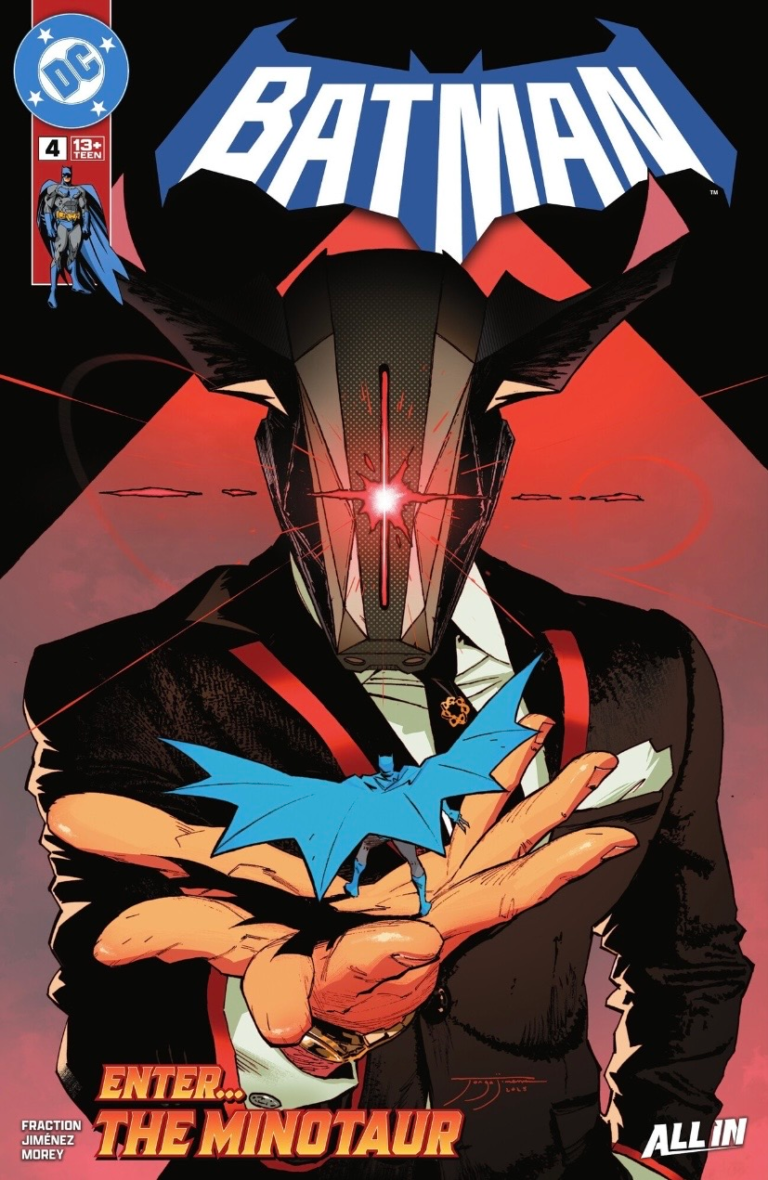
We all know that Gotham City has a branding problem. For decades, the criminal ecosystem has been dominated by the criminally insane. We have clowns who want to watch the world burn, obsessive compulsives who leave riddles at crime scenes, and disgraced professors using fear toxins. The Batman rogues’ gallery is widely considered the gold standard in comic book history because of that chaotic nihilism. But Batman #4 by Matt Fraction and Jorge Jimenez introduces a new player on the board who brings something terrifyingly scarce to Gotham: competence. His name is The Minotaur. And if his debut is any indication, he isn’t here to burn the city down. He is here to gentrify the underworld. WARNING: This article contains minor spoilers for Batman #4.
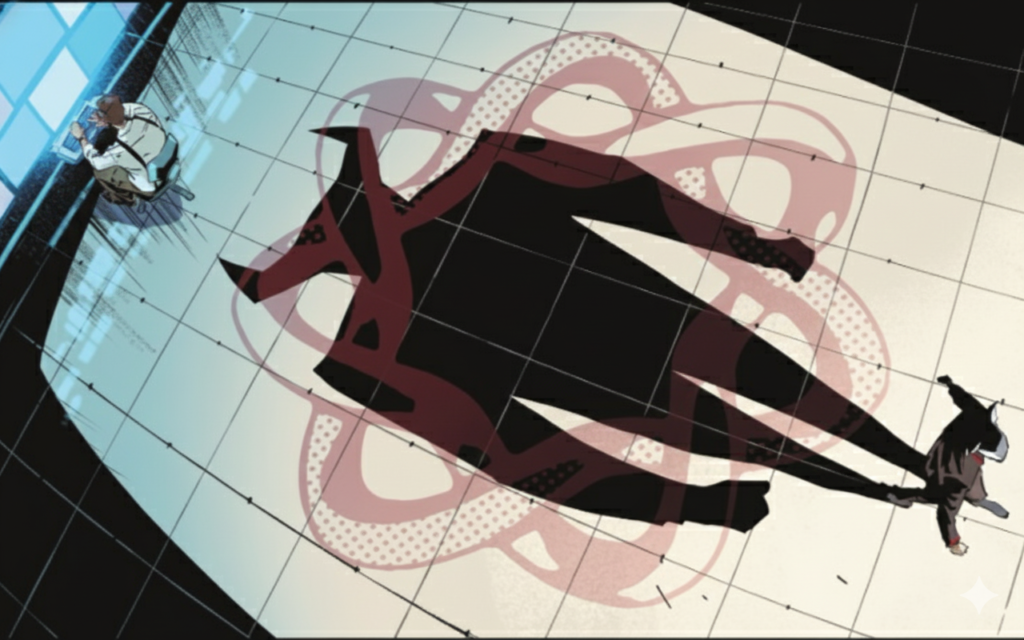
Image/Panel from Batman #4 (Writer: Matt Fraction, Artist: Jorge Jiménez)

Matt Fraction Gentrifies Gotham’s Underworld

To really understand why The Minotaur feels so fresh, you first have to look at the architect behind him. Matt Fraction is a writer who absolutely loves systems. Throughout his career, he has been fascinated by the machinery that makes worlds turn, whether he was deconstructing the corporate futurism of Tony Stark in Invincible Iron Man or showing the mundane landlord disputes of an Avenger in Hawkeye. With the Minotaur, Fraction seems to be applying that same systemic lens to Gotham City crime.

We are used to Gotham villains who rob banks because they are obsessed with the number two or because they want to fund a freeze ray. The Minotaur, however, feels like a direct response to the logistical nightmare of actually running a criminal empire in a city guarded by a billionaire bat-ninja. Fraction presents us with a villain who, for lack of a better word, represents the “HR Department” of organized crime. He is the guy you call when the henchmen stop showing up to work or when the revenue streams dry up. It’s honestly a brilliant, modern pivot that makes the crime in Gotham feel less like a carnival and more like a conglomerate.
Image/Panel from Batman #4 (Writer: Matt Fraction, Artist: Jorge Jiménez)

A Monster in a Three-Piece Suit

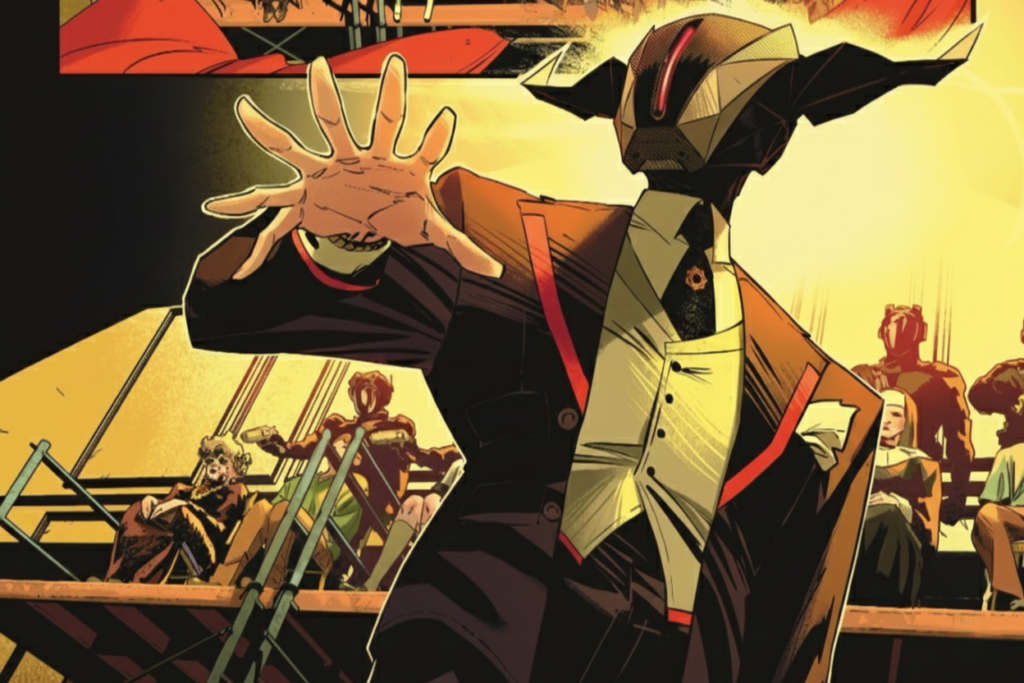
When you hear a name like “The Minotaur,” your mind probably immediately conjures images of Greek mythology. You picture the beast trapped in a labyrinth, a creature of brute force, rage, and cannibalism. You expect something like a Killer Croc or maybe a Bane wannabe. But Fraction and Jimenez subvert this expectation immediately, and the result is jarring in the best way possible.

This Minotaur is not a loincloth-wearing savage screaming for blood. He is a man of immense class. Debuting in Batman #4, he appears decked out in a sharp, tailored three-piece suit that probably costs more than the Batmobile’s tires. He doesn’t speak in grunts, but has a polished, confident cadence of a high-level power broker. The visual distinction is crucial because it signals that this villain won’t be defeated by simply punching him harder. He represents a different kind of threat: the white-collar criminal who isn’t afraid to get his hands bloody but prefers to do so with the efficiency of a corporate surgeon.

Image/Panel from Batman #4 (Writer: Matt Fraction, Artist: Jorge Jiménez)

The Banker of “Torus”

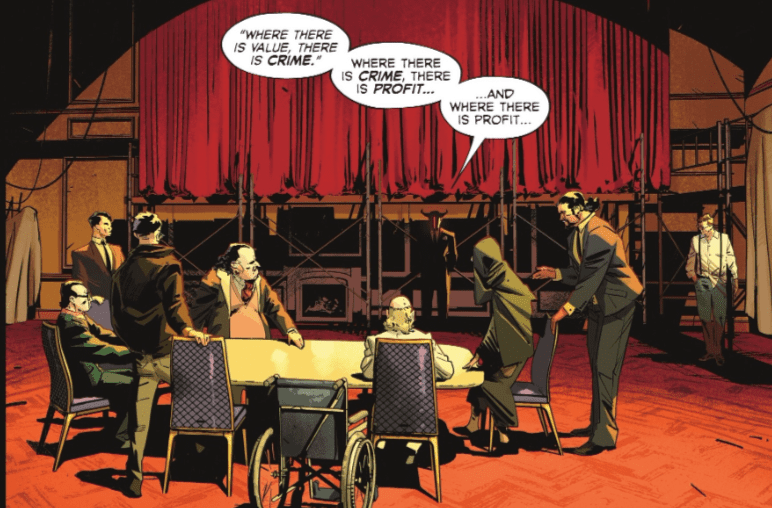
So, what are the hard facts we have on this new antagonist? We know that his role is essentially that of the underworld’s banker and cleaner. In his first appearance, he is shown handling a dispute for a shadowy criminal conspiracy known as “Torus.” The issue reveals that Torus suffered a staggering $4.4 million drop in revenue due to internal infighting.

Most Gotham villains would solve this problem with a bomb, an elaborately trapped warehouse, or a public execution on the evening news. The Minotaur, however, handles it like a hostile corporate restructuring. He brutally removes the “redundant” criminal heads’ family members to show he means business, characterizing him as a villain motivated by the bottom line rather than obsession or insanity. We also know he is physically imposing; despite the suit, he towers over his subordinates, meaning that if push comes to shove, he can back up his financial threats with physical violence. 
Image/Panel from Batman #4 (Writer: Matt Fraction, Artist: Jorge Jiménez)

The Mystery of the Labyrinth

Despite his strong introduction, the Minotaur is shrouded in mysteries that make him all the more compelling. The biggest question mark is his origin. Is he a meta-human? The name “Minotaur” implies a beast within. Is the suit just a cage for a physical monster waiting to burst out, or is the name merely a metaphorical title for the man at the center of the criminal maze?

We also don’t know the extent of his loyalty to Torus. Is he a true believer in this conspiracy, or is he simply a high-priced consultant who goes where the money is? And perhaps most importantly, we don’t know how he scales against Batman. We haven’t seen them trade blows yet. Is he a hand-to-hand brawler? Does he use gadgets? Or does he fight with leverage and blackmail? We don’t know yet; we’ll have to wait for the reveal to drop, or, in this case, for the suit jacket to come off.
Image/Panel from Batman #4 (Writer: Matt Fraction, Artist: Jorge Jiménez)

Why He Matters Now

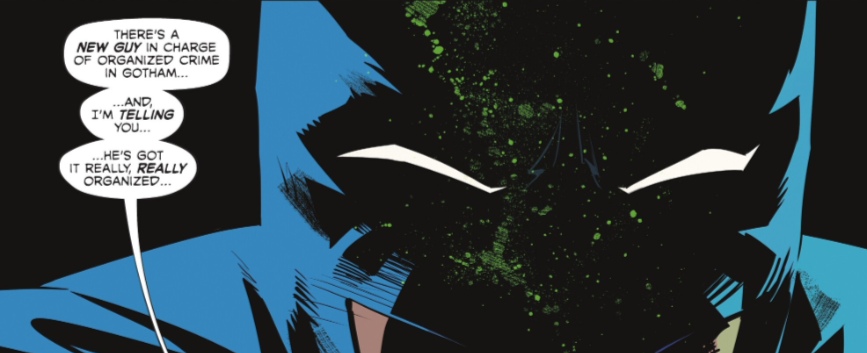
The introduction of the Minotaur suggests a massive shift in the status quo of Gotham’s organized crime. For years, the traditional mobs (the Falcones, the Maronis) have been pushed out by the freaks of Gotham. The Minotaur represents a synthesis of both worlds: the colorful theatricality of a supervillain name combined with the ruthlessness of the old-school mob.

With the shocking revelation that Wayne Manor itself might be compromised by these forces, the Minotaur is now a symbol of how deep the rot has gone. He is the face of a crime wave that is organized, wealthy, and firmly entrenched in the structures of the city. Batman is used to fighting chaos, but fighting a well-oiled machine is a different battle entirely. The Minotaur is the ghost in that machine, and Batman is going to have to do a lot more than throw a Batarang to exorcise him.

What do you think of the Minatour’s debut? Let us know in the comments.
Who is The Minotaur? The Corporate Cleaner of Gotham’s Underworld

December 9, 2025

We all know that Gotham City has a branding problem. For decades, the criminal ecosystem has been dominated by the criminally insane. We have clowns who want to watch the world burn, obsessive compulsives who leave riddles at crime scenes, and disgraced professors using fear toxins. The Batman rogues’ gallery is widely considered the gold standard in comic book history because of that chaotic nihilism. But Batman #4 by Matt Fraction and Jorge Jimenez introduces a new player on the board who brings something terrifyingly scarce to Gotham: competence. His name is The Minotaur. And if his debut is any indication, he isn’t here to burn the city down. He is here to gentrify the underworld. WARNING: This article contains minor spoilers for Batman #4.

Image/Panel from Batman #4 (Writer: Matt Fraction, Artist: Jorge Jiménez)

Matt Fraction Gentrifies Gotham’s Underworld

To really understand why The Minotaur feels so fresh, you first have to look at the architect behind him. Matt Fraction is a writer who absolutely loves systems. Throughout his career, he has been fascinated by the machinery that makes worlds turn, whether he was deconstructing the corporate futurism of Tony Stark in Invincible Iron Man or showing the mundane landlord disputes of an Avenger in Hawkeye. With the Minotaur, Fraction seems to be applying that same systemic lens to Gotham City crime.

We are used to Gotham villains who rob banks because they are obsessed with the number two or because they want to fund a freeze ray. The Minotaur, however, feels like a direct response to the logistical nightmare of actually running a criminal empire in a city guarded by a billionaire bat-ninja. Fraction presents us with a villain who, for lack of a better word, represents the “HR Department” of organized crime. He is the guy you call when the henchmen stop showing up to work or when the revenue streams dry up. It’s honestly a brilliant, modern pivot that makes the crime in Gotham feel less like a carnival and more like a conglomerate.

Image/Panel from Batman #4 (Writer: Matt Fraction, Artist: Jorge Jiménez)

A Monster in a Three-Piece Suit

When you hear a name like “The Minotaur,” your mind probably immediately conjures images of Greek mythology. You picture the beast trapped in a labyrinth, a creature of brute force, rage, and cannibalism. You expect something like a Killer Croc or maybe a Bane wannabe. But Fraction and Jimenez subvert this expectation immediately, and the result is jarring in the best way possible.

This Minotaur is not a loincloth-wearing savage screaming for blood. He is a man of immense class. Debuting in Batman #4, he appears decked out in a sharp, tailored three-piece suit that probably costs more than the Batmobile’s tires. He doesn’t speak in grunts, but has a polished, confident cadence of a high-level power broker. The visual distinction is crucial because it signals that this villain won’t be defeated by simply punching him harder. He represents a different kind of threat: the white-collar criminal who isn’t afraid to get his hands bloody but prefers to do so with the efficiency of a corporate surgeon.

Image/Panel from Batman #4 (Writer: Matt Fraction, Artist: Jorge Jiménez)

The Banker of “Torus”

So, what are the hard facts we have on this new antagonist? We know that his role is essentially that of the underworld’s banker and cleaner. In his first appearance, he is shown handling a dispute for a shadowy criminal conspiracy known as “Torus.” The issue reveals that Torus suffered a staggering $4.4 million drop in revenue due to internal infighting.

Most Gotham villains would solve this problem with a bomb, an elaborately trapped warehouse, or a public execution on the evening news. The Minotaur, however, handles it like a hostile corporate restructuring. He brutally removes the “redundant” criminal heads’ family members to show he means business, characterizing him as a villain motivated by the bottom line rather than obsession or insanity. We also know he is physically imposing; despite the suit, he towers over his subordinates, meaning that if push comes to shove, he can back up his financial threats with physical violence. 

Image/Panel from Batman #4 (Writer: Matt Fraction, Artist: Jorge Jiménez)

The Mystery of the Labyrinth

Despite his strong introduction, the Minotaur is shrouded in mysteries that make him all the more compelling. The biggest question mark is his origin. Is he a meta-human? The name “Minotaur” implies a beast within. Is the suit just a cage for a physical monster waiting to burst out, or is the name merely a metaphorical title for the man at the center of the criminal maze?

We also don’t know the extent of his loyalty to Torus. Is he a true believer in this conspiracy, or is he simply a high-priced consultant who goes where the money is? And perhaps most importantly, we don’t know how he scales against Batman. We haven’t seen them trade blows yet. Is he a hand-to-hand brawler? Does he use gadgets? Or does he fight with leverage and blackmail? We don’t know yet; we’ll have to wait for the reveal to drop, or, in this case, for the suit jacket to come off.

Image/Panel from Batman #4 (Writer: Matt Fraction, Artist: Jorge Jiménez)

Why He Matters Now

The introduction of the Minotaur suggests a massive shift in the status quo of Gotham’s organized crime. For years, the traditional mobs (the Falcones, the Maronis) have been pushed out by the freaks of Gotham. The Minotaur represents a synthesis of both worlds: the colorful theatricality of a supervillain name combined with the ruthlessness of the old-school mob.

With the shocking revelation that Wayne Manor itself might be compromised by these forces, the Minotaur is now a symbol of how deep the rot has gone. He is the face of a crime wave that is organized, wealthy, and firmly entrenched in the structures of the city. Batman is used to fighting chaos, but fighting a well-oiled machine is a different battle entirely. The Minotaur is the ghost in that machine, and Batman is going to have to do a lot more than throw a Batarang to exorcise him.

What do you think of the Minatour’s debut? Let us know in the comments.
Share:

Comments

Leave the first comment

<!-- if comments are disabled for this post then hide comments container -->
<style> 
<?php if(!comments_open()) { echo "#nfps-comments-container {display: none !important;}"; }?>
</style>