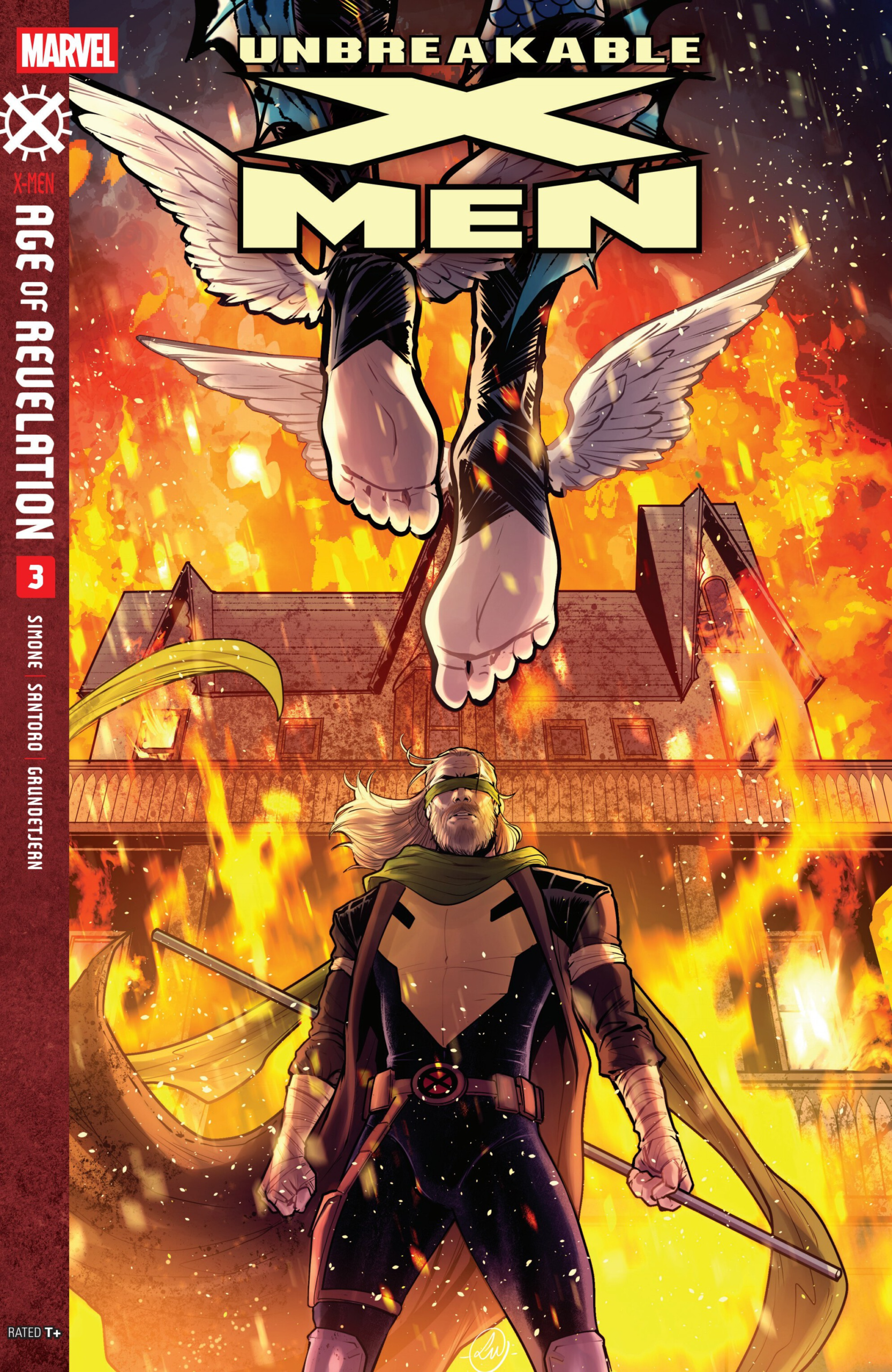

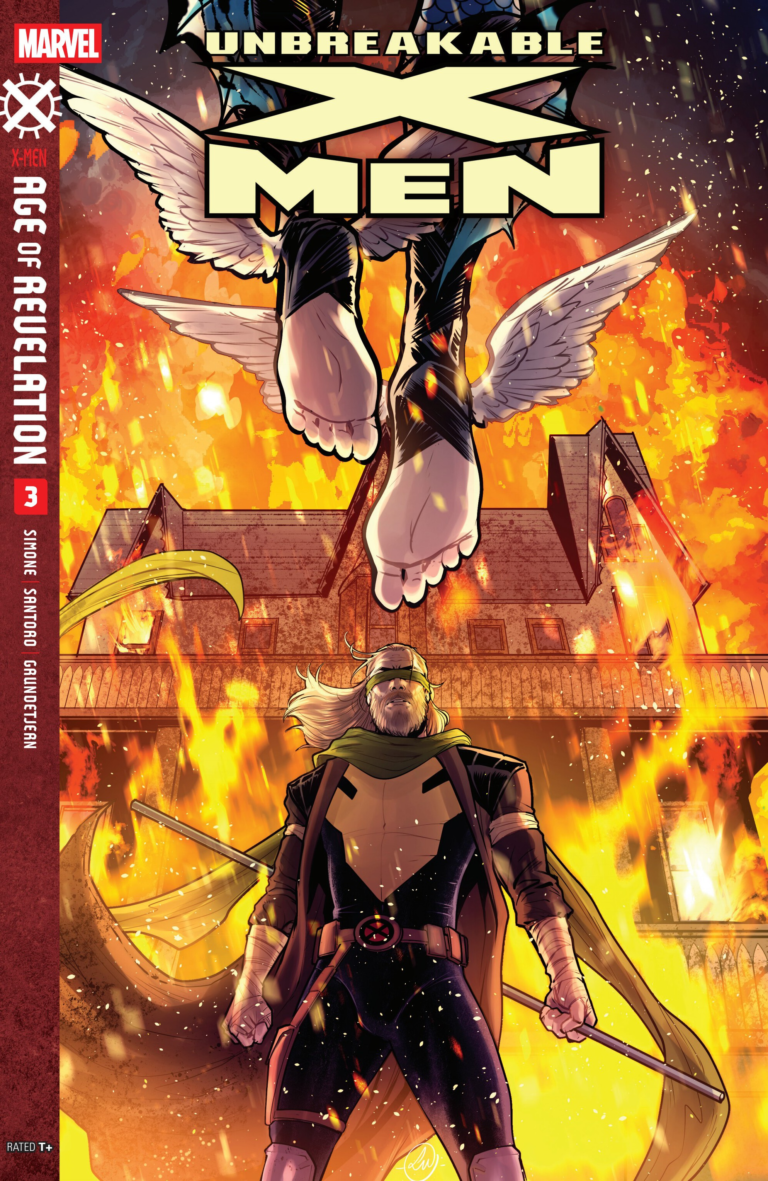
Unbreakable X-Men has followed the tragic saga of Gambit, following the death of his wife at the hands of Galactus. Brought to the page by Gail Simone and Mario Santoro, who replaces the excellent Lucas Werneck for this final issue, Unbreakable X-Men stands out among the Age of Revelation titles in ways both positive and negative. And that is most apparent in the third and final issue.
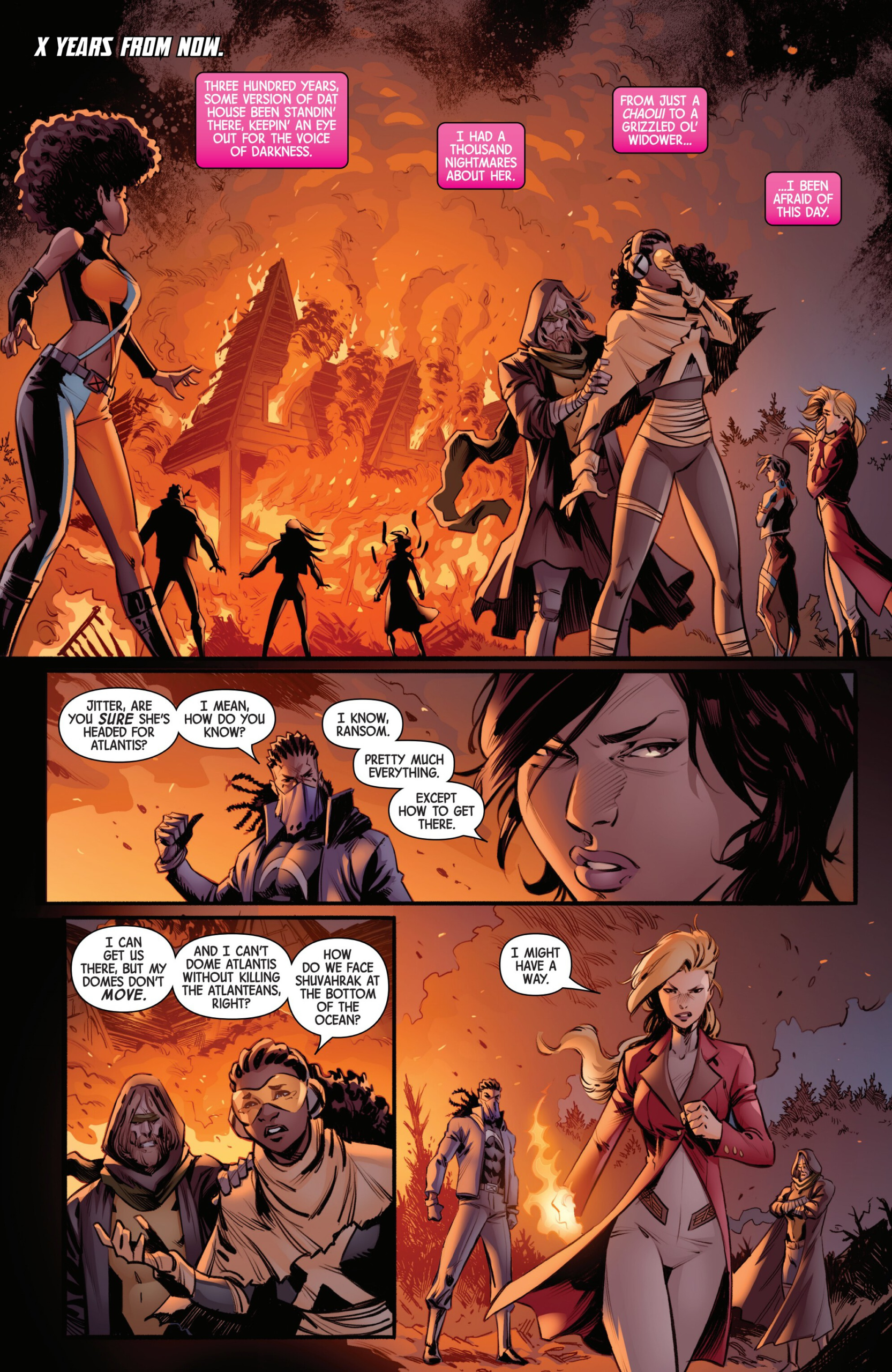
Shuvahrak has returned, and in the chaos of the previous issue, Haven House now burns. While the X-Men have been reunited with Calico, Jitter, and Deathdream, the odds are looking bleak, with Atlantis and Shuvahrak both operating as threats. As the X-Men dive deep under the sea to stop Shuvahrak, Namor stands against Gambit. There’s a symmetry in the two men. Namor is an even more embittered, saddened version of Gambit; someone who has lost much and who now stands to lose even more. But where his heart has hardened, Gambit’s is still open, and it is through Calico that he finds his way back to the light.
Plot and Art
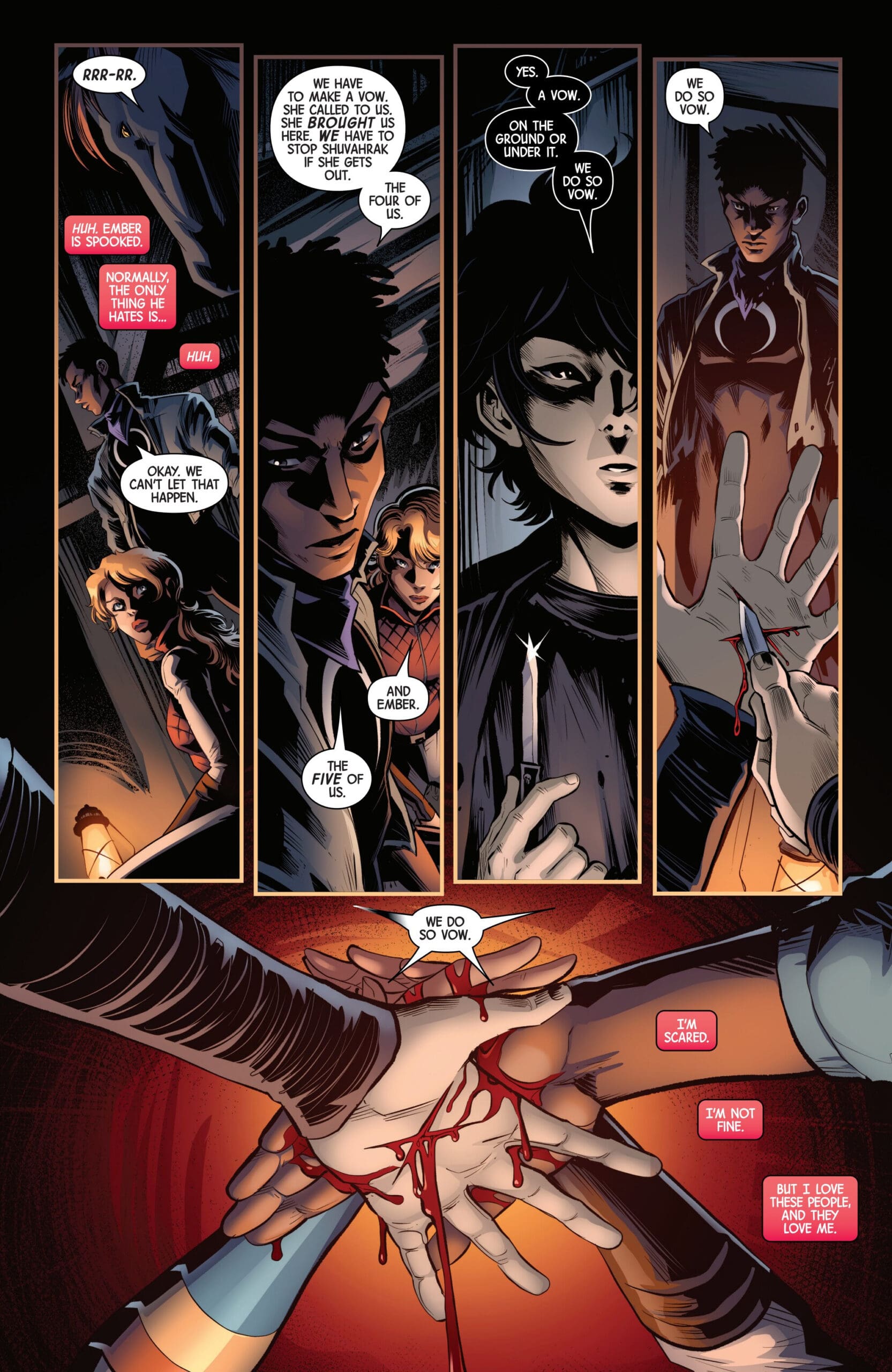
Throughout Unbreakable X-Men, grief and how people cope with and live through it have been the central themes. Through Gambit, Gail explores how oppressive and heartbreaking it can be to love and then lose that love. Unfortunately, the payoff in Unbreakable X-Men #3 doesn’t quite work. Where the payoff seems to come in the form of Gambit accepting what he has lost and deciding to open his heart again and love again, through those he would consider his children, the issue comes to an end with the sudden return of Rogue, who, in just a few short pages, defeats Shuvahrak and returns to Gambit’s side. While sure to please lovers of the pairing, it feels too sudden, too convenient, and too saccharine to really feel rewarding. It almost undercuts the message of learning to survive loss and coming out OK. That it happens in just four pages compounds the problem.
Lucas Werneck was replaced on this issue by Mario Santoro, with assistance from Lucciano Vecchio, R.B. Silva, Davide Tinto, and Tiago Palma. Espen Grundetjern provides the colours. Despite having a whole host of artists working on the title, the art comes across as smooth and coherent, with the visual variety blending together rather than serving as a distraction. That’s a real achievement, and while Lucas Werneck’s fantastic art is missed, visually this is a solid comic.
Themes and Verdict
Unbreakable X-Men digs into important themes and life lessons. Gambit is a compelling lead, and the comic’s overall message is one of optimism. Indeed, in the Age of Revelation, it may be the most optimistic comic of the entire event. That makes it stand out, but the total detachment from the broader event makes it feel less part of the X-Men world and more like a strange what-if.
Nothing that happens in this mini-series feels plausible or even potentially happening in Uncanny X-Men when it returns, raising questions about the purpose of going with this story. While Gail Simone presents a truly moving depiction of grief, the comic’s ending undercuts that premise by offering a convenient way out. Ultimately, the comic is hampered by these issues, despite a strong visual presentation.
‘Unbreakable X-Men’ #3 Review: The Tragic Saga of Gambit
Unbreakable X-Men is not a bad story in its own right. Still, it feels out of place in this event, unconnected to the broader Age of Revelation story, and even disconnected from the story Gail Simone was telling. The art, however, is excellent, and some pages of Gambit’s grief are quite moving, even if it is dwelt on for too long.