
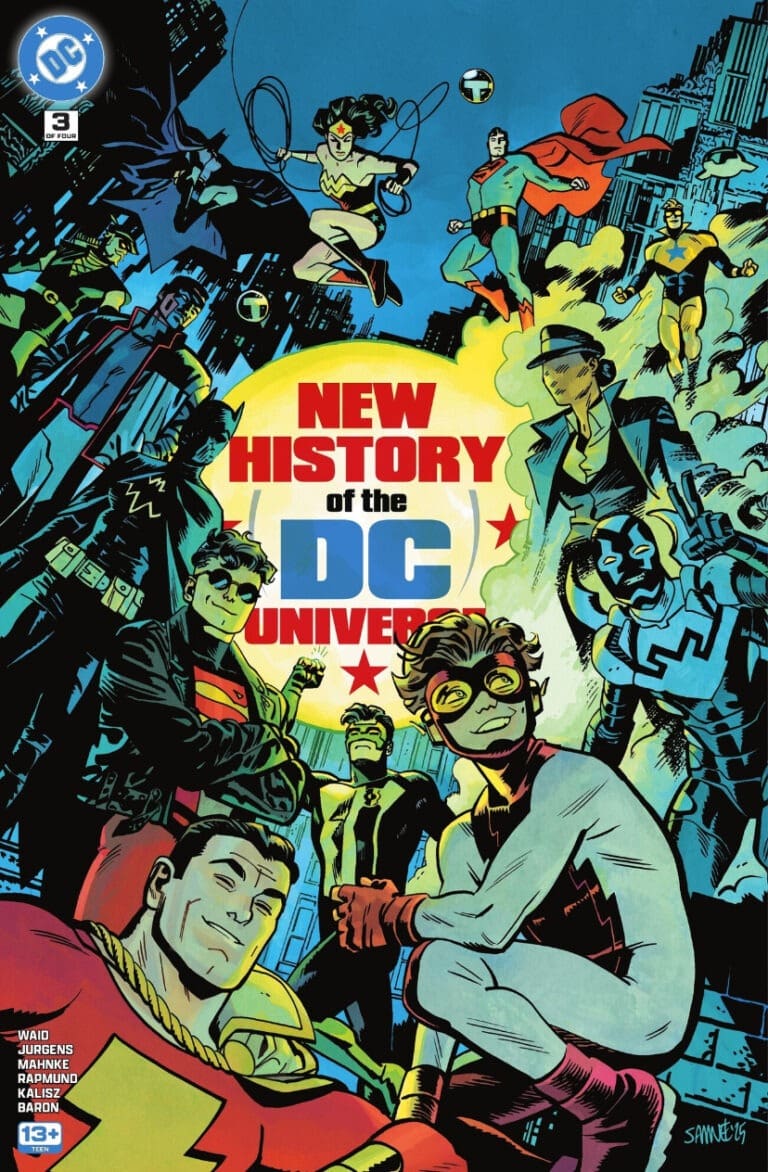
The Lesson Continues in ‘New History of the DC Universe’ #3

The Lesson Continues in ‘New History of the DC Universe’ #3

Chris Parker Jr | September 24, 2025

September 24, 2025

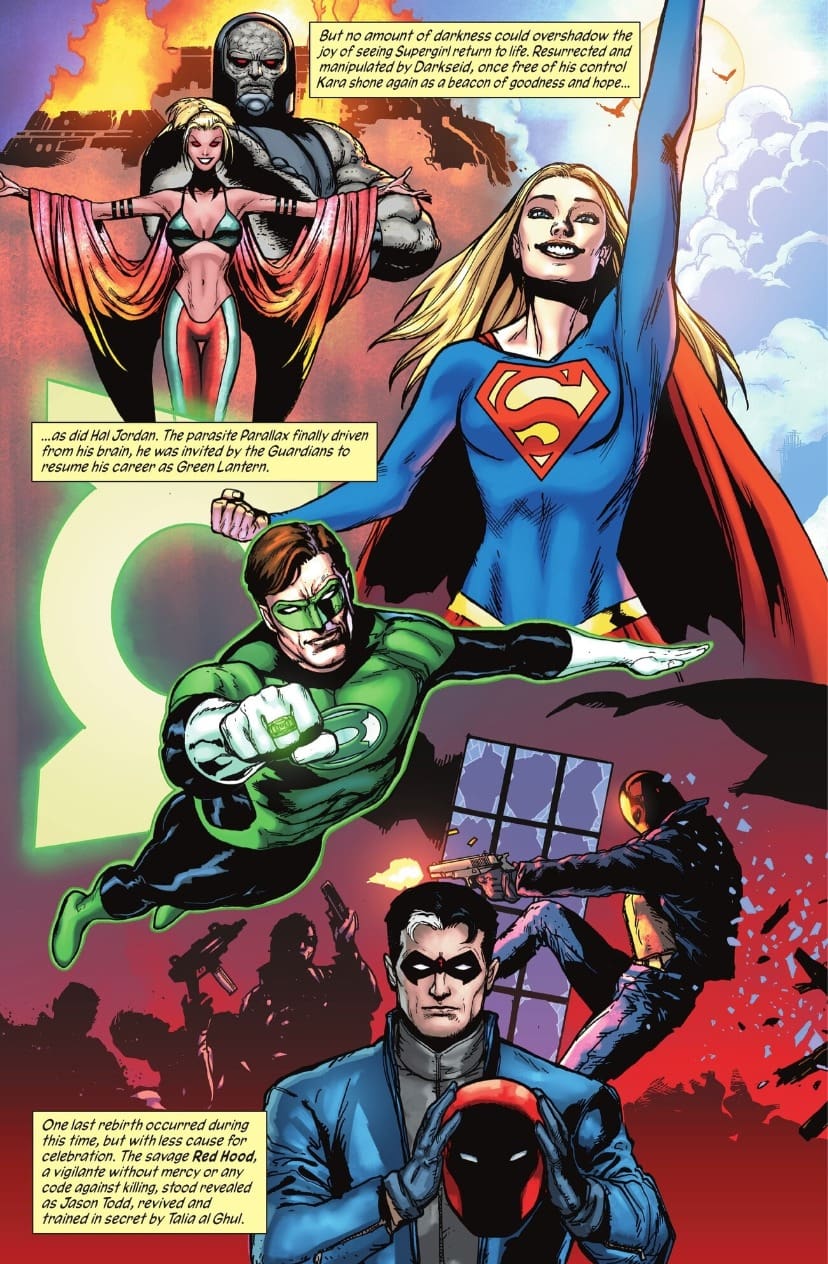
The first issues of New History of the DC Universe leaned more heavily on storytelling, but by this stage, the series has shifted into recap mode. Much of the focus is on condensing decades of continuity, which makes the pacing feel rushed as it speeds through major events. That said, there are some clever revisions along the way, such as Supergirl’s reintroduction being seamlessly folded into existing canon rather than treated as if she were an entirely new character. For longtime readers, these retellings may not offer much beyond familiarity, but there is no denying the comprehensive scope. Covering eighty years of DC history in such detail is an impressive feat, even if it sometimes sacrifices depth for breadth.

In New History of the DC Universe #3, the focus shifts to the major developments of the post-Crisis era, presented in broad strokes rather than detailed accounts. Yet even with this simplified approach, the issue continues to create major inconsistencies with how these events originally unfolded in canon. There are countless examples of these contradictions, but one of the most significant is the assertion that the original Milestone universe has been part of Prime Earth’s history all along, but newer comics don’t reflect this in any way.
Another example is Power Girl. DC’s perennial continuity paradox is once again presented as “the sole survivor of Earth-2.” The problem is that this claim collapses almost immediately under the weight of conflicting stories published in recent years.  Taken together, these details make it hard to view Power Girl as the “only” survivor of her world. Instead, it feels more like DC has chosen to keep her around because of her popularity rather than narrative consistency.

The issue also never acknowledges the death of Helena Wayne, leaving no explanation for how Helena Bertinelli became the second Huntress. This is further muddled by the bibliography recognizing Paula Brooks only as Tigress, despite her earlier identity as the villainous Huntress. Restoring Bertinelli’s post-Crisis history once again positions her as a re-imagining of Helena Wayne, a move that also raises questions about the increasingly lighter depiction of her skin tone since Rebirth.
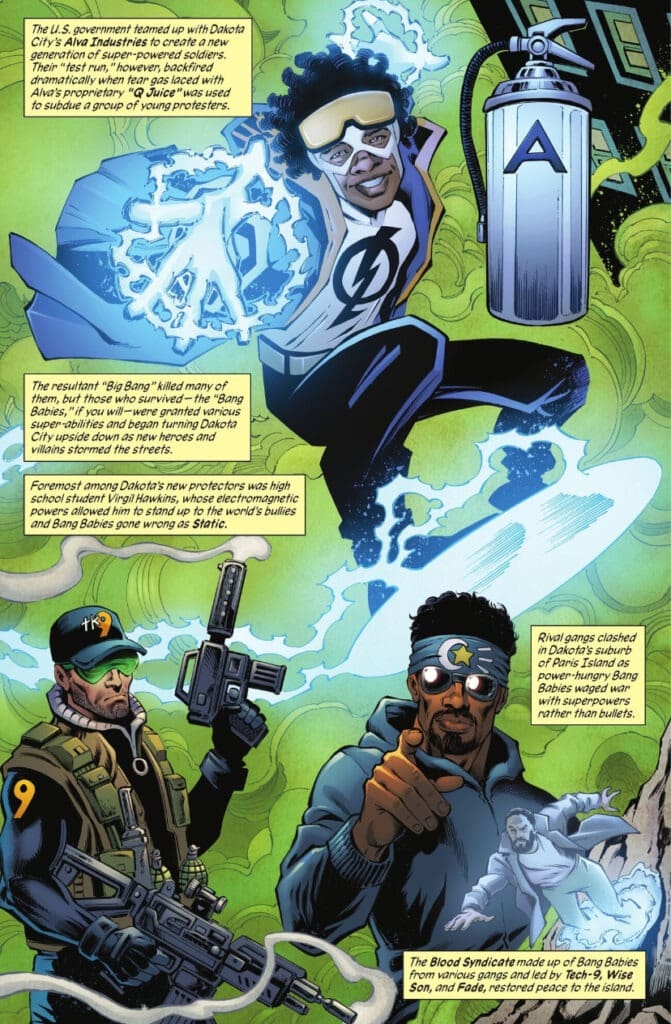
The issue also retcons Barbara Gordon’s history, claiming she became Oracle after Zero Hour despite her actual 1989 debut in Suicide Squad. Even Zero Hour itself contradicts this, since Barbara appeared as both Batgirl and Oracle within that storyline. The same problem arises with Birds of Prey, misplacing the team’s origin to the mid-1990s instead of after Batman: Hush. Finally, the origins of Jon Kent and Damian Wayne are rewritten in a manner that directly clashes with established canon.

One of the few elements that keeps New History of the DC Universe afloat is its artwork. Issue #3 is carried by the visuals, with Dan Jurgens and Doug Mahnke delivering pages that are nothing short of breathtaking. Their work captures the atmosphere of the post-Crisis era with striking accuracy, from the tone and textures to the way each panel flows naturally with the narration. The compositions are carefully arranged so that the reader’s eye is drawn seamlessly across the page, making the storytelling feel more dynamic. Adding to this impact is the vibrant coloring by John Kalisz and David Baron, whose palette enhances the sense of time and place. Together, the linework and colors evoke the very essence of that era in DC history, reminding us that even when the continuity stumbles, strong art can still hold the story together.
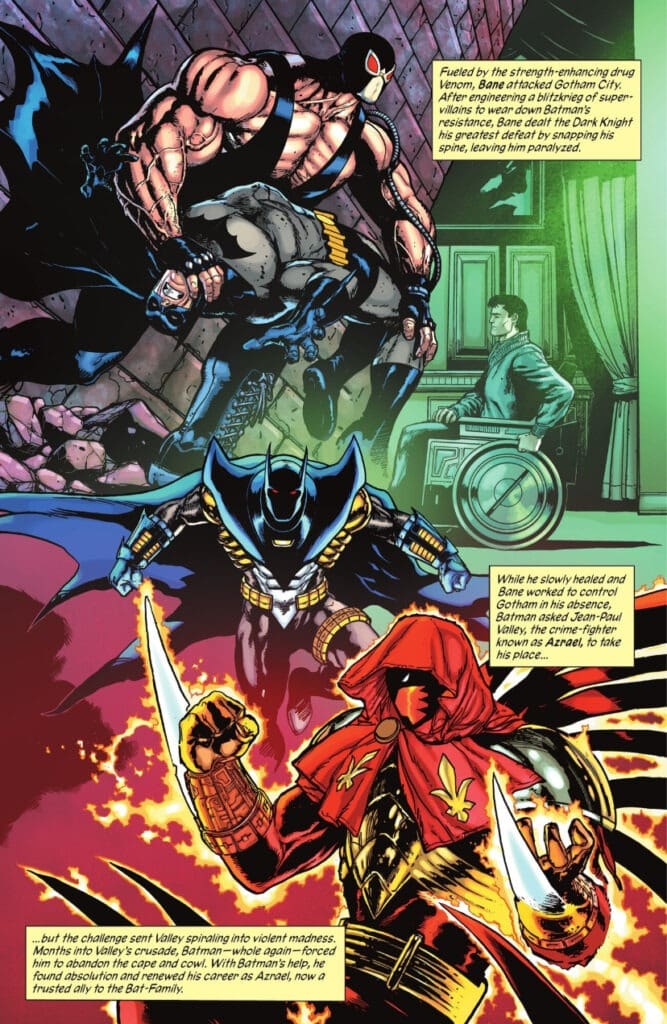
Overall, New History of the DC Universe #3 takes another look at DC’s post-Crisis era, but its sweeping, condensed approach keeps the revisions from landing as effectively as intended. Mark Waid highlights the key story lines that defined the period, while Dan Jurgens and Doug Mahnke provide excellent artwork that feels bold and dynamic. The vibrant colors from John Kalisz and David Baron further elevate the visuals, giving the pages real energy. Unfortunately, the issue continues DC’s ongoing pattern of needless retcons and revisions, with the added frustration that some of its own content contradicts the bibliography it references.

The Lesson Continues in ‘New History of the DC Universe’ #3

New History of the DC Universe #3 takes another look at DC’s post-Crisis era, but its sweeping, condensed approach keeps the revisions from landing as effectively as intended.

AMAZON
BUY NOW
The Lesson Continues in ‘New History of the DC Universe’ #3

The Lesson Continues in ‘New History of the DC Universe’ #3

September 24, 2025

The first issues of New History of the DC Universe leaned more heavily on storytelling, but by this stage, the series has shifted into recap mode. Much of the focus is on condensing decades of continuity, which makes the pacing feel rushed as it speeds through major events. That said, there are some clever revisions along the way, such as Supergirl’s reintroduction being seamlessly folded into existing canon rather than treated as if she were an entirely new character. For longtime readers, these retellings may not offer much beyond familiarity, but there is no denying the comprehensive scope. Covering eighty years of DC history in such detail is an impressive feat, even if it sometimes sacrifices depth for breadth.

In New History of the DC Universe #3, the focus shifts to the major developments of the post-Crisis era, presented in broad strokes rather than detailed accounts. Yet even with this simplified approach, the issue continues to create major inconsistencies with how these events originally unfolded in canon. There are countless examples of these contradictions, but one of the most significant is the assertion that the original Milestone universe has been part of Prime Earth’s history all along, but newer comics don’t reflect this in any way.

Another example is Power Girl. DC’s perennial continuity paradox is once again presented as “the sole survivor of Earth-2.” The problem is that this claim collapses almost immediately under the weight of conflicting stories published in recent years.  Taken together, these details make it hard to view Power Girl as the “only” survivor of her world. Instead, it feels more like DC has chosen to keep her around because of her popularity rather than narrative consistency.

The issue also never acknowledges the death of Helena Wayne, leaving no explanation for how Helena Bertinelli became the second Huntress. This is further muddled by the bibliography recognizing Paula Brooks only as Tigress, despite her earlier identity as the villainous Huntress. Restoring Bertinelli’s post-Crisis history once again positions her as a re-imagining of Helena Wayne, a move that also raises questions about the increasingly lighter depiction of her skin tone since Rebirth.

The issue also retcons Barbara Gordon’s history, claiming she became Oracle after Zero Hour despite her actual 1989 debut in Suicide Squad. Even Zero Hour itself contradicts this, since Barbara appeared as both Batgirl and Oracle within that storyline. The same problem arises with Birds of Prey, misplacing the team’s origin to the mid-1990s instead of after Batman: Hush. Finally, the origins of Jon Kent and Damian Wayne are rewritten in a manner that directly clashes with established canon.

One of the few elements that keeps New History of the DC Universe afloat is its artwork. Issue #3 is carried by the visuals, with Dan Jurgens and Doug Mahnke delivering pages that are nothing short of breathtaking. Their work captures the atmosphere of the post-Crisis era with striking accuracy, from the tone and textures to the way each panel flows naturally with the narration. The compositions are carefully arranged so that the reader’s eye is drawn seamlessly across the page, making the storytelling feel more dynamic. Adding to this impact is the vibrant coloring by John Kalisz and David Baron, whose palette enhances the sense of time and place. Together, the linework and colors evoke the very essence of that era in DC history, reminding us that even when the continuity stumbles, strong art can still hold the story together.

Overall, New History of the DC Universe #3 takes another look at DC’s post-Crisis era, but its sweeping, condensed approach keeps the revisions from landing as effectively as intended. Mark Waid highlights the key story lines that defined the period, while Dan Jurgens and Doug Mahnke provide excellent artwork that feels bold and dynamic. The vibrant colors from John Kalisz and David Baron further elevate the visuals, giving the pages real energy. Unfortunately, the issue continues DC’s ongoing pattern of needless retcons and revisions, with the added frustration that some of its own content contradicts the bibliography it references.
The Lesson Continues in ‘New History of the DC Universe’ #3

New History of the DC Universe #3 takes another look at DC’s post-Crisis era, but its sweeping, condensed approach keeps the revisions from landing as effectively as intended.
Share:

Comments

Leave the first comment

<!-- if comments are disabled for this post then hide comments container -->
<style> 
<?php if(!comments_open()) { echo "#nfps-comments-container {display: none !important;}"; }?>
</style>