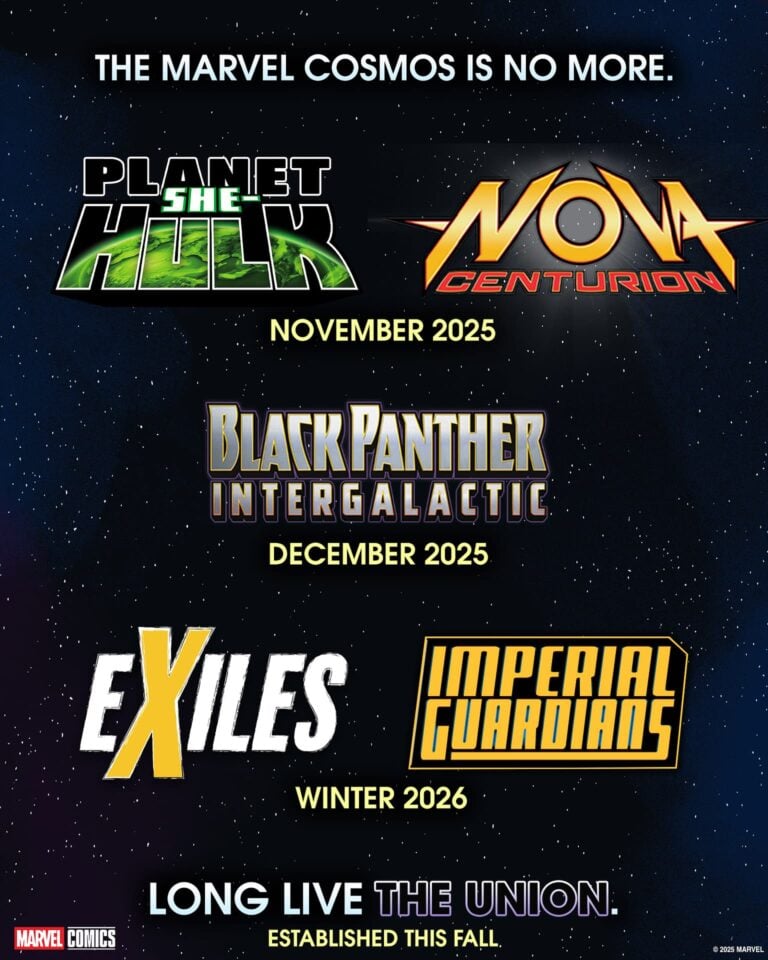
When Marvel announced a new event series by Jonathan Hickman that was intended to launch a new line of cosmic comic books, the excitement was palpable. Known for his cinematic, thoughtful work on the Fantastic Four through to Secret Wars, and then his bold redefining of the X-Men in House of X and Powers of X, Hickman is Marvel’s heaviest hitter and most acclaimed creative active with the company today.
Fast forward just 6 months after the end of the Imperial event, and readers have been met with the cancellation of the entire line, with one ongoing title reduced to a mini-series, two ongoing titles canceled in their sixth issue, and a fourth title never being released at all.
The Cancellations and Where the Imperial Line Stands Now
When Stephanie Phillips announced on The Comics Pals podcast that Planet She-Hulk #6 would be the final issue of the series, many fans were shocked, but for others, it only confirmed what they already feared.
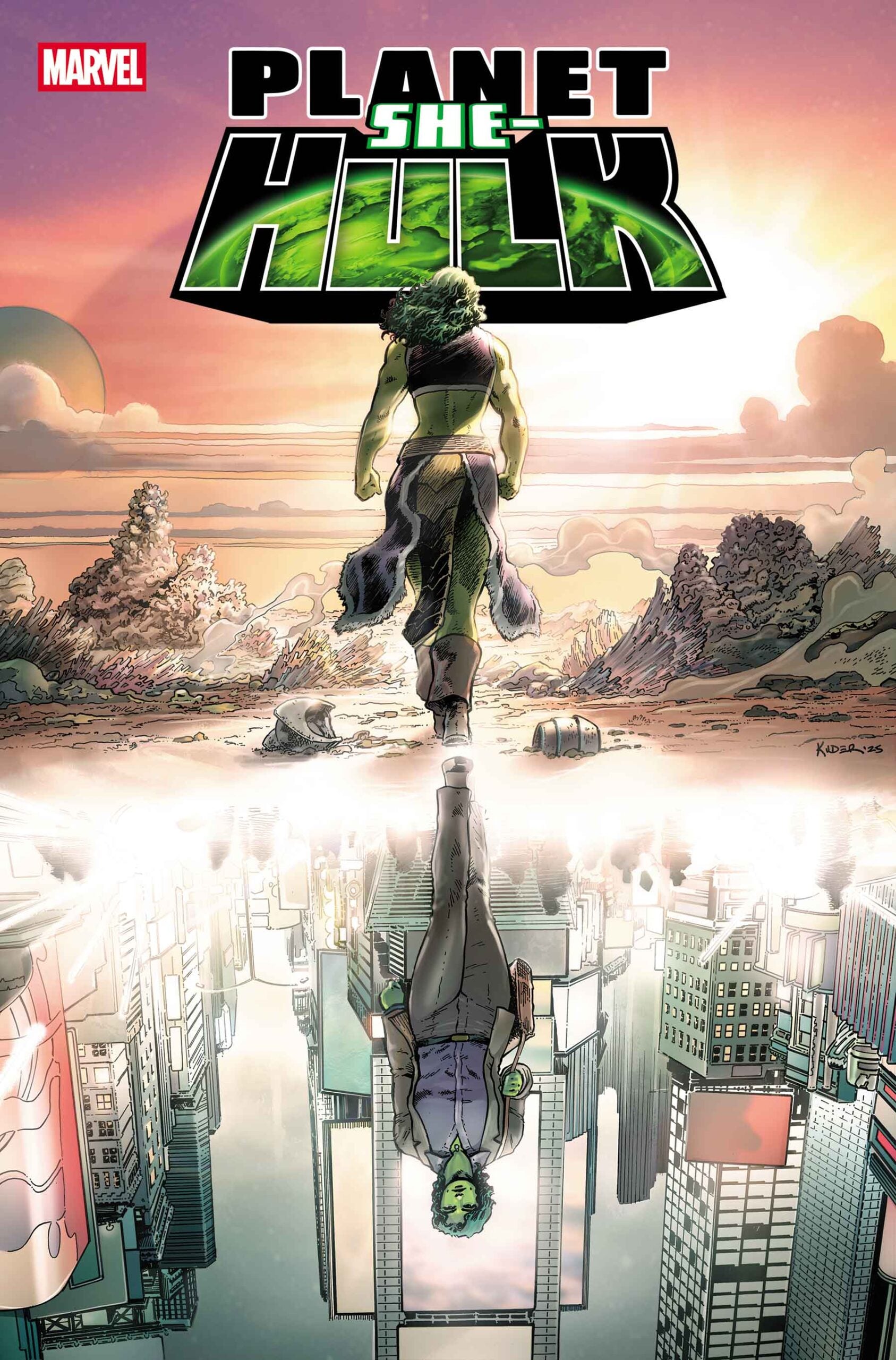
The May solicits for Marvel Comics had already shown that Planet She-Hulk and Nova: Centurion did not have a 7th issue. The two opening salvos of the post-Imperial cosmic landscape were cut short by their sixth issue.
Furthermore, the Winter 2026 teased stories of Exiles and Imperial Guardians seemed delayed, with Imperial Guardians just hitting shelves and being solicited as a mini-series rather than as an ongoing like it was originally hyped, while Exiles seems to have been canceled outright.
For a group of new titles that emerged from Imperial, an event Marvel President Dan Buckley had hyped up as a cosmic equivalent of House of X and Game of Thrones, every single one was either canceled early or not released at all. It’s a dismal outcome for a line of comics that came from the mind of key Marvel writer and creative heavyweight Jonathan Hickman.

What Went Wrong?
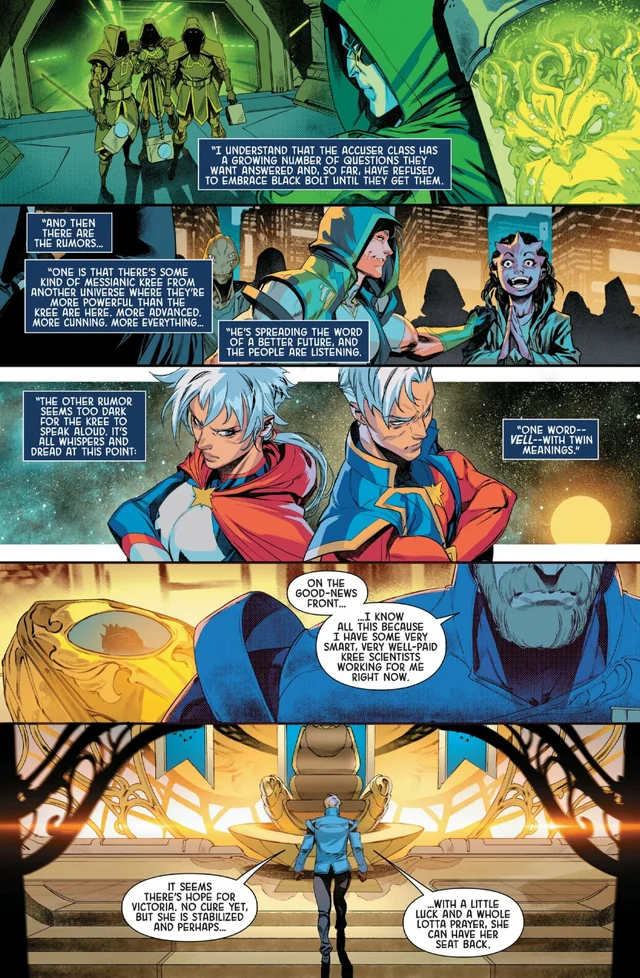
The “Imperial” line of comics seemed to have everything going for it: Jonathan Hickman had written the event comic these titles came from and co-wrote each series’ establishing one-shot. Top creatives like Jed MacKay, Aaron Kuder, Dan Abnett, and Victor LaValle were chosen for comics coming out of this, with plenty of pre-promotion for the event itself.
So why did it fail? Why did these titles not succeed?
The answer is multi-faceted, with issues at the point of origin that cascaded and damaged the succeeding titles out of the “Imperial” event comic.
First off is the issue with Imperial itself: according to BleedingCool’s Rich Johnston, the event didn’t seem to sell quite as well as Marvel had hoped, nor did the accompanying tie-in one-shots. A lackluster sales performance out of the gate like that would, of course, heavily impact the rest of the line; if there is less readership for the establishing event, then the successor comics sprouting from it would struggle too.
But why did Imperial and the tie-in comics struggle to sell? This is only conjecture, but having read the event in full, as well as the tie-ins, Imperial struggled not just financially but creatively too. For an event meant to redefine the cosmic arena of Marvel, it felt quite small in scale. There is a war between planets, but the action is largely kept off the page, and even the massive armadas of space battleships fighting don’t quite land with much impact. There is a familiarity to it all; readers are no strangers to Skrulls, Kree, Shi’ar, and others warring. Imperial doesn’t do much that the War of Kings hadn’t already covered.
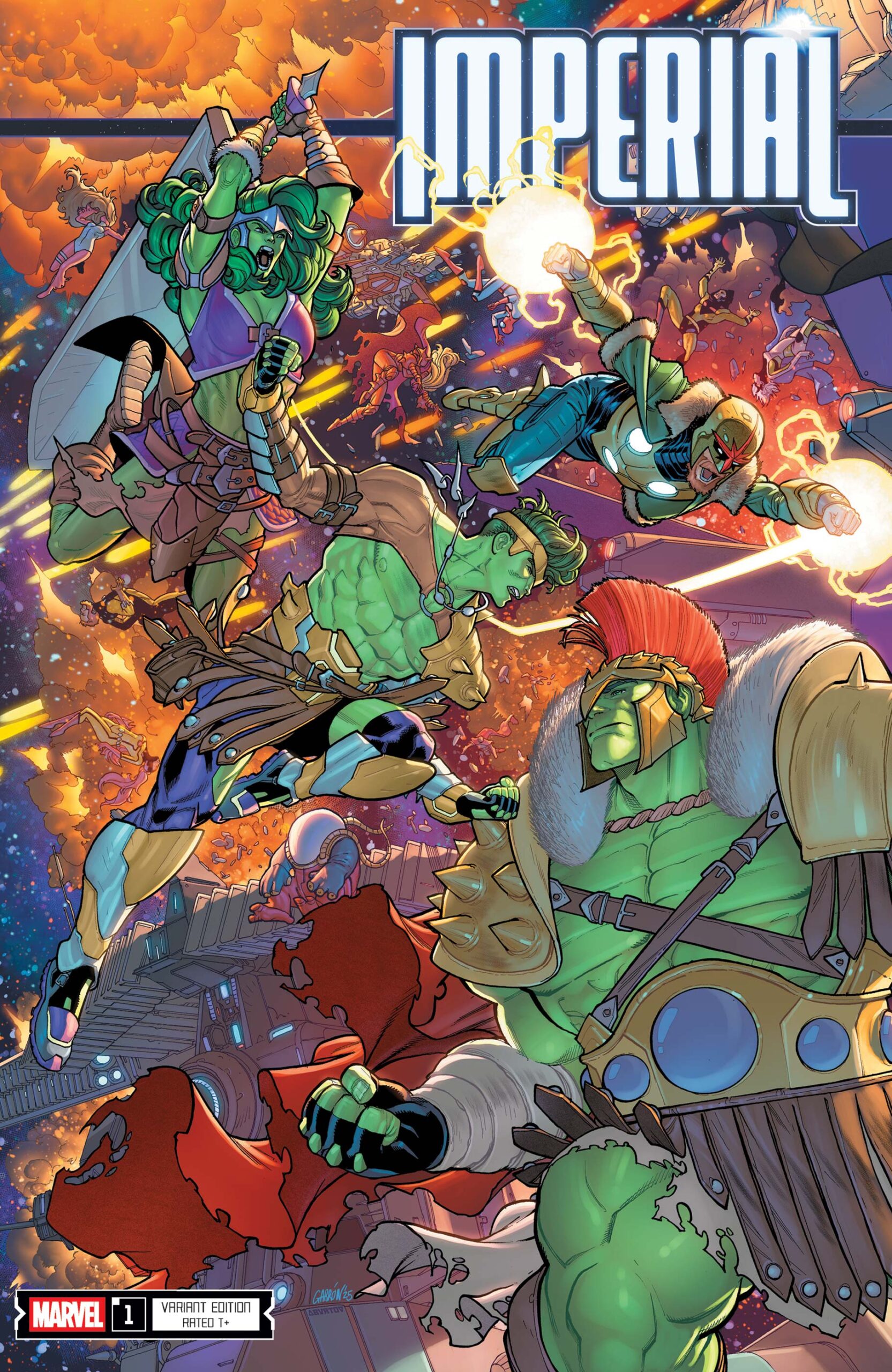
There’s also the issue of using primarily Earth-based characters instead of classically cosmic characters. Hulk, Black Panther, and She-Hulk are all characters largely associated with Earth, and even Nova isn’t a character who is quite as cosmic as some. Characters who already existed in the cosmos, such as Phoenix, Silver Surfer, Gladiator, Quasar, Adam Warlock, among others, all went ignored, and Imperial focused itself on space politics and conquest, rather than the mysteries of the vast Marvel universe and broader cosmos, which contain eclectic beings, metaphysical concepts, and grand narratives of destiny and adventure.

Simply put; Imperial offered nothing new and fresh, and eschewed the wider cosmic toy box for a more conventional cast of Earth heroes. It’s difficult to ask audiences to invest in your comics when the story that is being offered is redundant and repetitive.
What Comes Next?
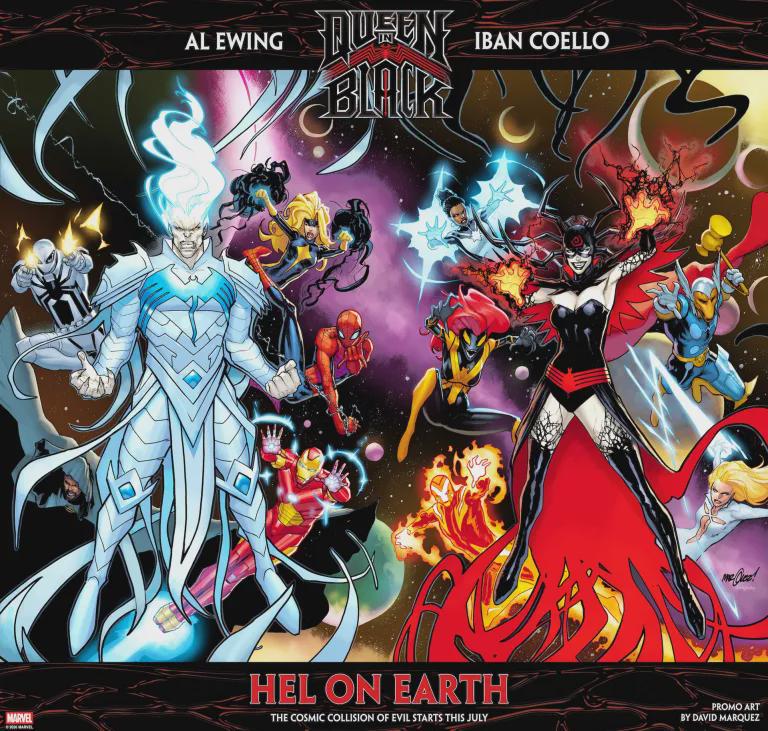
As BleedingCool’s Rich Johnston notes, Queen in Black might contain some clues as to what the next steps for the Marvel cosmos might be. As a comic that focuses on Hela and Knull and includes at least a few cosmic characters from the promotional art, it may serve as the launch point for a cosmic relaunch. Only time will tell.
X-Men executive editor Tom Brevoort has also teased an X-Men title set in space in the letter pages of X-Men #25, possibly due by the end of summer. He’s made reference in an interview with AIPT of wider plans within Marvel changing, and projects that were potentially scheduled to be released earlier now being pushed back and re-oriented to be different than the original pitches.
It’s clear, however, that the “Imperial” line is largely dead. Imperial Guardians seems to be the swan song for the line and may set up stories that could give some clues as to what comes next. Or it may serve to wrap up what was already built up and keep the slate clean for the next parties.
The failure of Imperial should serve as a cautionary tale for Marvel. Readers cannot be expected to invest in an entirely new line of comics without a compelling hook. Repetitive stories, even from top creatives, will do little to draw people in. The cosmic sandbox of storytelling is huge and brimming with potential. Marvel can build something exciting and enduring from it, so long as they take care to avoid the mistakes they made so recently.