‘The Amazing Spider-Man’ #16 Review: The Not So Superior Spider-Men

Stan West | November 27, 2025

November 27, 2025

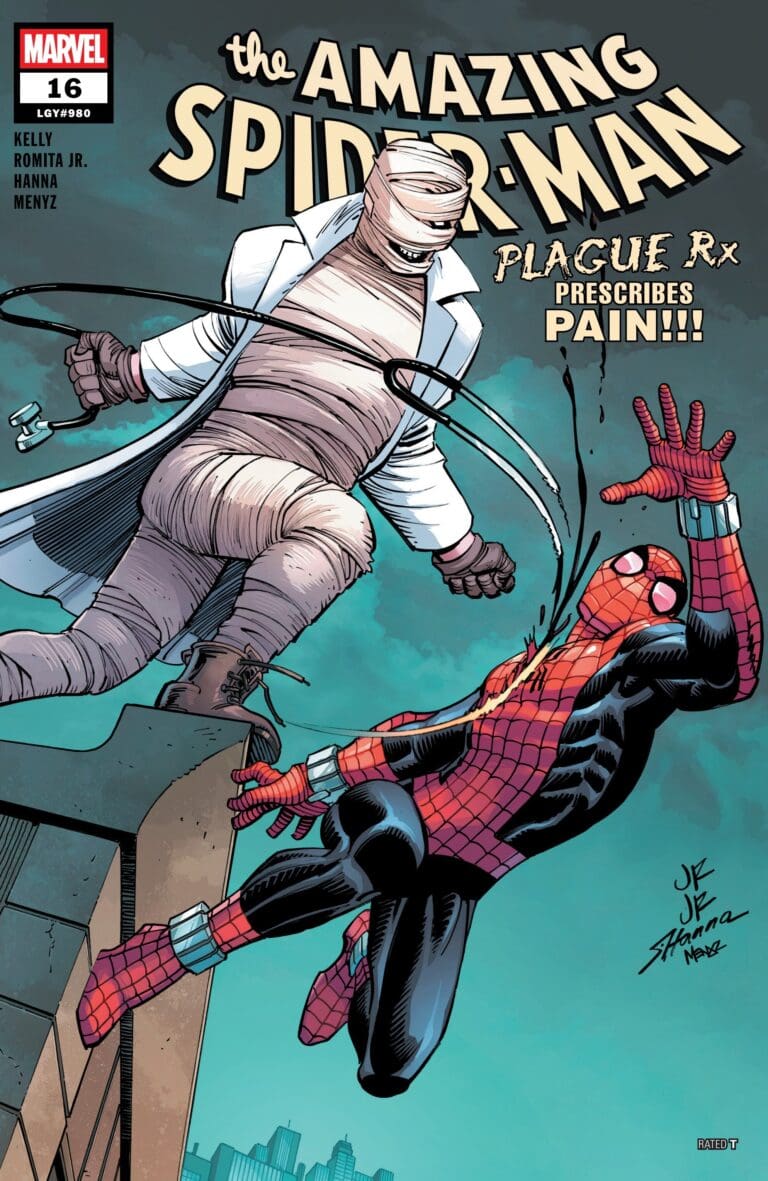
Can anyone truly live up to the standards set by Peter Parker? This is the driving question behind The Amazing Spider-Man #16, where Joe Kelly and John Romita Jr. tackle the weight of the legacy. Kelly expertly blends high drama with psychological introspection, focusing on Norman Osborn and Ben Reilly as they struggle to fill Peter’s shoes. While they face the same trials as Parker, their vastly different approaches ultimately reveal their true natures.

Ever since Peter’s encounter with Hellgate, Norman and Ben have grappled with Peter’s legacy and their volatile new status quo. While they’ve each had successes, the cracks are beginning to show as both men question their own motives, asking themselves the same, gnawing question: “What would Peter do?” Framing their actions against their ideas of how Peter would act continues to push these characters into uncharted territory.

Marvel

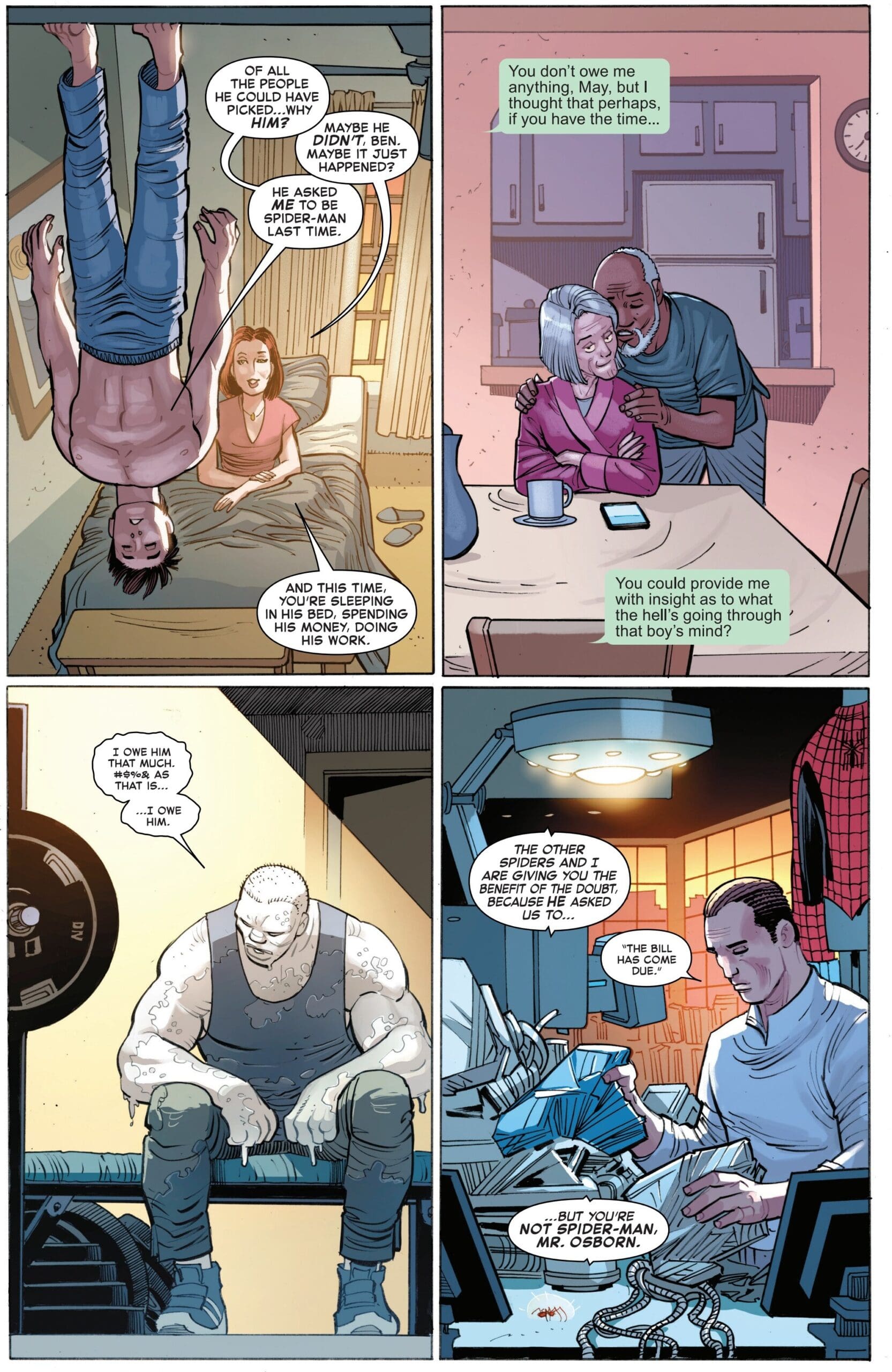
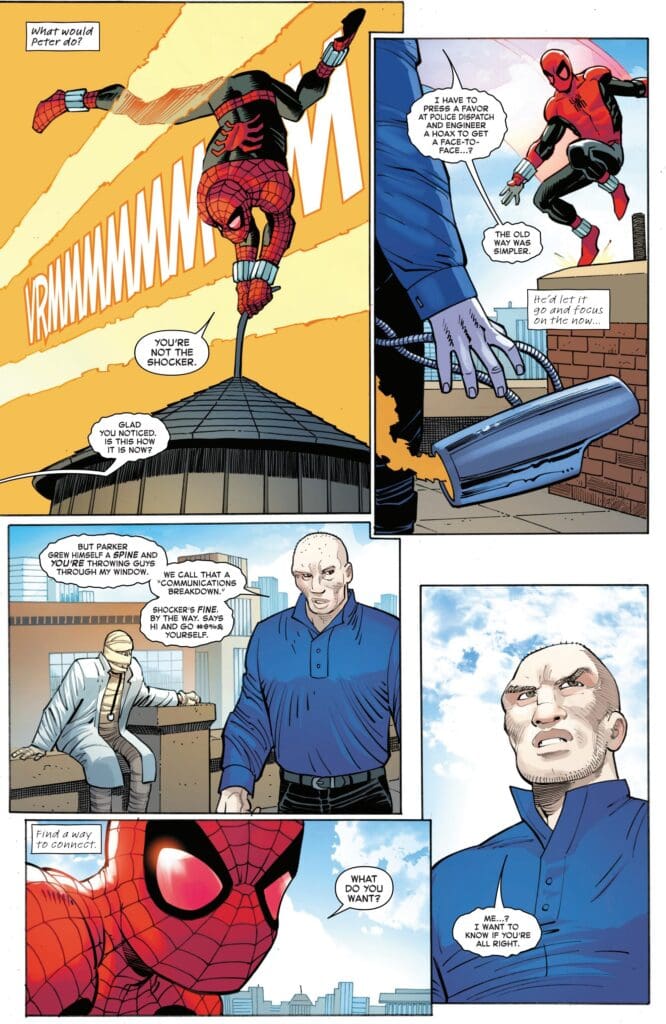
This issue works well because all the major players get time to shine. Ben’s discomfort at seeing his work attributed to Peter causes friction at the office and at home. At the same time, May agrees to meet our favorite podcast host, J. Jonah Jameson, leading to an outstanding confrontation. Tombstone, worried about Spider-Man’s recent behavior, confronts Norman in costume and realizes this isn’t the same friendly neighborhood wall-crawler. We finally get to see the new villain, Plague RX, in action. His engaging power immediately causes Norman fits and leaves him beaten down emotionally and physically. The fallout is sure to make their next confrontation even more memorable.

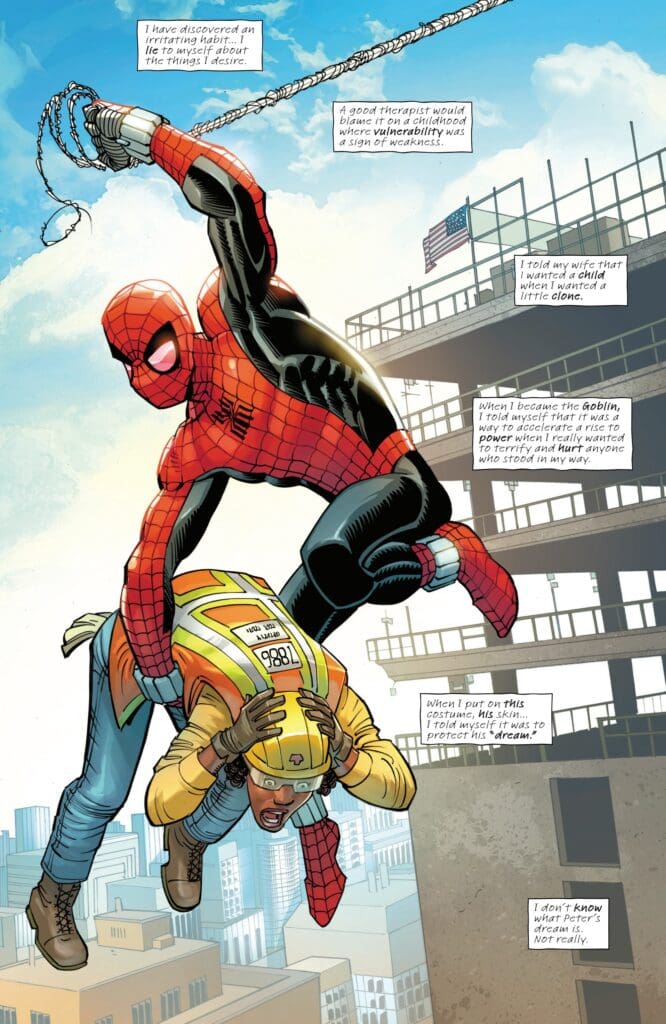
There’s a lot to like here. Kelly does his best writing when exploring character motivations, and there are plenty of defining moments throughout. Every time we explore Norman’s inner thoughts is a treat. Watching him grapple with the classic Spider-Man conundrum of sacrificing his personal life to be a hero has been well executed, adding deeper wrinkles to a character who already has plenty of layers. Norman also finally admits that he doesn’t know what Peter’s dream is. They’re fundamentally different people who’ve reacted to trauma in vastly different ways, but Norman is beginning to understand the core of what makes Spider-Man special. 

Spider-Man is hope, he says, and Norman needs that hope as much as any average New Yorker. Being Spider-Man is the only thing holding a man burdened by intense pain together. It’s a fascinating development and one that feels earned by Norman’s shift toward good-guy status over the past few years. However, it’s always one step forward and two steps back, as intrusive thoughts soon begin to plague him again.
Marvel

Meanwhile, Ben’s psyche continues to take a beating. Everywhere he turns, he’s reminded that he’s not living his own life. Whether it’s the apartment he lives in or the work he’s been doing at Rand Enterprises, Ben lacks an identity of his own. This has long been a central theme to his character, but the way it’s being explored here feels fresh. The way his section wraps up—dark and isolated at Rand Towers as he stares at a screen with his hard work being credited to Peter—is a perfect development for a man who has always struggled to make a name for himself. 

May gets an important scene here, too, reminding us that she can still be an iconic character. Though not Peter’s biological mother, her speech on motherhood and her support for Peter in his own way are among the best she’s written in a while. Tombstone, however, has the most head-scratching arc. Surprisingly, it seems he cares about Spider-Man, or at least the good Spidey can do for his streets. It’s an out-of-left-field development that doesn’t work when most of the Zeb Wells run established them at each other’s throats. 

Marvel

John Romita Jr. returns on pencils and, like most of his recent output, it’s a mixed bag. Faces occasionally sit at sharp angles, and backgrounds remain minimal, with a panel on page seven where Norman handles technology rendered somewhat unclearly. JRJR still excels in fight scenes, with Norman’s confrontation against Plague RX and Tombstone being a highlight. It’s gritty and brutal in all the right ways, allowing the reader to see the consequences of each punishing blow. Marcio Menyz’s colors provide steady support throughout, though the red tint on Norman’s Spider-Man lenses still looks slightly off. It resembles ink bleed rather than an intentional choice. 

Finally, VC’s Joe Caramagna handles letters and delivers his normal high-quality work. His decision to portray Norman’s internal dialogue as journal entries in distinct yellow boxes is a perfect character choice for a wealthy businessman. 
Marvel

Overall, Amazing Spider-Man #16 is a strong yet flawed addition to the run, significantly advancing the characters. Kelly explores the idea that Peter’s humanity is his greatest power, highlighting how neither Norman nor Ben can replicate it. The strain of trying to be Peter is clearly deteriorating their mental well-being. Whether this inevitably leads them back to villainy is unclear, but the fallout is bound to be chaotic.

‘The Amazing Spider-Man’ #16 Review: The Not So Superior Spider-Men

Amazing Spider-Man #16 is a strong yet flawed addition to the run, significantly advancing the characters. Kelly explores the idea that Peter’s humanity is his greatest power, highlighting how neither Norman nor Ben can replicate it.

AMAZON
BUY NOW

‘The Amazing Spider-Man’ #16 Review: The Not So Superior Spider-Men

November 27, 2025

Can anyone truly live up to the standards set by Peter Parker? This is the driving question behind The Amazing Spider-Man #16, where Joe Kelly and John Romita Jr. tackle the weight of the legacy. Kelly expertly blends high drama with psychological introspection, focusing on Norman Osborn and Ben Reilly as they struggle to fill Peter’s shoes. While they face the same trials as Parker, their vastly different approaches ultimately reveal their true natures.

Ever since Peter’s encounter with Hellgate, Norman and Ben have grappled with Peter’s legacy and their volatile new status quo. While they’ve each had successes, the cracks are beginning to show as both men question their own motives, asking themselves the same, gnawing question: “What would Peter do?” Framing their actions against their ideas of how Peter would act continues to push these characters into uncharted territory.

Marvel

This issue works well because all the major players get time to shine. Ben’s discomfort at seeing his work attributed to Peter causes friction at the office and at home. At the same time, May agrees to meet our favorite podcast host, J. Jonah Jameson, leading to an outstanding confrontation. Tombstone, worried about Spider-Man’s recent behavior, confronts Norman in costume and realizes this isn’t the same friendly neighborhood wall-crawler. We finally get to see the new villain, Plague RX, in action. His engaging power immediately causes Norman fits and leaves him beaten down emotionally and physically. The fallout is sure to make their next confrontation even more memorable.

There’s a lot to like here. Kelly does his best writing when exploring character motivations, and there are plenty of defining moments throughout. Every time we explore Norman’s inner thoughts is a treat. Watching him grapple with the classic Spider-Man conundrum of sacrificing his personal life to be a hero has been well executed, adding deeper wrinkles to a character who already has plenty of layers. Norman also finally admits that he doesn’t know what Peter’s dream is. They’re fundamentally different people who’ve reacted to trauma in vastly different ways, but Norman is beginning to understand the core of what makes Spider-Man special. 

Spider-Man is hope, he says, and Norman needs that hope as much as any average New Yorker. Being Spider-Man is the only thing holding a man burdened by intense pain together. It’s a fascinating development and one that feels earned by Norman’s shift toward good-guy status over the past few years. However, it’s always one step forward and two steps back, as intrusive thoughts soon begin to plague him again.

Marvel

Meanwhile, Ben’s psyche continues to take a beating. Everywhere he turns, he’s reminded that he’s not living his own life. Whether it’s the apartment he lives in or the work he’s been doing at Rand Enterprises, Ben lacks an identity of his own. This has long been a central theme to his character, but the way it’s being explored here feels fresh. The way his section wraps up—dark and isolated at Rand Towers as he stares at a screen with his hard work being credited to Peter—is a perfect development for a man who has always struggled to make a name for himself. 

May gets an important scene here, too, reminding us that she can still be an iconic character. Though not Peter’s biological mother, her speech on motherhood and her support for Peter in his own way are among the best she’s written in a while. Tombstone, however, has the most head-scratching arc. Surprisingly, it seems he cares about Spider-Man, or at least the good Spidey can do for his streets. It’s an out-of-left-field development that doesn’t work when most of the Zeb Wells run established them at each other’s throats. 

Marvel

John Romita Jr. returns on pencils and, like most of his recent output, it’s a mixed bag. Faces occasionally sit at sharp angles, and backgrounds remain minimal, with a panel on page seven where Norman handles technology rendered somewhat unclearly. JRJR still excels in fight scenes, with Norman’s confrontation against Plague RX and Tombstone being a highlight. It’s gritty and brutal in all the right ways, allowing the reader to see the consequences of each punishing blow. Marcio Menyz’s colors provide steady support throughout, though the red tint on Norman’s Spider-Man lenses still looks slightly off. It resembles ink bleed rather than an intentional choice. 

Finally, VC’s Joe Caramagna handles letters and delivers his normal high-quality work. His decision to portray Norman’s internal dialogue as journal entries in distinct yellow boxes is a perfect character choice for a wealthy businessman. 

Marvel

Overall, Amazing Spider-Man #16 is a strong yet flawed addition to the run, significantly advancing the characters. Kelly explores the idea that Peter’s humanity is his greatest power, highlighting how neither Norman nor Ben can replicate it. The strain of trying to be Peter is clearly deteriorating their mental well-being. Whether this inevitably leads them back to villainy is unclear, but the fallout is bound to be chaotic.
‘The Amazing Spider-Man’ #16 Review: The Not So Superior Spider-Men

Amazing Spider-Man #16 is a strong yet flawed addition to the run, significantly advancing the characters. Kelly explores the idea that Peter’s humanity is his greatest power, highlighting how neither Norman nor Ben can replicate it.
Share:

Comments

Leave the first comment

<!-- if comments are disabled for this post then hide comments container -->
<style> 
<?php if(!comments_open()) { echo "#nfps-comments-container {display: none !important;}"; }?>
</style>