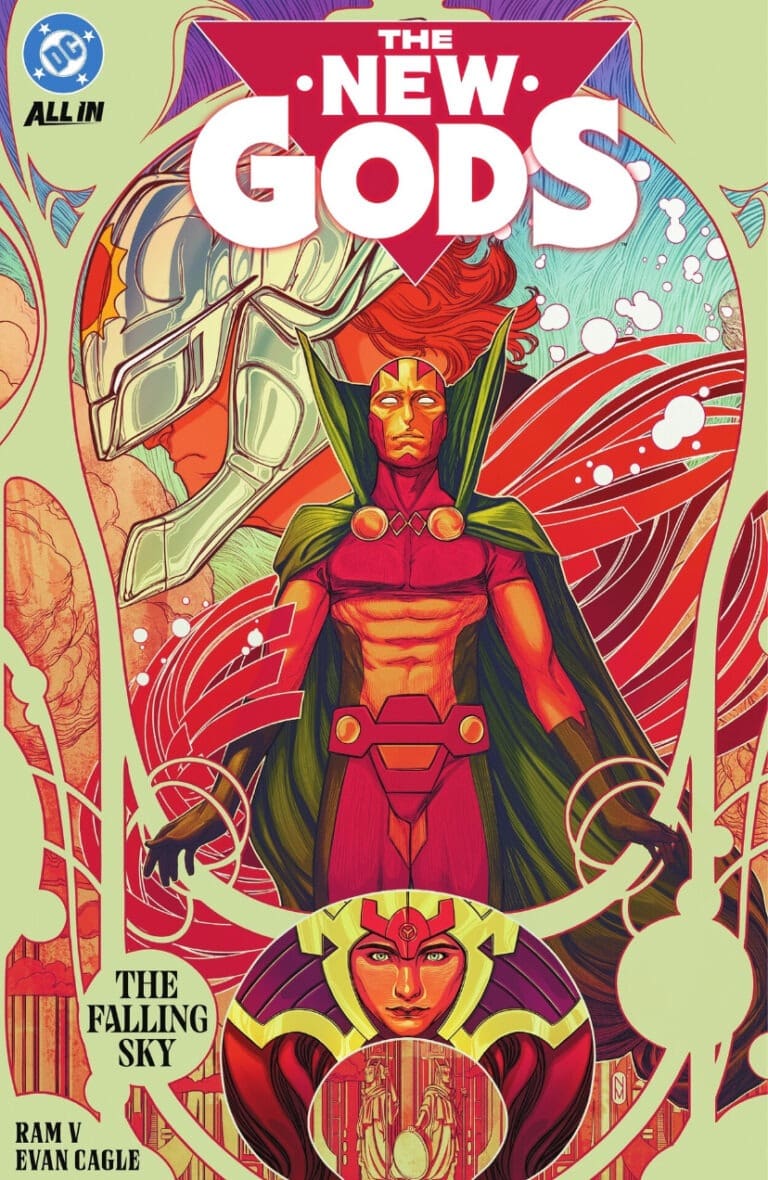
The New Gods Vol. 1: The Falling Sky is a stellar cosmic epic from a creative team that truly understands its assignment. Writer Ram V and artists Evan Cagle and Jorge Fornes have crafted a story that manages to be both mythic in scope and deeply personal. It’s an ambitious take on Jack Kirby’s Fourth World, and one that succeeds by focusing on the characters rather than just the cosmic conflict.
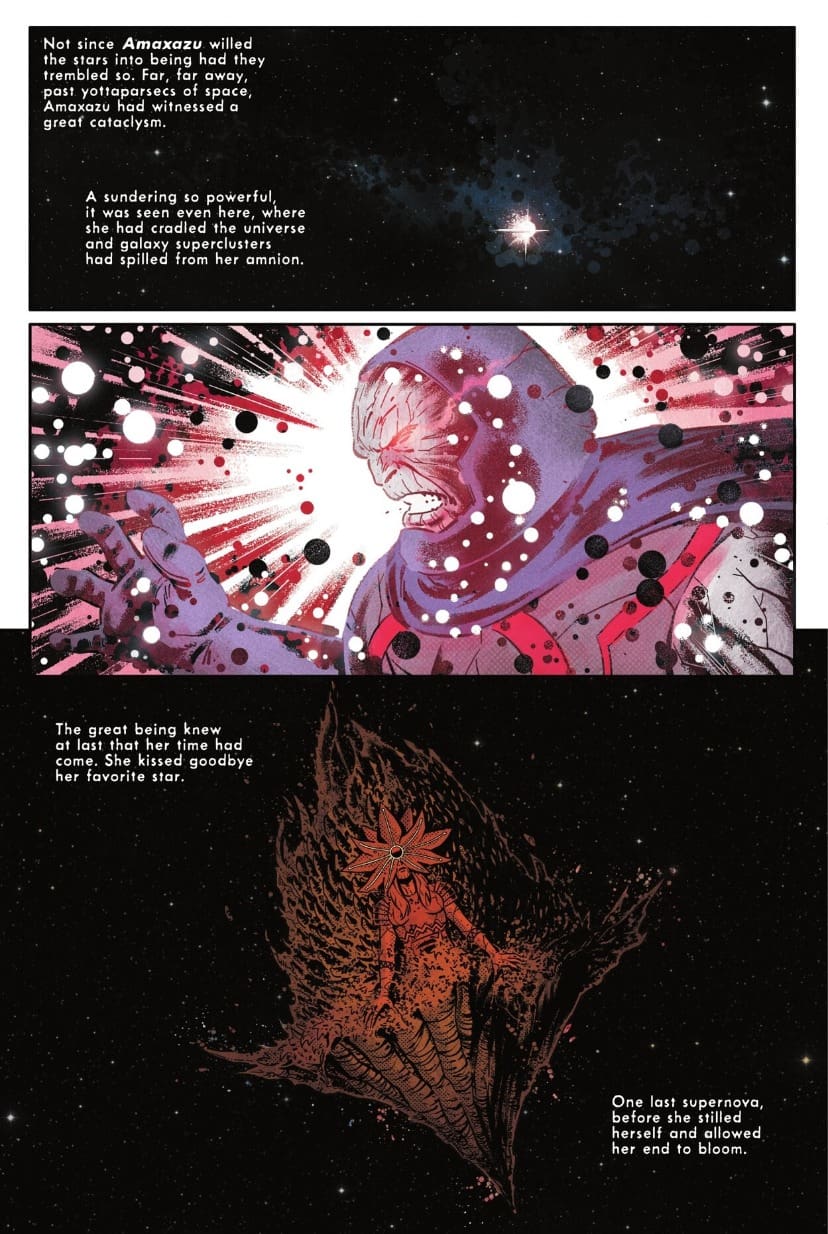
The story kicks off in a universe reeling from a monumental event: the death of Darkseid. While this might seem like a cause for celebration, the book immediately establishes that his absence has thrown the cosmos into chaos. There’s a lack of universal balance, a void that the New Gods on New Genesis are acutely aware of. The first issue sets the stage with a grand, celestial opening. We witness the death of the Old Gods, the birth of the New, and the current state of New Genesis, a city of stunning, godlike excess. The art, with contributions from both Cagle and Fornes, gives each realm its own distinct feel. The Source Wall, the very edge of the Multiverse, feels mysterious and unfathomable, while New Genesis is bright and serene, full of purity and dazzling beauty.
This divine setting, however, is quickly brought down to Earth—literally. The series is at its best when it juxtaposes the celestial with the domestic. This is masterfully achieved through the introduction of Mister Miracle, also known as Scott Free. We see him and his wife, Big Barda, not as regal deities but as exhausted new parents in a California home. The conversations that follow between Scott and Orion, Highfather’s chosen champion, are a perfect example of the book’s clever blend of ancient wisdom and modern grit. Orion, a noble warrior, talks like a god, while Scott, slumped on a park bench, talks like a regular human. This contrast is visually striking, with Orion bulky and out of place in his armor while Scott looks as normal as a human can get.
What truly elevates this series is the expert character writing. Ram V expertly grounds these larger-than-life beings, showing them struggle with universal truths and personal anxieties. On New Genesis, characters like Metron and Highfather speak with a grandiosity befitting their millennia of life, yet they bicker and snipe at each other like squabbling mortals. There’s Lightray, desperate for his father’s approval, and Orion, an immensely loyal son who receives his most troubling order yet: travel to Earth and kill a child who could change everything.
This “newest” New God is Kamal, a child being raised in India. The decision to set this part of the story on Earth adds a crucial human element, grounding the tale far away from the cosmic chess games unfolding between New Genesis and a newly power-hungry Apokolips. The art does a brilliant job of separating these different tones. Federici’s style, used for a mythic recounting of Kamal’s origins, is dreamlike and hazy, like something out of a storybook. At the same time, Cagle’s art is more grounded and tangible when focusing on the present-day events on Earth.
The series consistently explores the theme of compassion, showing how love and care were factors the gods didn’t account for. This is most evident in the journey of Mister Miracle and Big Barda. They leave their own child with a friend and set out on a quest to find and protect Kamal. Their relationship is one of the most compelling parts of the book, a realistic and endearing depiction of a happily married couple who still find time for sarcastic cracks about diaper duty.
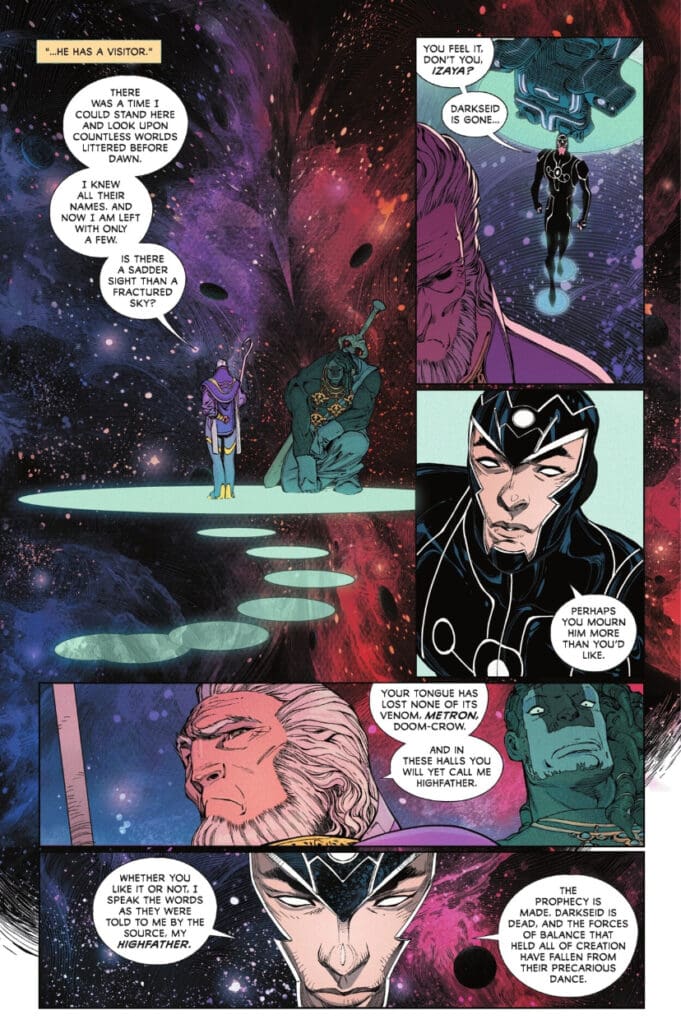
However, The New Gods Vol. 1: The Falling Sky is more than just a cosmic brawl. It’s a thoughtful exploration of legacy, family, and destiny. The creative team, including the vibrant colors of Francesco Segala and the brilliant lettering by Tom Napolitano, has done an incredible job of blending classic Kirby lore with a modern, character-driven narrative. The art perfectly captures the grandeur of the cosmos while also excelling at small, intimate moments, such as a heartfelt conversation between two friends or a powerful emotional display.
The series is filled with big ideas and an ambition that feels truly special. From the stunning visuals to the poignant character moments, this collection is a must-read for anyone who loves cosmic storytelling and epic myths. It proves that there’s still so much to explore in the rich history of the Fourth World, and that when handled with care, these characters can feel as fresh and compelling as they did when they were first created. This first volume is not just a great New Gods story; it’s a great comic book, period.
‘The New Gods’ Vol. 1: The Falling Sky: Delivers Gods, Flaws, and Family
The New Gods Vol. 1 proves that there’s still so much to explore in the rich history of the Fourth World, and that when handled with care, these characters can feel as fresh and compelling as they did when they were first created. This first volume is not just a great New Gods story; it’s a great comic book, period.