
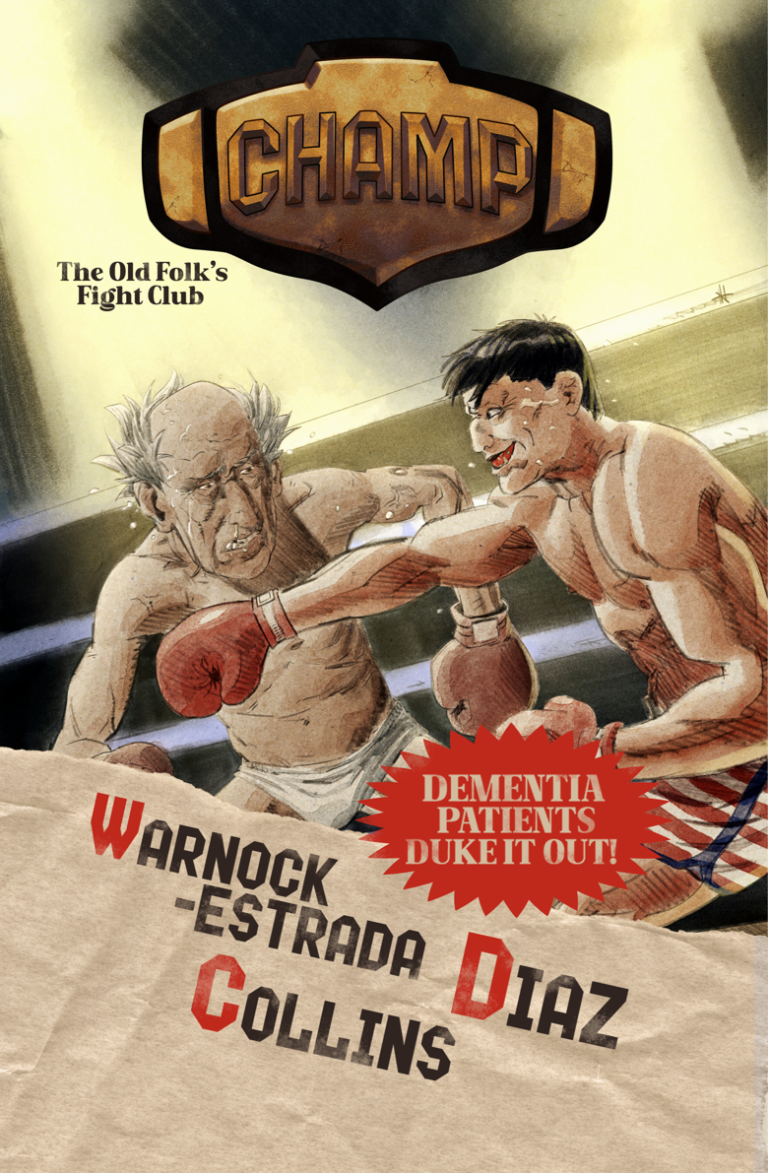
If you follow indie books, you probably know that some of the best stories are the ones that make you feel like you’ve been punched in the gut. CHAMP is exactly that kind of read, created by the talented team of Amber Warnock-Estrada, Jesusa Diaz, and Hannah Collins, with cover by Nicolo Arcuti. It takes the premise of an underground fight club for senior citizens and turns it into a devastating exploration of dementia and the way society often treats the elderly as invisible or, worse, disposable.
It is a raw look at the loss of self, and while it isn’t always an easy experience, I think it is an essential one for anyone who appreciates storytelling that takes big risks with heavy themes like memory loss and predatory geriatric care.

CHAMP is pretty violent, but the most terrifying thing about this story is the way the system treats the elderly as a commodity. The story introduces us to Mr. Herrera and a world where an old folk home is actually a front for a gambling ring that exploits patients with cognitive decline. We see the manager, a cold, calculating figure, berating Mr. Herrera for spoiling bets and being “sloppy” in fights. The whole staff is in on it, pushing the residents to fight every day just to get their kicks and make a quick buck.
CHAMP feels like a direct commentary on how our healthcare systems can sometimes prioritize profit over the actual humanity of the people they are supposed to protect. It forces you to confront a scary thought: Is this actually possible? It pushes your imagination to some pretty dark places, questioning what people are willing to do for profit and a show.
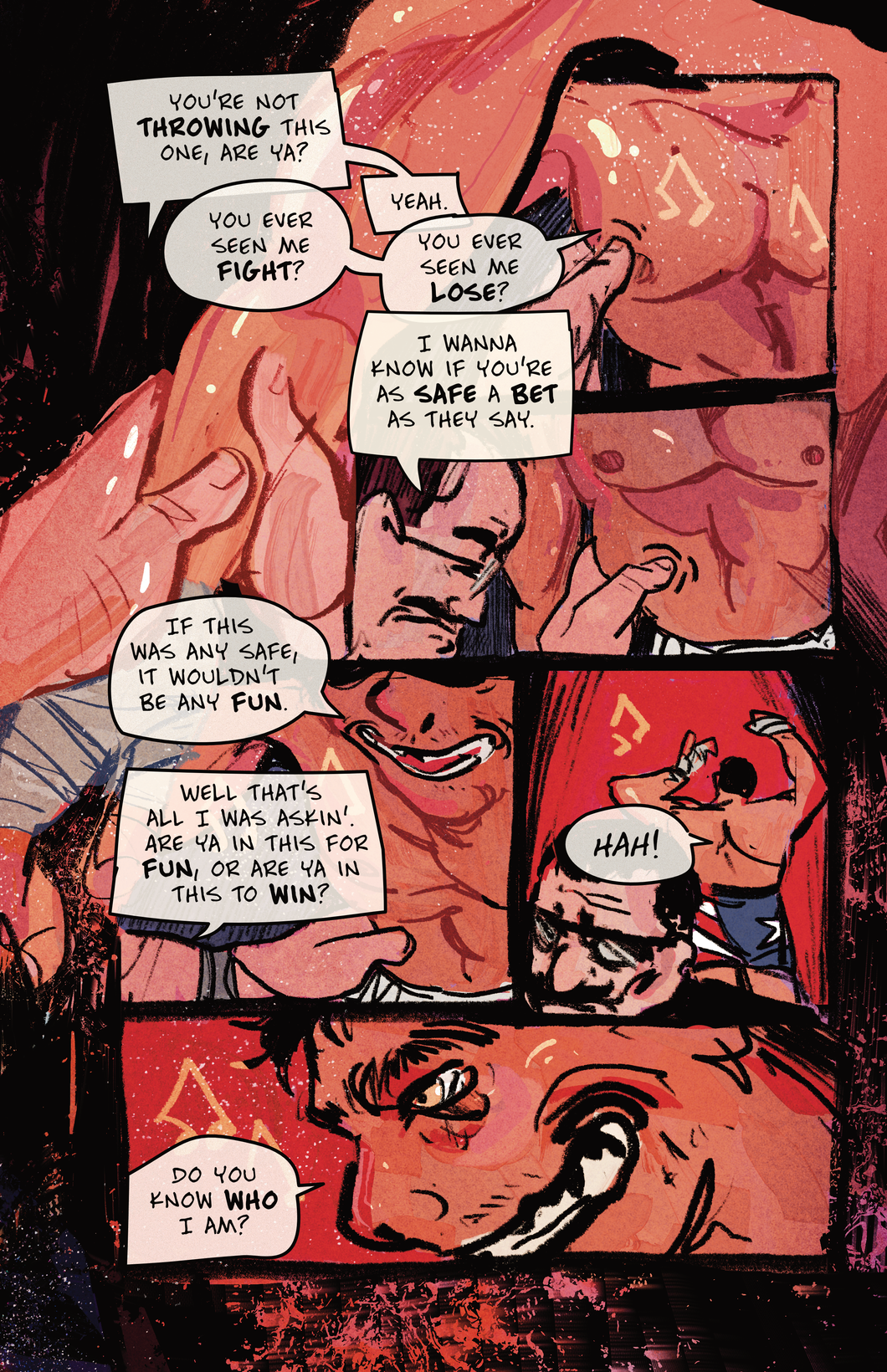
The art in this book is, frankly, spectacular. Jesusa Diaz uses a color palette that feels like a bruise; lots of deep purples, sickly yellows, and a recurring, aggressive red that dominates the fight scenes. The art doesn’t just show us what is happening; it makes us feel Herrera’s confusion. The way the panels transition from a quiet breakfast tray to the roar of a crowd is jarring in all the right ways. It captures the disorienting nature of dementia, where the present and the past collide without warning. I also really loved the repeated TAP sound effect in one panel, which felt like a hypnotic suggestion or a ticking clock, reminding both Herrera and the reader that time is running out.
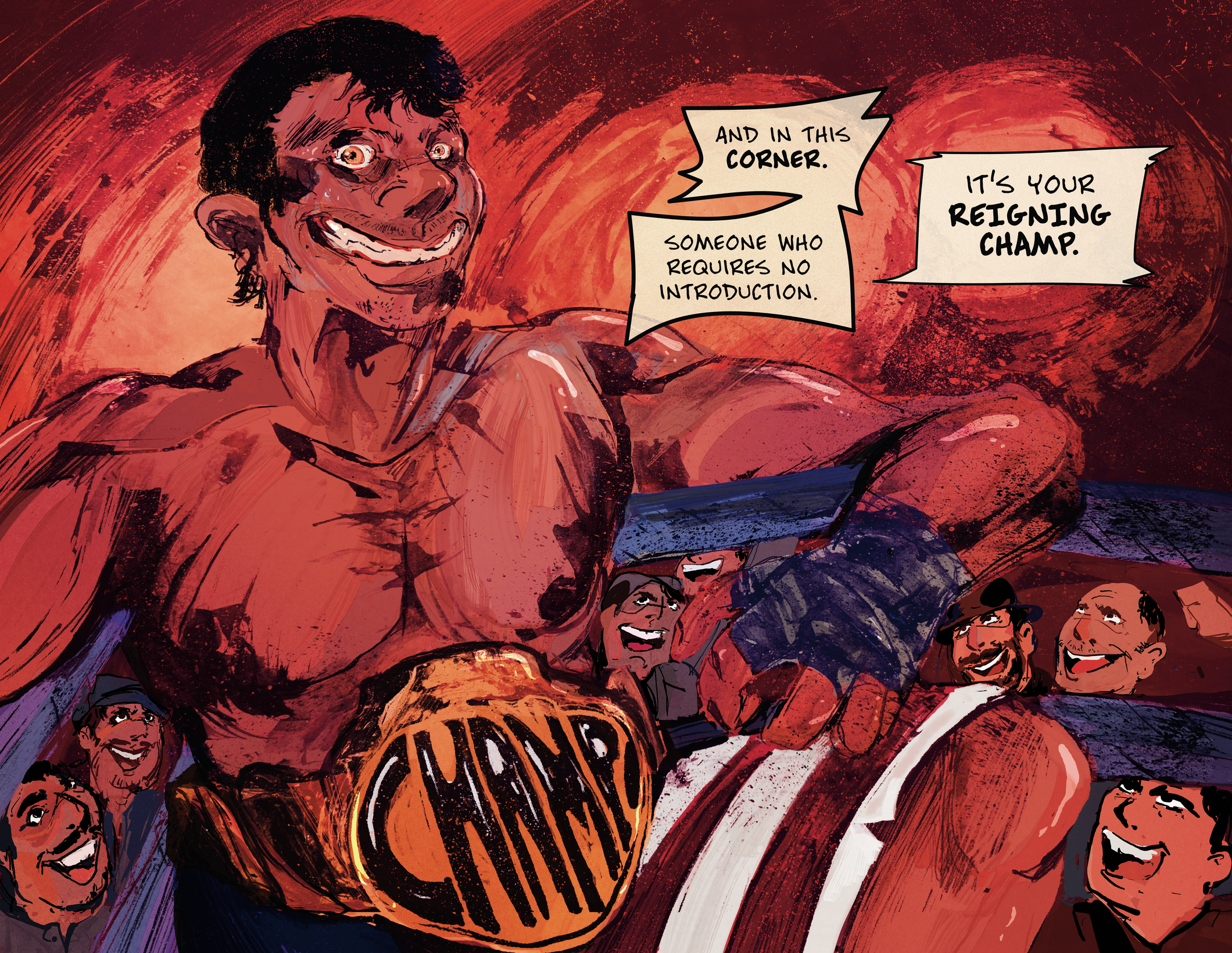
The most striking visual choice for me was the tiger symbolism introduced during the final, most brutal bout. As Herrera is pushed to his limit, he stops seeing himself as a frail man in green shorts and starts seeing himself as a massive, powerful predator. On one hand, it’s a visually stunning way to represent his internal fighter spirit. On the other hand, it’s incredibly sad because it shows how far he has drifted from reality. He is no longer in a room with people; he is in a jungle of his own mind. Diaz’s lines become much more jagged and chaotic here, and it perfectly illustrates the moment where Herrera’s grip on the real world finally snaps.
If I had to offer some criticism, I would say that the book’s 34-page length feels a bit too short for the weight of the themes it tries to carry. While the fast pace helps convey the confusion of the protagonist, I occasionally felt like the transition from the “normal” world of the facility to the horror of the fight club happened so quickly that I didn’t get to see enough of the “before” state. I would have loved one more scene showing Herrera’s daily routine to really drive home the contrast. Some might also find the manager to be a bit of a cartoon villain because he is so relentlessly cruel. While it works for the horror tone of the book, a slightly more nuanced look at the staff might have made the exploitation feel even more insidious and realistic.

Overall, CHAMP is a hauntingly visceral and deeply disturbing work. It forces the reader to look at the elderly, the “champs” in our own lives, and wonder what they are fighting for in the dark of an old folks’ home. It is a necessary, if difficult, read that stays with you long after the final page is turned.
If you’d like to dive deeper into the world of CHAMP, secure your copies, or support the creative team behind this debut, you can find more information at the links below:
Read More from KPB Comics:
‘CHAMP’ Review: The Brutal Reality of the Old Folk’s Fight Club
CHAMP is a hauntingly beautiful and deeply disturbing work. It forces the reader to look at the elderly, the “champs” in our own lives, and wonder what they are fighting for in the dark. It is a necessary, if difficult, read that stays with you long after the final page is turned.