The Saturday Morning Cartoon Renaissance: A Conversation With Writer David Pepose On ‘Speed Racer’, ‘Captain Planet’ and Hope in a Cynical World

KPB Interview: David Pepose on Space Ghost, Captain Planet, and Hope in a Cynical World

Phillip Creary | August 24, 2025

August 24, 2025

{acf_comic_author_date}

From Speed Racer to Captain Planet, writer David Pepose has built a career on reimagining classic Saturday morning cartoon heroes for a modern audience. He’s the creative force behind fan-favorite titles like Cable: Love and Chrome, Space Ghost, Spencer & Locke, and more, and he recently took on the iconic eco-hero for Mad Cave Studios. We sat down with Pepose to discuss how he updates beloved characters for today’s readers, the challenges of working with decades of established mythology, and the importance of finding hope in a cynical world.
Dynamite

Phillip Creary: You’re known for giving classic characters a fresh update. What would you say is the most challenging part of taking an old, beloved character and making them feel new and exciting for today’s audience?

David Pepose: You know, I think for me, the challenging thing is just figuring out how to connect some of the dots with the story logic. When you’re working with cartoons from the ’60s, ’70s, ’80s, or ’90s, audiences weren’t necessarily looking for plot holes. It was much easier to go from point A to point B.

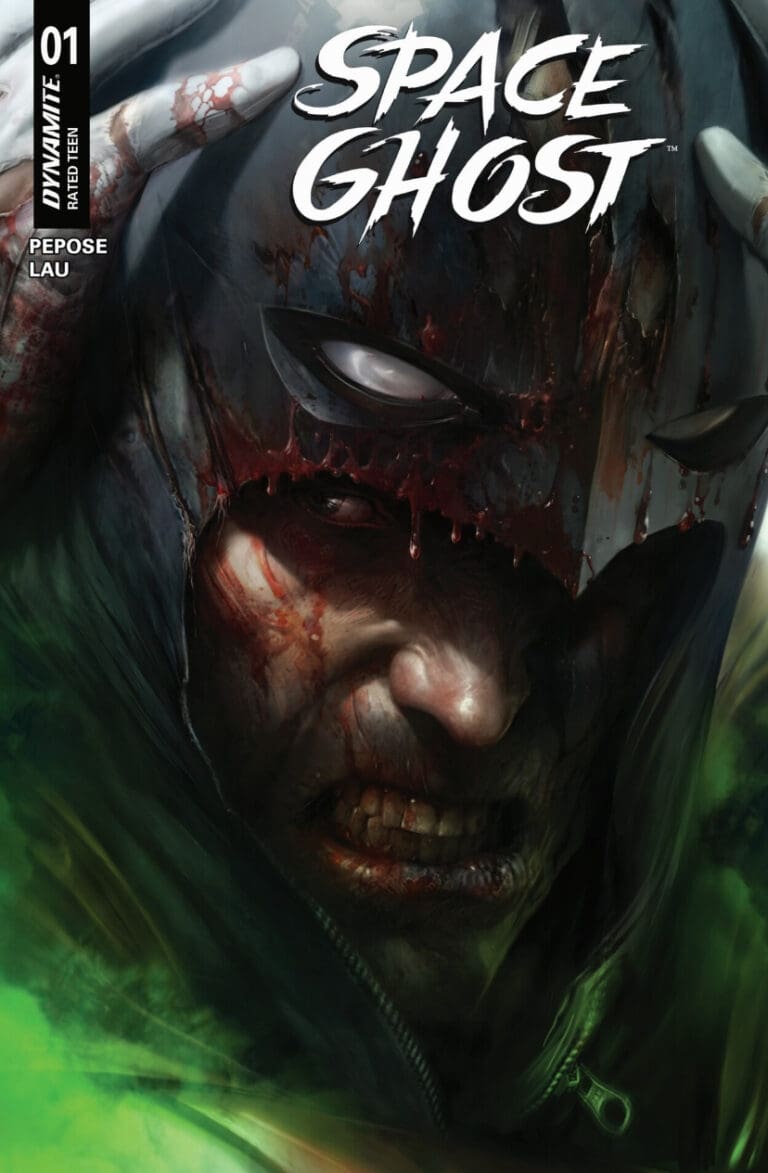
For example, with Space Ghost, I had to wrap my head around how his powers work. What are his limitations? What are his weaknesses? Are his powers inherently superhuman, or are they technologically based? Or for Speed Racer, the Mach 5 has all these gadgets, but the other cars don’t. How do we square that without it seeming like Speed is boxing with weighted gloves?

With Captain Planet, a big question was how to get all the Planeteers from their native countries to the same place. In the original cartoon, they were young, so where are the parents? How are they okay with their kids absconding to a random island? Those are always the biggest hurdles for me, figuring out how to line up the mythology in a way that feels airtight and passes the smell test.

Beyond that, it’s about figuring out what’s appealing about the concept to me. Writing a book is a marathon, so you’d better like these characters and the high concept because otherwise, it’s a tough road. I’ve had a few books where that’s been the case. It’s also about figuring out the core appeal and why the series has endured for so long. What are those core qualities that made it a success? And then figuring out a way to build a story based on those.
Dynamite

PC: On the topic of Space Ghost, you mentioned something interesting. Does he actually have powers, or is it his gear?

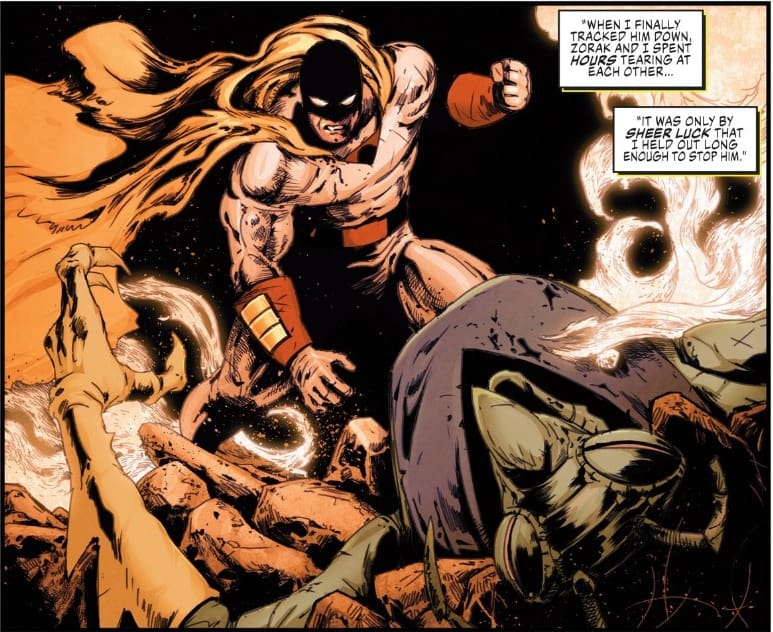
David Pepose: It’s his gauntlets, the power bands, the invis-belt, and his radiographic harness. That’s really where all his powers come from. It’s gravity manipulation, force fields, and his manipulation of light, temperature, and pressure. I like the idea that he is space Batman. He has this almost Iron Man-like tech. In our two-parter with Metallus, Metallus shatters the power bands. It’s a nice option to be able sometimes to turn your hero’s powers off and force him to figure out how to survive without his signature abilities.

PC: Season one was all about Space Ghost, Jan, and Jace becoming a family. How do you plan to raise the stakes in season two while keeping that emotional core intact?

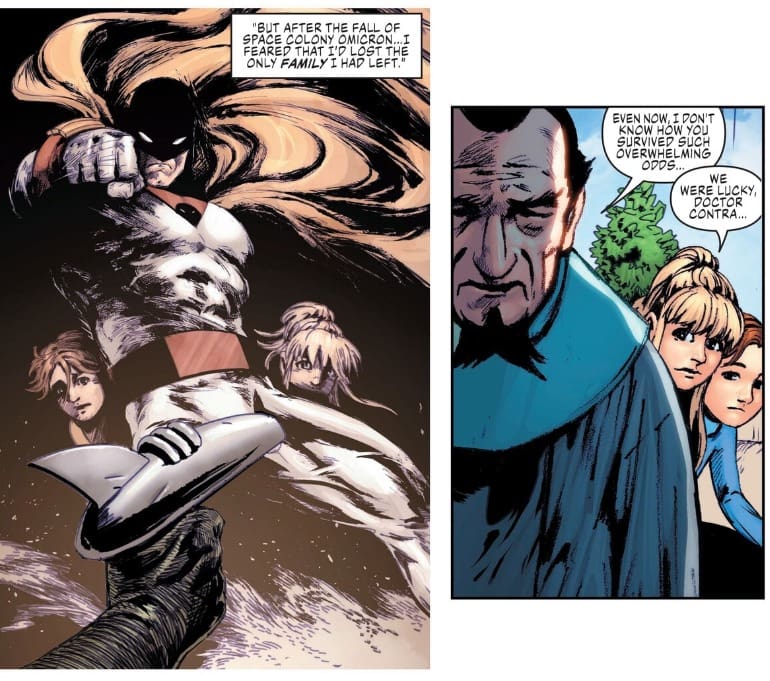
David Pepose: That’s a great question. For me, it’s about taking that central formula from the first series, half villain-of-the-week and half figuring out Space Ghost’s ongoing relationship with Jan and Jace, and increasing that on both fronts for season two. We have two story threads: the ongoing threat of Tempus the Time-Master and the introduction of Dr. Henry Contra, Jan and Jace’s maternal grandfather.

The heart of it is still Jan and Jace, and their relationship with Space Ghost is tested by Contra. He was estranged from the family, and after hearing about their colony being attacked, he came back into their lives, saying, “I want to raise you. I want to bring you in.” The core escapist fantasy of Space Ghost is that two kids get to save the universe with a superhero. The idea of that fantasy suddenly being broken by a parent saying, “I’ve come to take you home,” is very potent. Dr. Contra has a villainous alter ego, the Anti-Matter Man, and our series will portray him as the Harvey Dent of our series. It’s going to come down to this found family unit and what happens when one of them breaks bad.

PC: In your version, Blip has a new identity as the “Binary Language Integral Prototype.” How early on did you know you wanted to go in that direction?

David Pepose: Pretty much from the jump. When I was thinking about the character, the first thing that came to mind was that Adam West’s Batman inspired him. It was very apparent to me from the jump that we never learned how Space Ghost met Jan and Jace. This idea of a found family coming together was the core. The next question I had to ask myself was, “Are we keeping the monkey?” I thought long and hard about it and came to the conclusion that Blip was such a specific choice that not having him would be like serving an ice cream sundae without the cherry. I needed a plot reason to justify him. The idea of making him the MacGuffin of the whole run is how I squared that: having him as the dad’s science experiment explains why the kids have a monkey and why he’s so smart.
Dynamite

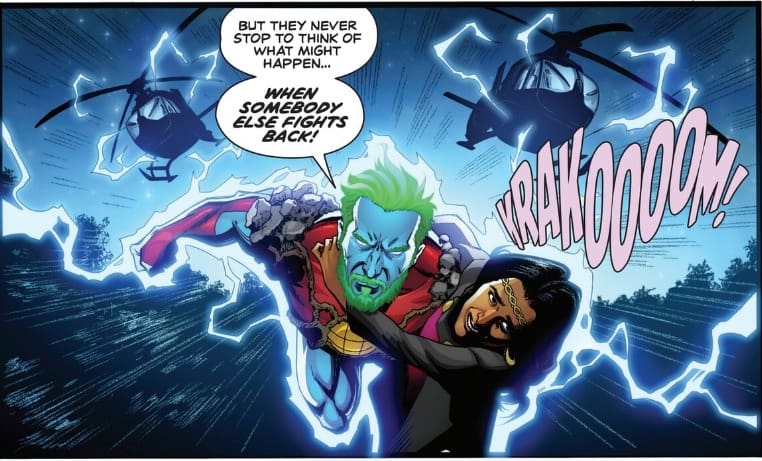
PC: On Captain Planet, you said you wanted him to feel real, but the world we live in is pretty chaotic right now. How do you update the threats from a 1989 cartoon to make them relevant today?

David Pepose: Captain Planet often gets a bad rap for feeling dated, but when the series came out, it was meant to reflect the world outside its window in 1989. Of course, 30 years later, things have changed. However, I think Ted Turner and Barbara Pyle were ahead of their time. The villains were broad strokes that spoke to some strains we’re still seeing in culture today.

I’ve been wanting to write Captain Planet for a decade, and it’s a little disconcerting to see how the themes only feel more relevant. I wanted our villain, Lucian Plunder, to feel timely. He’s a tech-bro oligarch who’s infiltrating every segment of society. His ethos is that the ends justify the means, and his ends are just enriching his own wealth and power. That feels pretty timeless.

The thing about books like Captain Planet is that nothing about these concepts is broken. It’s just a matter of giving them a modern reappraisal through today’s eyes. For me, I write by touch. It feels like a sculpture, and it’s only when I’m done tinkering with it that I can look back and say, “Okay, this feels right.” I’m a big believer that the best kind of fiction has a message. Hopefully, it gives readers that one moment of hesitation that says, “Huh, maybe we have more in common than we think. Maybe diversity is our strength.”

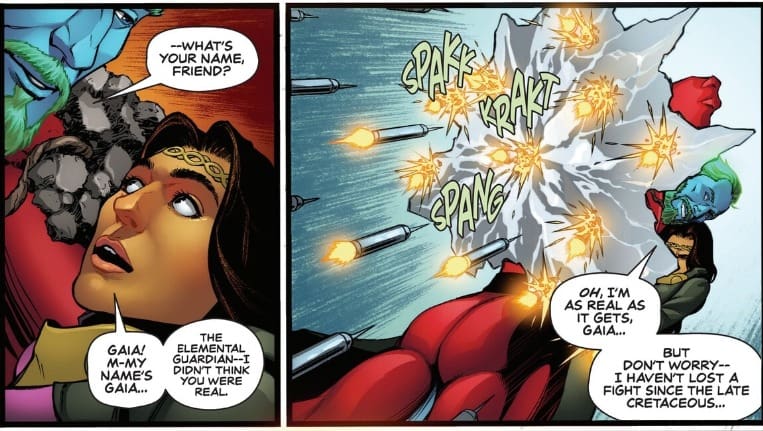
PC: Speaking of your Captain Planet series, you removed Gaia pretty early on. Why was it important to remove that guiding figure?

David Pepose: It goes back to your first question: figuring out limitations and weaknesses. You don’t want to make it easy on these characters. Gaia, in the original cartoon, struck me as a little bit of a “get out of jail free” card. Having two demigods removes a lot of stakes and tension. I wanted the stakes to feel personal, so having a living being as the MacGuffin adds a sense of immediacy. I wanted the Planeteers to be the underdogs. I pitched this book as X-Men meets Avatar: The Last Airbender. The Planeteers are fighting for the right thing, but are immediately targeted by a billionaire.

I didn’t want the Planeteers on Hope Island; I wanted them in New York, a great melting pot city. Our way of circling the square for Gaia was to turn her into a Dalai Lama figure rather than a demigod. Watching the original show, it was very apparent to me that Captain Planet is the trump card, but he’s not meant to solve everything. It’s down to us.
Mad Cave

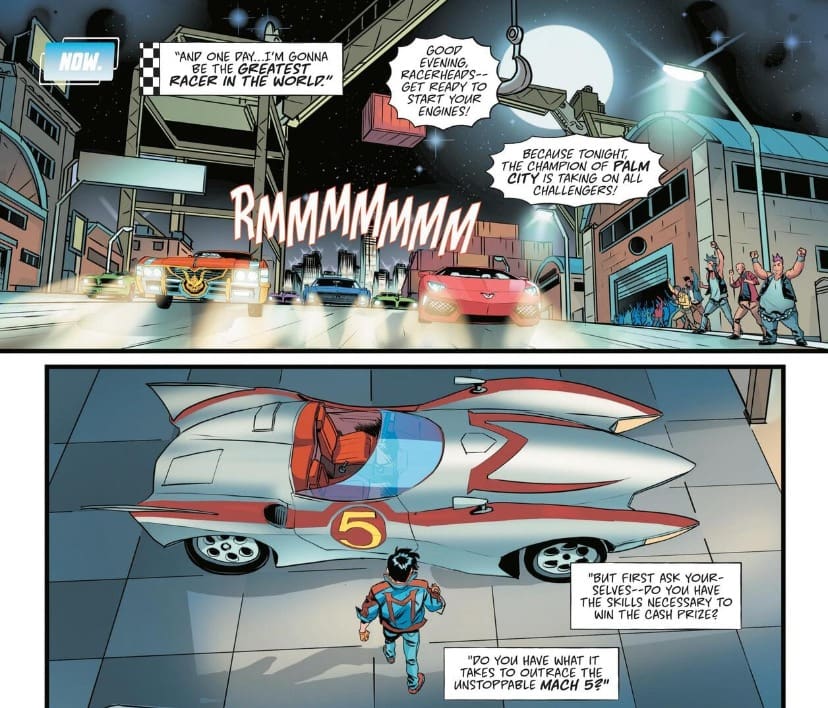
PC: Speed Racer is a pretty straightforward hero type. How do you find new ways to challenge him emotionally and strategically beyond him just winning races?

David Pepose: Speed is a flawed character. He’s talented, but he’s very emotional. I pitched the book as Rocky in a race car. Every issue, we’re figuring out what Speed has to learn or overcome, and a lot of times, it’s himself. Whether it’s figuring out a reason to race beyond glory or dealing with imposter syndrome when he joins Formula X for the first time. In a lot of ways, every book that I write, the best ones anyway, is autobiographical in some capacity. Speed Racer draws from my own experience of going from a civilian to a professional comics writer and joining the majors. It’s a learning curve, and you learn your weaknesses very quickly.

Speed’s relationships with his supporting cast are the heart of the book. His dynamic with Trixie, who’s the boss of the racing team, his relationship with Spritle, which mirrors his relationship with his late brother Rex, and his fraught relationship with Pops. What happens when Pops has a crisis of faith after losing one son, and his other son joins the same league? We’ll see that in the second arc. Racer X also has a vested interest in making sure his brother survives, but their first meeting won’t go as smoothly as you might think. He believes racing is a place to settle old scores, not a place for someone like Speed.
Papercutz

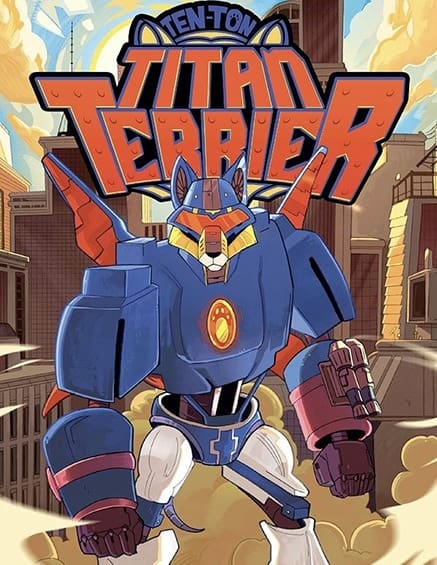
PC: The idea for Ten Ton Titan Terrier, a terrier controlling a giant battlemech, is awesome. Where did it come from?

David Pepose: It’s such a personal story for me. I wrote it in the early days of the pandemic while caring for my family’s dog, Holly, who was diagnosed with melanoma. I felt so powerless. I remember sitting in the waiting room thinking, “If I can’t save my dog, maybe I can make her immortal.” Holly was a sweet dog who battled for about a year. In that time, I wrote the majority of Ten Ton Titan Terrier. I pitched it as Pokémon meets Pacific Rim, where instead of Ash and Pikachu, it’s a scientist and his dog, and the dog is piloting an alien battlesuit to fight Kaiju.

I’ve written some darker material over the years, and I was tired of not having anything to sell to kids at conventions. I can’t tell you how many children would reach for a copy of Spencer & Locke, and I’d have to apologize to the parent by saying, “Your child cannot read this book.” I felt like a book for younger readers was a missing food group in my bibliography. This was a book I said by hook or by crook I was going to get made.

PC: You’ve now written for a variety of demographics. Is there a different process for writing for kids?

David Pepose: The only thing is being cognizant of who you’re writing for, but you don’t talk down to them. You don’t have to dumb it down. I grew up reading ’90s Spider-Man, and that changed my life. The art does a lot of heavy lifting in that regard. Finding the right collaborator, like Ornella Greco on Terrier, is 80% of the battle. She’s a superstar in the making. We can still have the robot versus Kaiju action, but there’s no gore or blood. I don’t think it’s going to be done in a way that’s going to freak kids out.

PC: Your books have a sense of hope even when things get really bleak. How important is it for you to add that optimism to your work, especially in a world that can feel so cynical?

David Pepose: I appreciate you saying that because I think that’s the heart of why I do what I do. With my books, even the darker ones, it’s about the redemptive climb. I think you can start bleak as long as you aren’t staying there. There’s always room to change things and make things a little bit better. I like to write characters who are flawed and have a past, but that doesn’t have to define who they are.

One of my favorite comics is an issue of Justice Society of America by Geoff Johns. It’s the Liberty Bell issue, and the message is, “Just because something has a crack in it doesn’t mean you have to throw it away.” We all feel a little broken sometimes, and the message I want to convey is that there’s always room for hope. That’s what makes for compelling character arcs.

It’s the difference between a story and content. “Content” and “product” are my least favorite words. I’m not in this to make a product; I’m in this to tell a story. My goal is never to forget that.
Dynamite

PC: Alright, let’s do some rapid-fire questions. If you had to create a personal Mount Rushmore of classic cartoons, who would be on it?

David Pepose: Batman: The Animated Series (if the Superman Batman adventures count), 90s X-Men, and Teenage Mutant Ninja Turtles for sure. I’d love to do something in the Turtles universe. I guess Captain Planet would be the fourth one.

PC: If you could have any of the Captain Planet rings, which one would you choose and what would you do with it?

David Pepose: I’d choose the Wind ring. It’s the only one of those rings that wouldn’t destroy my apartment or make me lose my mind. I’d probably just float around my neighborhood with it. The other rings can be very destructive if you don’t have a lot of control.

PC: You’re going on an adventure, and you need a monkey sidekick. Do you choose Blip (Space Ghost) or Chim Chim (Speed Racer)?

David Pepose: You choose Blip, 100%. I love Chim Chim, but he’s a wild card and all mischief. He’s a loving pet, but you would not want to trust your life in his hands. Blip is smarter than Chim Chim. He understands stakes and danger more. Plus, he’s got a jetpack, he can turn invisible, and he knows how to fire a blaster. He’s a lot more useful in an adventure setting.

PC: What TV, movie, or video game has you hooked right now?

David Pepose: I’ve had to put video games away because the ones I love, I love too hard. I can’t play Baldur’s Gate 3 or Fallout 4 anymore because I’d never get any work done. For TV, I really loved The Pitt and The Last of Us. I’m also on a real horror movie kick lately. I love Companion, Friendship, and Sinners. Horror is where the boundaries are being pushed the most. At the same time, the writers and directors are playing fair with the viewers by telling a coherent story with a compelling theme and a satisfying ending.

PC: And that concludes our conversation with David Pepose. Be sure to check out Space Ghost, Speed Racer, Captain Planet, and more, available now

The Saturday Morning Cartoon Renaissance: A Conversation With Writer David Pepose On ‘Speed Racer’, ‘Captain Planet’ and Hope in a Cynical World

KPB Interview: David Pepose on Space Ghost, Captain Planet, and Hope in a Cynical World

August 24, 2025

{acf_comic_author_date}

From Speed Racer to Captain Planet, writer David Pepose has built a career on reimagining classic Saturday morning cartoon heroes for a modern audience. He’s the creative force behind fan-favorite titles like Cable: Love and Chrome, Space Ghost, Spencer & Locke, and more, and he recently took on the iconic eco-hero for Mad Cave Studios. We sat down with Pepose to discuss how he updates beloved characters for today’s readers, the challenges of working with decades of established mythology, and the importance of finding hope in a cynical world.

Dynamite

Phillip Creary: You’re known for giving classic characters a fresh update. What would you say is the most challenging part of taking an old, beloved character and making them feel new and exciting for today’s audience?

David Pepose: You know, I think for me, the challenging thing is just figuring out how to connect some of the dots with the story logic. When you’re working with cartoons from the ’60s, ’70s, ’80s, or ’90s, audiences weren’t necessarily looking for plot holes. It was much easier to go from point A to point B.

For example, with Space Ghost, I had to wrap my head around how his powers work. What are his limitations? What are his weaknesses? Are his powers inherently superhuman, or are they technologically based? Or for Speed Racer, the Mach 5 has all these gadgets, but the other cars don’t. How do we square that without it seeming like Speed is boxing with weighted gloves?

With Captain Planet, a big question was how to get all the Planeteers from their native countries to the same place. In the original cartoon, they were young, so where are the parents? How are they okay with their kids absconding to a random island? Those are always the biggest hurdles for me, figuring out how to line up the mythology in a way that feels airtight and passes the smell test.

Beyond that, it’s about figuring out what’s appealing about the concept to me. Writing a book is a marathon, so you’d better like these characters and the high concept because otherwise, it’s a tough road. I’ve had a few books where that’s been the case. It’s also about figuring out the core appeal and why the series has endured for so long. What are those core qualities that made it a success? And then figuring out a way to build a story based on those.

Dynamite

PC: On the topic of Space Ghost, you mentioned something interesting. Does he actually have powers, or is it his gear?

David Pepose: It’s his gauntlets, the power bands, the invis-belt, and his radiographic harness. That’s really where all his powers come from. It’s gravity manipulation, force fields, and his manipulation of light, temperature, and pressure. I like the idea that he is space Batman. He has this almost Iron Man-like tech. In our two-parter with Metallus, Metallus shatters the power bands. It’s a nice option to be able sometimes to turn your hero’s powers off and force him to figure out how to survive without his signature abilities.

PC: Season one was all about Space Ghost, Jan, and Jace becoming a family. How do you plan to raise the stakes in season two while keeping that emotional core intact?

David Pepose: That’s a great question. For me, it’s about taking that central formula from the first series, half villain-of-the-week and half figuring out Space Ghost’s ongoing relationship with Jan and Jace, and increasing that on both fronts for season two. We have two story threads: the ongoing threat of Tempus the Time-Master and the introduction of Dr. Henry Contra, Jan and Jace’s maternal grandfather.

The heart of it is still Jan and Jace, and their relationship with Space Ghost is tested by Contra. He was estranged from the family, and after hearing about their colony being attacked, he came back into their lives, saying, “I want to raise you. I want to bring you in.” The core escapist fantasy of Space Ghost is that two kids get to save the universe with a superhero. The idea of that fantasy suddenly being broken by a parent saying, “I’ve come to take you home,” is very potent. Dr. Contra has a villainous alter ego, the Anti-Matter Man, and our series will portray him as the Harvey Dent of our series. It’s going to come down to this found family unit and what happens when one of them breaks bad.

PC: In your version, Blip has a new identity as the “Binary Language Integral Prototype.” How early on did you know you wanted to go in that direction?

David Pepose: Pretty much from the jump. When I was thinking about the character, the first thing that came to mind was that Adam West’s Batman inspired him. It was very apparent to me from the jump that we never learned how Space Ghost met Jan and Jace. This idea of a found family coming together was the core. The next question I had to ask myself was, “Are we keeping the monkey?” I thought long and hard about it and came to the conclusion that Blip was such a specific choice that not having him would be like serving an ice cream sundae without the cherry. I needed a plot reason to justify him. The idea of making him the MacGuffin of the whole run is how I squared that: having him as the dad’s science experiment explains why the kids have a monkey and why he’s so smart.

Dynamite

PC: On Captain Planet, you said you wanted him to feel real, but the world we live in is pretty chaotic right now. How do you update the threats from a 1989 cartoon to make them relevant today?

David Pepose: Captain Planet often gets a bad rap for feeling dated, but when the series came out, it was meant to reflect the world outside its window in 1989. Of course, 30 years later, things have changed. However, I think Ted Turner and Barbara Pyle were ahead of their time. The villains were broad strokes that spoke to some strains we’re still seeing in culture today.

I’ve been wanting to write Captain Planet for a decade, and it’s a little disconcerting to see how the themes only feel more relevant. I wanted our villain, Lucian Plunder, to feel timely. He’s a tech-bro oligarch who’s infiltrating every segment of society. His ethos is that the ends justify the means, and his ends are just enriching his own wealth and power. That feels pretty timeless.

The thing about books like Captain Planet is that nothing about these concepts is broken. It’s just a matter of giving them a modern reappraisal through today’s eyes. For me, I write by touch. It feels like a sculpture, and it’s only when I’m done tinkering with it that I can look back and say, “Okay, this feels right.” I’m a big believer that the best kind of fiction has a message. Hopefully, it gives readers that one moment of hesitation that says, “Huh, maybe we have more in common than we think. Maybe diversity is our strength.”

PC: Speaking of your Captain Planet series, you removed Gaia pretty early on. Why was it important to remove that guiding figure?

David Pepose: It goes back to your first question: figuring out limitations and weaknesses. You don’t want to make it easy on these characters. Gaia, in the original cartoon, struck me as a little bit of a “get out of jail free” card. Having two demigods removes a lot of stakes and tension. I wanted the stakes to feel personal, so having a living being as the MacGuffin adds a sense of immediacy. I wanted the Planeteers to be the underdogs. I pitched this book as X-Men meets Avatar: The Last Airbender. The Planeteers are fighting for the right thing, but are immediately targeted by a billionaire.

I didn’t want the Planeteers on Hope Island; I wanted them in New York, a great melting pot city. Our way of circling the square for Gaia was to turn her into a Dalai Lama figure rather than a demigod. Watching the original show, it was very apparent to me that Captain Planet is the trump card, but he’s not meant to solve everything. It’s down to us.

Mad Cave

PC: Speed Racer is a pretty straightforward hero type. How do you find new ways to challenge him emotionally and strategically beyond him just winning races?

David Pepose: Speed is a flawed character. He’s talented, but he’s very emotional. I pitched the book as Rocky in a race car. Every issue, we’re figuring out what Speed has to learn or overcome, and a lot of times, it’s himself. Whether it’s figuring out a reason to race beyond glory or dealing with imposter syndrome when he joins Formula X for the first time. In a lot of ways, every book that I write, the best ones anyway, is autobiographical in some capacity. Speed Racer draws from my own experience of going from a civilian to a professional comics writer and joining the majors. It’s a learning curve, and you learn your weaknesses very quickly.

Speed’s relationships with his supporting cast are the heart of the book. His dynamic with Trixie, who’s the boss of the racing team, his relationship with Spritle, which mirrors his relationship with his late brother Rex, and his fraught relationship with Pops. What happens when Pops has a crisis of faith after losing one son, and his other son joins the same league? We’ll see that in the second arc. Racer X also has a vested interest in making sure his brother survives, but their first meeting won’t go as smoothly as you might think. He believes racing is a place to settle old scores, not a place for someone like Speed.

Papercutz

PC: The idea for Ten Ton Titan Terrier, a terrier controlling a giant battlemech, is awesome. Where did it come from?

David Pepose: It’s such a personal story for me. I wrote it in the early days of the pandemic while caring for my family’s dog, Holly, who was diagnosed with melanoma. I felt so powerless. I remember sitting in the waiting room thinking, “If I can’t save my dog, maybe I can make her immortal.” Holly was a sweet dog who battled for about a year. In that time, I wrote the majority of Ten Ton Titan Terrier. I pitched it as Pokémon meets Pacific Rim, where instead of Ash and Pikachu, it’s a scientist and his dog, and the dog is piloting an alien battlesuit to fight Kaiju.

I’ve written some darker material over the years, and I was tired of not having anything to sell to kids at conventions. I can’t tell you how many children would reach for a copy of Spencer & Locke, and I’d have to apologize to the parent by saying, “Your child cannot read this book.” I felt like a book for younger readers was a missing food group in my bibliography. This was a book I said by hook or by crook I was going to get made.

PC: You’ve now written for a variety of demographics. Is there a different process for writing for kids?

David Pepose: The only thing is being cognizant of who you’re writing for, but you don’t talk down to them. You don’t have to dumb it down. I grew up reading ’90s Spider-Man, and that changed my life. The art does a lot of heavy lifting in that regard. Finding the right collaborator, like Ornella Greco on Terrier, is 80% of the battle. She’s a superstar in the making. We can still have the robot versus Kaiju action, but there’s no gore or blood. I don’t think it’s going to be done in a way that’s going to freak kids out.

PC: Your books have a sense of hope even when things get really bleak. How important is it for you to add that optimism to your work, especially in a world that can feel so cynical?

David Pepose: I appreciate you saying that because I think that’s the heart of why I do what I do. With my books, even the darker ones, it’s about the redemptive climb. I think you can start bleak as long as you aren’t staying there. There’s always room to change things and make things a little bit better. I like to write characters who are flawed and have a past, but that doesn’t have to define who they are.

One of my favorite comics is an issue of Justice Society of America by Geoff Johns. It’s the Liberty Bell issue, and the message is, “Just because something has a crack in it doesn’t mean you have to throw it away.” We all feel a little broken sometimes, and the message I want to convey is that there’s always room for hope. That’s what makes for compelling character arcs.

It’s the difference between a story and content. “Content” and “product” are my least favorite words. I’m not in this to make a product; I’m in this to tell a story. My goal is never to forget that.

Dynamite

PC: Alright, let’s do some rapid-fire questions. If you had to create a personal Mount Rushmore of classic cartoons, who would be on it?

David Pepose: Batman: The Animated Series (if the Superman Batman adventures count), 90s X-Men, and Teenage Mutant Ninja Turtles for sure. I’d love to do something in the Turtles universe. I guess Captain Planet would be the fourth one.

PC: If you could have any of the Captain Planet rings, which one would you choose and what would you do with it?

David Pepose: I’d choose the Wind ring. It’s the only one of those rings that wouldn’t destroy my apartment or make me lose my mind. I’d probably just float around my neighborhood with it. The other rings can be very destructive if you don’t have a lot of control.

PC: You’re going on an adventure, and you need a monkey sidekick. Do you choose Blip (Space Ghost) or Chim Chim (Speed Racer)?

David Pepose: You choose Blip, 100%. I love Chim Chim, but he’s a wild card and all mischief. He’s a loving pet, but you would not want to trust your life in his hands. Blip is smarter than Chim Chim. He understands stakes and danger more. Plus, he’s got a jetpack, he can turn invisible, and he knows how to fire a blaster. He’s a lot more useful in an adventure setting.

PC: What TV, movie, or video game has you hooked right now?

David Pepose: I’ve had to put video games away because the ones I love, I love too hard. I can’t play Baldur’s Gate 3 or Fallout 4 anymore because I’d never get any work done. For TV, I really loved The Pitt and The Last of Us. I’m also on a real horror movie kick lately. I love Companion, Friendship, and Sinners. Horror is where the boundaries are being pushed the most. At the same time, the writers and directors are playing fair with the viewers by telling a coherent story with a compelling theme and a satisfying ending.

PC: And that concludes our conversation with David Pepose. Be sure to check out Space Ghost, Speed Racer, Captain Planet, and more, available now

Share:

Comments

Leave the first comment

<!-- if comments are disabled for this post then hide comments container -->
<style> 
<?php if(!comments_open()) { echo "#nfps-comments-container {display: none !important;}"; }?>
</style>