Halloween is almost here. The air is starting to bite, the candy bowls are out, and for us comic fans, the only proper way to celebrate is by stacking our reading piles with stories that genuinely unsettle. Forget those flimsy, flash-in-the-pan jump scares: we’re looking for something deeper than a fright on the surface.
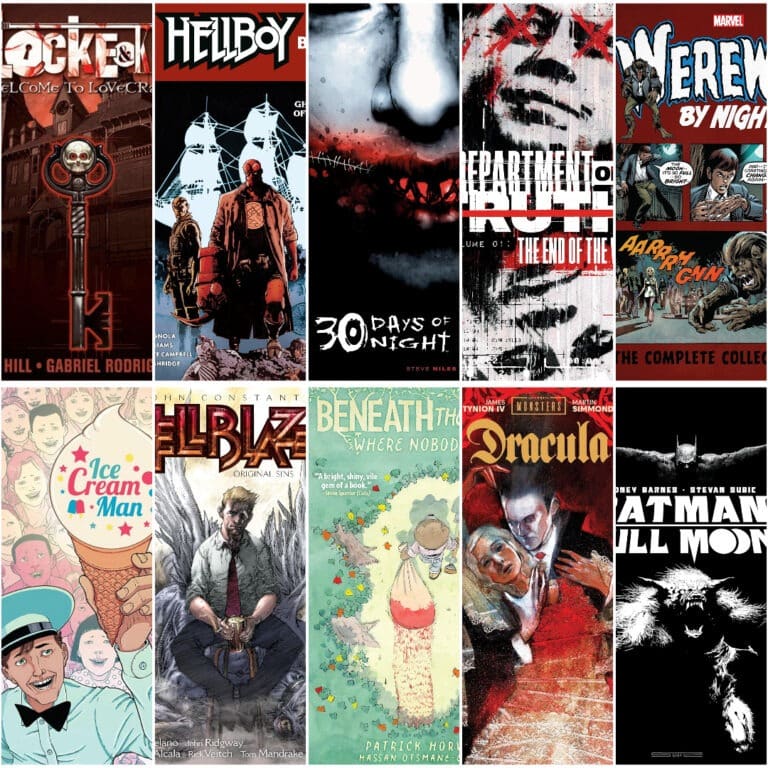
To guide your reading through the shadowy week ahead, we’ve compiled a list of our favorite Halloween books. But let’s be clear: this isn’t a simple “Top 10 Spooks.”
Consider this your personal dossier of dread, assembled with one crucial question in mind: Which horror comics offer the most sustained, bone-deep fear, the sharpest stylistic innovation, and the kind of thematic bite that makes them worth revisiting on a long, dark Halloween night?
**Heads up! This post contains Amazon affiliate links, which means that as an Amazon Associate, we may earn a small commission if you make a purchase through these links, at no additional cost to you. We only recommend books we genuinely love and believe will add value to our readers. Happy reading!**
Now, if you want a deep, lasting chill (an alternative to watching classic Halloween movies), these spooky season comics are your essential reading list. Let’s find the stories that stick!
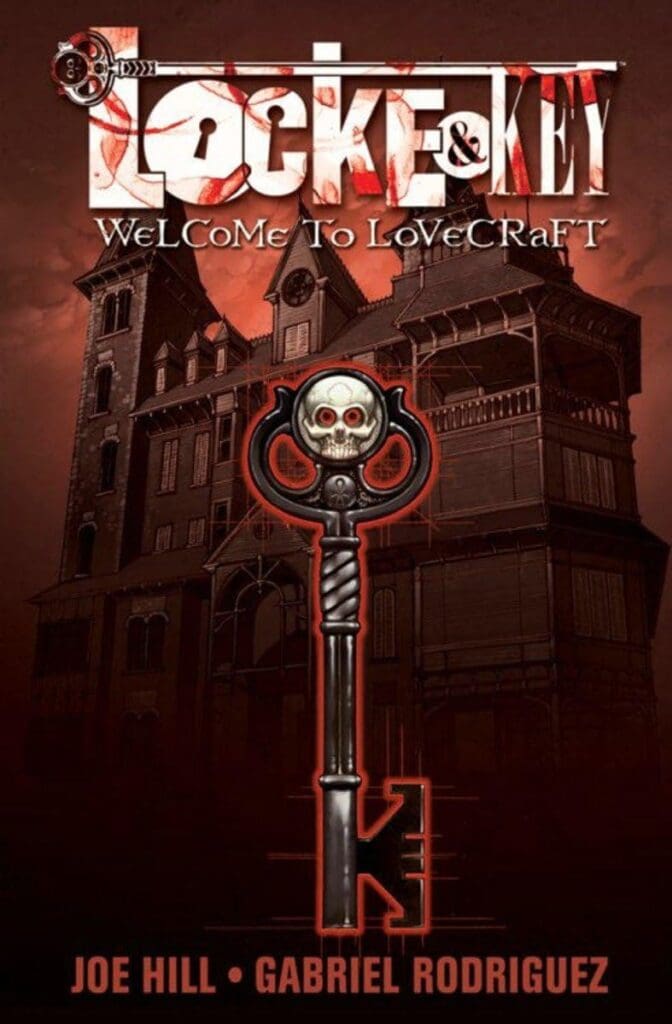
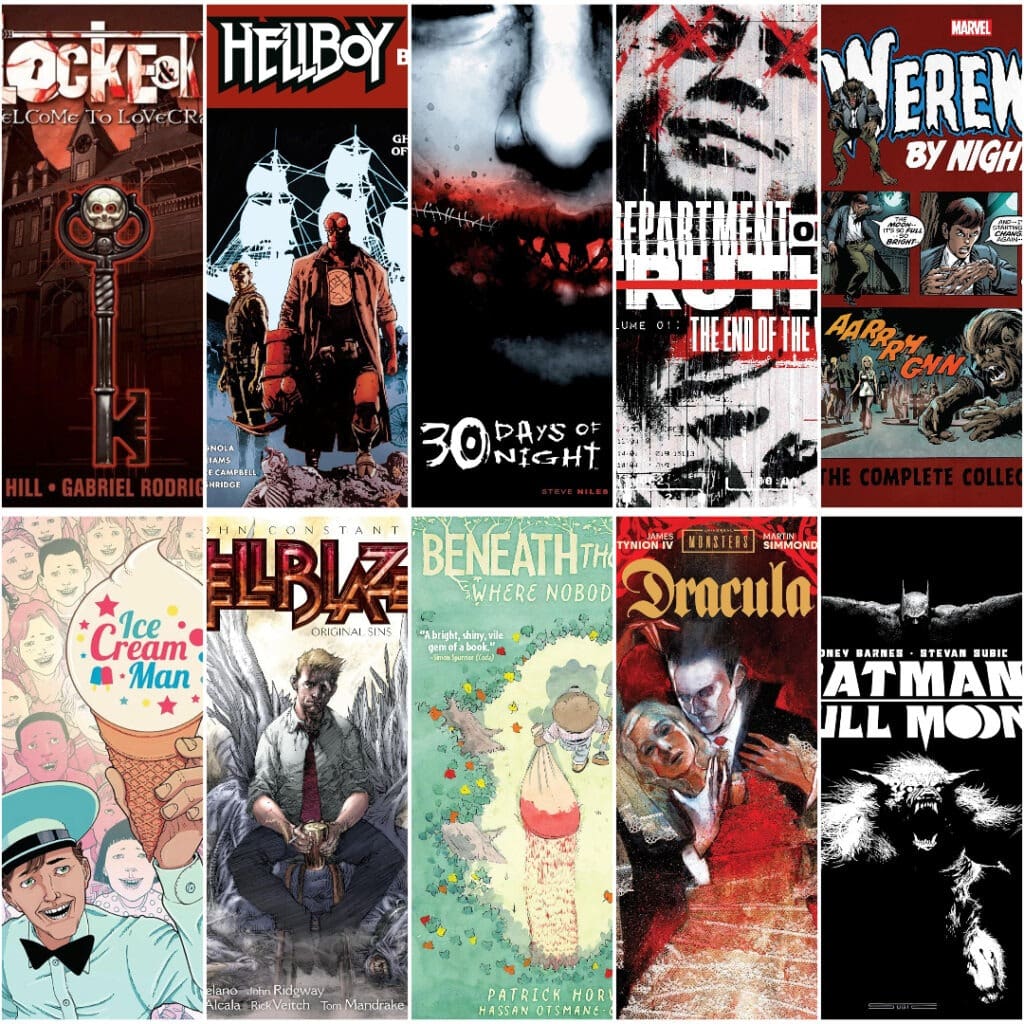
1. Locke & Key (Joe Hill & Gabriel Rodríguez)
Locke & Key is a horror as inheritance: generational trauma encoded into rooms, keys, and rules. Joe Hill’s storytelling is precise and patient, using the geography of a New England manor as a psychological map. Gabriel Rodríguez’s art is the genius translator, taking uncanny architecture and infusing it with a palpable, dangerous ecology.
Unlike thrillers that trade tension for spectacle, Locke & Key builds mythic stakes around the domestic (the attic, the kitchen, the home itself) so the dread feels relentlessly personal. It’s ranked first for its hybrid mastery: family drama, myth-building, and smart, emotional scares. Its enduring strength is its ability to innovate with metaphoric horror (keys that unlock identity, memory, desire) while sustaining emotional investment across its long-form arc. That blend makes it the most re-readable masterpiece on this list.
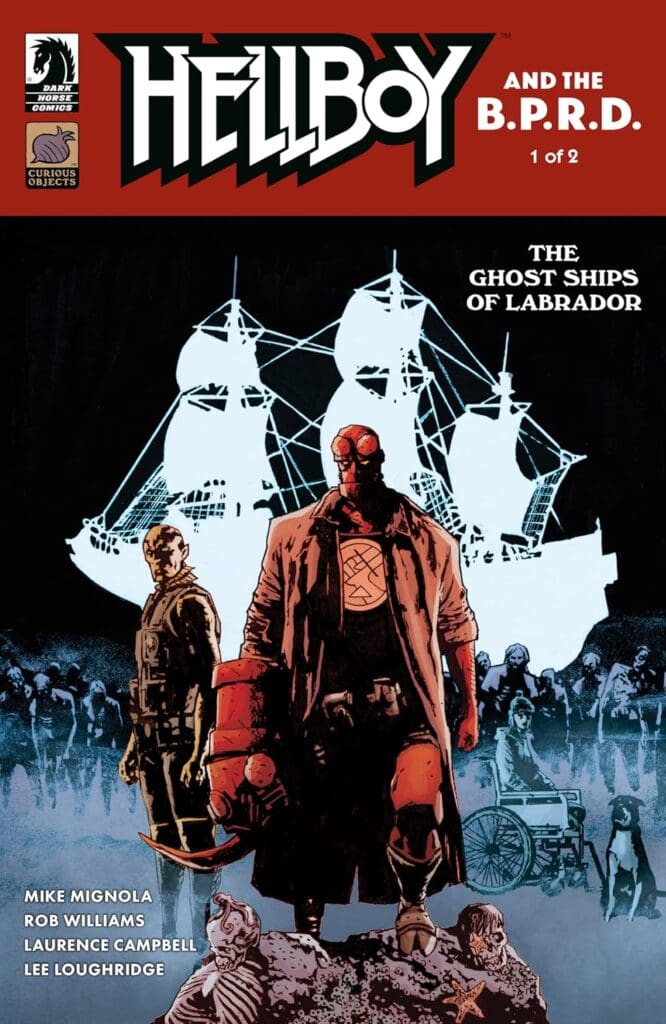
2. Hellboy and the B.P.R.D.: The Ghost Ships of Labrador (Mike Mignola & Gary Gianni)
The Hellboy universe is folklore and bureaucratic weirdness filtered through a hardboiled lens. Mike Mignola’s visual economy (heavy blacks, suggestive silhouettes, and negative space) is a stylistic tool that lets dread breathe. This B.P.R.D. arc, specifically the two-issue masterpiece The Ghost Ships of Labrador (often collected with other B.P.R.D. stories), is a perfect self-contained haunting. It uses maritime legend and the crushing cold of the North Atlantic to ask how isolation warps souls.
It sits high because it’s both classic and subversive: traditional monster lore is used to probe profound themes of grief, duty, and the institutional weight of monster-hunting. The inking by Gary Gianni brings a scratchy, classic horror feel that makes the isolation feel even more complete. If you want mythic spooks with thematic teeth and a visual language that is all suggestion, this is your chilling port of call.
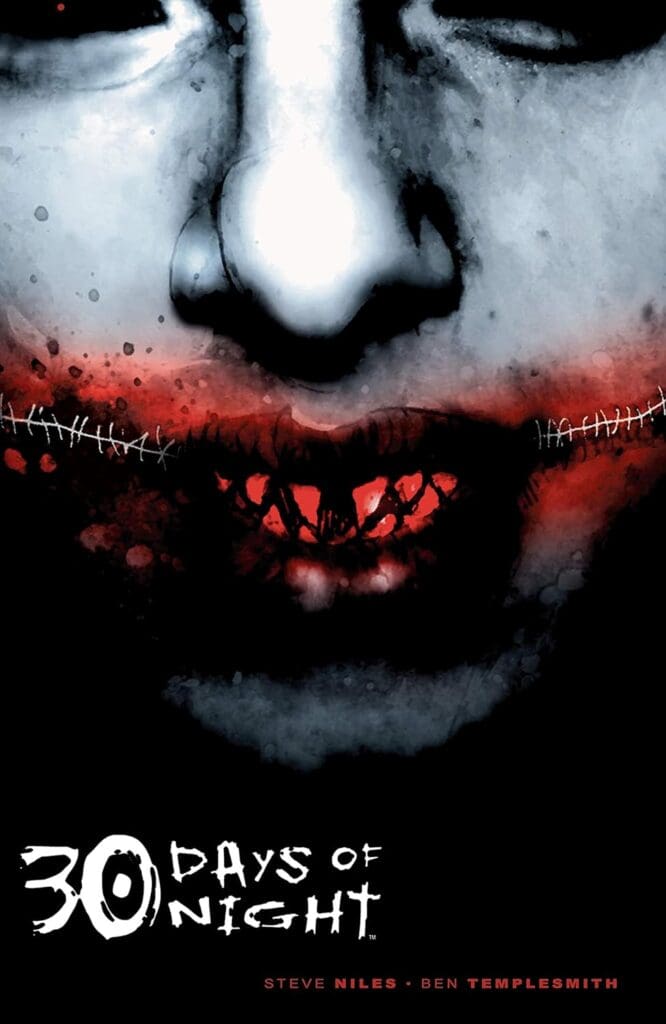
3. 30 Days of Night (Steve Niles & Ben Templesmith)
30 Days of Night is streamlined horror: premise-first, execution-expert. Steve Niles strips away unnecessary vampire mythology, leaving a simple structural coup: a colony of vampires arrives in Barrow, Alaska, where the sun won’t rise for a month. The comic wrings this idea for all its social and psychological terror.
The series ranks third because it brilliantly converts the environment into the main antagonist. The town itself, plunged into darkness, becomes a pressure chamber. Ben Templesmith’s visceral, impressionistic art (all jagged lines and smeared watercolors) delivers a graphic pacing and a brutal economy of violence, resulting in a relentless, almost cinematic claustrophobia. Read it for a masterclass in sustained, high-concept tension where the only monster worse than the one feeding on you is the despair of the endless night.
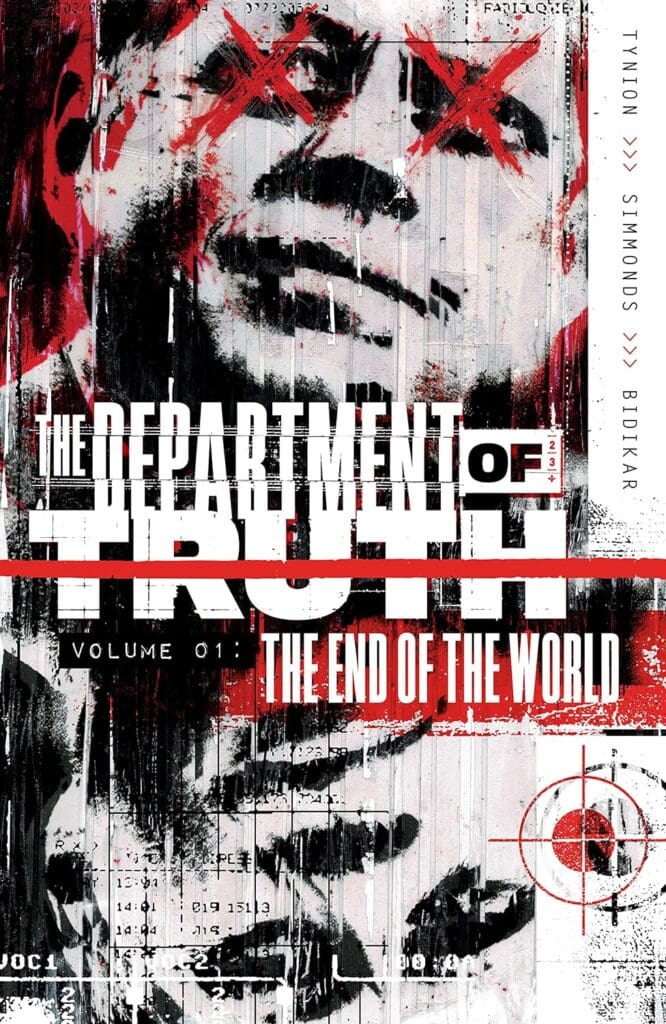
4. Department of Truth (James Tynion IV & Martin Simmonds)
James Tynion IV and Martin Simmonds’ ongoing conspiracy thriller is less about monsters and more about the horror of narrative itself. Department of Truth posits that collective belief is a contagious, reality-shaping machinery. The terrifying question here is: what if all the worst lies (from QAnon to Flat Earth) were not just opinions but literal hazards capable of manifesting a dark, physical reality?
Ranked fourth for its intellectual audacity, it interrogates truth, propaganda, and the anatomy of fear in modern media ecosystems. Martin Simmonds’ art is a paranoid collage of scratchy lines, newsprint textures, and washed-out colors, making the reality of the page feel constantly unstable. It rewards readers who want ideas served cold: where paranoia becomes a literal weapon and dread is the side effect of overthinking.
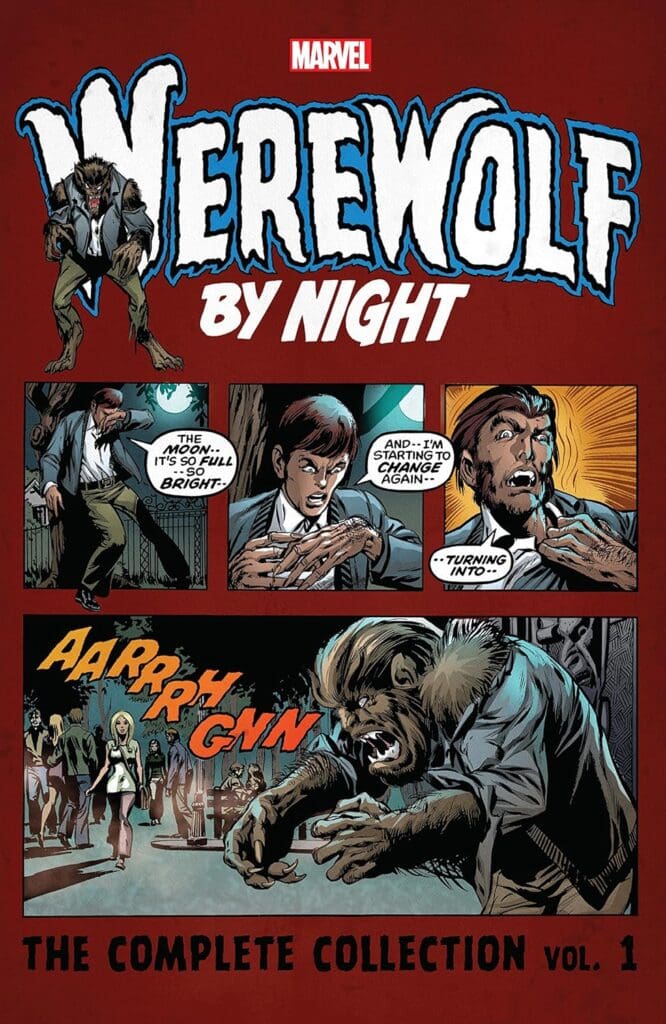
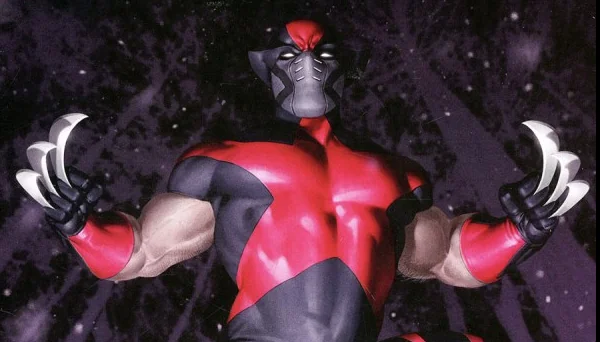
5. Werewolf by Night (Gerry Conway & Mike Ploog)
Marvel’s Werewolf by Night may sound like high pulp, but beneath the claws and moonlight is a profound story about identity in exile. Jack Russell’s transformation is not played for simple sympathy; it’s an allegory for the loss of control in a world that fears you by design.
While the original 1970s run established the moody, gothic rhythm, the recent revivals (especially the modern explorations of the character’s legacy) give the book a sharper, more nuanced visual tone. It’s ranked fifth because it honors horror’s primal roots (rage, transformation, and the impossibility of assimilation) while still feeling alive in modern comics. The true terror isn’t in killing monsters, but in the daily struggle of surviving as one.
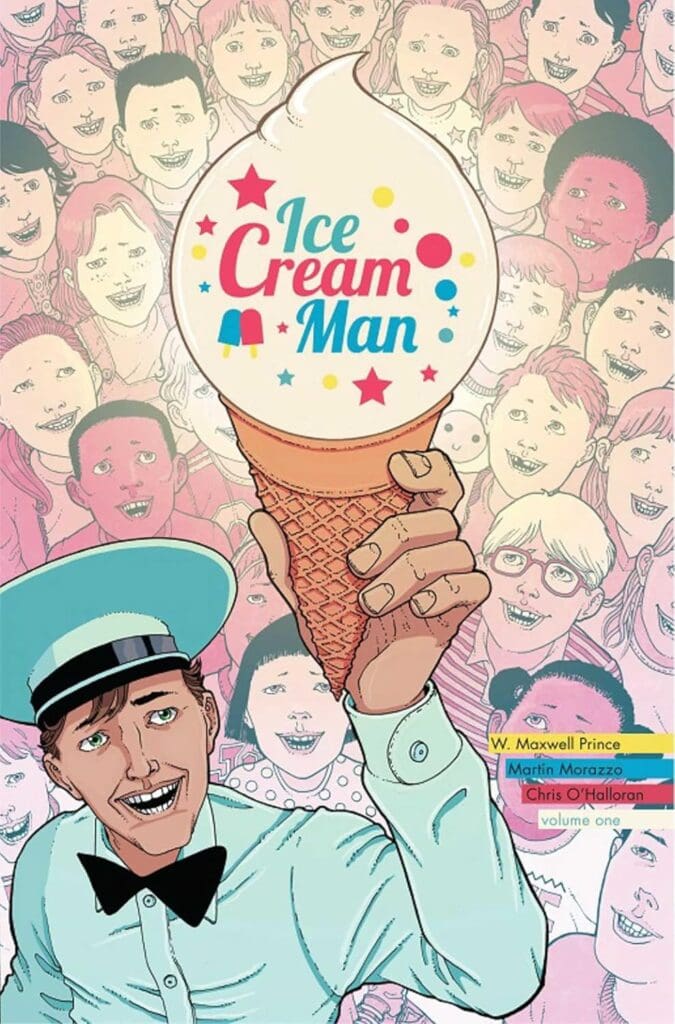
6. Ice Cream Man (W. Maxwell Prince & Martin Morazzo)
Ice Cream Man operates like a traveling, malevolent carnival of micro-horrors. The titular vendor is a silent, omnipresent vector; each issue is a distinct, self-contained parable about addiction, memory, small cruelties, and the vast cosmic indifference lurking behind the mundane.
This series ranks sixth because its episodic, anthology form is its greatest strength, allowing it to experiment wildly with moral fables, surreal body horror, and biting social satire while maintaining an overarching, single malevolent intelligence. The strength here is its tonal range: you can find both a near-perfect short story and a lingering, uncanny aftertaste in the same volume. It’s the comic equivalent of opening a beautiful, inviting box and finding a fresh, sticky nightmare inside.
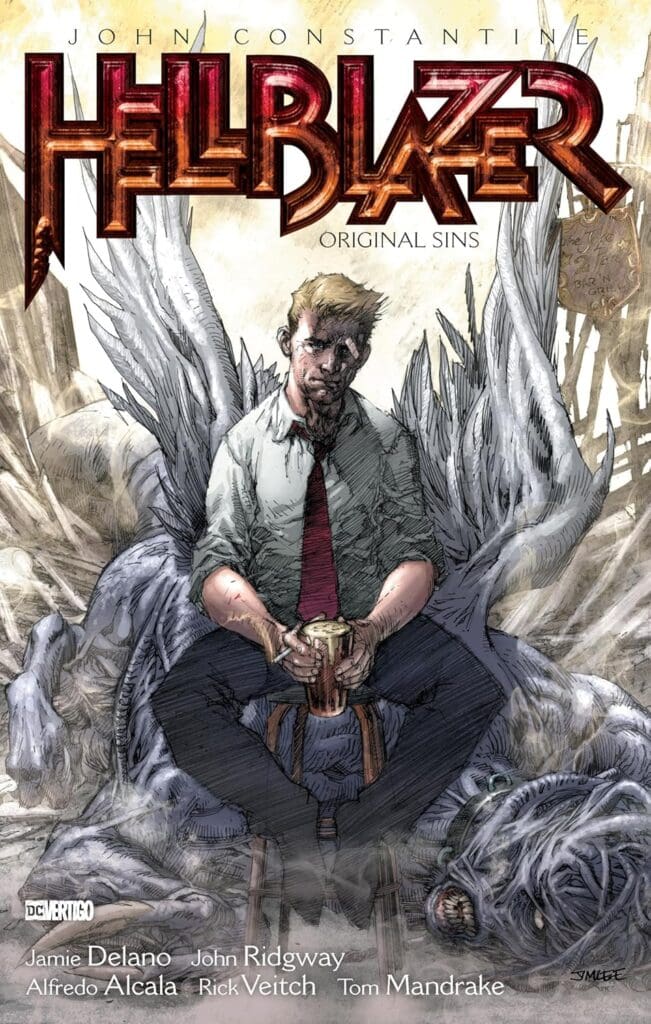
7. John Constantine: Hellblazer (Jamie Delano & John Ridgway)
Constantine’s horror is human-scale, morally ambiguous, and urban-occult. Hellblazer trades in the cost of cleverness; its protagonist always wins like a thief, but he pays with years, luck, and the lives of those around him. It ranks seventh because it’s atmospheric, wordy, and often melancholic rather than sensational.
This is horror filtered through British social commentary, cynicism, regret, and the omnipresent scent of cheap cigarettes. It’s a comic that proves that the most terrifying thing in the world isn’t a demon, but a man who knows all the right numbers to call them up. Read it if you want long-form morality plays that sting and characters who feel like hard-earned scars.
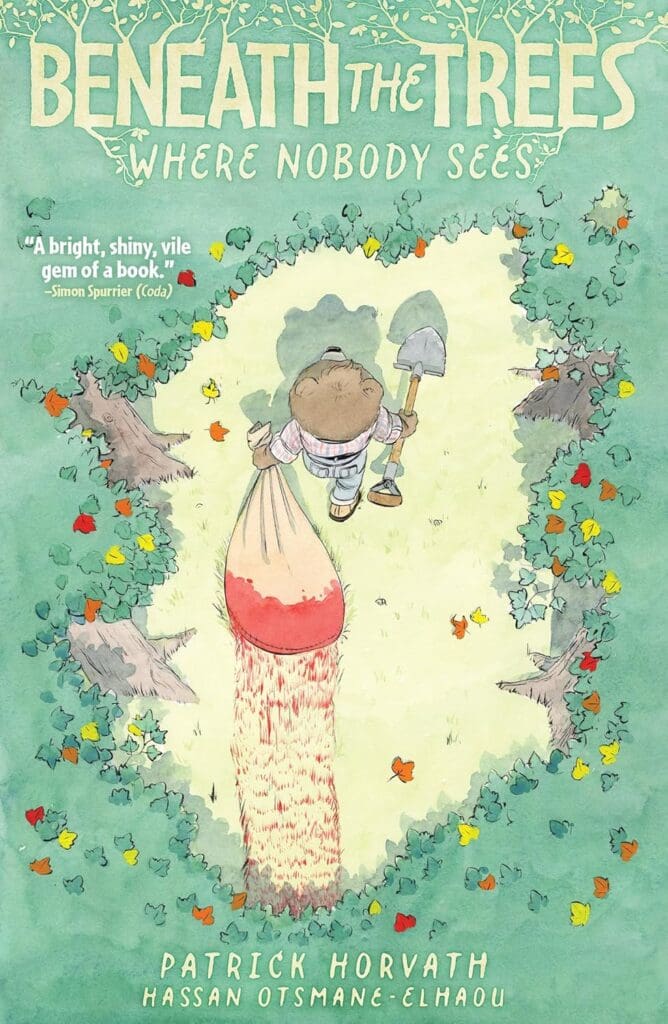
8. Beneath the Trees Where Nobody Sees (Patrick Horvath)
Beneath the Trees Where Nobody Sees relies almost entirely on slow-building, invasive unease. Where other comics make noise, this one listens: to solitude, to the invasive small things that take root in neglected places, and the horrifying banality of a picturesque community of predatory forest animals.
It ranks eighth because its technique is restrained. For readers exhausted by gore, this book proves that dread can be soft, almost domestic, and break your heart anyway. The horror is rooted in the uncomfortable feeling of a gated community of predators whose polite society is a thin veneer over their instinct. It’s an example of horror that reverberates because it refuses theatrics, making the quiet moments the most unsettling.
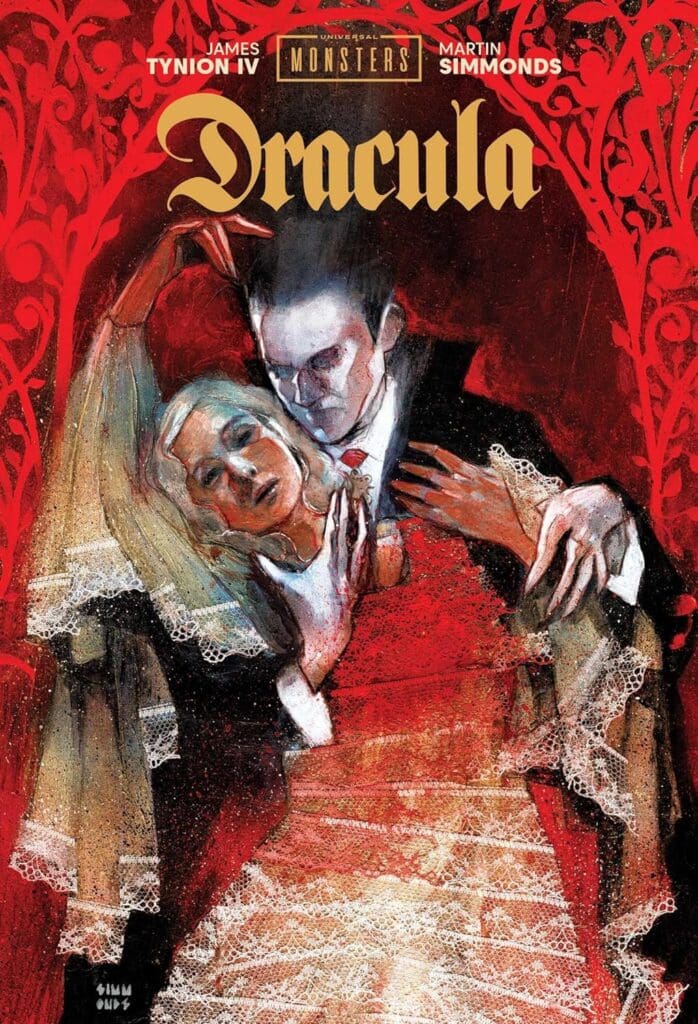
9. Universal Monsters: Dracula (James Tynion IV & Martin Simmonds)
Universal Monsters: Dracula in comics can often feel like a tired retread, but this title earns its place by reframing the vampire myth with high production values and an uncompromising eye for mood. It sits ninth because it’s a critical reminder: classic monsters remain potent when the craft matches their mythic scale.
These adaptations, often released in stunning limited editions, manage to re-contextualize a familiar figure to echo modern anxieties about desire, contagion, and the eternal corruption of class and wealth. Read it for the lush, oppressive atmosphere and the sheer quality of the artistic devotion to the source material.
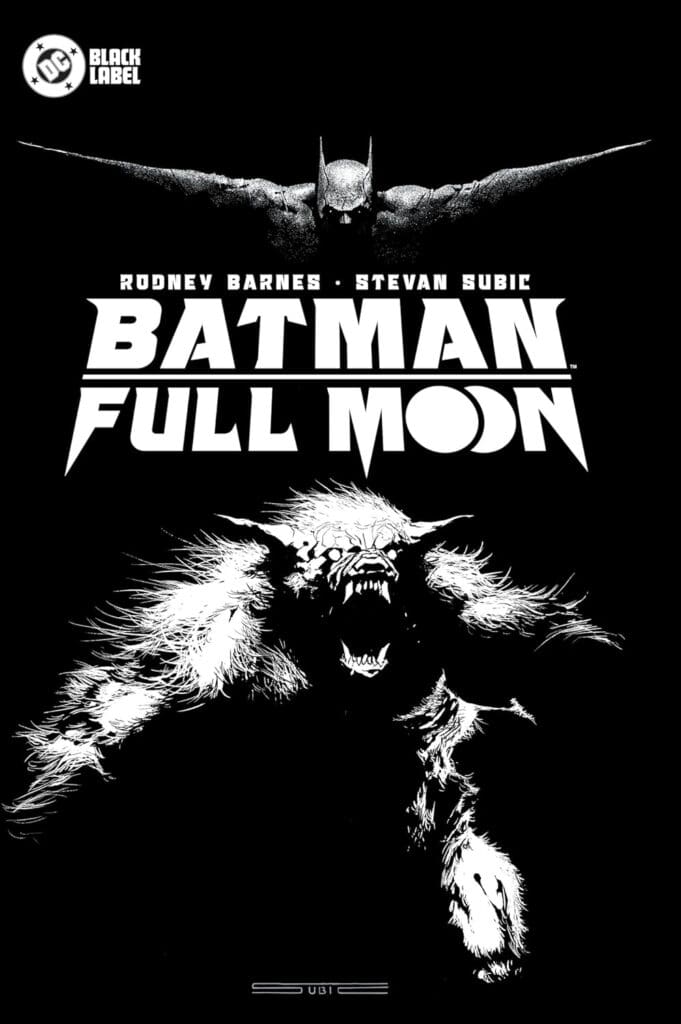
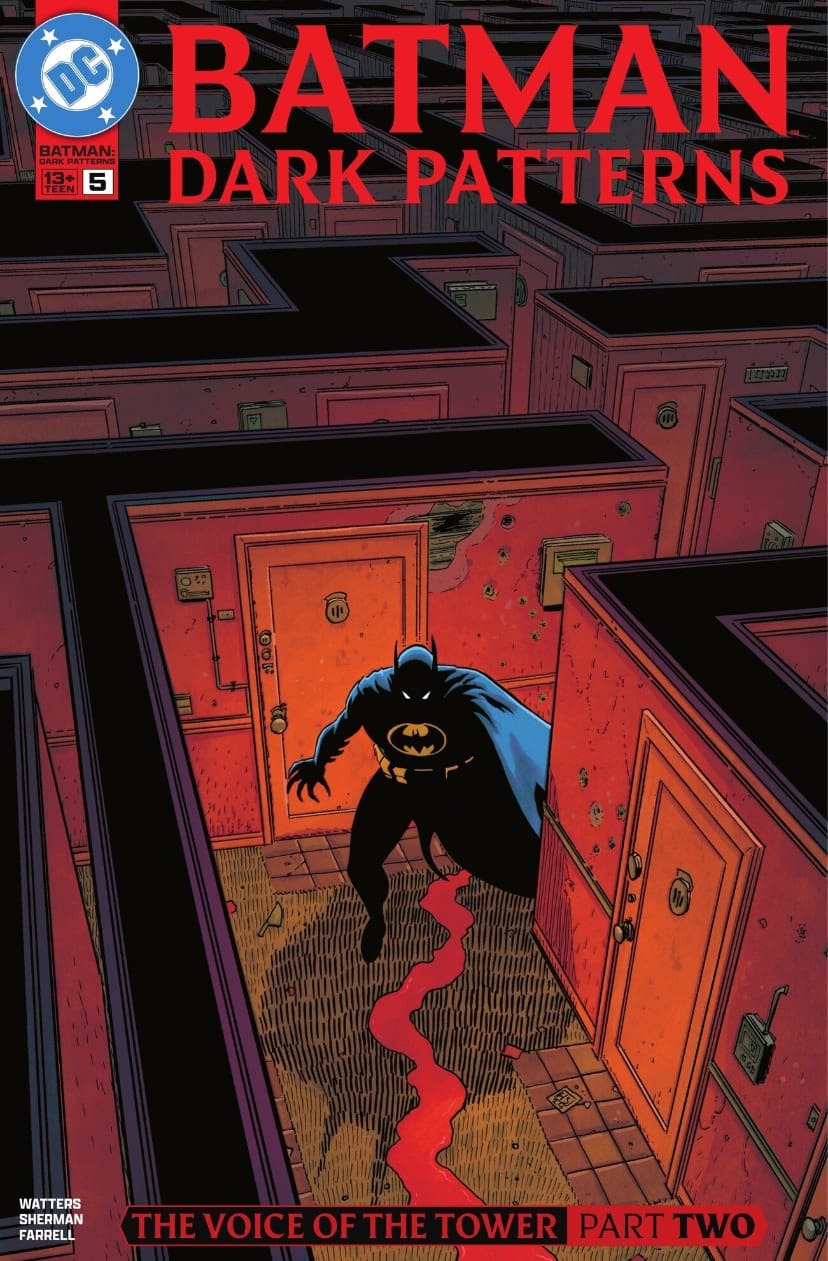
10. Batman: Full Moon (Rodney Barnes & Stevan SUBIC)
At the bottom of the list but far from an afterthought, Batman: Full Moon stands as one of the Dark Knight’s most unusual detours. This limited series forces the world’s greatest detective to face a series of murders seemingly committed by a werewolf, pushing him to confront the limits of logic in the face of the uncanny.
It earns its tenth-place slot because it’s an experiment in tone rather than terror. The comic masterfully blends noir structure with supernatural tension, revealing how fragile Batman’s faith in reason becomes when he can’t explain the evidence. What makes it interesting isn’t the monster, it’s Batman’s refusal to believe in one. Horror here is epistemological: what happens when intellect fails, and instinct must take over?
Wrapping It Up
Each comic here is a different experiment in fear: ecology, myth, conspiracy, morality, or quiet menace. Our top picks favor long-form emotional payoff and inventive use of the medium; the lower ranks still deliver unforgettable moments but trade some breadth for focus.
Your Halloween reading should depend on what you want to feel: claustrophobic dread (30 Days of Night), slow-burn disquiet (Beneath the Trees), or the intellectual itch of paranoia (Department of Truth).
Choose accordingly, and leave a light on: if only out of courtesy to the house spirits.
What’s first on your reading list? We’re excited to hear about it!