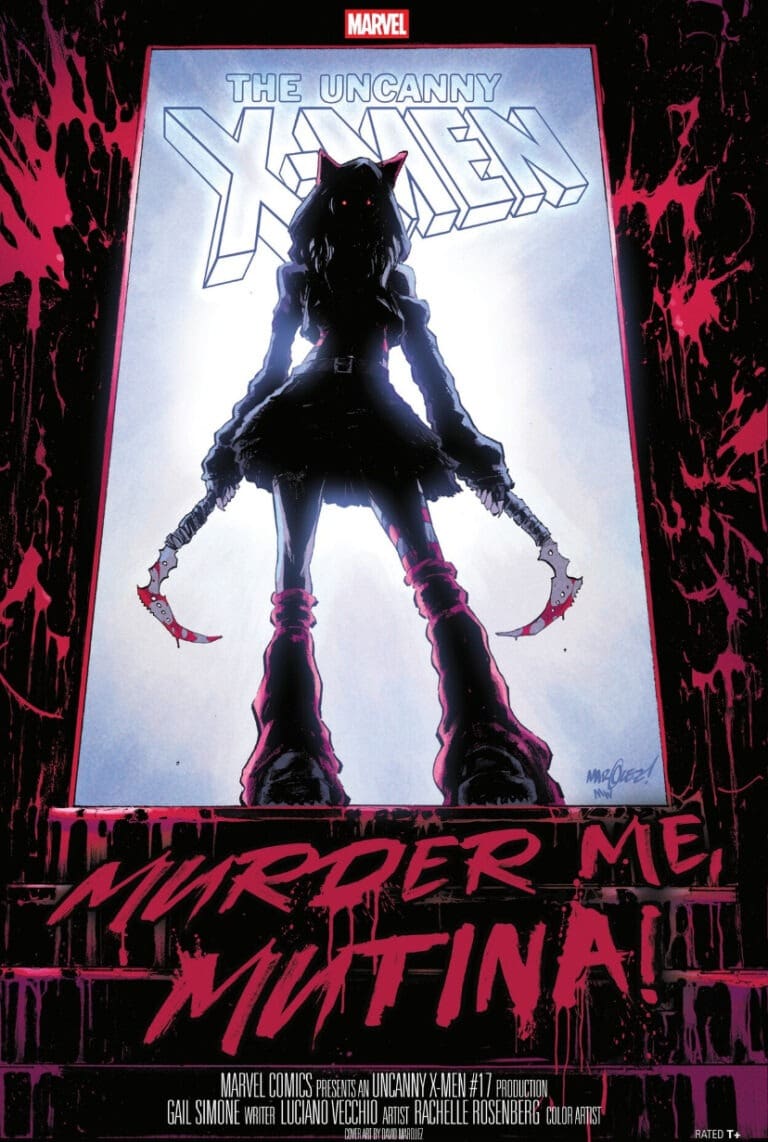
We’re at an interesting place in the story for Uncanny X-Men #17. Unlike the work over at X-Men, under Jed MacKay, Gail Simone isn’t as tightly wedded to a single ongoing narrative, with the initial focus on Greymalkin Prison being set aside in favor of telling several different stories across multiple story arcs. While each story is unique, a common thread unites them: Southern Gothic horror. Uncanny X-Men #17 continues this tradition, launching a new arc with a surprisingly meta take on the genre.
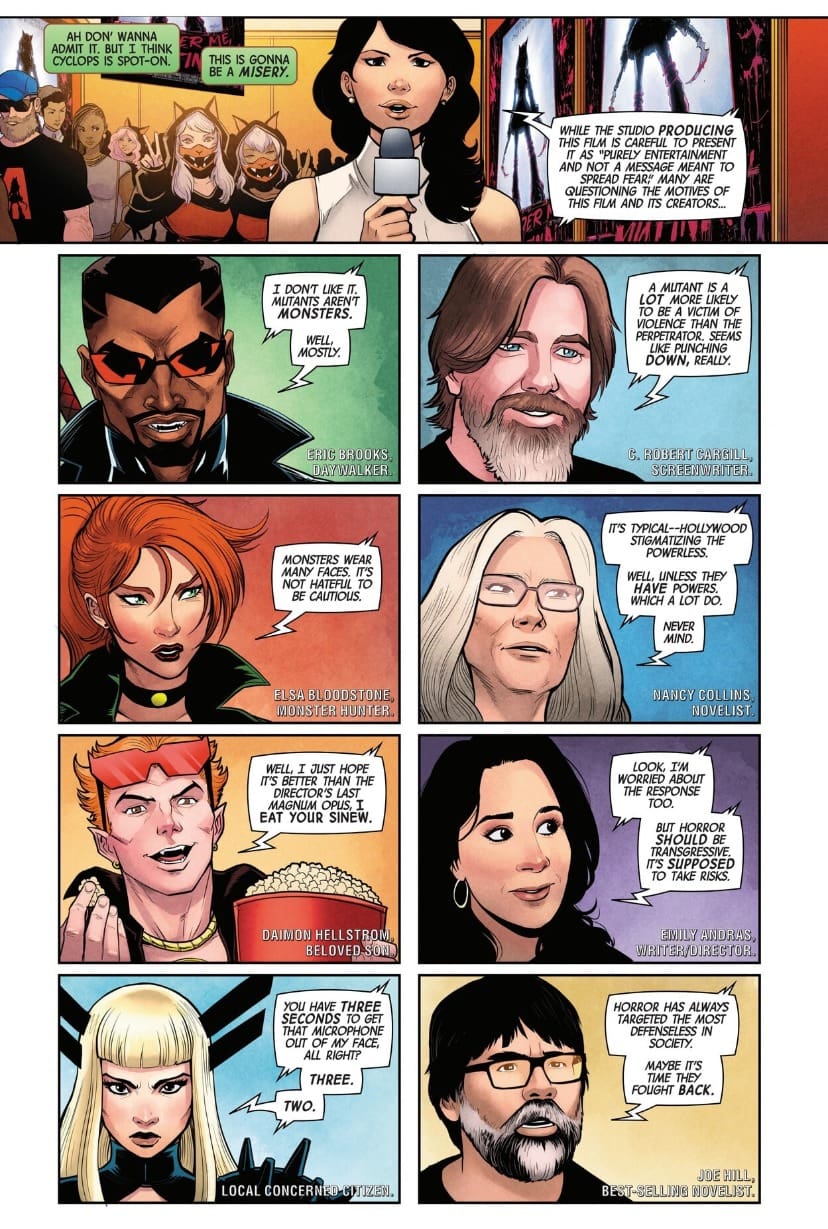
As is the case for many of the issues Gail Simone has written in this run, the primary perspective and focus is on the young Outliers. The story is viewed through their eyes, and the impact of the major story in this issue is felt through their interactions with people. That major story being the release of a slasher movie starring a mutant killer. It’s an interesting and fun idea that approaches the familiar horror homages Gail Simone has been writing about in a more meta-textual way. We’re treated to a glimpse into how various mutants in other X-Men books perceive the release of such a movie, with the adults uniformly expressing disapproval and concern over what this could mean for the perception of mutants. It’s an interesting and truly different approach to analyzing the mutant metaphor, and whether the horror genre’s so-called empowerment is actually exploitative.
Marvel Comics
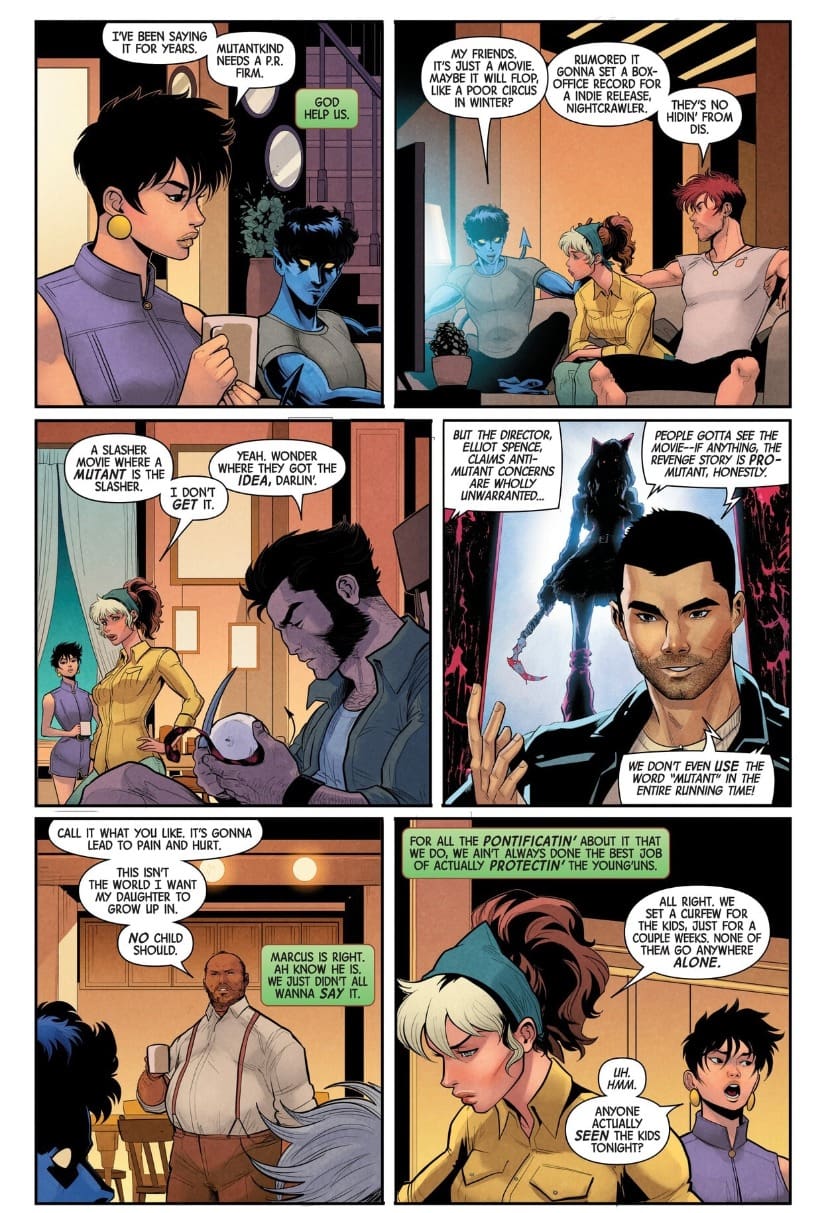
The fallout of the movie is felt in the interactions between the Outliers and the theatre and school, where the young mutants are met with belligerence and an attempt at restitution. The issue reaches a climax when Jitter, who serves as the primary voice and narrator, and Calico step out to meet Mutina. The story takes a surprising turn, and the final pages are jarring yet compelling.
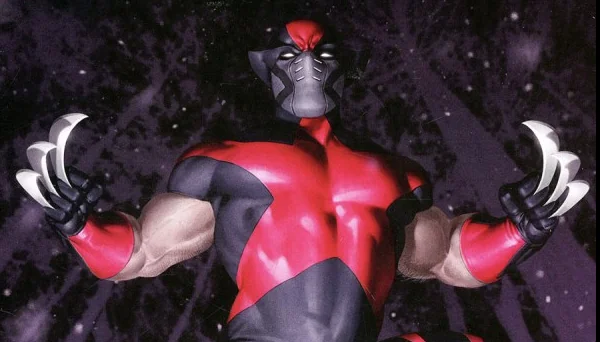
It’s these final pages that mar what was an interesting and unique approach to the mutant experience in the 616. Mutina, as a character, had character design sheets and variant covers released quite early; clearly, she is a character that Marvel wants us to be interested in. Her characterization, however, leaves much to be desired, and her introduction alters the initial themes of the story, rendering them something much less interesting. That slow burn, which allowed us to get a glimpse into the lives of the Outliers and how these young teen mutants experience the effects of a cultural shift that a movie can have, is thrown out for something much less subtle and much more abrupt. It’s disappointing to say the least, and I hope that these two different concepts find some way to reconcile into a coherent story by the end of this arc, because I couldn’t see it here.
Marvel Comics
Artist Luciano Vecchio is no stranger to the X-Men line. His work on Resurrection of Magneto (2023) and Fall of X seemed to have gotten the attention of the new editorial team, and since From the Ashes began, he’s been a workhorse, contributing to Storm (2024) and Hellfire Vigil (2025). Uncanny X-Men (2024) has had four different artists since its inception, an unusually high number of fill-in artists for a mainline series. While each was talented in their own right, they didn’t always mesh well with Matthew Wilson’s brighter colors, nor did their art feel similar to that of leading artist, David Marquez. Vecchio brings stability to the book, with his high work rate, skill in drawing dark and otherworldly beings, and strong collaboration with Matthew Wilson’s colour palette.
Uncanny X-Men #17 is a mixed bag, showing the promise of Gail’s writing as well as the pitfalls. While the initial premise was delightful, if not slightly muddled, the issue ultimately leads the story to take a turn for the worse. Let’s hope this story arc regains the quality of the issue’s first half, rather than continuing the decline of the latter.
‘Uncanny X-Men’ #17 Hopes and Hurdles for Simone’s Southern Gothic
Uncanny X-Men #17 is a mixed bag, showing the promise of Gail’s writing as well as the pitfalls. While the initial premise was delightful, if not slightly muddled, the issue ultimately leads the story to take a turn for the worse. Let’s hope this story arc regains the quality of the issue’s first half, rather than continuing the decline of the latter.