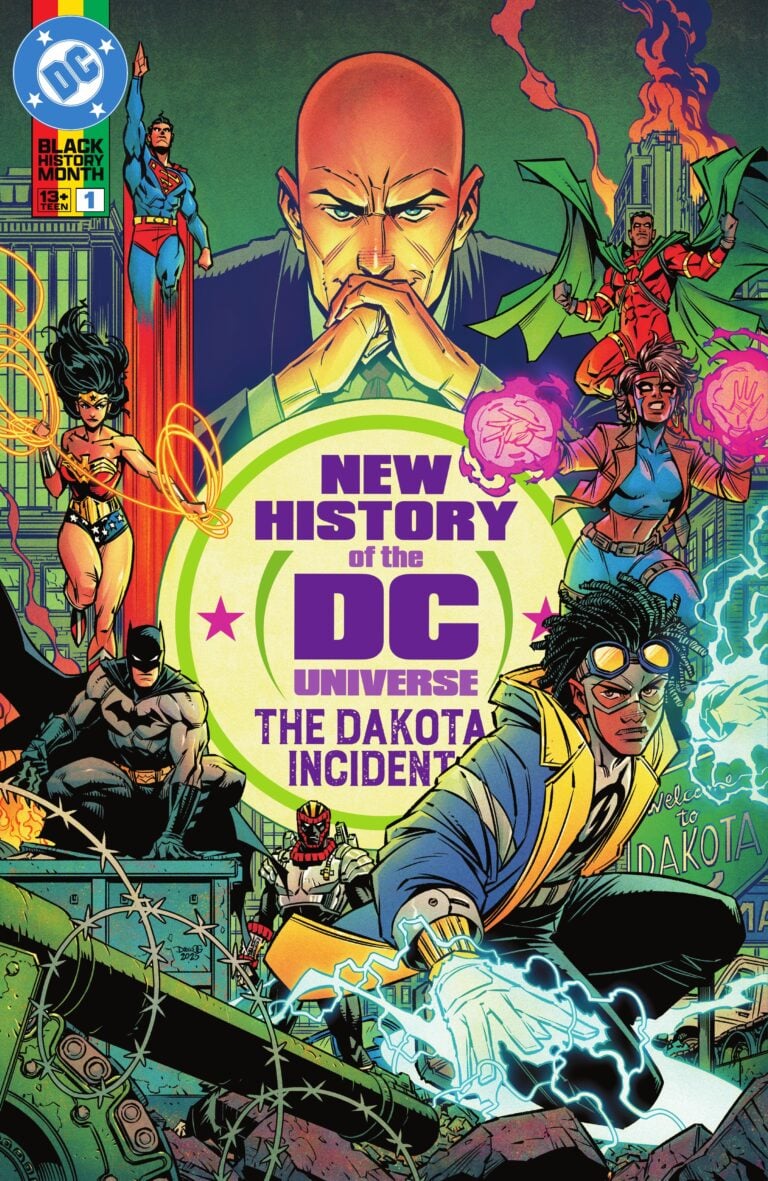
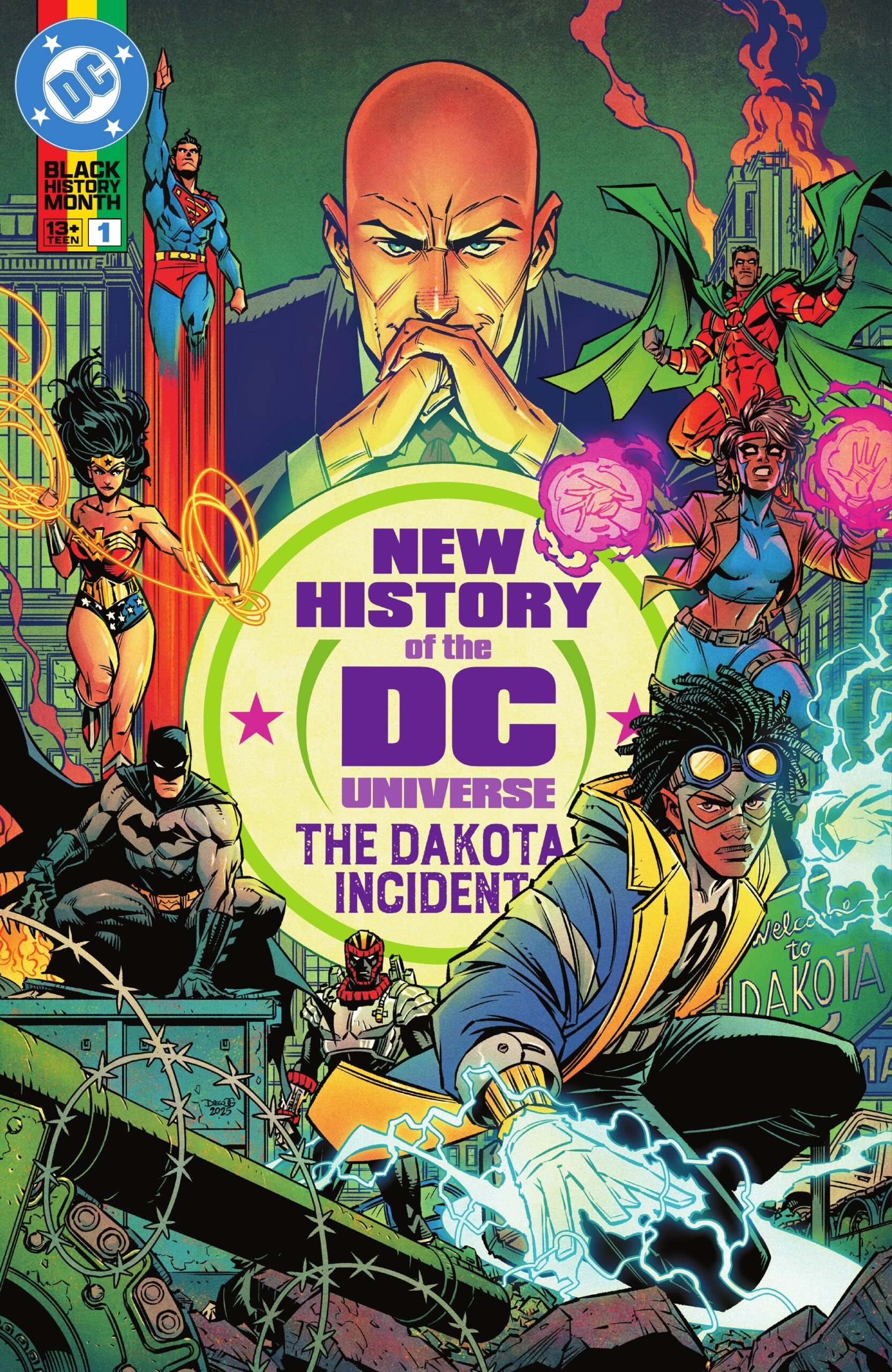
The release of New History of the DC Universe: The Dakota Incident #1 has finally done something that comic fans have been waiting for since 2017: it made the “Supermen Project” matter.
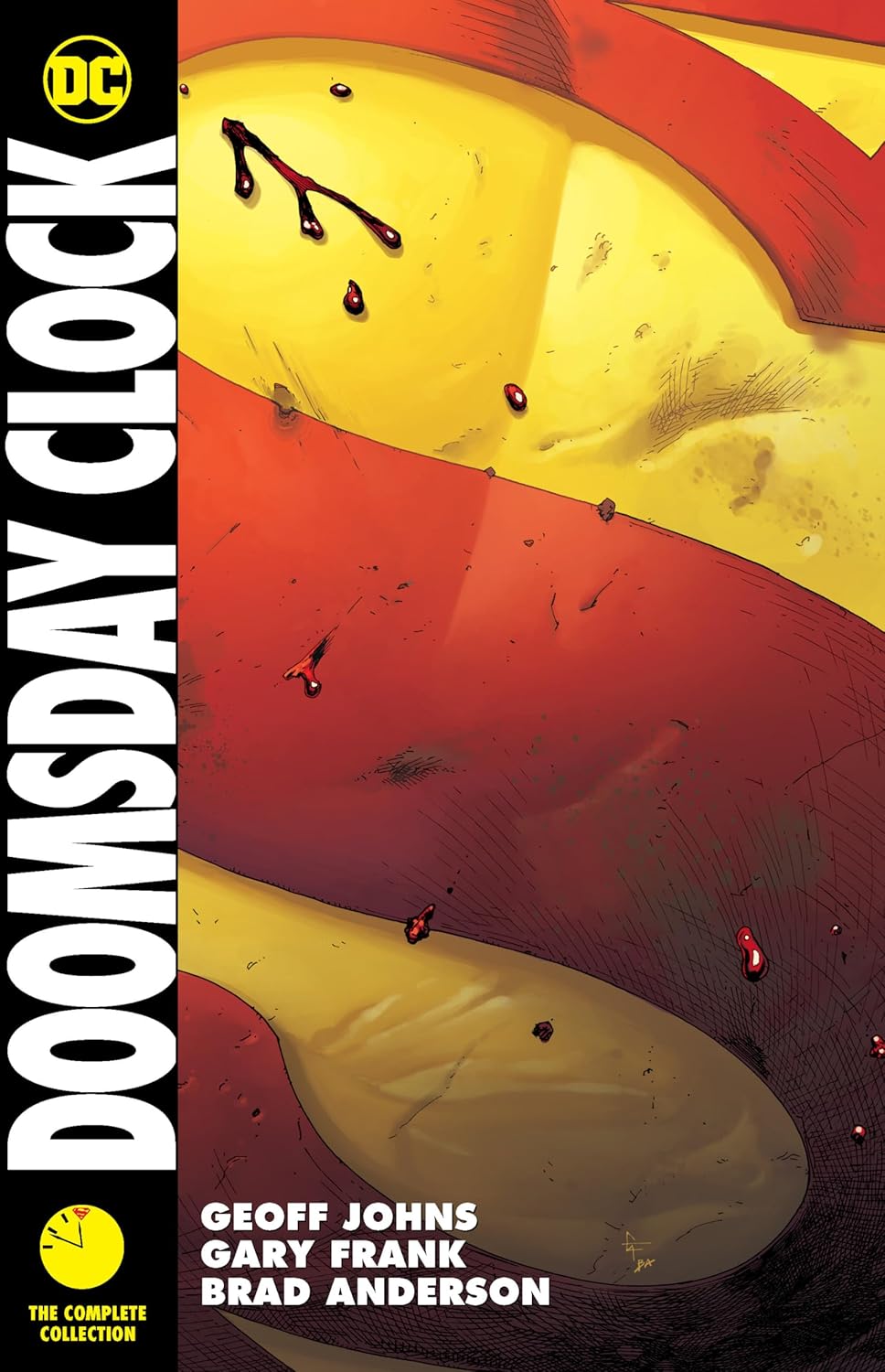
If you haven’t been keeping up with the continuity switch-up, the Supermen Project was a concept Geoff Johns introduced back in Doomsday Clock. At the time, it felt like a one-off, meta-commentary on why every major superhero in DC Comics seems to live in the United States. But with the recently released Dakota Incident, DC has officially woven this dark thread through the entire fabric of their modern history, using the heroes of Dakota City: Static, Icon, Rocket, and Hardware, as the missing pieces of a very ugly puzzle.
What is the Supermen Project, anyway?
To understand why this is a big deal, you have to go back to the “Superman Theory” from Doomsday Clock. The idea was simple but terrifying: the reason 97% of the world’s metahumans are American wasn’t just luck or some sort of Manifest Destiny. It was a conspiracy. The theory claimed that the U.S. government has been secretly manufacturing superheroes and supervillains for decades, staging “accidents” to trigger people’s powers so they can build a superhuman army that looks like a bunch of independent do-gooders.
In Doomsday Clock, this was mostly used to create international tension. Other countries were arming up because they didn’t trust the Justice League anymore. It turned the DC Universe from a place of “truth, justice, and the American way” into a place where the American way was actually a secret laboratory run by guys like Martin Stein (Firestorm), Niles Caulder (Doom Patrol), and Edwin Alva (Bang Babies).
For a long time, fans weren’t sure if this was actually “canon” or just a side-story. But the New History of the DC Universe (2025) and now the Dakota Incident (2026) have leaned all the way in. It turns out the Supermen Project wasn’t just a theory but a blueprint for the entire modern heroic age.
The Dakota Incident: The Experiment Exposed
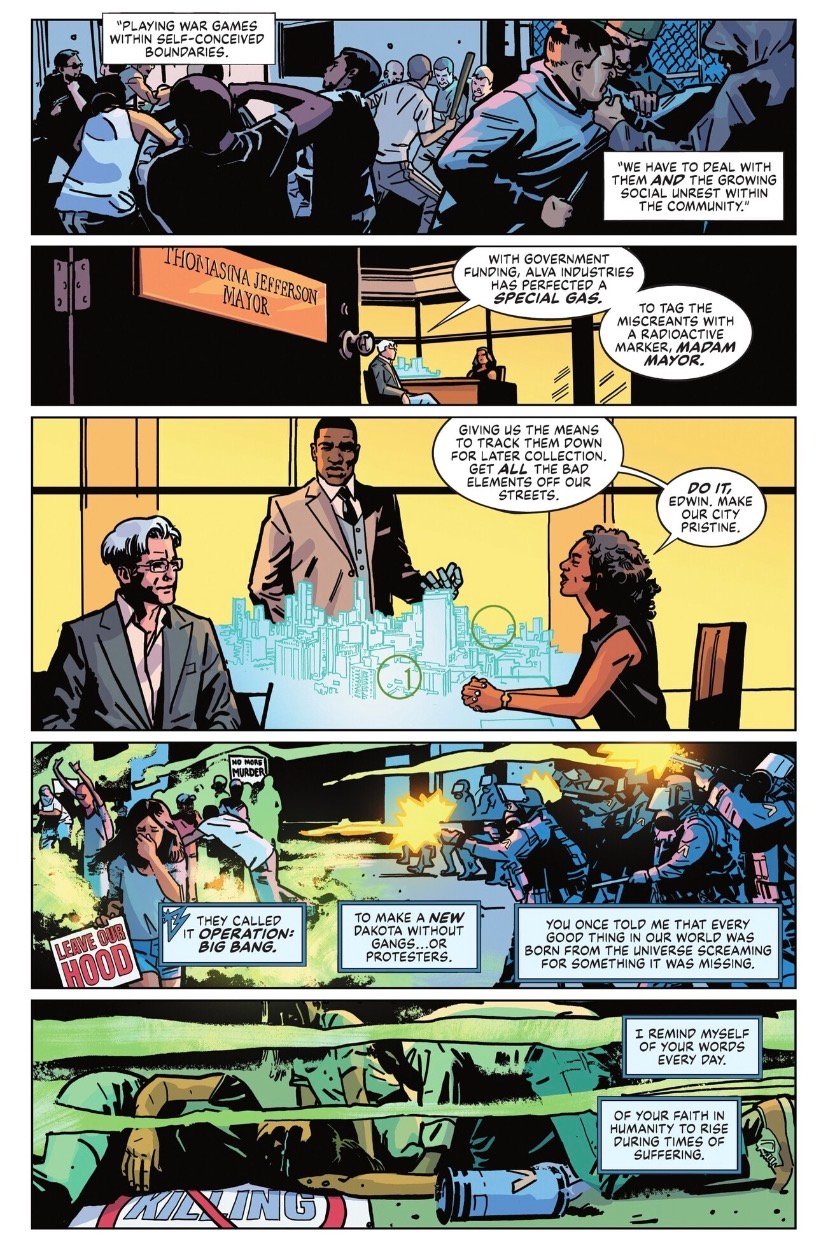
This is where things get heavy. For years, the origin of the Milestone heroes was the “Big Bang.” In the original stories, a gang war was hit with an experimental tear gas that gave everyone superpowers (the “Bang Babies”). It was a tragedy, but it felt localized to Dakota City.
The Dakota Incident completely changes the context. We now know that the Big Bang wasn’t just a rogue corporate action but a Phase Two test of the Supermen Project. Edwin Alva, the billionaire villain of the Milestone universe, believed to be just a local tech mogul, was actually a high-level consultant for the Project.

When Hardware (Curtis Metcalf) unearths proof that the government deliberately experimented on Dakota’s youth to test Meta-Gene reactions, it changes the stakes immediately: transforming the Milestone heroes’ mission from neighborhood protection to an ingrained, defiant struggle against the state.
The parallels to the X-Men are also hard to ignore now. When the state views a specific group of people as experimental property rather than citizens, the story shifts from crime-fighting to survival. This new direction gives the Milestone line a sharper, more political edge (though Milestone was always political). They’re no longer just Bang Babies, but survivors of a state-sponsored program: making their existence an inherent act of defiance.
Lex Luthor and the Cost of Silence
Perhaps the most fascinating part of this full-circle moment is the role of Lex Luthor. During this era of DC history, Luthor is the President of the United States. He represents the ultimate intersection of corporate greed and government overreach.
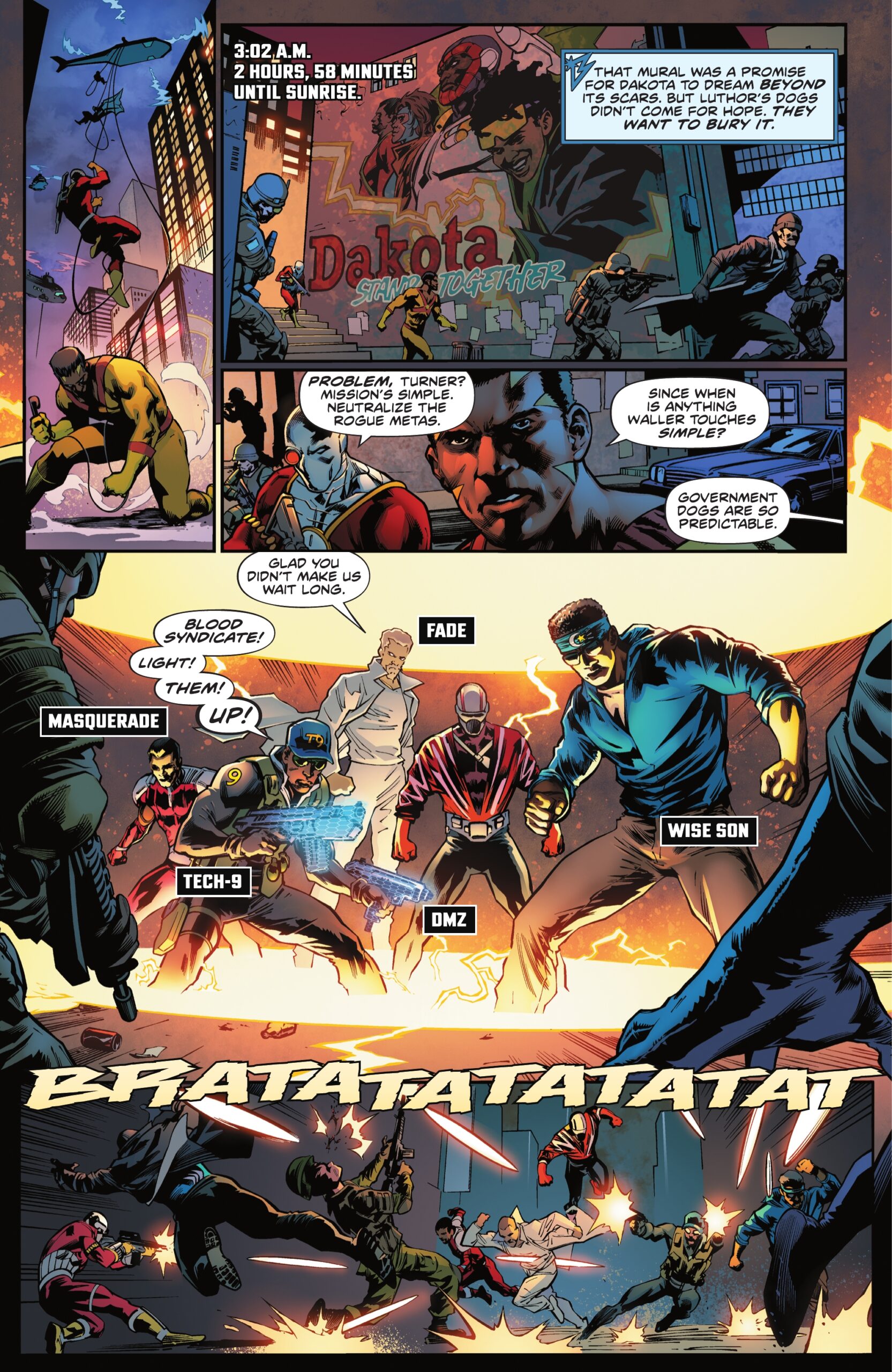
In the Dakota Incident, Luthor doesn’t just send the military and the Suicide Squad to deal with the “Bang Babies.” He uses the Supermen Project as a weapon of blackmail. He realizes that if the public finds out the government was responsible for the Big Bang, the administration falls. So, he offers the heroes of Dakota a choice: they can keep their powers and their city, but they have to disappear. They have to stop being symbols of hope and go into the shadows.
This explains one of the biggest meta-questions in DC history: Where were the Milestone heroes during the major DC events of the last decade? Well, between the Luthor presidency and the Supermen Project, DC has now established a heartbreaking, ‘real-world’ catalyst for their absence. They didn’t just forget to show up to the fight with Darkseid; they were systematically suppressed by the very government they were supposed to protect.

Why This Matters for the Future
In grounding the Supermen Project in the Dakota Incident, DC inches away from the Silver Age idea that heroes just happen because of cosmic happenstance. They are moving toward a more modern, cynical, yet ultimately more grounded universe in which power is something the state seeks to control.
It brings the themes of Watchmen (the inspiration for Doomsday Clock) full circle into the main DC timeline. In Watchmen, heroes were outlawed or turned into government puppets. Now, we see that the DC Universe almost suffered the same fate. The difference is the resilience of characters like Static, Rocket, Icon and Hardware.
At the end of the Dakota Incident, we see Beacon (Static’s protégé from the future) urging the current versions of these heroes to fight back against the “script” the government wrote for them. It suggests that while superpowers can be manufactured, you can’t “manufacture” a hero. You can give someone powers in a lab, but you can’t control the heart that chooses to use those powers for good.
The Bigger Picture
New History of the DC Universe: The Dakota Incident #1 makes the DC Universe feel smaller in the best way possible. It links the high-concept sci-fi of Doomsday Clock to the gritty, street-level reality of Milestone. It shows that whether you’re a god-like alien in Metropolis or a kid with electricity powers in Dakota, the “system” is the same.
The Supermen Project is no longer just a footnote in a Geoff Johns event. It is the original sin of the modern DCU. And the Dakota Incident is the moment the heroes finally stopped being the Project’s subjects and started being its executioners.
For fans, this means that future stories involving Milestone heroes, Firestorm, Captain Atom, the Doom Patrol, and the Justice League are going to have to deal with the fallout. With the revelation that many metahuman origins were state-manufactured, the DC Universe’s ‘New History’ is no longer just a reboot but a geopolitical powder keg, and for the first time in years, we have no idea where the pieces will land. One thing is certain: the DC Universe just got a lot more interesting.
If The Dakota Incident left you wanting to see how the rest of the puzzle pieces fit together, here is the essential reading order for the modern Milestone era:
The KPB Comics Essential Milestone Returns Reading List:
- Milestone Returns #0: The start of the modern reboot.
- Static: Season One: Virgil’s new origin and his first run-ins with the feds.
- Icon and Rocket: Season One: Covers the politics of being a hero.
- Hardware: Season One: Curtis Metcalf finds the first cracks in the conspiracy.
- Milestones in History #1: Stories exploring the history of the Milestone world.
- Blood Syndicate: Season One: The gritty side of what happened after the Big Bang.
- Duo: A sci-fi story that expands the technology of the universe.
- New Talent Showcase: The Milestone Initiative: Short stories from new creators.
- Milestone 30th Anniversary Special #1: A bridge between the 90s and today.
- Static: Shadows of Dakota (Static: Season Two): Things get dangerous for Virgil.
- Icon vs. Hardware: The big ideological clash between the two heavy hitters.
- Static Team-Up: Anansi #1: Virgil teams up with a mystical legend.
- Milestone Universe: The Shadow Cabinet: Where the secret players finally show their faces.