'The Last Spartan: Red Tape' Graphic Novel Review: Red Tape, Raw Justice

‘The Last Spartan: Red Tape’ Graphic Novel Review: Red Tape, Raw Justice

Phillip Creary | September 28, 2025

September 28, 2025

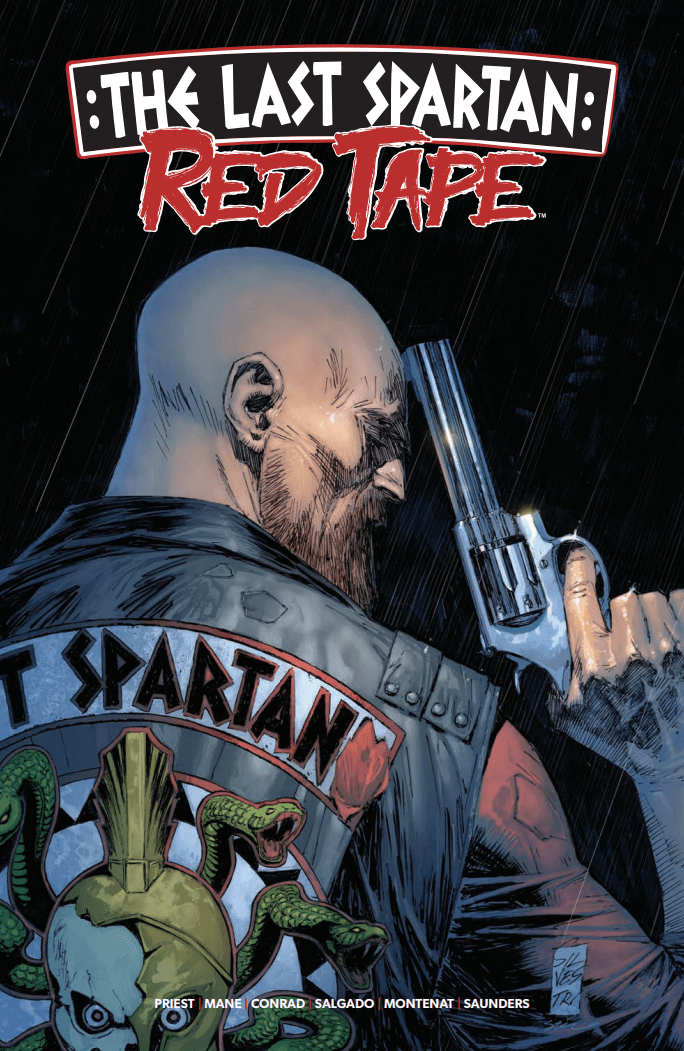
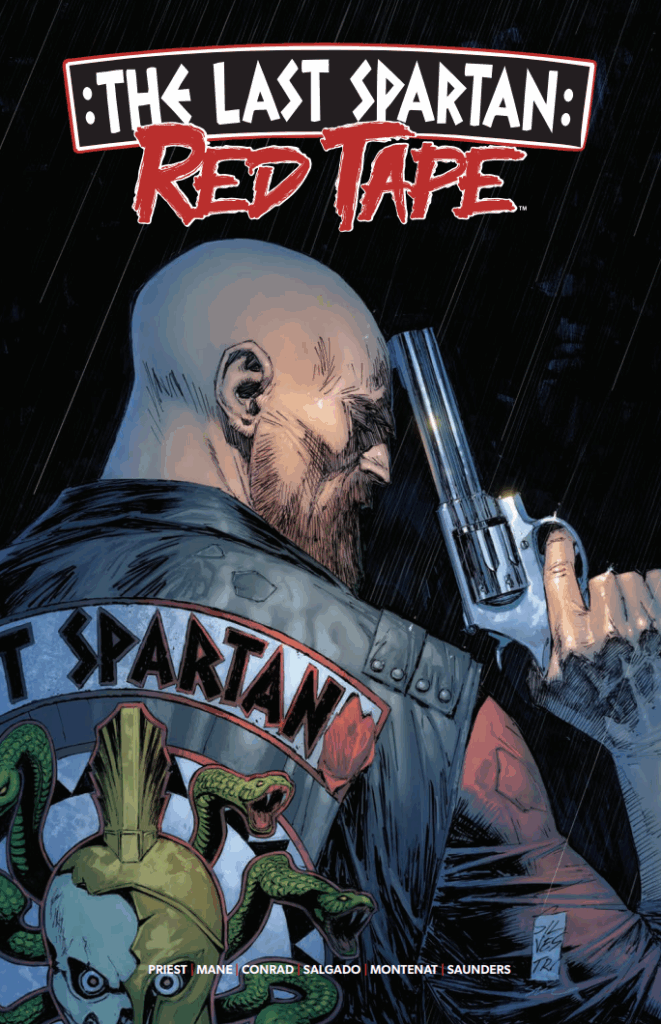
Mane Entertainment’s The Last Spartan: Red Tape is a graphic novel that’s less about costumed heroes and more about a brutal exploration into the shadows of human trafficking. It’s a gritty, street-level crime drama that feels more like a mash-up of Taken and The Punisher, but with a strangely compelling mystical edge. Written by Christopher Priest, Tyler Mane, and Renae Geerlings, and inspired by the novel by John F. Saunders, this book doesn’t hold back. It’s a raw look at a terrifying real-world issue, framed by the journey of two seriously messed-up anti-heroes.

At the center is Frank Kane, a decorated combat veteran and the last surviving member of a biker gang called The Last Spartans. He’s on parole, living a quiet life that’s a powder keg waiting for a match. The man is a self-described sociopath with a rigid, almost ancient code of honor, who follows “omens” from the gods, a callback to the literal Spartans. His mundane existence is shattered when the grandparents who once saved his life ask him for an impossible favor: find their missing granddaughter, Jenny.
Mane Entertainment

Frank’s solitary, honor-bound quest crashes head-on into the mission of Donzetta “Harper” La’Quan, an undercover Department of Homeland Security (DHS) agent. Harper is Frank’s total opposite: a government operative who believes in the system, even though she’s constantly frustrated by its failures. She and her unit were tracking Jenny and the trafficking network, but the surveillance was mysteriously pulled. Now, she’s operating on her own, determined to save them all, fed up with the government “red tape” that gives the book its title. The word “Red Tape” actually has a double meaning here; it’s also a term for a gun ready to fire – no blanks, just red-hot action.

The core of the story is the uneasy partnership between Frank’s spiritual “omens” and Harper’s sharp federal training, a dynamic built on mutual distrust but united by one desperate goal. Frank’s simple promise to find a missing girl quickly spins into a full-blown fight against the Baieringe Collective, a sophisticated international cartel. These villains are using phony modeling workshops and huge events like the “Big Game” to traffic victims. What’s especially chilling and clever is how the villains use a modern app to auction young girls, a disturbing reminder of how human depravity is always adapting to new technology.
Mane Entertainment

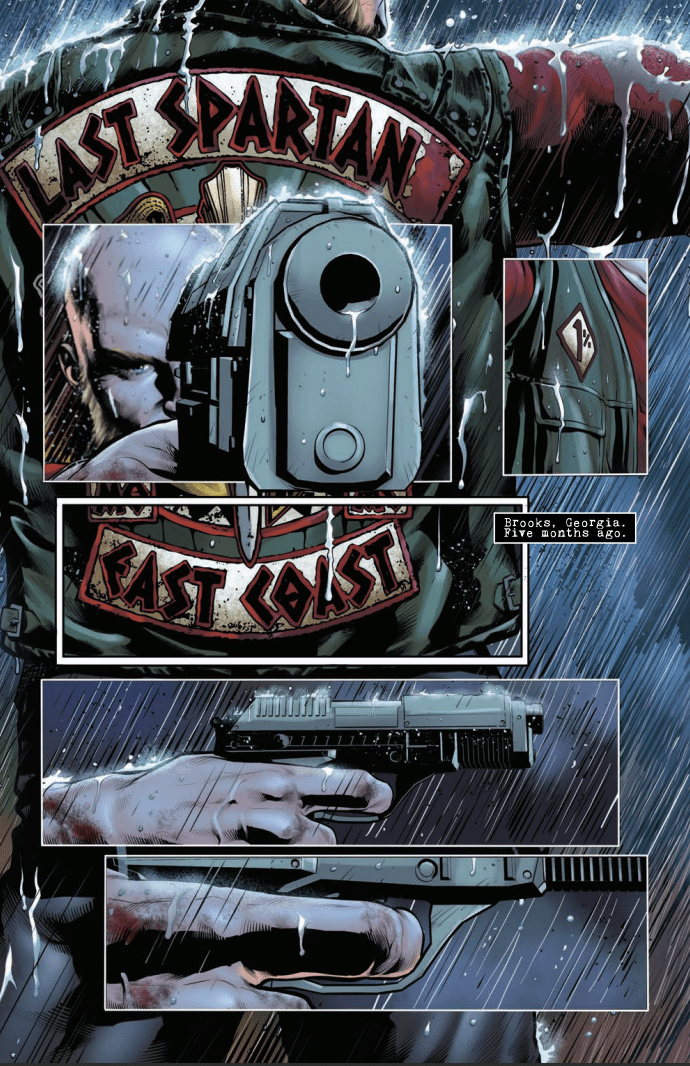
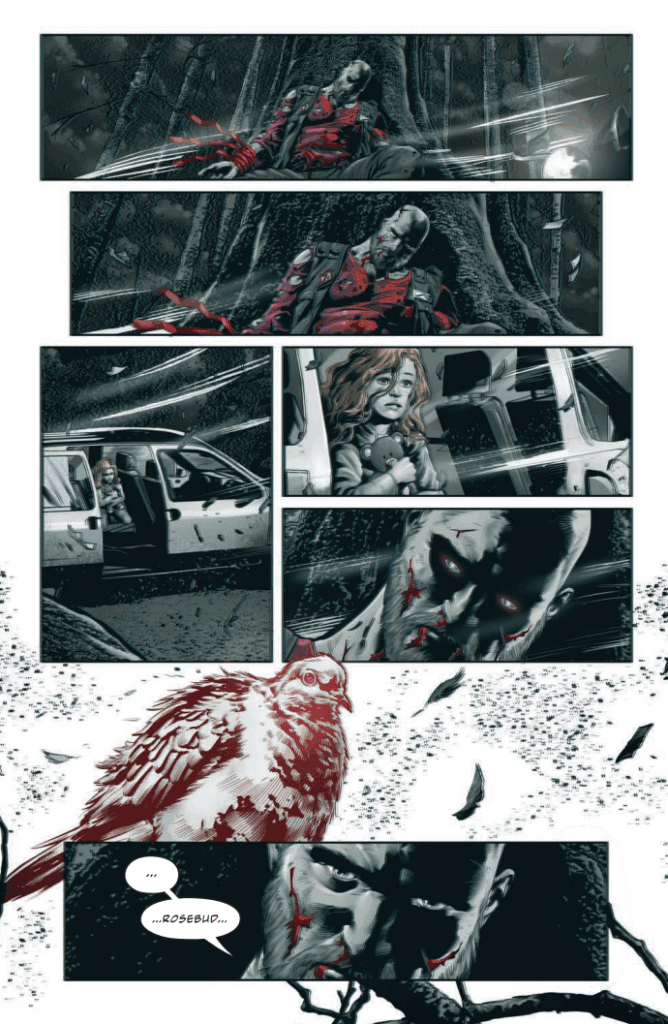
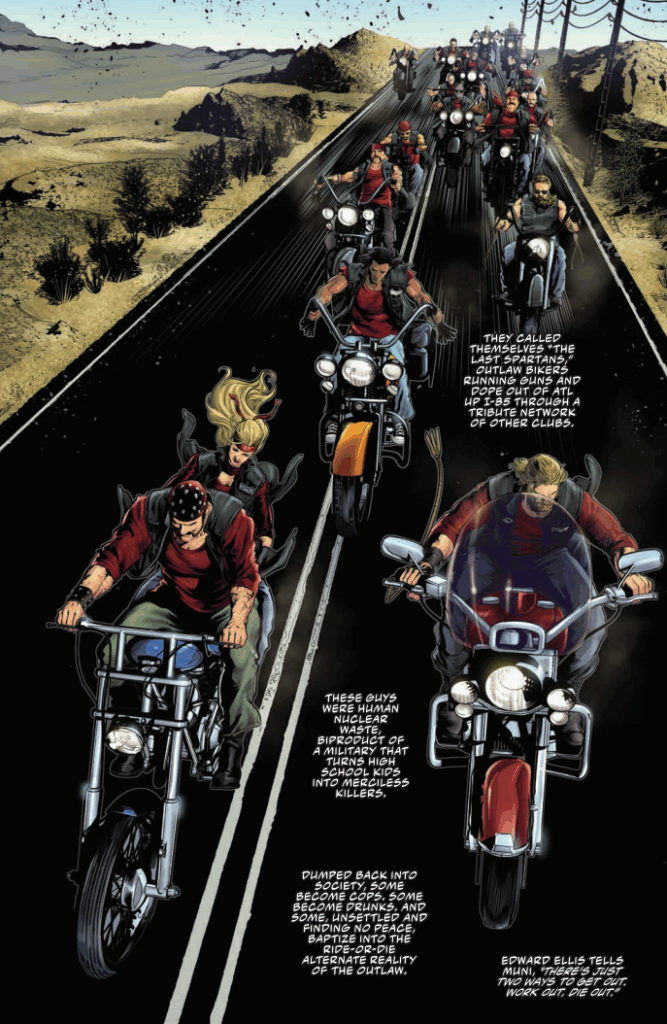
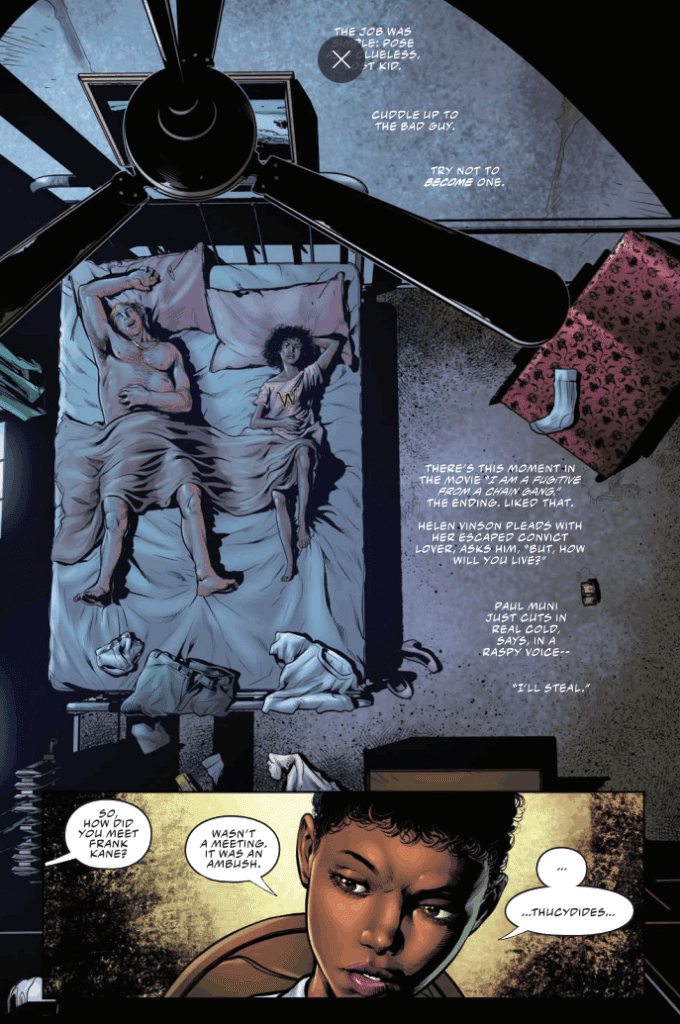
Let’s talk about the art because it is a true standout: crisp, sharp, and intensely cinematic. The visual style is a collaborative effort, with Will Conrad on pencils and inks for Chapter #1, Jimbo Salgado for Chapter #2, and Michael Montenat for Chapter #3. This diverse lineup works, somehow creating a varied but cohesive, raw feel.

The art is highly detailed and expressive, capturing everything from Frank’s stoic, unreadable intensity to Harper’s fierce determination. The action sequences are fluid and impactful. Seriously, the work by Jimbo Salgado in Chapter #2 really shines, highlighting every move, swing, and punch with stunning sequential precision. His background work on Bankhead, Atlanta, is crazy good, packing so much detail and character into a single panel. However, it’s worth noting a common critique: the rendering of Black women’s hair in some panels could use some work.

The coloring, handled by Omi Remalante Jr. and Nanjan Jamberi (with extra colors by Juancho Velez), is moody and muted, perfectly reflecting the dark subject matter. The lettering by Troy Peteri is clean and effective, with sound effects like the BLAPP of a gunshot and the SSKKRREEEECH of a car skidding, adding a visceral layer of immersion.
Mane Entertainment

Christopher Priest’s writing is a major force here. He’s a pioneering figure in comics; the first Black American editor and writer in mainstream comics, known for his sophisticated, often non-linear, and politically charged storytelling on titles like Black Panther and Deathstroke. He brings that distinct, powerful voice to this story. He makes Frank Kane a fantastic straight man, delivering confident absurdity with a matter-of-fact, straight-laced style that’s hard to figure out but makes him undeniably one of the “good ones.” Harper, the no-nonsense government cop, is equally compelling, a seemingly “charming” black woman who has seen the darkest things.

Priest’s work is often praised for its uncomfortable realness, an unexpected sprinkling of the Black American diaspora into the fantasy world of comics. It’s refreshing, but also, as noted, can be problematic. There’s a scene where a potential victim says, “I’m young, pretty, and white. It’s… the genetic lottery… no money or SAT scores… but everybody wants to do me.” It’s a line that attempts to touch on the harsh realities of race and sex trafficking, but does so with a lack of subtlety that could easily be seen as reinforcing problematic stereotypes that success or prominence comes down to race and not much else. The book also includes the uncensored “N-word,” an explicit choice by Priest to make the story feel raw and real, even amidst supernatural elements.
Mane Entertainment

On the lighter side, some of the character interactions are brilliant, like the hilarious scene where Kane and Harper are having a serious conversation while Frank is literally on the toilet in a victim’s house. You don’t even realize it until Harper calls him out. It’s that kind of confident absurdity that works.

The plot delivers on satisfying twists: the mysterious “DK” character shows up out of nowhere, there are some truly shocking reveals, and the detail about the “Dove” tattoo at the end will absolutely leave you reeling.
Mane Entertainment

Despite being fiction, the book is firmly grounded in reality. The editor’s letter explicitly states the story is inspired by the terrifying reality of human trafficking, a problem that isn’t just “somewhere else.” The book goes one step further by shining a light on DeliverFund, a real-life non-profit that combats human trafficking by working with law enforcement and using advanced technology. The inclusion of this organization and its mission makes the story feel truly important, blurring the line between graphic novel and a genuine call to action.

The Last Spartan: Red Tape is a compelling, thought-provoking, and unforgettable journey into the heart of darkness. It’s a dark, layered crime drama with a rich blend of mythology, honor, and raw action. The characters are complex, the plot is full of twists, and the multi-artist approach delivers a top-notch visual experience. It’s a gripping story that will keep you hooked, but also a poignant, necessary reminder of a very real crisis. If you’re a fan of gritty crime thrillers or just looking for a comic with style and substance that isn’t afraid to go there, this one should be on your list.

‘The Last Spartan: Red Tape’ Graphic Novel Review: Red Tape, Raw Justice

The Last Spartan: Red Tape is a compelling, thought-provoking, and unforgettable journey into the heart of darkness. It’s a dark, layered crime drama with a rich blend of mythology, honor, and raw action.
AMAZON
BUY NOW
'The Last Spartan: Red Tape' Graphic Novel Review: Red Tape, Raw Justice

‘The Last Spartan: Red Tape’ Graphic Novel Review: Red Tape, Raw Justice

September 28, 2025

Mane Entertainment’s The Last Spartan: Red Tape is a graphic novel that’s less about costumed heroes and more about a brutal exploration into the shadows of human trafficking. It’s a gritty, street-level crime drama that feels more like a mash-up of Taken and The Punisher, but with a strangely compelling mystical edge. Written by Christopher Priest, Tyler Mane, and Renae Geerlings, and inspired by the novel by John F. Saunders, this book doesn’t hold back. It’s a raw look at a terrifying real-world issue, framed by the journey of two seriously messed-up anti-heroes.

At the center is Frank Kane, a decorated combat veteran and the last surviving member of a biker gang called The Last Spartans. He’s on parole, living a quiet life that’s a powder keg waiting for a match. The man is a self-described sociopath with a rigid, almost ancient code of honor, who follows “omens” from the gods, a callback to the literal Spartans. His mundane existence is shattered when the grandparents who once saved his life ask him for an impossible favor: find their missing granddaughter, Jenny.

Mane Entertainment

Frank’s solitary, honor-bound quest crashes head-on into the mission of Donzetta “Harper” La’Quan, an undercover Department of Homeland Security (DHS) agent. Harper is Frank’s total opposite: a government operative who believes in the system, even though she’s constantly frustrated by its failures. She and her unit were tracking Jenny and the trafficking network, but the surveillance was mysteriously pulled. Now, she’s operating on her own, determined to save them all, fed up with the government “red tape” that gives the book its title. The word “Red Tape” actually has a double meaning here; it’s also a term for a gun ready to fire – no blanks, just red-hot action.

The core of the story is the uneasy partnership between Frank’s spiritual “omens” and Harper’s sharp federal training, a dynamic built on mutual distrust but united by one desperate goal. Frank’s simple promise to find a missing girl quickly spins into a full-blown fight against the Baieringe Collective, a sophisticated international cartel. These villains are using phony modeling workshops and huge events like the “Big Game” to traffic victims. What’s especially chilling and clever is how the villains use a modern app to auction young girls, a disturbing reminder of how human depravity is always adapting to new technology.

Mane Entertainment

Let’s talk about the art because it is a true standout: crisp, sharp, and intensely cinematic. The visual style is a collaborative effort, with Will Conrad on pencils and inks for Chapter #1, Jimbo Salgado for Chapter #2, and Michael Montenat for Chapter #3. This diverse lineup works, somehow creating a varied but cohesive, raw feel.

The art is highly detailed and expressive, capturing everything from Frank’s stoic, unreadable intensity to Harper’s fierce determination. The action sequences are fluid and impactful. Seriously, the work by Jimbo Salgado in Chapter #2 really shines, highlighting every move, swing, and punch with stunning sequential precision. His background work on Bankhead, Atlanta, is crazy good, packing so much detail and character into a single panel. However, it’s worth noting a common critique: the rendering of Black women’s hair in some panels could use some work.

The coloring, handled by Omi Remalante Jr. and Nanjan Jamberi (with extra colors by Juancho Velez), is moody and muted, perfectly reflecting the dark subject matter. The lettering by Troy Peteri is clean and effective, with sound effects like the BLAPP of a gunshot and the SSKKRREEEECH of a car skidding, adding a visceral layer of immersion.

Mane Entertainment

Christopher Priest’s writing is a major force here. He’s a pioneering figure in comics; the first Black American editor and writer in mainstream comics, known for his sophisticated, often non-linear, and politically charged storytelling on titles like Black Panther and Deathstroke. He brings that distinct, powerful voice to this story. He makes Frank Kane a fantastic straight man, delivering confident absurdity with a matter-of-fact, straight-laced style that’s hard to figure out but makes him undeniably one of the “good ones.” Harper, the no-nonsense government cop, is equally compelling, a seemingly “charming” black woman who has seen the darkest things.

Priest’s work is often praised for its uncomfortable realness, an unexpected sprinkling of the Black American diaspora into the fantasy world of comics. It’s refreshing, but also, as noted, can be problematic. There’s a scene where a potential victim says, “I’m young, pretty, and white. It’s… the genetic lottery… no money or SAT scores… but everybody wants to do me.” It’s a line that attempts to touch on the harsh realities of race and sex trafficking, but does so with a lack of subtlety that could easily be seen as reinforcing problematic stereotypes that success or prominence comes down to race and not much else. The book also includes the uncensored “N-word,” an explicit choice by Priest to make the story feel raw and real, even amidst supernatural elements.

Mane Entertainment

On the lighter side, some of the character interactions are brilliant, like the hilarious scene where Kane and Harper are having a serious conversation while Frank is literally on the toilet in a victim’s house. You don’t even realize it until Harper calls him out. It’s that kind of confident absurdity that works.

The plot delivers on satisfying twists: the mysterious “DK” character shows up out of nowhere, there are some truly shocking reveals, and the detail about the “Dove” tattoo at the end will absolutely leave you reeling.

Mane Entertainment

Despite being fiction, the book is firmly grounded in reality. The editor’s letter explicitly states the story is inspired by the terrifying reality of human trafficking, a problem that isn’t just “somewhere else.” The book goes one step further by shining a light on DeliverFund, a real-life non-profit that combats human trafficking by working with law enforcement and using advanced technology. The inclusion of this organization and its mission makes the story feel truly important, blurring the line between graphic novel and a genuine call to action.

The Last Spartan: Red Tape is a compelling, thought-provoking, and unforgettable journey into the heart of darkness. It’s a dark, layered crime drama with a rich blend of mythology, honor, and raw action. The characters are complex, the plot is full of twists, and the multi-artist approach delivers a top-notch visual experience. It’s a gripping story that will keep you hooked, but also a poignant, necessary reminder of a very real crisis. If you’re a fan of gritty crime thrillers or just looking for a comic with style and substance that isn’t afraid to go there, this one should be on your list.
‘The Last Spartan: Red Tape’ Graphic Novel Review: Red Tape, Raw Justice

The Last Spartan: Red Tape is a compelling, thought-provoking, and unforgettable journey into the heart of darkness. It’s a dark, layered crime drama with a rich blend of mythology, honor, and raw action.
Share:

Comments

Leave the first comment

<!-- if comments are disabled for this post then hide comments container -->
<style> 
<?php if(!comments_open()) { echo "#nfps-comments-container {display: none !important;}"; }?>
</style>