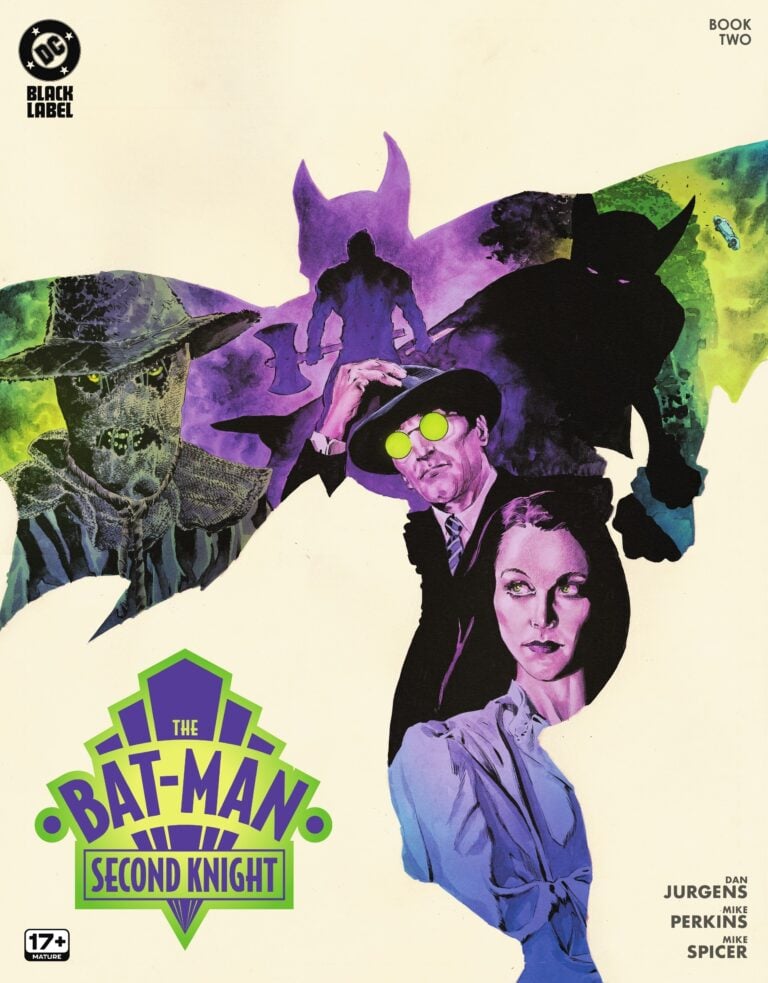
The capes-and-cowls genre often leans into the mythic side of things, but The Bat-Man: Second Knight #2 feels like a grimy, pulse-pounding drop into real history. Dan Jurgens and Mike Perkins continue their reimagining of the Dark Knight’s earliest days, set against the suffocating paranoia of 1939-1940 Gotham. It’s a period piece that uses the looming threat of World War II to elevate the stakes of a local murder mystery into something far more existential: fear.

The issue picks up in the chaotic aftermath of a movie premiere turned slaughterhouse. A masked man with a Tommy gun has opened fire on a crowd, leaving the city in mourning and the streets stained with blood. Amidst this carnage, we find Lois Lane, on assignment from Metropolis, who survives a harrowing car plunge off a cliff after being gassed and seeing monsters that weren’t there.
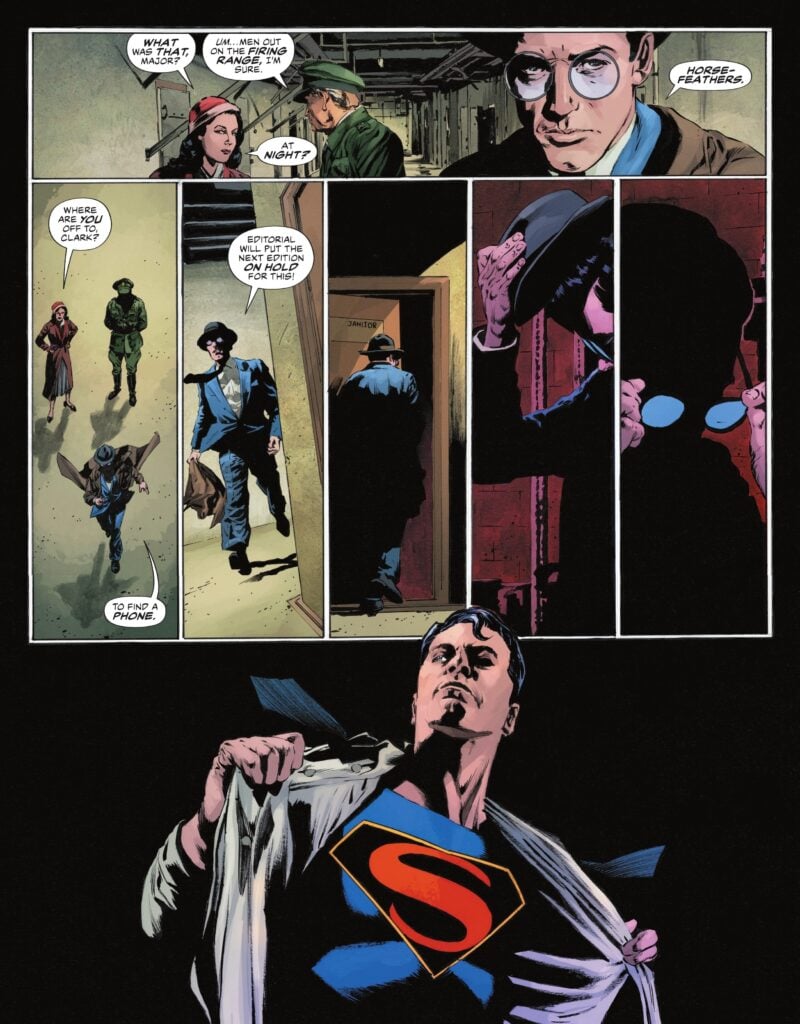
Everything changes the moment Superman swoops in to save Lois. His arrival instantly shifts the tone of the book, clashing with the gritty, shadow-drenched world of Gotham. While the GCPD dismisses him as a cheap PR stunt to sell newspapers, Bruce Wayne is the ultimate skeptic. He refuses to believe a man can actually fly, insisting the stranger is simply making “longer jumps than we can conceive of.” It’s a great meta-nod to Superman’s Golden Age roots, back when he could only leap tall buildings, and not fly. That skepticism perfectly highlights how grounded this version of Gotham is; even for a man who dresses as a bat, a flying alien is somehow a bridge too far.
While Bruce wrestles with the impossibility of a “Super-man,” he remains firmly tethered to the physical reality of the case. The issue expertly weaves two parallel threads. In the present, Bruce Wayne is recovering from a knife stab while trying to piece together how he and Lois were both drugged into a state of irrational terror. This leads him to his father’s old war files, revealing a connection to an Army chemist named Crane, a man obsessed with turning the terror of the trenches into a weapon.
The heart of this issue is a masterfully handled flashback from Commissioner Jim Gordon. We learn that Gordon’s bond with Bruce is actually a life debt. Gordon recounts his time in the Great War at Flanders Field, where he was saved from mustard gas and shrapnel by a medic named Thomas Wayne.
Jurgens uses this to draw a direct line between the horrors of World War I and the burgeoning madness in Gotham. It contextualizes why the Bat-Man is necessary in these tumultuous times, and not just because he’s a crime fighter pushing back against the madness, but as a response to a world that has forgotten its humanity in the face of chemical warfare, cynicism and fascism.

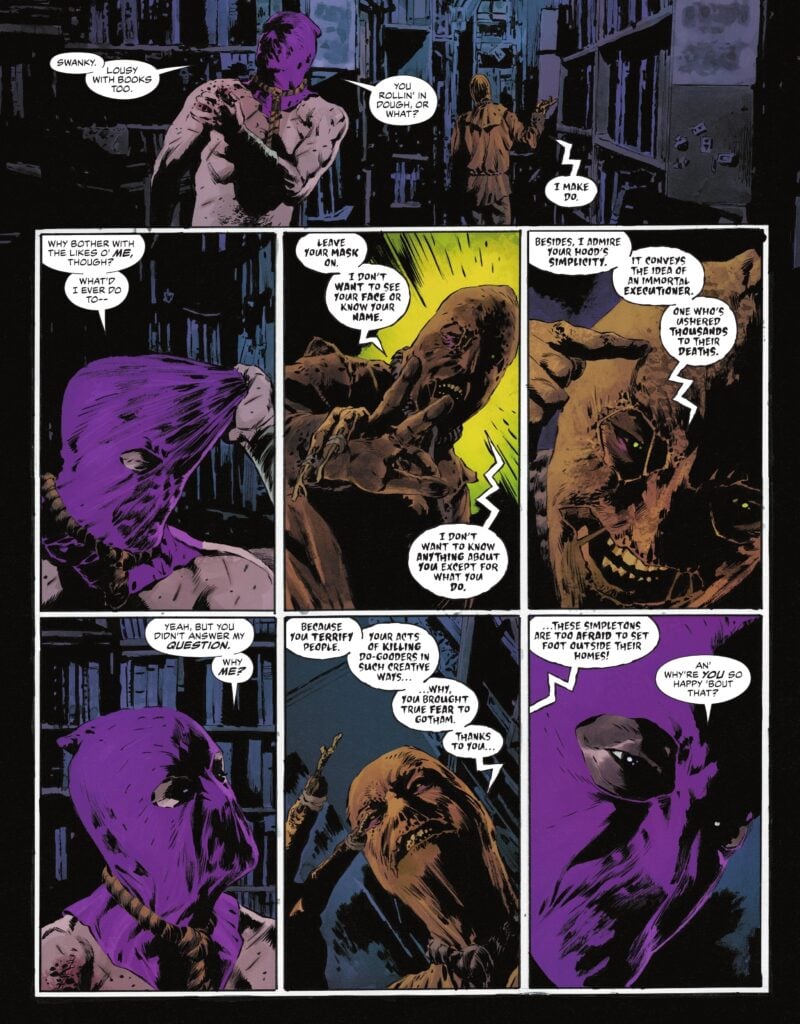
The primary theme here is the anatomy of fear. This Scarecrow, following his usual motif but heightened to Nazi levels, views fear as a tool to control a populace, to bend the people to his will and reshape the world in his image. Why? Because he’s a sicko who relishes in the anxiety, and terror, and anguish of others. Sidestepping his vileness, it’s actually one of the best interpretations of the character in recent years, even if, ironically, this story takes place in the past.
Setting this story in the late 1930s and adding in the fear of the other and an invisible enemy (the gas) in the mix really mirrors the real-world anxiety of the time and, if we’re being honest, current times; it makes the terror in Gotham feel like a microcosm of a global collapse, one where we’re left desperately rooting for the good guys to win.
Mike Perkins’ art continues to shine here, even when the subject matter is notably dark. His style is heavy on shadows and grit, perfectly capturing the noir aesthetic of the late 30s. The way he renders the gas-masked soldiers in the trenches of Belgium is genuinely haunting; they look more like insects than men. Spicer’s colors further enhance the mood. He uses a sickly, neon-green palette for the fear gas that contrasts sharply with the muted, earthy tones of Gordon’s hospital room or the sepia-tinted past. This visual cue makes the hallucinations feel invasive and toxic, and musty. Simon Bowland’s lettering also deserves a nod. The sound effects—like the BRATTA-KATTA-TATT of the Tommy gun are integrated into the action panels, making the violence feel loud and immediate.

Pay What You Want!
The Bat-Man: Second Knight #2 is a dense, rewarding read that respects the legacy of these characters while putting them through a much darker, historical ringer. It’s a story about the scars left by war and how fear, if left unchecked, can turn neighbors into monsters.
‘The Bat-Man: Second Knight’ #2 Scarecrow’s WWII Origins Revealed
The Bat-Man: Second Knight #2 is a dense, rewarding read that respects the legacy of these characters while putting them through a much darker, historical ringer. It’s a story about the scars left by war and how fear, if left unchecked, can turn neighbors into monsters.