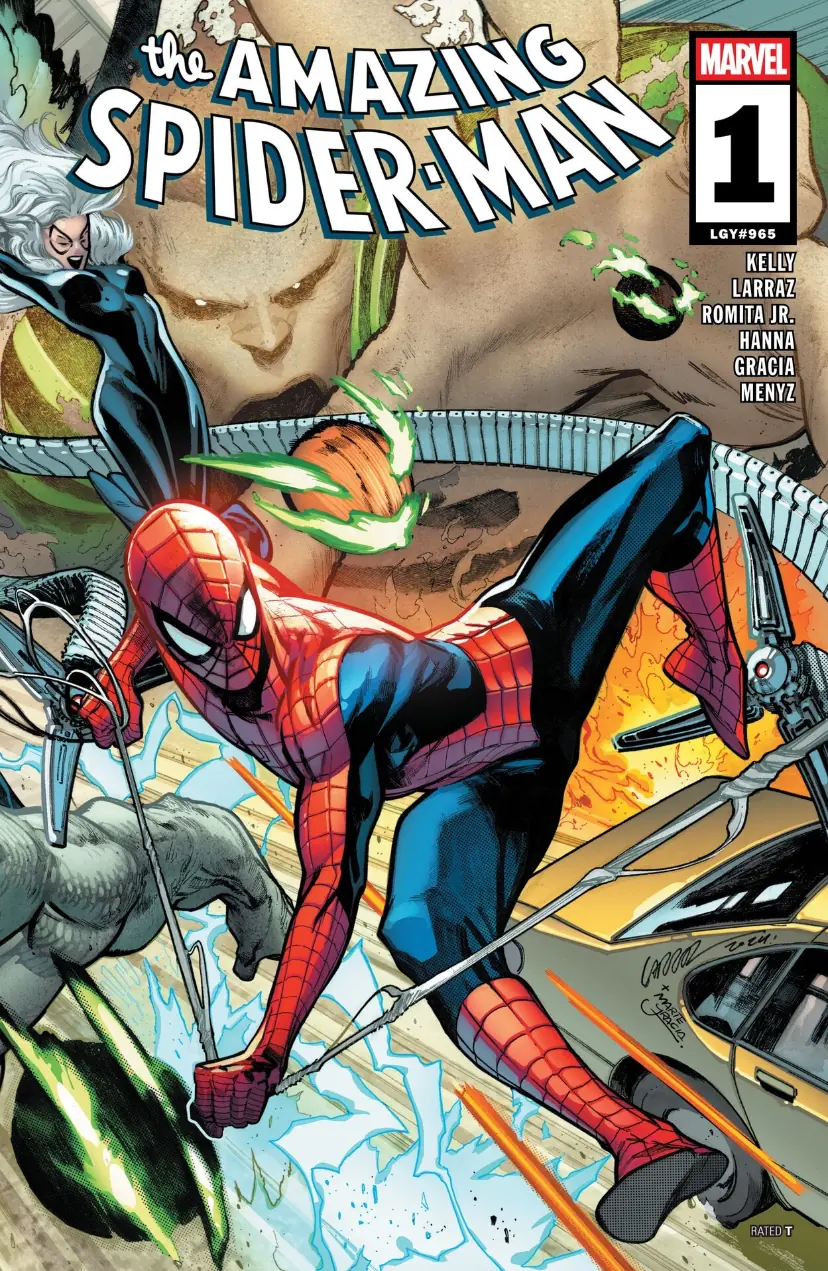
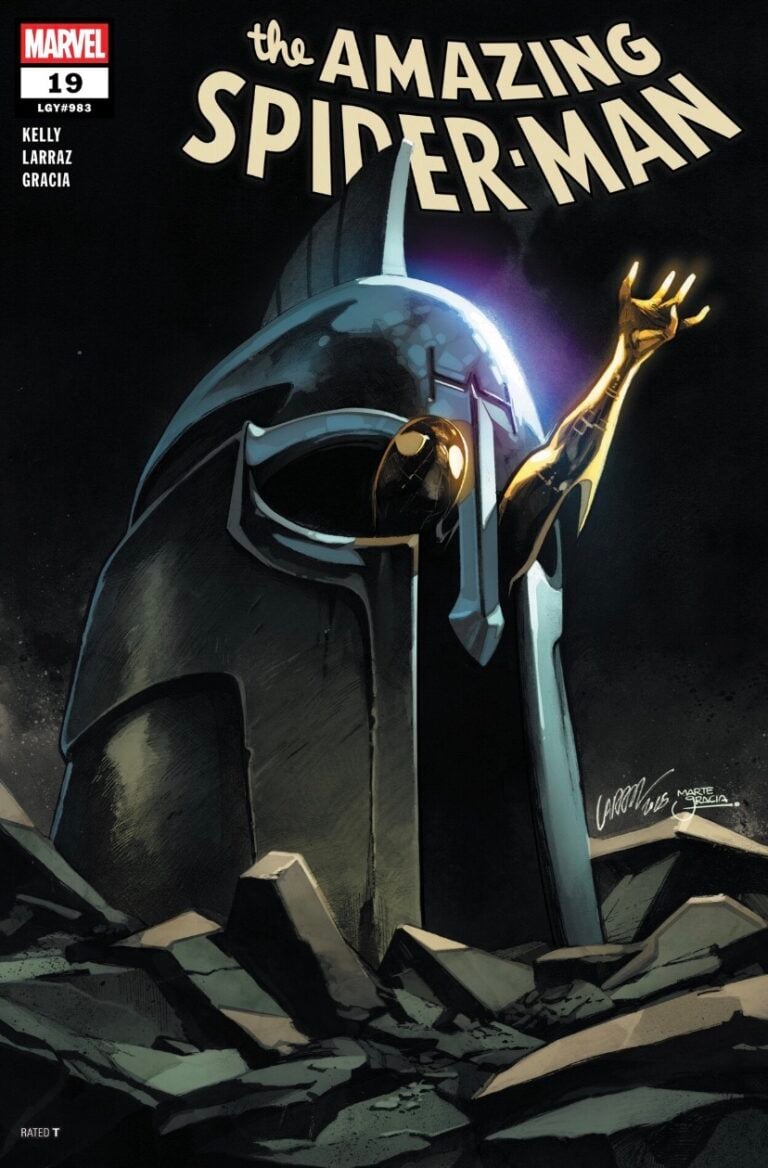
Hellgate didn’t have the strongest introduction, but just wait until you get a look at him on page sixteen of this book. Once again, artist Pepe Larraz steals the show with his detailed character design. His Hellgate, compared to fellow Spider-Man artist John Romita Jr’s, looks like a completely different villain.
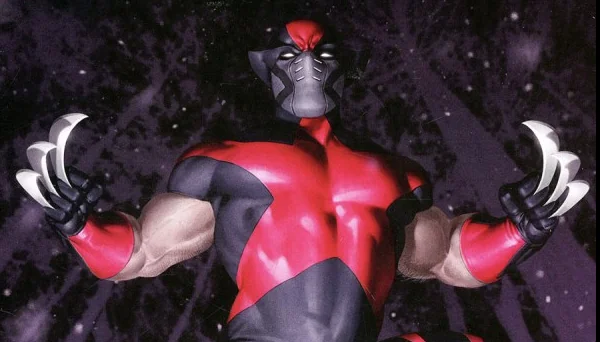
Larraz’s version looks less like a Renaissance Fair cosplayer, instead resembling a demonic Achilles ripped straight from Hell. He towers over Peter, broad shoulders fixed with spiked armor and hands clenched into massive fists. Larraz’s art has been the number one strength of this run, pairing Marvel’s greatest hero with one of their strongest artists. Unfortunately, it’s being surrounded by a story that’s starting to stall out.

Pay at least $16 for these 10 items
The battle between Hellgate and Peter is the centerpiece of this book, which is why they had to nail Hellgate’s intimidation factor. Colorists Marte Gracia and Marcio Menyz bathe him in dark blues, transforming him into a living shadow. The way those colors contrast with the villain’s ominous red eyes reinforces his innate darkness. It’s the best portrayal of Hellgate yet, and he finally feels like someone who could punch Peter across the universe.

Their fight is fast-paced and dynamic, which is where Larraz excels. He blurs backgrounds with quick lines and bright colors, indicating the speed of our combatants, using each panel to push the battle forward. Peter uses Hellgate’s own hammer against him, slamming it into the villain’s side with a satisfying KRUNCHH courtesy of letterer Joe Carmagna, before ricocheting him into the ground with an epic WHAM.
Larraz never spares detail, adding flying debris to drive home the impact, before Hellgate mounts his comeback. He chases Peter through different worlds, each swing of his sword or limber dodge from our hero rendered in dramatic poses that bleed through the panels and ramp up the pacing. Once he’s on the ropes, Peter contemplates taking Xanto’s solution before being rescued by Raeltih and the rest of his crew, escaping the fight and heading back towards Earth.
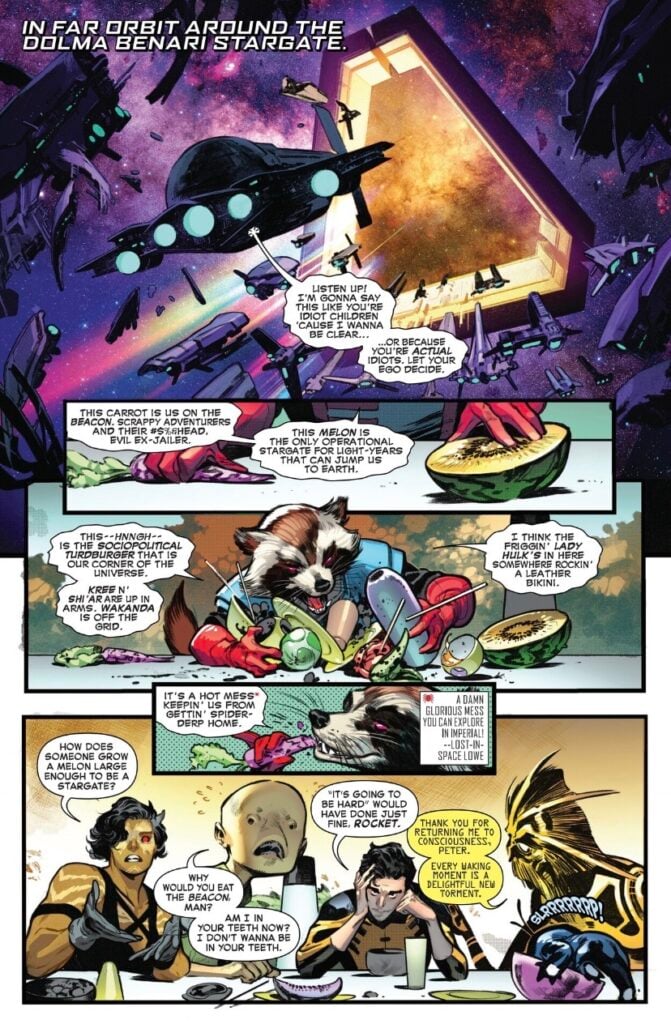
Think what you want about Amazing Spider-Man writer Joe Kelly, but the man has ambition. Ever since he started this alternating issue structure (one issue in space with Peter and then the next on Earth with Norman and Ben), we’ve gotten a variety of fresh character moments like Norman experiencing the burdens of being Spider-Man or any of Peter’s fights in space. As the months drag on, though, so do these issues, and the initial momentum they built up is starting to slow.
The big hook of Peter going to space was his journey to become strong enough to defeat Hellgate. But Kelly never truly showed that journey. Peter trained briefly in issue #11, then spent the next four issues fighting villains of the week and flirting with Raelith. Those battles may have given our hero riveting moments where he stands up for himself and others, but they fail to show why it’s made him stronger.
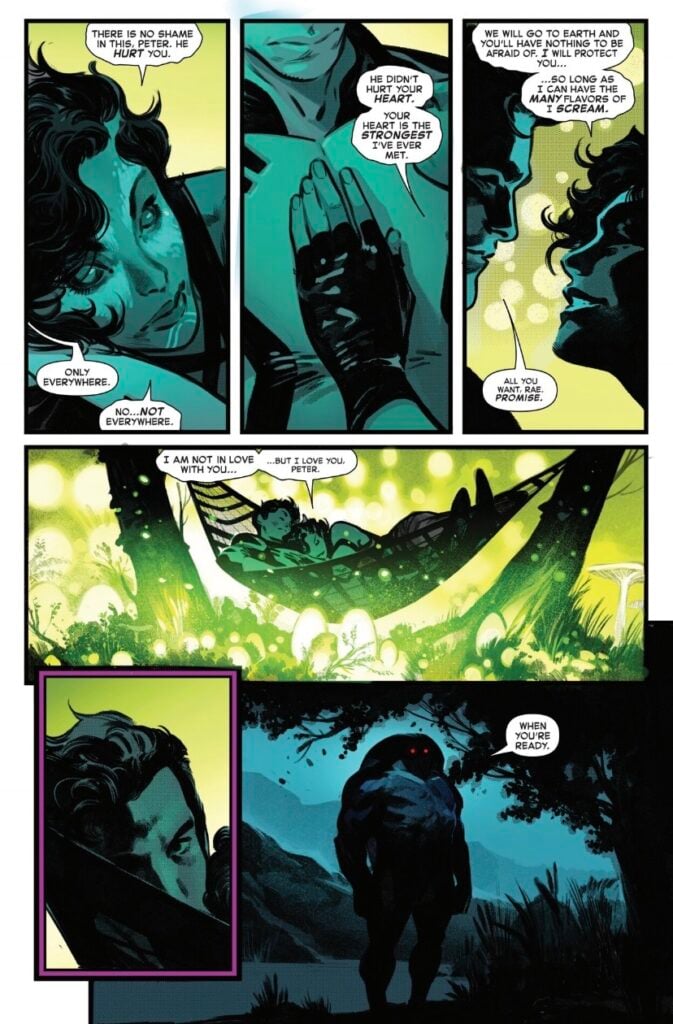
When Xanto Starblood abruptly reveals that he has created a genetic re-coder to upgrade Peter’s physiology, it feels like a cop-out. Peter hasn’t earned anything yet. A Dragon Ball Z-style training arc showing him accomplishing specific deeds to gain new powers would have been much more satisfying than this magic solution.
That being said, the genetic re-coder does create an interesting ethical dilemma. Despite developing it, Xanto doesn’t want Peter to take it. He’s come to respect Peter and asserts he doesn’t want him to lose himself to gain something he doesn’t need. It’s a warranted scene showing how far these two have come since their first interactions. They finally feel like part of a team, and it’ll be a shame when Xanto, Rocket, and Glitch likely leave this series soon.

Amazing Spider-Man #19 serves as another exhibition for Pepe Larraz’s incredible art. Hellgate finally looks like a cosmic threat; the color work transforms him into a genuine monster, and the fight choreography is fast-paced and animated. But even he can’t save the training arc that never materialized.
Peter’s power-up was handed to him via a plot device rather than compelling storytelling. Kelly’s ambition is admirable, and while I genuinely enjoyed Peter’s fresh direction out in space, it’s overstaying its welcome. I’m counting down the days till he’s back to being our Friendly Neighborhood Spider-Man.
‘The Amazing Spider-Man’ #19 Review: Pepe Larraz Redesigns Hellgate (Legacy: #983)
Amazing Spider-Man #19 serves as another exhibition for Pepe Larraz’s incredible art. Hellgate finally looks like a cosmic threat; the color work transforms him into a genuine monster, and the fight choreography is fast-paced and animated. But even he can’t save the training arc that never materialized.