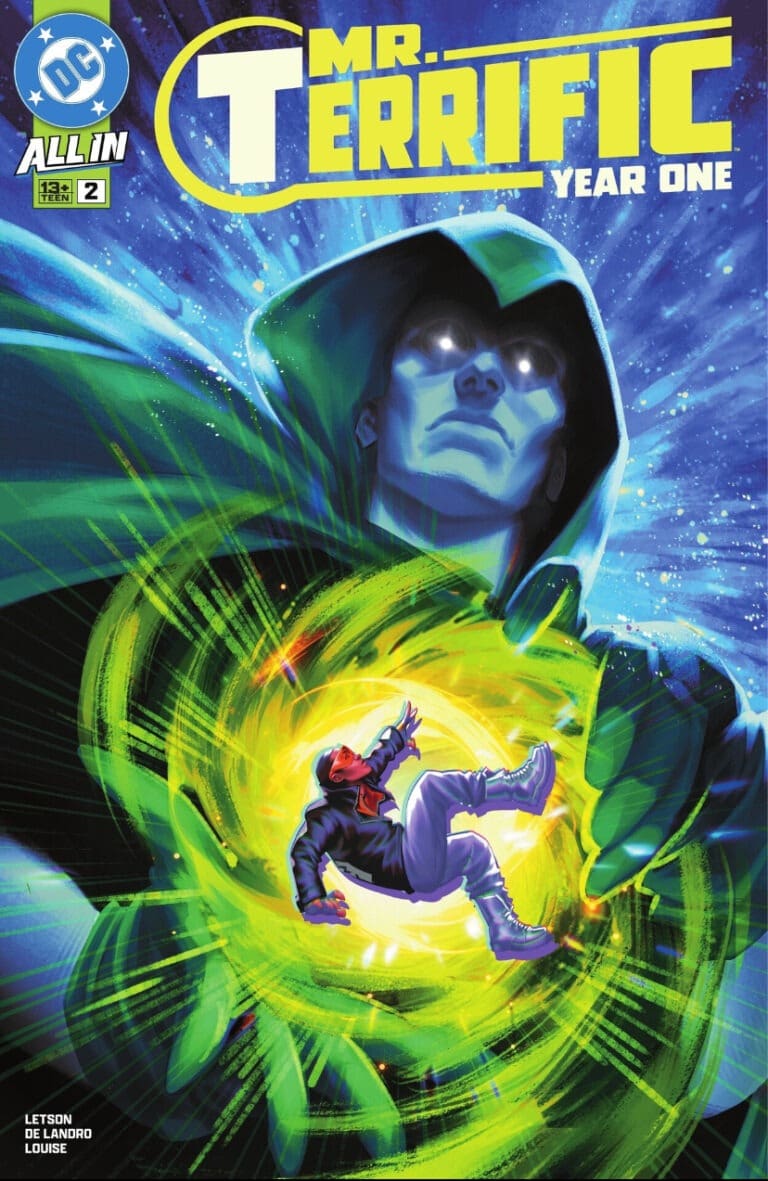
In Mr. Terrific: Year One #2, writer Al Letson, along with artists Valentine De Landro, Edwin Galmon, and colorist Marissa Louise, take us on a powerful journey into Michael Holt’s origin story. This issue cleverly weaves together two timelines to explore his beginnings.
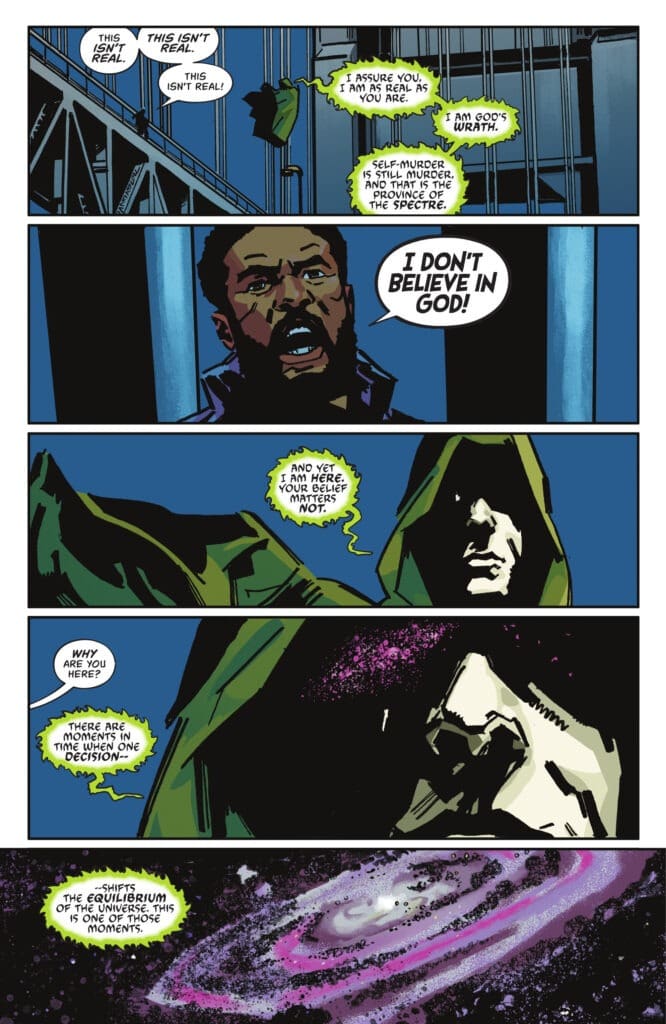
The story alternates between Michael’s darkest days and his current struggles. In the past, we see Michael at rock bottom. He’s lost his wife, Paula, their unborn child, and his best friend, Dre, all in a devastating blow. This overwhelming grief pushes him to the brink of suicide, where he’s suddenly confronted by The Spectre. Fast forward to the present, and Mr. Terrific is investigating a strange rift in his old city. This leads him straight to an Apokoliptian Hellhound. It turns out that this current mystery is closely tied to his past, as the rift appears at his old company, which he’d sold to the evil tech billionaire, Athena Prescott.
Al Letson’s writing reshapes Mr. Terrific, giving his emotional journey much more depth. Letson explores the full spectrum of grief and recovery, showing that the universal human feeling of wanting to give up is a common experience. It makes the story incredibly relatable. The focus on mental health and the tough road to healing sets this series apart from typical superhero origin stories, grounding a genius in deeply human vulnerability. Michael is clearly struggling with a lot of self-blame here, and you’re really hoping he finds a way through this.
DC Comics
The Spectre’s appearance is a significant turning point, pulling Michael out of his darkness: the dialogue, especially The Spectre’s powerful line, “a trillion specks of stardust. If one explodes, it could set off a chain reaction. You are only as insignificant as you believe yourself to be”, acts as a philosophical spark for Michael’s transformation, and highlights how the series explores the psychological side of being a hero.
Mr. Terrific: Year One #2 reveals that Michael’s despair isn’t rooted in a single tragedy but stems from a succession of losses, including the violent death of his best friend, Dre, which is directly tied to Michael’s past inaction.
Letson expertly adds new twists, such as Michael knowing about Paula’s pregnancy beforehand. There’s also clear respect for the source material here, especially John Ostrander and Tom Mandrake’s Spectre run, building on it rather than just replaying old beats. Finally, I appreciated the respect given to the original Mr. Terrific, Terry Sloane, particularly his compelling hero’s journey and the inspirations drawn from his backstory.
DC Comics
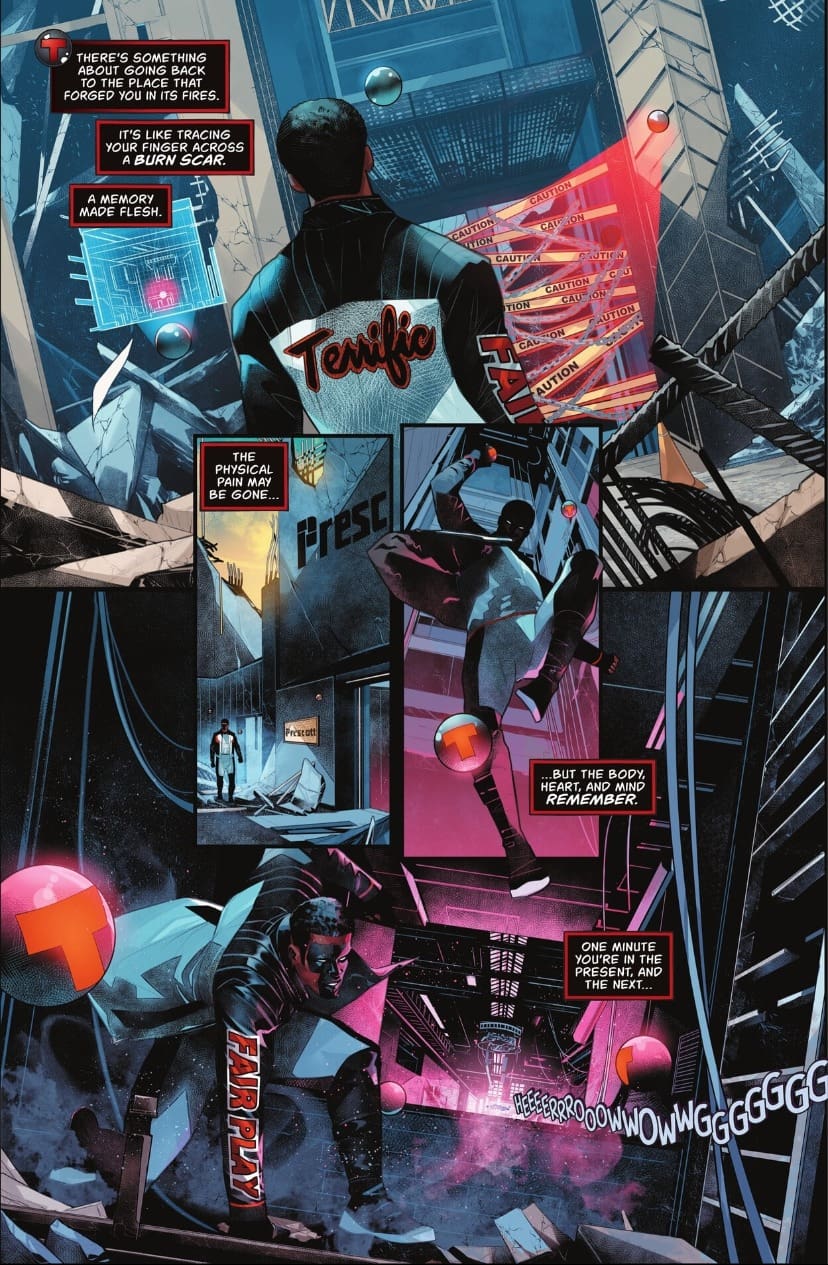
The artwork is a huge highlight, deliberately split to enhance the dual narrative. Edwin Galmon handles the present-day scenes, giving us the superhero flair that makes everything pop. On the other hand, Valentine De Landro approaches the flashback sequences with a distinct style that evokes a more gritty, realistic aesthetic. This visual choice literally transports you back to Michael’s traumatic past, making his memories feel real, dark, and deeply personal.
Marissa Louise’s coloring is crucial in bringing these two distinct art styles together, and Lucas Gattoni’s lettering makes The Spectre feel like the larger-than-life character he is. This division of artistic labor, combined with the artists’ deliberate styles, makes the art itself an active storytelling element, guiding the reader through Michael’s complex psychological landscape.
Mr. Terrific: Year One #2 is a powerful example of a well-told origin story. It perfectly balances respecting the established lore with bold, emotionally resonant new ideas. This issue also beautifully reinterprets his title as the “world’s third smartest person,” now signifying that his late wife, Paula, held the first and second spots. This adjustment offers a far more meaningful comparison than those with characters like Lex Luthor or Batman.
‘Mr. Terrific: Year One’ #2 A Genius Forged in Grief
Mr. Terrific: Year One #2 is a powerful example of a well-told origin story. It perfectly balances respecting the established lore with bold, emotionally resonant new ideas. Al Letson’s poignant script, combined with the visually distinct artwork, creates a compelling issue that digs deep into Michael Holt’s mind, making for a truly immersive read.