‘Captain America’ #2 (2025) review

‘Captain America’ #2 (2025) Review: War? What Is It Good For?

Chris Parker Jr | August 6, 2025

August 6, 2025

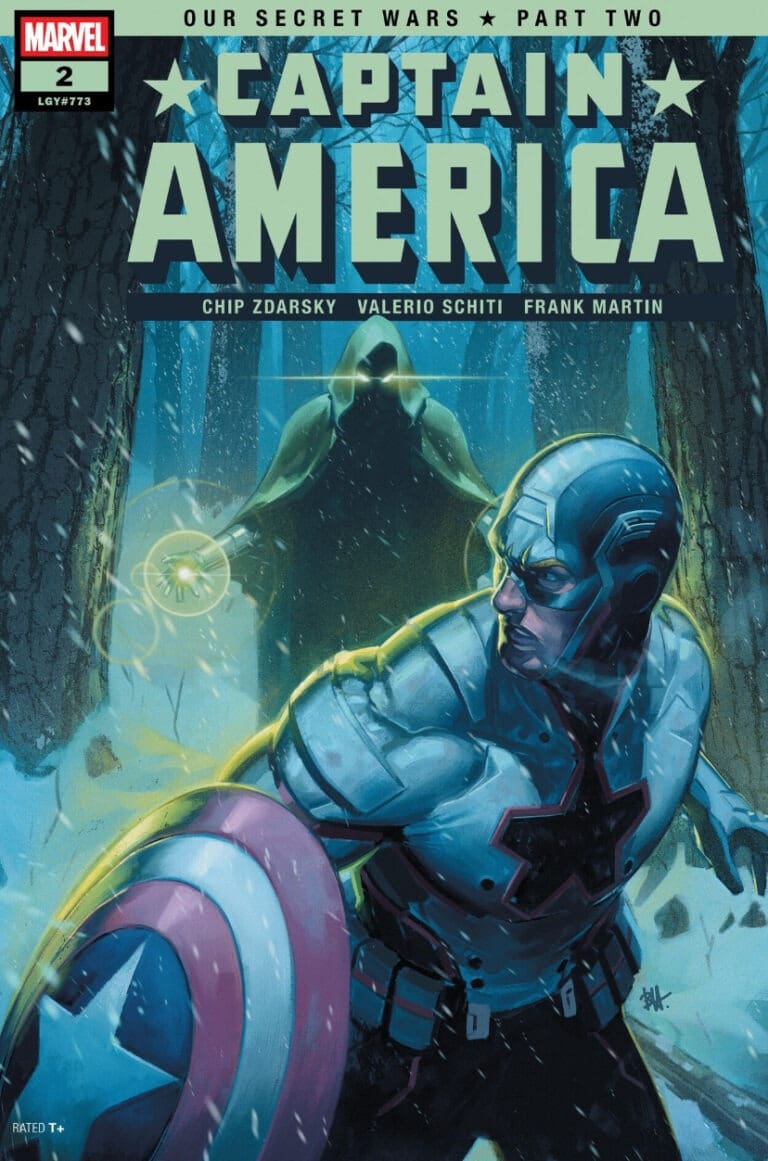
Captain America #1 redefined Steve Rogers by aging him alongside the world, making his perspective less unique as he became part of the broader landscape. Zdarsky gave Rogers a fresh voice and viewpoint, allowing for a more direct exploration of challenging topics. The series began boldly with a modern take on the hero, revisiting 9/11 and introducing a new super soldier called David Colton. And now, by the second issue, Colton emerges clearly, deepening the story’s impact as it examines what it means for a young American shaped by 9/11 to fight for freedom today.

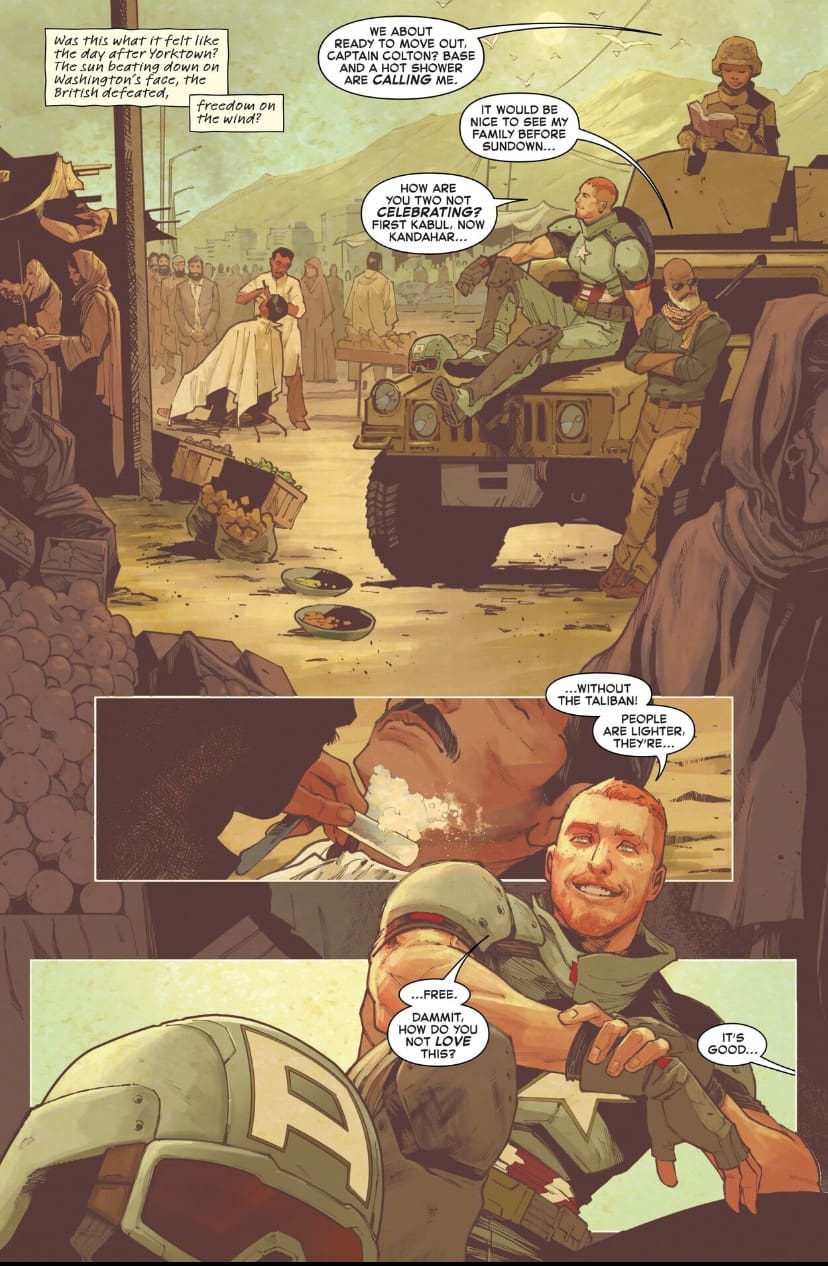
Colton’s character arc becomes clearer in Captain America #2, challenging the assumptions set up in the first issue when he watched Saddam Hussein’s statue fall with youthful optimism. Flashbacks to the aftermath of the Taliban’s defeat reveal a more layered figure, not yet hardened by war but already facing its moral complexity.

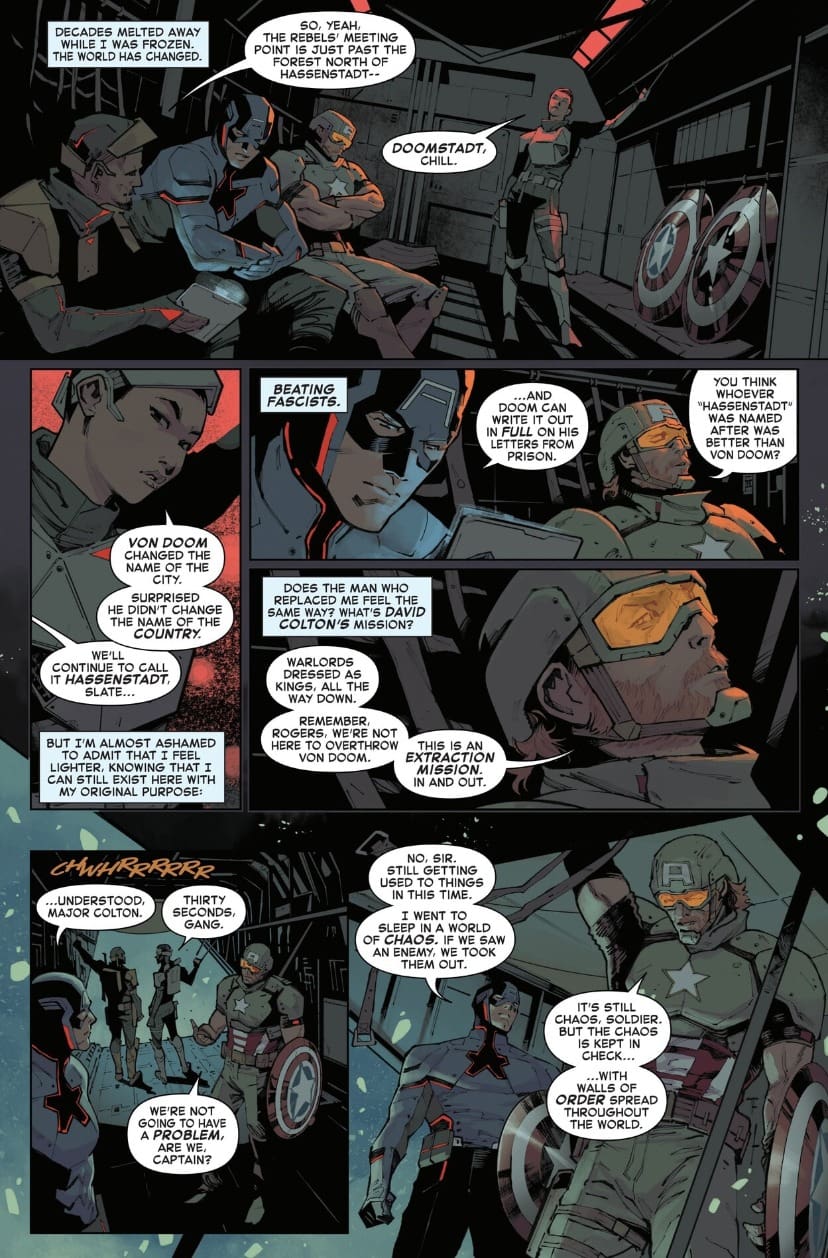
Then we shift to the present, one week after Captain America was rescued from the ice. He and David Colton are sent on a mission to rescue captured diplomats in Latveria, with orders to avoid direct conflict with Doctor Doom. This directive proves difficult for Steve Rogers, who sees a chance to liberate people from a tyrant. The contrast between their perspectives becomes central to the issue. Steve believes in doing what feels morally right, while Colton sees the world through a more jaded lens. During the mission, Steve breaks off to support local insurgents against Doom, while Colton sticks to the objective of rescuing the diplomats. Colton views Steve as out of touch, holding on to ideals that no longer match the world’s reality. Having served in Iraq and Afghanistan, Colton has grown disillusioned with the promises of his country, and his sense of patriotism has eroded after years of betrayal and loss.
Marvel Comics

This comic presents a grounded and thoughtful take on Captain America, updating his mythology by placing him in a contemporary setting. The contrast between Steve Rogers and David Colton, using their differing perspectives to explore the complexities of modern warfare, is a compelling narrative. Rogers remains hopeful and idealistic, shaped by clear-cut victories like the fall of Hitler, while Colton, scarred by missions in Afghanistan and Iraq, sees the harsh gray areas of war. Flashbacks reveal Colton’s struggle to do right in a world that rarely offers simple answers. Zdarsky presents multiple viewpoints without favoring one, raising questions about morality, military policy, and the cost of idealism in today’s conflicts. Their opposing ideologies promise a rich dynamic moving forward.

For a superhero comic, there is minimal action, with only a brief scene that feels more like an obligation than a meaningful moment. The creators are aware that action is expected in this genre, but it does not appear to be their focus or intent. This presents a tricky balance, as Captain America feels more grounded and relevant than he has in a long time, yet the limited combat may seem underwhelming for readers who expect more traditional superhero battles. The emotional and thematic depth of the story stands out, even if the physical confrontations take a back seat.
Marvel Comics

Schiti plays a major role in shaping Colton’s character alongside Zdarsky. While the writing explains where Colton has been and what he is doing, the art shows how those experiences have changed him. Schiti’s soft style avoids hard lines, especially on faces, making expressions central to the storytelling. Young Colton is drawn with wide smiles and open emotion, while the present version appears clenched and hardened. In contrast, Steve Rogers retains a youthful, hopeful quality. Martin’s muted yet vivid colors complement Schiti’s tone, and Caramagna’s captions blend seamlessly with the artwork, using subtle blues and yellows that enhance rather than distract.

Overall, Captain America #2 builds on the emotional and moral groundwork of the first issue, offering a timely and grounded take on heroism. Zdarsky’s sharp writing and Schiti’s expressive art create rich character development, especially through Colton’s flashbacks, which reflect the complex emotions tied to the Afghanistan and Iraq wars. Favoring introspection over spectacle, the issue explores contrasting views on war, making Captain America feel truly relevant and challenging traditional superhero storytelling with real-world depth.

‘Captain America’ #2 (2025) Review: War? What Is It Good For?

Captain America #2 builds on the emotional and moral groundwork of the first issue, offering a timely and grounded take on heroism. Zdarsky’s sharp writing and Schiti’s expressive art create rich character development, especially through Colton’s flashbacks, which reflect the complex emotions tied to the Afghanistan and Iraq wars.

8.5
AMAZON
BUY NOW
‘Captain America’ #2 (2025) review

‘Captain America’ #2 (2025) Review: War? What Is It Good For?

August 6, 2025

Captain America #1 redefined Steve Rogers by aging him alongside the world, making his perspective less unique as he became part of the broader landscape. Zdarsky gave Rogers a fresh voice and viewpoint, allowing for a more direct exploration of challenging topics. The series began boldly with a modern take on the hero, revisiting 9/11 and introducing a new super soldier called David Colton. And now, by the second issue, Colton emerges clearly, deepening the story’s impact as it examines what it means for a young American shaped by 9/11 to fight for freedom today.

Colton’s character arc becomes clearer in Captain America #2, challenging the assumptions set up in the first issue when he watched Saddam Hussein’s statue fall with youthful optimism. Flashbacks to the aftermath of the Taliban’s defeat reveal a more layered figure, not yet hardened by war but already facing its moral complexity.

Then we shift to the present, one week after Captain America was rescued from the ice. He and David Colton are sent on a mission to rescue captured diplomats in Latveria, with orders to avoid direct conflict with Doctor Doom. This directive proves difficult for Steve Rogers, who sees a chance to liberate people from a tyrant. The contrast between their perspectives becomes central to the issue. Steve believes in doing what feels morally right, while Colton sees the world through a more jaded lens. During the mission, Steve breaks off to support local insurgents against Doom, while Colton sticks to the objective of rescuing the diplomats. Colton views Steve as out of touch, holding on to ideals that no longer match the world’s reality. Having served in Iraq and Afghanistan, Colton has grown disillusioned with the promises of his country, and his sense of patriotism has eroded after years of betrayal and loss.

Marvel Comics

This comic presents a grounded and thoughtful take on Captain America, updating his mythology by placing him in a contemporary setting. The contrast between Steve Rogers and David Colton, using their differing perspectives to explore the complexities of modern warfare, is a compelling narrative. Rogers remains hopeful and idealistic, shaped by clear-cut victories like the fall of Hitler, while Colton, scarred by missions in Afghanistan and Iraq, sees the harsh gray areas of war. Flashbacks reveal Colton’s struggle to do right in a world that rarely offers simple answers. Zdarsky presents multiple viewpoints without favoring one, raising questions about morality, military policy, and the cost of idealism in today’s conflicts. Their opposing ideologies promise a rich dynamic moving forward.

For a superhero comic, there is minimal action, with only a brief scene that feels more like an obligation than a meaningful moment. The creators are aware that action is expected in this genre, but it does not appear to be their focus or intent. This presents a tricky balance, as Captain America feels more grounded and relevant than he has in a long time, yet the limited combat may seem underwhelming for readers who expect more traditional superhero battles. The emotional and thematic depth of the story stands out, even if the physical confrontations take a back seat.

Marvel Comics

Schiti plays a major role in shaping Colton’s character alongside Zdarsky. While the writing explains where Colton has been and what he is doing, the art shows how those experiences have changed him. Schiti’s soft style avoids hard lines, especially on faces, making expressions central to the storytelling. Young Colton is drawn with wide smiles and open emotion, while the present version appears clenched and hardened. In contrast, Steve Rogers retains a youthful, hopeful quality. Martin’s muted yet vivid colors complement Schiti’s tone, and Caramagna’s captions blend seamlessly with the artwork, using subtle blues and yellows that enhance rather than distract.

Overall, Captain America #2 builds on the emotional and moral groundwork of the first issue, offering a timely and grounded take on heroism. Zdarsky’s sharp writing and Schiti’s expressive art create rich character development, especially through Colton’s flashbacks, which reflect the complex emotions tied to the Afghanistan and Iraq wars. Favoring introspection over spectacle, the issue explores contrasting views on war, making Captain America feel truly relevant and challenging traditional superhero storytelling with real-world depth.
‘Captain America’ #2 (2025) Review: War? What Is It Good For?

Captain America #2 builds on the emotional and moral groundwork of the first issue, offering a timely and grounded take on heroism. Zdarsky’s sharp writing and Schiti’s expressive art create rich character development, especially through Colton’s flashbacks, which reflect the complex emotions tied to the Afghanistan and Iraq wars.
8.5

Share:

Comments

Leave the first comment

<!-- if comments are disabled for this post then hide comments container -->
<style> 
<?php if(!comments_open()) { echo "#nfps-comments-container {display: none !important;}"; }?>
</style>