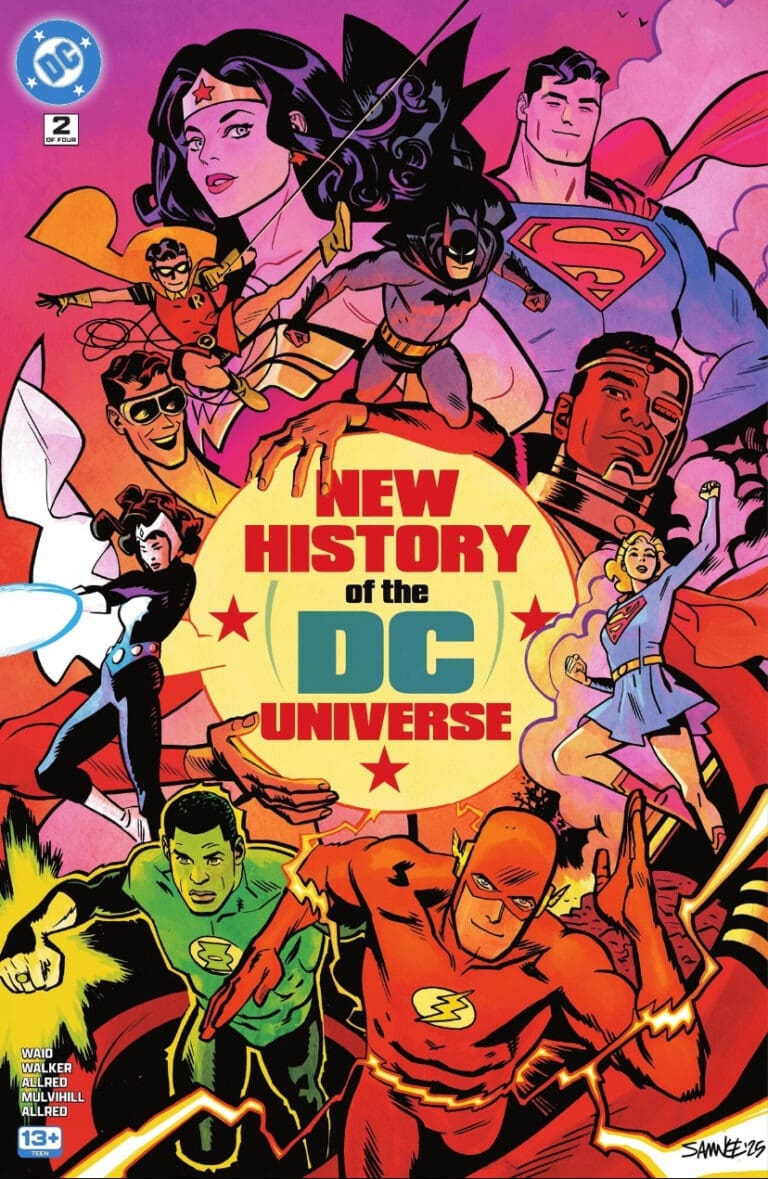
‘New History of the DC Universe’ #2 Review: The Lesson Continues

‘New History of the DC Universe’ #2 Review: The Lesson Continues

Chris Parker Jr | July 23, 2025

July 23, 2025

Told through Barry Allen’s perspective, New History of the DC Universe tackles the tangled web of almost a 100 years of superhero continuity. The second issue highlights the formation of the Justice League and the devastating crisis brought on by the Anti-Monitor. From the outset, this series was a monumental challenge, even for veteran writer Mark Waid. He is not just trying to clarify the chaos left by Flashpoint and Dark Crisis on Infinite Earths, but also attempts to bridge the fundamentally incompatible pre- and post-Crisis on Infinite Earths canons. This task becomes more challenging when considering the inconsistencies of the post-Flashpoint continuity, which often clash with everything that came before.

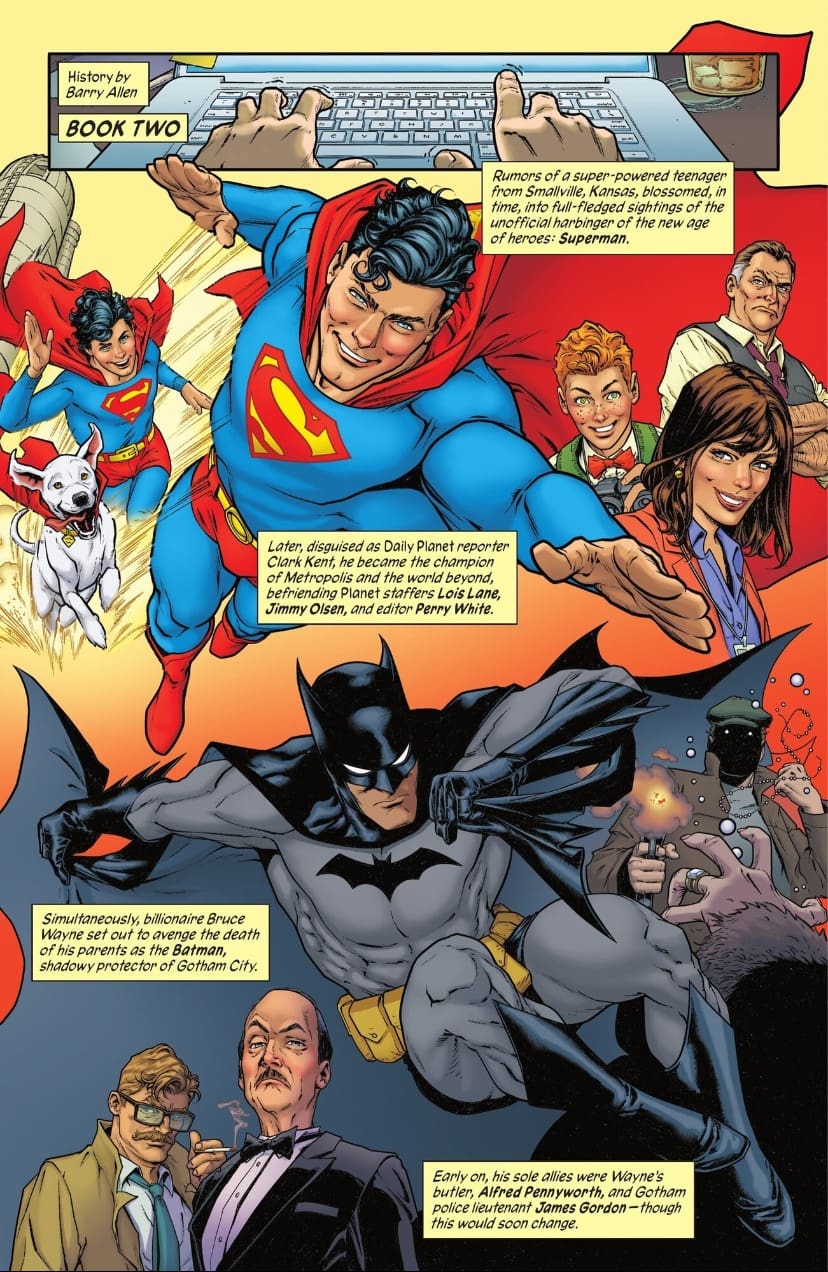
Mark Waid brings a poetic clarity to DC’s often tangled history, presenting its complex lore in a way that’s both concise and easy to follow. He navigates the vast cast of heroes and villains with precision, ensuring readers are never lost, thanks in part to Todd’s well-crafted lettering that guides the narrative flow. The story begins with familiar icons like Superman, Batman, and Flash, then gradually expands to explore major teams, iconic villains, and the more chaotic corners of DC continuity. Waid’s approach makes even the most intricate histories feel accessible without sacrificing depth or emotional weight.
DC Comics

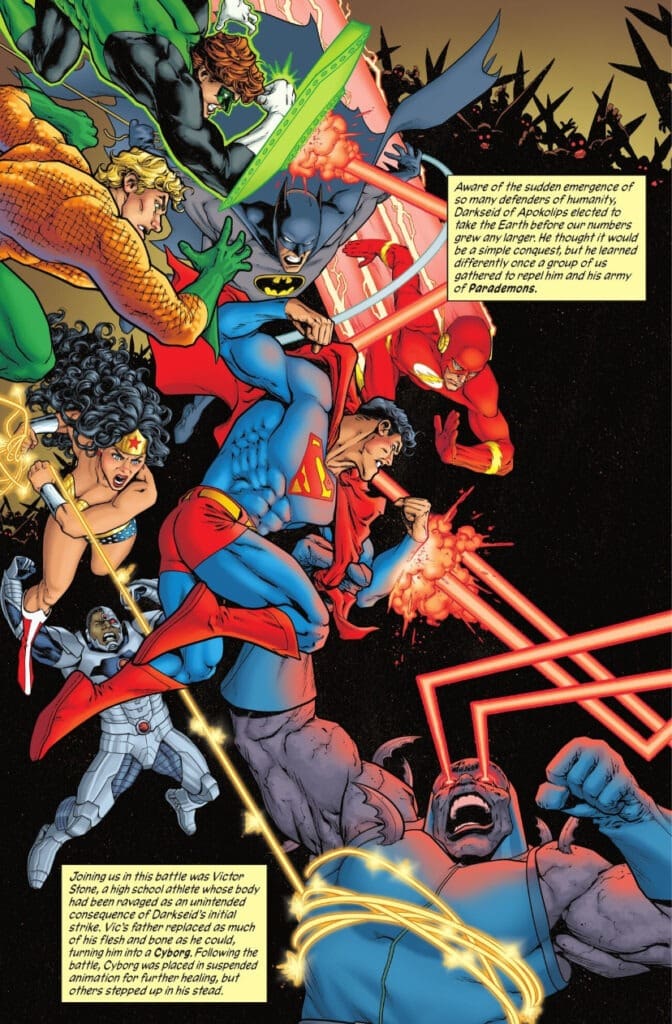
The main concern is that the book attempts to merge conflicting continuities, such as introducing Vic Stone as Cyborg to the Justice League despite his original debut with the Teen Titans, and presenting Supergirl as the first member of the Super-family, only to have her die in Crisis on Infinite Earths. While ambitious in scope, its value as a true “Guide to the DC Omniverse” is debatable. This becomes clear when readers turn to the David Wielgosz-written portion of the issue, only to find the stories there contradict the book’s own narrative. These inconsistencies risk weakening its role as a dependable resource for navigating DC’s complex and ever-shifting continuity.

Longtime DC fans may be the hardest to win over with this latest revision. While some might accept the changes, others will likely be frustrated by more unnecessary retcons. Issue #1 altered the Justice Society’s disappearance in a way that could bother continuity purists. Issue #2 continues this trend by placing the New 52 story “Justice League: Origin” into the Silver and Bronze Age timeline, before the Crisis on Infinite Earths.

Michael Allred and Brad Walker deliver stunning artwork that beautifully captures the essence of DC’s Silver and Bronze Ages. Their visuals enhance the storytelling with clarity and scale, showcasing impressive variation across eras. Iconic costumes from major storylines are faithfully rendered, adding depth and nostalgia. Highlights include a powerful image of Batman shirtless with a sword, the evolving rogues’ galleries of DC’s heroes, and the future generations who inherit legendary mantles. Every panel bursts with detail and vibrant color, making each character stand out. The artists accomplish a monumental task, visually chronicling decades of DC history with energy, emotion, and precision.
DC Comics

The final page’s art depicting the end of Crisis on Infinite Earths is deeply emotional. Superman holding Kara’s lifeless body and Flash vanishing into light as he runs to his death are haunting, heroic images. Though we know these heroes will one day return, the scene remains powerful and tense. Ending the issue with this moment reinforces the tragedy and sacrifice at the heart of the Crisis.

In the end, New History of the DC Universe #2 is a visually stunning and emotionally resonant must-read. Mark Waid keeps the narrative accessible for new readers, while Michael Allred and Brad Walker’s artwork evokes the spirit of DC’s classic eras. The issue effectively breaks down the complex history of DC’s Silver and Bronze Ages, offering clarity in a famously convoluted timeline. However, it isn’t without flaws. Waid repeats old missteps by relying on unnecessary retcons and missing the chance to present DC’s history as it truly unfolded, but as we approach the modern era of continuity reboots, how it all ties together remains to be seen.

‘New History of the DC Universe’ #2 Review: The Lesson Continues

The New History of the DC Universe #2 effectively breaks down the complex history of DC’s Silver and Bronze Ages, offering clarity in a famously convoluted timeline. However, it isn’t without flaws. Waid repeats old missteps by relying on unnecessary retcons and missing the chance to present DC’s history as it truly unfolded, but as we approach the modern era of continuity reboots, how it all ties together remains to be seen.
8.5
AMAZON
BUY NOW
‘New History of the DC Universe’ #2 Review: The Lesson Continues

‘New History of the DC Universe’ #2 Review: The Lesson Continues

July 23, 2025

Told through Barry Allen’s perspective, New History of the DC Universe tackles the tangled web of almost a 100 years of superhero continuity. The second issue highlights the formation of the Justice League and the devastating crisis brought on by the Anti-Monitor. From the outset, this series was a monumental challenge, even for veteran writer Mark Waid. He is not just trying to clarify the chaos left by Flashpoint and Dark Crisis on Infinite Earths, but also attempts to bridge the fundamentally incompatible pre- and post-Crisis on Infinite Earths canons. This task becomes more challenging when considering the inconsistencies of the post-Flashpoint continuity, which often clash with everything that came before.

Mark Waid brings a poetic clarity to DC’s often tangled history, presenting its complex lore in a way that’s both concise and easy to follow. He navigates the vast cast of heroes and villains with precision, ensuring readers are never lost, thanks in part to Todd’s well-crafted lettering that guides the narrative flow. The story begins with familiar icons like Superman, Batman, and Flash, then gradually expands to explore major teams, iconic villains, and the more chaotic corners of DC continuity. Waid’s approach makes even the most intricate histories feel accessible without sacrificing depth or emotional weight.

DC Comics

The main concern is that the book attempts to merge conflicting continuities, such as introducing Vic Stone as Cyborg to the Justice League despite his original debut with the Teen Titans, and presenting Supergirl as the first member of the Super-family, only to have her die in Crisis on Infinite Earths. While ambitious in scope, its value as a true “Guide to the DC Omniverse” is debatable. This becomes clear when readers turn to the David Wielgosz-written portion of the issue, only to find the stories there contradict the book’s own narrative. These inconsistencies risk weakening its role as a dependable resource for navigating DC’s complex and ever-shifting continuity.

Longtime DC fans may be the hardest to win over with this latest revision. While some might accept the changes, others will likely be frustrated by more unnecessary retcons. Issue #1 altered the Justice Society’s disappearance in a way that could bother continuity purists. Issue #2 continues this trend by placing the New 52 story “Justice League: Origin” into the Silver and Bronze Age timeline, before the Crisis on Infinite Earths.

Michael Allred and Brad Walker deliver stunning artwork that beautifully captures the essence of DC’s Silver and Bronze Ages. Their visuals enhance the storytelling with clarity and scale, showcasing impressive variation across eras. Iconic costumes from major storylines are faithfully rendered, adding depth and nostalgia. Highlights include a powerful image of Batman shirtless with a sword, the evolving rogues’ galleries of DC’s heroes, and the future generations who inherit legendary mantles. Every panel bursts with detail and vibrant color, making each character stand out. The artists accomplish a monumental task, visually chronicling decades of DC history with energy, emotion, and precision.

DC Comics

The final page’s art depicting the end of Crisis on Infinite Earths is deeply emotional. Superman holding Kara’s lifeless body and Flash vanishing into light as he runs to his death are haunting, heroic images. Though we know these heroes will one day return, the scene remains powerful and tense. Ending the issue with this moment reinforces the tragedy and sacrifice at the heart of the Crisis.

In the end, New History of the DC Universe #2 is a visually stunning and emotionally resonant must-read. Mark Waid keeps the narrative accessible for new readers, while Michael Allred and Brad Walker’s artwork evokes the spirit of DC’s classic eras. The issue effectively breaks down the complex history of DC’s Silver and Bronze Ages, offering clarity in a famously convoluted timeline. However, it isn’t without flaws. Waid repeats old missteps by relying on unnecessary retcons and missing the chance to present DC’s history as it truly unfolded, but as we approach the modern era of continuity reboots, how it all ties together remains to be seen.
‘New History of the DC Universe’ #2 Review: The Lesson Continues

The New History of the DC Universe #2 effectively breaks down the complex history of DC’s Silver and Bronze Ages, offering clarity in a famously convoluted timeline. However, it isn’t without flaws. Waid repeats old missteps by relying on unnecessary retcons and missing the chance to present DC’s history as it truly unfolded, but as we approach the modern era of continuity reboots, how it all ties together remains to be seen.
8.5

Share:

Comments

Leave the first comment

<!-- if comments are disabled for this post then hide comments container -->
<style> 
<?php if(!comments_open()) { echo "#nfps-comments-container {display: none !important;}"; }?>
</style>