'Masterminds' #1 Review

‘Masterminds’ #1 Review: A Bold Supervillain Saga Begins

Aun Haider | August 24, 2025

August 24, 2025

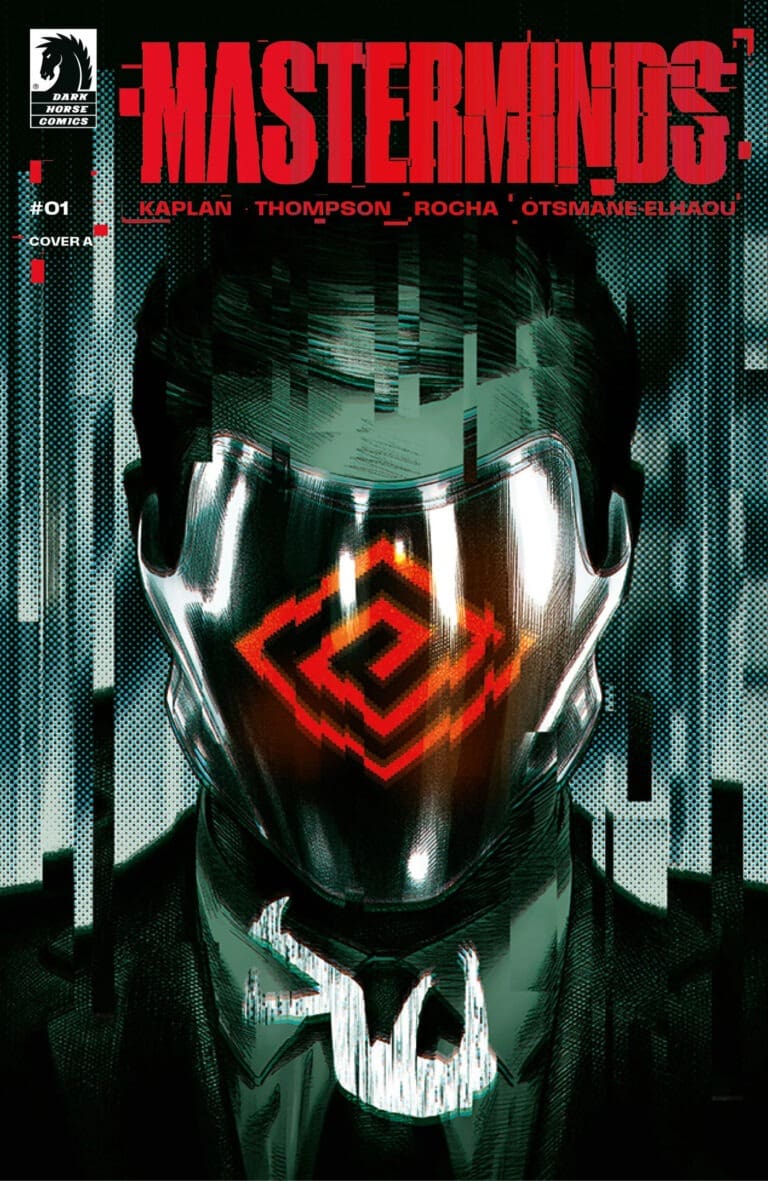
The debut issue of Masterminds sets the stage for a world where intellect is power, and villainy isn’t just about brute strength but sharp strategy. Written by Zack Kaplan with art by Stephen Thompson, Rocha, and lettering by Otsmane-Elhaou, the comic balances psychological tension with sharp social commentary and visual spectacle. This first issue introduces us to a fresh cast of schemers, setting the tone for a series that’s as much about clever plots and manipulation as it is about the thrill of comic book spectacle.

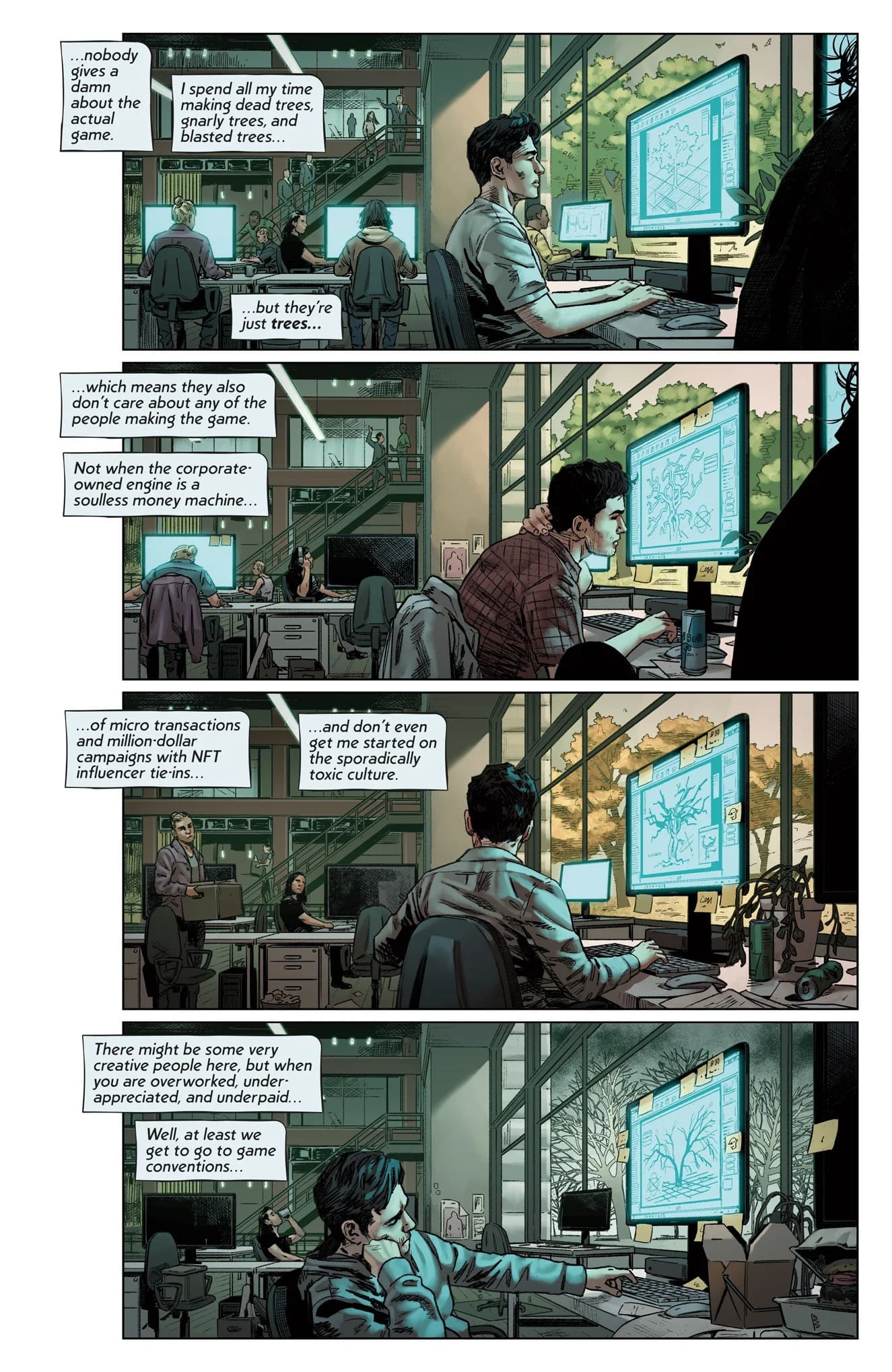
The issue opens with Edward Hale’s backstory: a boy who lost his mother early and never quite found his footing in the outside world. Gaming became his refuge, a space where he could create, escape, and eventually excel. His passion carried him far as he built his own game, earned awards, and landed a spot at a prestigious studio, the kind of “dream job” most gamers only fantasize about. But inside the glossy walls of that gaming giant, Edward’s dream quickly curdles. The studio is less a creative haven and more a corporate machine, grinding down its workers with endless hours, constant revisions, and a relentless push for profit. Talent doesn’t matter here; obedience does. What could have been a playground for creativity becomes a pressure cooker, and the comic wastes no time in making this clash between passion and profit feel uncomfortably real.

Edward’s disillusionment pushes him into a pivotal encounter when he attends a lavish party hosted by Mr. Minata, a powerful and enigmatic figure in the industry. Instead of blending into the crowd, Edward introduces himself boldly as a creator, not just a programmer. It’s a risky move, and Minata’s cryptic and unsettling response becomes the catalyst for everything that follows. From this moment on, the comic shifts gears from grounded corporate drama into mystery and danger.
Darkhorse

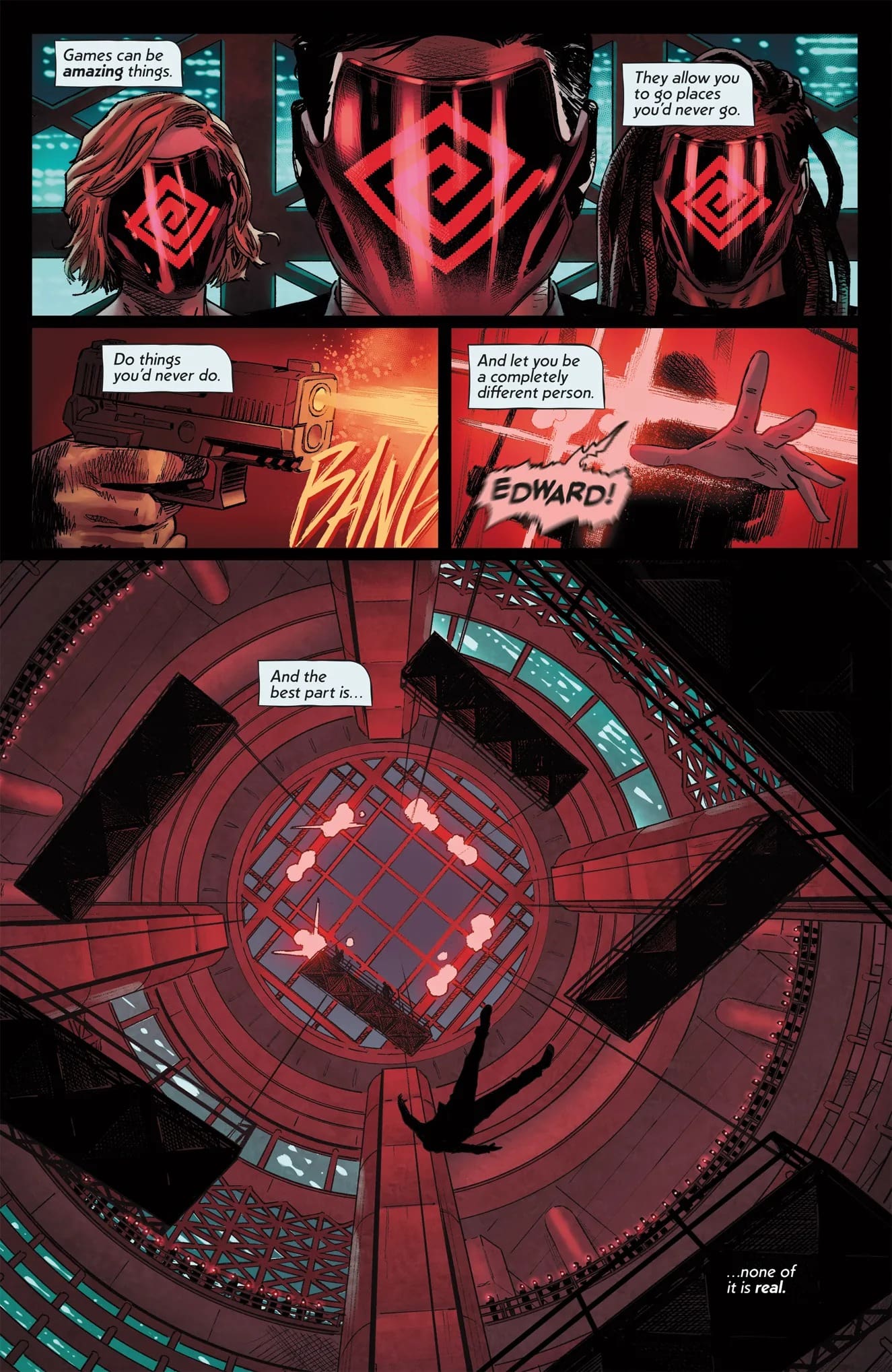
Soon Edward finds himself invited into a high-stakes initiation process for a secretive organization known only as “Masterminds.” The initiation is no simple test; it’s a deadly game filled with puzzles, surveillance, and the constant threat of failure, which means death. Here, the book’s themes come into sharp focus: the cost of ambition, the hunger for recognition, and the moral compromises people are willing to make under pressure. Edward isn’t just fighting for validation anymore; he’s fighting for survival.

Honestly? It’s refreshing. Supervillain-centered comics can sometimes fall into the trap of edgy for the sake of edgy, but Masterminds #1 avoids that. The characters aren’t just mustache-twirling caricatures; they are layered, flawed, and oddly relatable. While the build-up is definitely there, it’s the personalities and dynamics that hook you. You can sense rivalries forming, alliances being tested, and bigger schemes just beneath the surface. The art works in tandem with the story: expressive faces, moody but not overbearing color work, and layouts that make conversations feel just as kinetic as fights.

Reading it, I found myself grinning at the sharp dialogue and second-guessing who’s really in control of each scene. That’s a good sign for a first issue: it leaves you curious and keeps you guessing. Is every plan really as airtight as the characters think, or are we already seeing cracks that will come back to bite them? That intrigue is the kind of hook that makes you want to stick around for issue #2.
Darkhorse

The strongest part of Masterminds #1 is its confidence. It knows what kind of book it wants to be: Intelligent, character-driven, a little stylish, and just wicked enough to feel dangerous. The pacing keeps you moving, and it’s clear the creators are laying breadcrumbs for a larger story. If there’s a knock against it, it’s that as a first issue, it spends more time setting the board than pushing pieces around. Some readers might want a bit more immediate payoff, but personally, I liked that it took its time. It feels like we’re being invited into a chess match rather than a street brawl, and that slow-burn style fits the title perfectly.

Masterminds #1 is a promising start, mixing sharp writing, expressive art, and a strong sense of direction. It’s not a loud, explosive debut, but it’s something more precise and intentional, which feels fitting for a series about brains over brawn. If the next issues build on this foundation, we could be looking at one of the smarter, more engaging new comics on the shelves.

‘Masterminds’ #1 Review: A Bold Supervillain Saga Begins

Masterminds #1 is a promising start, mixing sharp writing, expressive art, and a strong sense of direction. It’s not a loud, explosive debut, but it’s something more precise and intentional, which feels fitting for a series about brains over brawn. If the next issues build on this foundation, we could be looking at one of the smarter, more engaging new comics on the shelves.
8.75
AMAZON
BUY NOW
'Masterminds' #1 Review

‘Masterminds’ #1 Review: A Bold Supervillain Saga Begins

August 24, 2025

The debut issue of Masterminds sets the stage for a world where intellect is power, and villainy isn’t just about brute strength but sharp strategy. Written by Zack Kaplan with art by Stephen Thompson, Rocha, and lettering by Otsmane-Elhaou, the comic balances psychological tension with sharp social commentary and visual spectacle. This first issue introduces us to a fresh cast of schemers, setting the tone for a series that’s as much about clever plots and manipulation as it is about the thrill of comic book spectacle.

The issue opens with Edward Hale’s backstory: a boy who lost his mother early and never quite found his footing in the outside world. Gaming became his refuge, a space where he could create, escape, and eventually excel. His passion carried him far as he built his own game, earned awards, and landed a spot at a prestigious studio, the kind of “dream job” most gamers only fantasize about. But inside the glossy walls of that gaming giant, Edward’s dream quickly curdles. The studio is less a creative haven and more a corporate machine, grinding down its workers with endless hours, constant revisions, and a relentless push for profit. Talent doesn’t matter here; obedience does. What could have been a playground for creativity becomes a pressure cooker, and the comic wastes no time in making this clash between passion and profit feel uncomfortably real.

Edward’s disillusionment pushes him into a pivotal encounter when he attends a lavish party hosted by Mr. Minata, a powerful and enigmatic figure in the industry. Instead of blending into the crowd, Edward introduces himself boldly as a creator, not just a programmer. It’s a risky move, and Minata’s cryptic and unsettling response becomes the catalyst for everything that follows. From this moment on, the comic shifts gears from grounded corporate drama into mystery and danger.

Darkhorse

Soon Edward finds himself invited into a high-stakes initiation process for a secretive organization known only as “Masterminds.” The initiation is no simple test; it’s a deadly game filled with puzzles, surveillance, and the constant threat of failure, which means death. Here, the book’s themes come into sharp focus: the cost of ambition, the hunger for recognition, and the moral compromises people are willing to make under pressure. Edward isn’t just fighting for validation anymore; he’s fighting for survival.

Honestly? It’s refreshing. Supervillain-centered comics can sometimes fall into the trap of edgy for the sake of edgy, but Masterminds #1 avoids that. The characters aren’t just mustache-twirling caricatures; they are layered, flawed, and oddly relatable. While the build-up is definitely there, it’s the personalities and dynamics that hook you. You can sense rivalries forming, alliances being tested, and bigger schemes just beneath the surface. The art works in tandem with the story: expressive faces, moody but not overbearing color work, and layouts that make conversations feel just as kinetic as fights.

Reading it, I found myself grinning at the sharp dialogue and second-guessing who’s really in control of each scene. That’s a good sign for a first issue: it leaves you curious and keeps you guessing. Is every plan really as airtight as the characters think, or are we already seeing cracks that will come back to bite them? That intrigue is the kind of hook that makes you want to stick around for issue #2.

Darkhorse

The strongest part of Masterminds #1 is its confidence. It knows what kind of book it wants to be: Intelligent, character-driven, a little stylish, and just wicked enough to feel dangerous. The pacing keeps you moving, and it’s clear the creators are laying breadcrumbs for a larger story. If there’s a knock against it, it’s that as a first issue, it spends more time setting the board than pushing pieces around. Some readers might want a bit more immediate payoff, but personally, I liked that it took its time. It feels like we’re being invited into a chess match rather than a street brawl, and that slow-burn style fits the title perfectly.

Masterminds #1 is a promising start, mixing sharp writing, expressive art, and a strong sense of direction. It’s not a loud, explosive debut, but it’s something more precise and intentional, which feels fitting for a series about brains over brawn. If the next issues build on this foundation, we could be looking at one of the smarter, more engaging new comics on the shelves.
‘Masterminds’ #1 Review: A Bold Supervillain Saga Begins

Masterminds #1 is a promising start, mixing sharp writing, expressive art, and a strong sense of direction. It’s not a loud, explosive debut, but it’s something more precise and intentional, which feels fitting for a series about brains over brawn. If the next issues build on this foundation, we could be looking at one of the smarter, more engaging new comics on the shelves.
8.75

Share:

Comments

Leave the first comment

<!-- if comments are disabled for this post then hide comments container -->
<style> 
<?php if(!comments_open()) { echo "#nfps-comments-container {display: none !important;}"; }?>
</style>